
When seeking to better understand the ventilation in your home, two terms often come up: constant airflow (autoréglable) and humidity-sensitive (hygroréglable). Not easy to grasp at first! Yet, understanding what lies behind the “hygroréglable definition” can really help you to choose the right ventilation system. Here, we’ll look at how these systems work, their differences, and what this means for your comfort, your energy bill, and the air quality in your home.
Key Points to Remember
- A humidity-sensitive (hygroréglable) ventilation system adjusts the airflow according to the humidity, unlike a constant airflow (autoréglable) system, which runs at a fixed rate.
- Humidity-sensitive vents change their opening according to the level of humidity, whereas constant airflow vents remain fixed.
- The Hygro A system uses constant airflow air inlets, while Hygro B combines humidity-sensitive vents and inlets for greater precision.
- Controls differ: a switch for constant airflow, a push button or sensor for humidity-sensitive systems, with settings adapted to each room.
- Choosing between constant and humidity-sensitive systems depends on your home’s layout, ventilation needs, and the desire to save energy.
Humidity-sensitive (Hygroréglable) Definition and Operating Principles
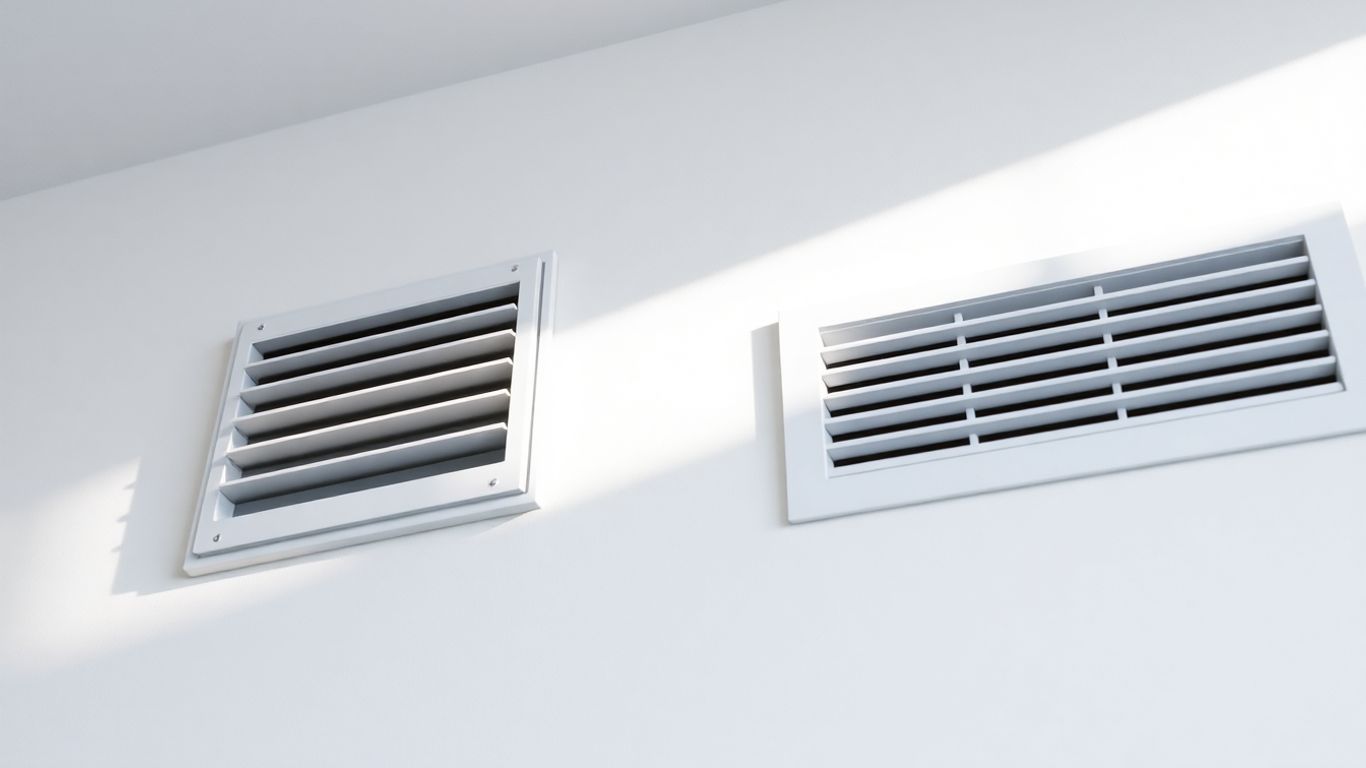
Origin and distinction of the term humidity-sensitive (hygroréglable)
When talking about ventilation systems, two terms often appear: constant airflow (autoréglable) and humidity-sensitive (hygroréglable). It’s not uncommon to come across the word “hydroréglable”, but this is incorrect; the proper term, “hygroréglable”, comes from “hygrometry”—the measurement of humidity in the air. This system was designed to allow your home’s ventilation to respond automatically to ambient humidity, unlike constant airflow systems, which always run the same way no matter the humidity in the room.
- Humidity-sensitive: adjusts the airflow according to humidity.
- Constant airflow: fixed airflow, not influenced by humidity.
Principle of humidity-based regulation
The core principle of the humidity-sensitive system is the automatic adjustment of extracted airflow in response to the measured humidity in each room. Typically, this is done via a strip that expands or contracts depending on the air’s humidity. When humidity rises, the vent opens more, allowing more air extraction. When the air is dry, it closes partially, reducing the airflow.
This offers several concrete benefits:
- Optimised air renewal without waste.
- Reduced heat loss in winter.
- Targeted response to humidity spikes (showering, cooking, etc.).
For you, this means fresher, healthier air, without manual intervention or energy overconsumption.
Difference with constant airflow systems
Constant airflow systems operate differently. Here, the extracted airflow remains constant regardless of household conditions. The motor always runs at the same speed, sometimes with several positions selectable by hand. Unlike the humidity-sensitive system, a constant airflow system provides an identical airflow in all circumstances, and the user must intervene to change the ventilation intensity.
Here’s a summary table comparing these two approaches:
| Feature | Constant Airflow | Humidity-sensitive |
|---|---|---|
| Humidity detection | No | Yes |
| Extraction rate | Always constant | Variable (by humidity) |
| Adjustment method | Manual | Automatic |
| Energy consumption | Higher on average | Reduced (matched to need) |
If you want to control your ventilation yourself, the constant airflow option will suit you; for a system responsive to humidity, the humidity-sensitive option is more suitable. In many modern homes, it is this automatic air regulation that ensures genuine comfort, with ventilation continuously adjusted to your usage and environment.
The Technology of Constant Airflow and Humidity-sensitive Vents
Description of constant airflow vents
Constant airflow vents are designed to maintain a steady rate of airflow, no matter the level of humidity or activity in the room. They are simple: once installed, they do not adjust their opening depending on the environment. The system’s motor usually runs at a fixed speed, but can offer two or three speeds manually selectable, often by a switch located in the kitchen. This setup is particularly suitable for collective housing or double flow systems.
Here are some key features:
- Stable airflow in all circumstances.
- Little maintenance required.
- Robust mechanical system, no complex moving parts.
| Feature | Constant airflow vent |
|---|---|
| Airflow | Fixed |
| Adjustment | Manual |
| Usual application | Collective/double-flow |
To maintain regular ventilation, there is no automatic adjustment depending on ambient humidity. This direct operation ensures great simplicity, but limits flexibility in the face of changing needs.
Mechanical operation of humidity-sensitive vents
Humidity-sensitive vents use an internal mechanism, usually a humidity-sensitive strip, to adapt their opening in real time. The more the humidity rises, the wider the vent opens, allowing more air through, and vice versa.
- Automatic airflow adjustment to humidity.
- No manual input required during humidity spikes like showers or cooking.
- Some versions are battery-powered, mains-powered, or manual depending on the room’s layout (more details on power supply here).
This system is especially relevant for rooms such as bathrooms, kitchens, or WCs, where requirements change
almost constantly.
Adjustment of airflow to needs
The real advantage of humidity-sensitive vents lies in their ability to respond precisely to changing ventilation needs. The airflow is not constant; it rises as soon as the humidity goes up and drops once the air dries out.
- In the kitchen, the vent can go from moderate to maximum airflow (e.g. from 10 to 135 m³/h on demand).
- In WCs, a presence detector can also trigger a temporary opening.
- Bathrooms benefit from continuous adjustment with no external control.
Humidity-based adjustment optimises air quality and reduces needless heat loss, while ensuring indoor comfort. You can see how this type of equipment fits into a modern, connected home by consulting practical advice from home automation and energy renovation platforms.
In summary, constant airflow vents are stable and require little maintenance, whereas humidity-sensitive vents provide a real response to changes in the indoor environment. The choice should be made depending on your particular usage and home layout.
Comparison of Hygro A and Hygro B Systems
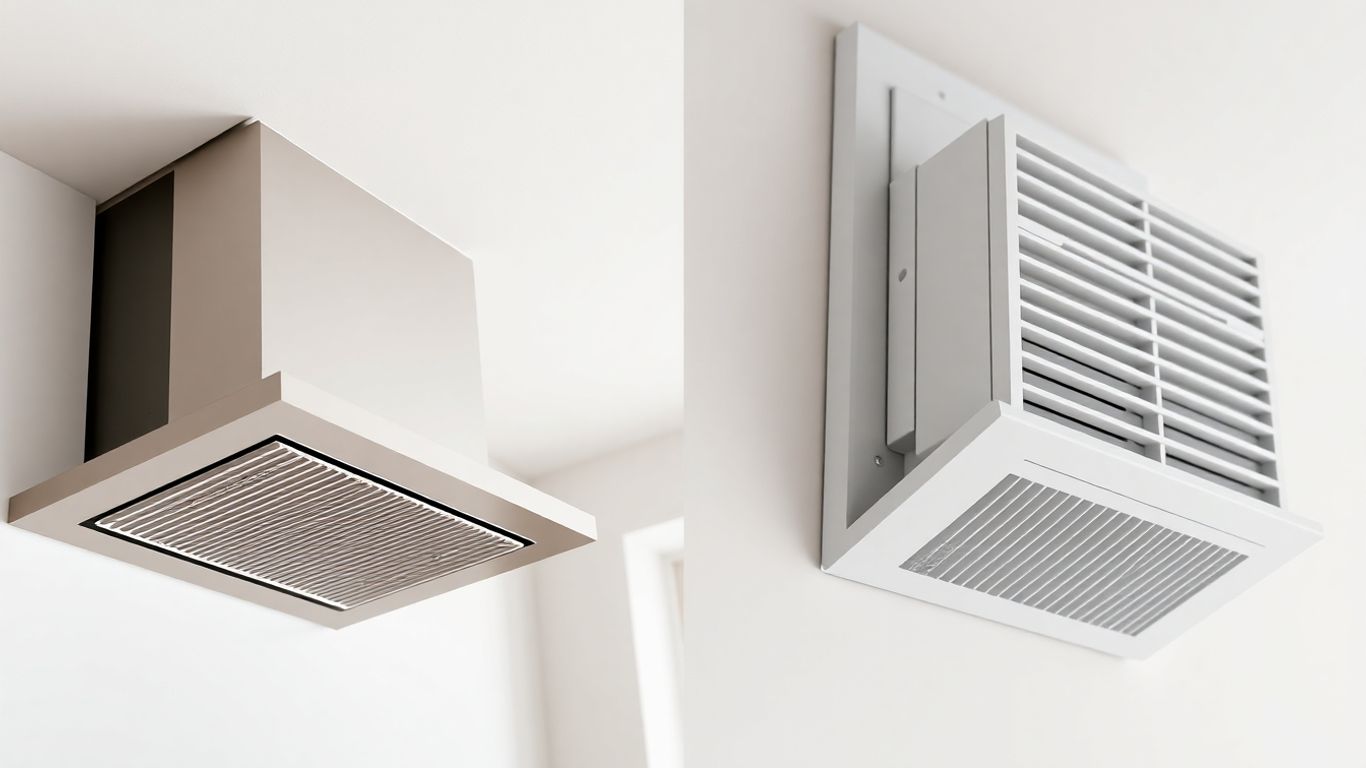
You are probably looking for the ideal solution for managing your home’s air, and the choice between Hygro A and Hygro B ventilation systems can seem complex. Here’s a precise overview of both options, to help you better understand their strengths and weaknesses.
Features of the Hygro A system
The Hygro A system combines humidity-sensitive extraction vents with constant airflow air inlets. This means the extraction of air adapts according to humidity, while the supply of fresh air remains constant all year round.
- Ideal for older homes or collective buildings,
- Low initial investment,
- Overall ventilation: air only adjusted at extraction, with no control of the supply of fresh air,
- Decent air quality, but can lead to some over-ventilation in winter.
Specific features of the Hygro B system
With the Hygro B system, the entire network is humidity-sensitive, both vents and air inlets. This means dynamic control in each room, tailored to its use and actual humidity.
- Mainly suited to new or detached homes,
- Higher purchase and installation cost,
- Accurate humidity control room-by-room,
- Allows you to minimise heat loss and energy consumption,
- The motor, often low consumption, further reduces electricity costs.
Differences between air inlets and extraction vents
The key difference between Hygro A and Hygro B mainly concerns the air inlets: constant airflow for one, humidity-sensitive for the other. Here’s a brief comparison table to help you:
| Criteria | Hygro A system | Hygro B system |
|---|---|---|
| Air inlets | Constant airflow (fixed rate) | Humidity-sensitive (variable rate) |
| Extraction vents | Humidity-sensitive (variable rate) | Humidity-sensitive (variable rate) |
| Humidity management | Overall | Room-by-room |
| Energy saving | Medium | High |
| Price | More affordable | More expensive |
| Air quality | Good | Excellent |
If your key goal is finely tuned air quality management, the Hygro B system truly stands out, in exchange for a slightly larger investment.
To go further on optimising energy management at home, a home automation solution may be relevant, taking into account an initial assessment of your needs.
Controls and Management of Ventilation
With a constant airflow ventilation system, control is mainly via a simple wall switch. This is often located in the kitchen, where the airflow sometimes needs to be quickly increased, for example when cooking.
The user can switch between two ventilation speeds: a normal speed for everyday use, and a boosted speed to quickly remove humidity or smells. The change is made directly at the fan, and increases the airflow through all vents in the house.
- A two-way switch increases airflow.
- The system is centralised; control is from one or two points in the house.
- This control is independent of the level of measured humidity.
In collective buildings, simplicity remains key, but some constant airflow models are specifically designed for more complex systems, as explained in this ventilation system for extracting stale air.
Humidity sensors and automation
Humidity-sensitive vents adjust their opening automatically depending on the humidity measured locally. In technical rooms such as bathrooms and WCs, management is often via a timed push button or by presence detection. In the kitchen, manual or automatic controls can trigger a timed boost (often 30 minutes).
Summary table:
| Room | Available control | Trigger type | Maximum airflow |
|---|---|---|---|
| Kitchen | Push button/switch | Manual or automatic | 135 m3/h |
| Bathroom | None | Passive humidity detection | 40 m3/h |
| WC | Button or presence detection | Manual or automatic | 40 m3/h |
The switch to a higher flow rate is temporary and reverts automatically after a preset time.
- The vents can be powered by batteries, 230V, or 12V.
- Some have a pull cord or mechanical control, especially for toilets.
- Smart management can be coupled with sensors in the central unit to adjust ventilation on demand.
Room-specific installation details
Each service room requires its own management style for efficiency and user-friendliness. For example, bathrooms usually have no manual controls: everything is regulated by the ambient humidity. In the kitchen or WCs, the user may intervene more often to activate a boost via an easily accessible control (button, switch, or motion detector).
- In the kitchen: priority on rapid extraction of smells and steam.
- In WCs: easily accessible control for quick air refresh.
- In bathrooms: continuous extraction adjusted to humidity, no manual input.
Management suited to each room ensures effective air renewal without constant intervention and unnecessary energy waste.
By making use of simple controls or smart humidity-linked automation, today’s ventilation systems meet modern comfort and energy efficiency needs.
Energy Efficiency and Impact on Air Quality
Managing heat loss
Heat management is often overlooked when thinking about ventilation. Yet, every time the indoor air is renewed, some of the heat produced in your home escapes. With a humidity-sensitive system, the air renewal is matched to need, thus limiting heat loss. The main advantage here is the ability to ventilate only when it’s really needed, avoiding unnecessary energy waste.
- Ventilation modulated according to actual humidity
- Less heat loss in winter
- Finer control cuts your heating bill
A well-chosen system can make the difference between a comfortable home and one where every draught hits your heating bill.
Adjusting ventilation to real needs
The strength of humidity-sensitive vents, especially in a Hygro B system, lies in their responsiveness: they instantly detect changes in humidity. There’s no need for constant airflow everywhere, even if nobody is using the bathroom or kitchen. Air only moves more where and when it’s needed.
Here’s a simple example table comparing system behaviour:
| Time of day | Bathroom | Kitchen | Bedroom |
|---|---|---|---|
| 8am (shower) | High rate | Low | Low |
| 12pm (cooking) | Low | High | Low |
| Night | Low | Low | Medium |
A constant airflow system, on the other hand, always runs at the same rate, sometimes wasting energy where it’s not needed.
Impact on energy consumption
Between a standard constant airflow ventilation system and a humidity-sensitive system, the difference is seen in your energy bill and the comfort you feel. This is even more pronounced with Hygro B models, which allow room-by-room fine-tuning, as shown by the latest innovations from AUTOGYRE in their range.
- Energy savings are clear across the heating season
- The power consumption of the ventilation unit itself can also be reduced (less running at full power)
- Improved air quality prevents humidity- and pollutant-related health issues
You might pay more upfront, but this is often offset by subsequent savings—especially in well-insulated homes, where every bit of heat loss matters.
Sensor Integration and Technological Advances
Controlled mechanical ventilation has changed a lot in recent years, largely thanks to the integration of more sophisticated sensors and the ongoing evolution of building regulations. The arrival of electronic sensors in ventilation systems is fundamentally changing the control of indoor air.
Use of humidity sensors in ventilation systems
Initially, most humidity-sensitive systems regulated airflow with a simple mechanical part, often a strip reacting to the room’s humidity. Today, many models use more accurate humidity sensors. These sensors:
- Continuously measure ambient humidity
- Allow automatic adjustment of extraction speed and rate
- Offer reduced maintenance and more personalisation
For constant airflow systems, some versions with a humidity sensor installed directly on the motor allow automatic switching to high speed when a certain humidity threshold is reached. This is a good alternative if you want to modernise your setup without replacing all the extraction vents.
Developments in air quality sensors
Needs change, as does the concept of indoor air quality. Now, the most advanced systems do not only monitor humidity. We are now seeing ventilation systems with electronic sensors capable of detecting various pollutants:
- CO₂
- Volatile organic compounds (VOCs)
- Fine particles
One of the only humidity-sensitive models currently incorporating these sensors is the Healthbox 3.0+ (Renson). It continuously monitors several parameters and adjusts ventilation airflow as soon as a threshold value is exceeded.
Stricter environmental standards will likely make air quality sensors standard in all new buildings soon.
Limitations and regulatory perspectives
Sensor integration still poses some limits, especially in installation complexity and cost. For humidity-sensitive ventilation systems, adding an electronic sensor directly into the vent can disrupt traditional mechanical regulation. This still partially holds back the spread of these technologies.
However, several factors indicate this shift will accelerate. Demand for comfort and health, as well as regulatory pressure, are driving the market towards smarter solutions. Indeed, recent history of ventilation shows that each new regulation has triggered innovation.
In summary:
- Electronic sensors are developing mostly for high-end models or targeted renovations.
- Mechanical or electronic, each technology has its place, depending on your needs.
- The coming years will probably see air quality sensors become more widespread in homes.
| System | Type of regulation | Parameters measured | Level of automation |
|---|---|---|---|
| Classic humidity-sensitive | Mechanical | Humidity | Low |
| Constant airflow with sensor | Electronic (motor) | Humidity | Medium |
| Humidity-sensitive with IAQ sensors | Electronic (connections) | Humidity, VOC, CO₂ | High |
Choosing the Right System for Your Home and Needs
The choice between a constant airflow vent, a Hygro A system, or a Hygro B system is not made at random. You need to consider several factors related to your home, your expectations regarding air quality, and especially your budget. Each system has its own logic and recommended applications.
Selection criteria: constant vs humidity-sensitive
Before making a decision, it’s helpful to compare the strengths and limits of each technology:
- Type of home (new, old, detached, collective)
- Level of air quality required
- Specific needs (large family, pets)
- Budget constraints, short and long term
- Sensitivity to energy consumption
Here’s a summary table to clarify things:
| Criteria | Constant Airflow | Hygro A | Hygro B |
|---|---|---|---|
| Type of home | All | Old, collective | New, detached |
| Airflow | Constant | Modulated at extraction | Fully modulated |
| Humidity control | Overall | Overall | Room-by-room |
| Price | Affordable | Medium | Higher |
| Energy saving | Moderate | Medium | High |
It’s always better to choose a system adapted to your home’s real layout to avoid energy wastage and enjoy cleaner air.
Compatibility with different types of homes
Certain types of home naturally suit certain choices:
- In older homes: Hygro A may be suitable, as it is easy to install and low cost.
- For a new house or complete renovation, Hygro B gives better room-by-room air control.
- Small spaces or collective flats often go well with a constant airflow or Hygro A system, depending on budget.
For more details about the difference between constant and humidity-sensitive systems, and what this means when renovating, see this key comparison.
Recommendations for an optimal installation
If you are wondering how to make the right choice, here are some tips:
- Assess your air renewal needs, especially the household’s makeup and occupancy rate.
- Consider your home’s technical constraints (duct routes, available space).
- Compare long-term purchase, installation, and maintenance costs.
- Go for simplicity if your use is basic, or for precision if quality of life and energy saving are priorities.
Bear in mind that a properly sized installation will always be more cost-effective and pleasant to live with, whichever system you choose. It’s not only a question of technology—it’s also a matter of fine-tuning for your daily habits.
Conclusion
To conclude, it’s important to understand the difference between constant airflow and humidity-sensitive vents, as well as the Hygro A and Hygro B systems. Each solution has its own features, whether in terms of operation, control, or humidity adjustment. If you want simplicity and robustness, constant airflow vents remain a safe bet, especially for collective buildings or double flow ventilation. Conversely, for more precise air management and energy savings, humidity-sensitive vents, especially in Hygro B systems, should be favoured. The choice will depend on your needs, budget, and type of home. Take time to compare the options, and don’t hesitate to seek professional advice before deciding. Good ventilation means healthier air and a more comfortable home every day.
Frequently Asked Questions
What is the difference between a constant airflow vent and a humidity-sensitive vent?
A constant airflow vent always lets through the same amount of air, regardless of the humidity or room conditions. A humidity-sensitive vent changes its opening according to humidity: the more humid it is, the more it opens to remove moist air. This allows the ventilation to match real needs.
How does a humidity-sensitive (hygroréglable) ventilation system work?
The humidity-sensitive system uses special vents that open or close according to the room’s humidity. When humidity rises, the vent opens more to let more air through. When the air is dry, it closes a bit to reduce the airflow, helping to keep in the warmth.
What are the Hygro A and Hygro B systems?
The Hygro A system uses humidity-sensitive extraction vents, but the air inlets are constant airflow (always equally open). The Hygro B system has both humidity-sensitive vents AND humidity-sensitive air inlets—so everything adjusts to humidity, for greater efficiency.
Do humidity-sensitive vents need a special control?
Yes, in rooms like the kitchen or toilet, there is often a push button or pull cord to trigger a higher airflow for a limited time (for example, 30 minutes). In the bathroom, everything works automatically based on humidity, with no manual control.
Does a humidity-sensitive (hygroréglable) ventilation system save energy?
Yes, because it only ventilates fully when needed, for example when cooking or when the room is humid. This avoids wasting heat in winter and reduces the need for heating, saving money.
How to choose between a constant airflow and a humidity-sensitive ventilation system?
You should look at the type of home and your needs. If you want simple ventilation, constant airflow may be enough. But if you want to better control humidity and save energy, the humidity-sensitive system is better—especially in modern or well-insulated homes.
