
Considering installing a single-split air conditioning system for your home? It’s an excellent idea to improve your thermal comfort, whether for cooling your rooms in summer or heating them in winter. However, choosing the right power output is an important step to ensure efficiency and energy savings. This article guides you through understanding how to choose the model that suits your specific needs.
Key Takeaways
- A single-split air conditioning system consists of an indoor unit and an outdoor unit, ideal for a single room such as a bedroom or office. It offers a reversible solution for both heating and cooling.
- To determine the necessary power output, you need to consider the room’s surface area, as well as its insulation, sun exposure, the number of occupants, and electrical appliances that generate heat.
- Too little power will not be sufficient to maintain a pleasant temperature, while too much power will lead to excessive electricity consumption and premature wear of the unit.
- The noise level of the units (expressed in decibels), energy performance indicators (such as SEER and COP), and comfort options (programming, connectivity) are important criteria for choosing a suitable model.
- The budget for a single-split air conditioning system includes the purchase cost of the unit, installation fees (which can vary depending on complexity), and any potential expenses related to additional options or maintenance.
Understanding Single-Split Air Conditioning and Its Benefits
The Principle of Reversible Air Conditioning
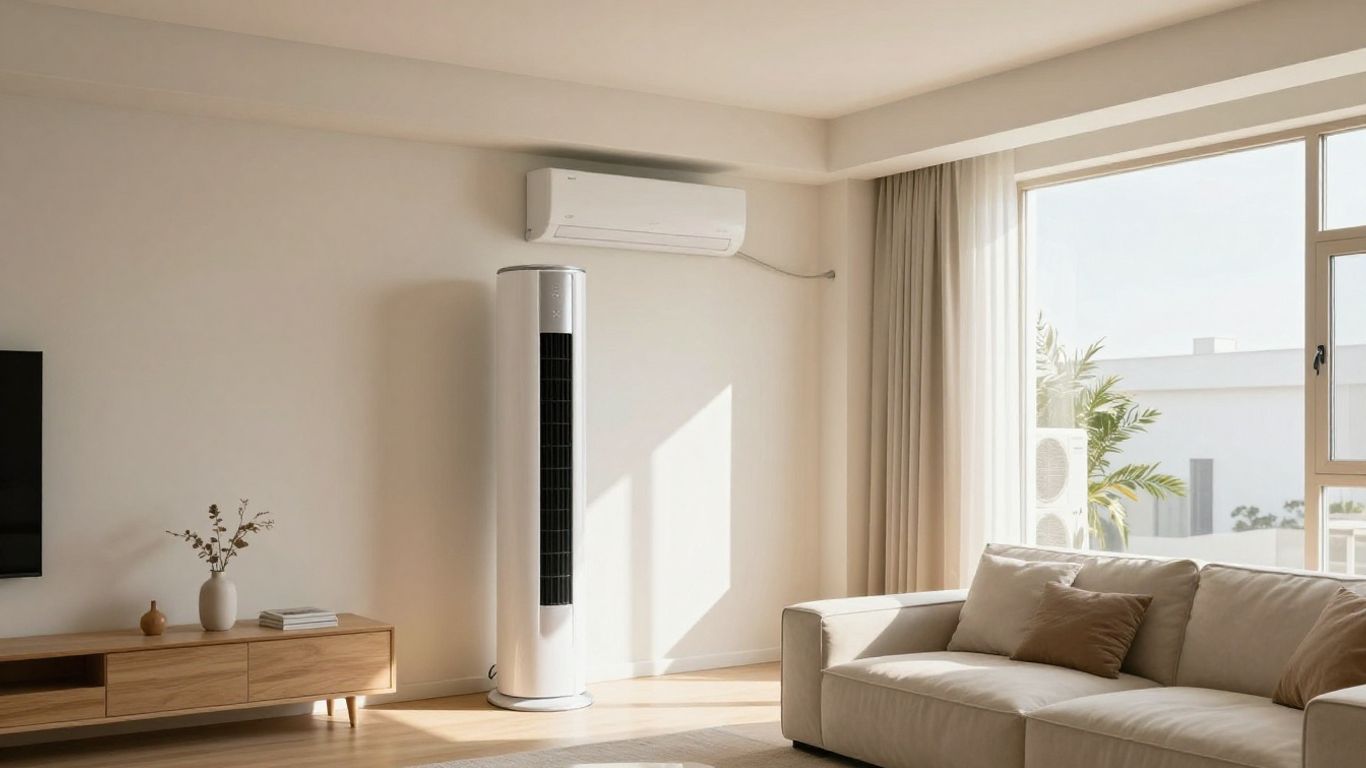
Reversible air conditioning, often called an air-to-air heat pump, is a technology that allows you to heat your home in winter and cool it in summer. Its operation is based on heat transfer. In cooling mode, it captures heat from inside your room and releases it outside. Conversely, in heating mode, it captures the heat present in the outside air, even in cold weather, and diffuses it inside. This 2-in-1 system offers thermal comfort all year round.
The Benefits of Energy-Efficient Technology
One of the major advantages of reversible air conditioning is its energy efficiency. Unlike conventional electric heating systems that produce heat through resistance, a heat pump transfers energy. This means it consumes less electricity to produce the same amount of heat. Modern models, using R32 gas for example, achieve high energy classes (up to A+++), promising substantial savings on your bills. The Inverter technology, which modulates the compressor’s power according to actual needs, also helps reduce consumption by avoiding repeated start-up and shut-down cycles, which are energy-intensive.
Specifics of the Single-Split System
The single-split system is characterised by its simplicity: one outdoor unit is connected to a single indoor unit. This type of installation is particularly suitable for air conditioning a specific room, such as a bedroom, office, or living room. Its installation is generally easier than that of more complex systems. It represents an effective solution for targeted temperature control in a defined area of your home. Its discretion and ease of installation make it a popular choice for many residential configurations, offering appreciable comfort without major work.
Matching the Power of Your Single-Split Air Conditioner to Your Home
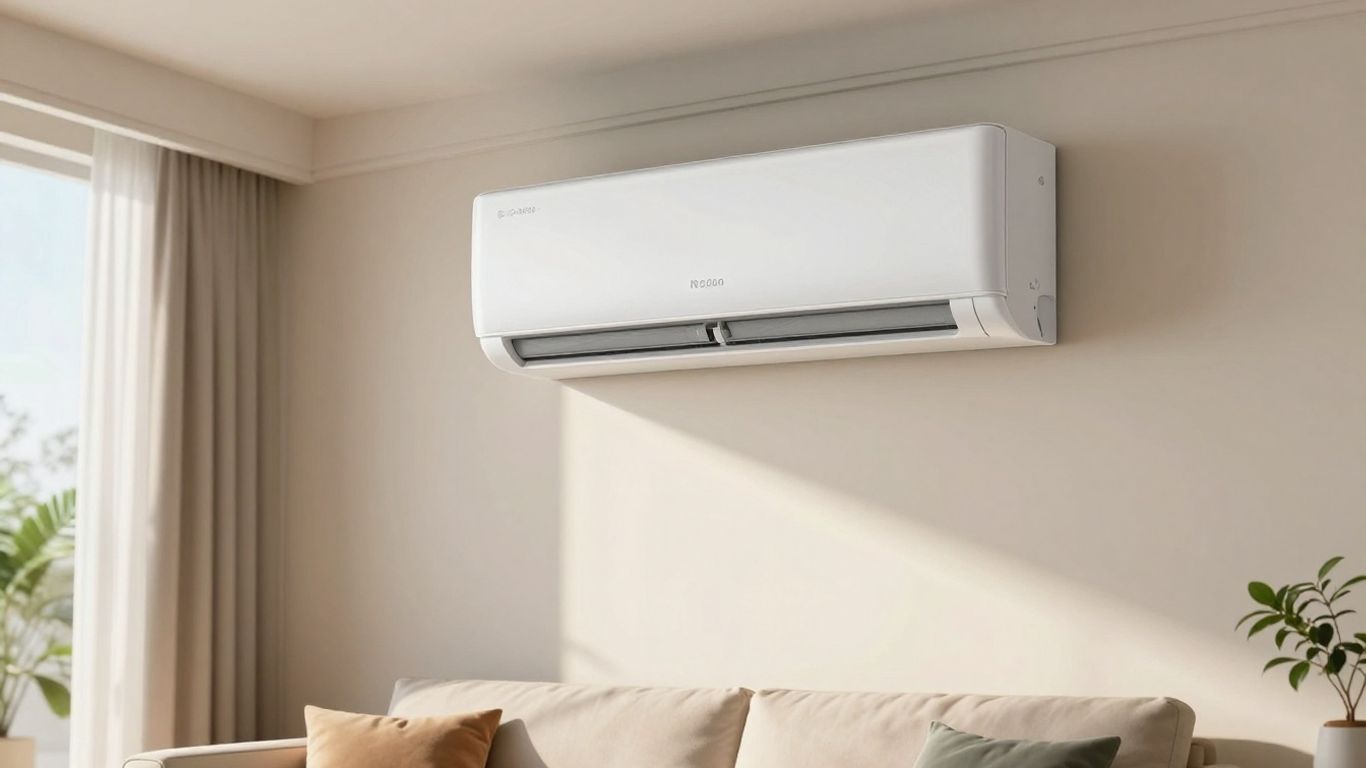
Choosing the right power output for your single-split air conditioner is an important step. An undersized unit will struggle to cool or heat your space properly, while an oversized model will unnecessarily consume more energy and could even degrade comfort through frequent on/off cycles. Therefore, it’s essential to find the right balance.
Assessing the Required Power Based on Surface Area
The size of the room or home is the first criterion to consider. A general rule often cited is around 100 watts per square metre. However, this estimate is a baseline and needs to be adjusted.
To give you a more precise idea, here is a table relating surface area, estimated volume, and recommended power. These figures assume a standard ceiling height of approximately 2.5 metres and adequate insulation.
| Surface Area (m²) | Estimated Volume (m³) | Recommended Power (kW) | BTU Equivalent | Recommended Air Conditioning Type |
|---|---|---|---|---|
| 20 m² | 50 m³ | 2.0 kW | ~6,800 BTU | Wall-mounted or portable single-split |
| 30 m² | 75 m³ | 2.5 to 3.0 kW | ~9,000 – 10,200 BTU | Wall-mounted or console single-split |
| 45 m² | 112.5 m³ | 3.5 to 4.0 kW | ~12,000 – 13,600 BTU | Powerful single-split or entry-level multi-split |
| 50 m² | 125 m³ | 4.0 to 5.2 kW | ~14,000 – 18,000 BTU | Multi-split or ducted system |
For small areas, such as a bedroom or a small office, a 2000 to 2500 W model may suffice, especially if the insulation is good. For example, a 2500 W single-split is often ideal for rooms up to 25 m².
Taking Insulation and Exposure into Account
Your home’s insulation plays a major role. A poorly insulated house will require more effort from your air conditioner to maintain the desired temperature, thus needing a higher power output. It is sometimes wiser to improve insulation before investing in a more powerful system.
The exposure of the room is also an important factor. A south or southwest-facing room, which receives a lot of direct sunlight, will heat up more quickly and require a greater cooling capacity than a north-facing room. Similarly, the presence of large windows or French doors can increase the thermal load.
Considering the Number of Occupants and Electrical Appliances
Don’t forget that the human body generates heat. The more people present in a room, the more the ambient temperature will tend to rise. Likewise, electrical appliances such as televisions, computers, ovens, or even light bulbs produce heat. Therefore, you need to adjust the power of your air conditioner based on the actual use of the room and the number of appliances generally used there. Consider adding a power margin to account for these factors, especially if the room is often occupied or if you use a lot of electronic equipment.
Calculating the ideal power output is a combination of several factors. Do not rely solely on the surface area; insulation, exposure, the number of people, and electrical appliances are equally decisive for optimal comfort and controlled consumption. An accurate estimate will save you unnecessary expenses and ensure the efficiency of your reversible air conditioning system.
Choosing the Ideal Power Output for Different Surface Areas
It is essential to correctly match the power output of your single-split air conditioner to the size of your home to ensure optimal comfort without overconsumption. Incorrectly calculated power can lead to poor efficiency or, conversely, short cycles and wasted energy. Let’s look at how to adjust this parameter according to the surface area.
Recommended Power for Small Areas
For smaller spaces, such as a bedroom or a small office, moderate power is generally sufficient. We are talking about areas up to 20 m². In this case, a unit of around 2.0 kW is often adequate. It will effectively cool the air without the compressor running at full speed constantly. Remember to check the BTU equivalent, a unit often used by manufacturers, which would be around 6,800 BTU for this category.
Sizing for Medium Spaces
When dealing with medium-sized rooms, for example between 25 and 45 m², the power output needs to be increased. For a surface area of 30 m², a capacity of 2.5 to 3.0 kW is generally recommended. If your space reaches 45 m², you might need a unit of 3.5 to 4.0 kW. These power outputs correspond to approximately 9,000 to 13,600 BTU. It is important to note that for these areas, a powerful single-split air conditioner may be suitable, or you might start considering a multi-split system if you have multiple zones to treat.
Adaptation for Large Volumes
For larger homes, exceeding 50 m², the power calculation becomes more complex and requires careful attention. A 60 m² house could require a power output of 5.5 to 6.5 kW (approximately 18,800 to 22,000 BTU). If your home reaches 100 m², the needs can climb to 8.8 to 10 kW, especially if the insulation is not optimal. In these large volumes, it is often wiser to opt for high-performance multi-split systems or ducted systems, which allow for better distribution of cool air. It is crucial not to underestimate the power needed for large spaces to ensure uniform comfort.
Here is a summary table to help you see more clearly:
| Surface Area (m²) | Recommended Power (kW) | BTU Equivalent | Recommended Air Conditioning Type |
|---|---|---|---|
| 20 | 2.0 | ~6,800 | Wall-mounted single-split |
| 30 | 2.5 – 3.0 | ~9,000 – 10,200 | Wall-mounted or console single-split |
| 45 | 3.5 – 4.0 | ~12,000 – 13,600 | Powerful single-split or entry-level multi-split |
| 60 | 5.5 – 6.5 | ~18,800 – 22,000 | High-performance multi-split or ducted system |
| 100 | 8.8 – 10.0 | ~30,000 – 34,000 | Ducted system with zoning or multiple splits |
Remember that these figures are estimates. Other factors such as insulation, sun exposure, the number of occupants, and the presence of electrical appliances can influence the actual power requirement. A personalised thermal assessment is always the best approach for precise sizing. For a quick estimate, you can use an online power calculator.
Factors Influencing Power Output Selection
Choosing the right power output for your single-split air conditioner is not just about a simple formula. Several elements come into play to ensure your unit operates optimally, without overconsuming or being inefficient. It is therefore important to consider these aspects to make an informed choice.
The Importance of Ceiling Height
Ceiling height has a direct impact on the volume of air to be treated. A room with a higher ceiling than a room of the same floor area will require a higher air conditioning power output. This is because there is more air to cool or heat. For example, a standard 20 m² bedroom with a 2.5 m ceiling height will not have the same needs as a large 20 m² living room with a 4 m ceiling.
The Impact of Building Thermal Standards
Construction standards have evolved, and modern buildings are generally better insulated than older ones. A new house, compliant with RE2020 standards for example, will require less power than an old, poorly insulated house to maintain a comfortable temperature. Ignoring your home’s insulation can lead to unnecessary oversizing of the unit, resulting in excessive energy consumption. It is sometimes wiser to improve insulation before investing in a more powerful air conditioner.
Adjustment for Reversible Air Conditioners
If you opt for a reversible system, meaning it produces cold in summer and heat in winter, you need to consider both operating modes. Although the nominal power output is often the same, the intended use can influence your choice. For example, if you plan to use the heating mode intensively, you may need to adjust the power output to be adequate for winter needs, in addition to summer needs. A good power assessment is key to optimal thermal comfort and controlled consumption.
Here is a table illustrating how insulation can affect the required power for a given surface area:
| Type of Dwelling (100 m²) | Insulation | Recommended Power (kW) | BTU/h Equivalent |
|---|---|---|---|
| New House (RE2020) | Excellent (Bioclimatic) | 5 to 6 kW | 18,000 to 20,000 |
| Recent House (RT2012) | Good | 7 to 8 kW | 24,000 to 28,000 |
| Old House | Poor or non-existent | 10 kW | 34,000 |
It is also important to consider other factors such as the room’s orientation (a south-west facing room will be warmer) and the number of occupants or electrical appliances that generate heat. These elements may require an adjustment to the initially calculated power. For a more precise estimate, you can consult the recommendations by surface area.
Selection Criteria for a Single-Split Air Conditioner
Choosing the right single-split air conditioner is a bit like choosing a pair of shoes: they need to be the right size and suit your needs. Several elements come into play to make the best choice. It’s not just about the power output, although that’s important. You also need to look at other aspects to be sure you’re making a good investment.
Noise Level for Optimal Comfort
Nobody likes constant noise in their living room or bedroom. The noise level of an indoor air conditioner unit is measured in decibels (dB). The lower this figure, the quieter the unit. The quietest models have noise levels around 20 dB in cooling mode, which is comparable to the murmur of a quiet conversation. It’s important to check this information, especially if the indoor unit is placed in a bedroom or office where quiet is appreciated. The outdoor unit also produces noise, although it’s generally less bothersome as it’s located outside. Remember to check its acoustic power so as not to disturb your neighbours.
Energy Performance Indicators
This is where it gets interesting for your wallet and the planet. Air conditioners are classified according to their energy efficiency. We mainly look at two indices: SEER (Seasonal Energy Efficiency Ratio) for cooling mode and SCOP (Seasonal Coefficient Of Performance) for heating mode (if your unit is reversible). The higher these figures, the more efficient the unit and the less electricity it consumes. A unit with a SEER of 6, for example, is already quite good, but those that reach 8 or more are truly excellent. Good energy efficiency will allow you to make substantial savings on your electricity bills in the long term. Also consider the energy class, which ranges from A+++ (most efficient) to D. For a reversible system, it’s good to know that heating consumes more than cooling, so a good SCOP is also preferable if you plan to use it in winter. To give you an idea, a unit with a high SEER can save you up to 30% on electricity compared to a less efficient model compared to a classic system.
Options for Simplified Use
Beyond basic functions, many single-split air conditioners offer options that make life easier. Wi-Fi connectivity is increasingly common, allowing you to control your unit remotely via an app on your smartphone. This is convenient for pre-heating or pre-cooling your home before you arrive. Other options include specific operating modes such as night mode (which reduces noise and adjusts the temperature for better sleep), advanced timer programming, or presence detectors that adjust power based on room occupancy. There are also improved filters for better indoor air quality, which can be a significant advantage if you have allergies or respiratory problems. These little things can make a big difference in everyday life.
Budget to Consider for a Single-Split Air Conditioner
When considering the budget for a single-split air conditioning system, you need to look beyond the simple price tag. You must consider all expenses for a clear picture and to avoid unpleasant surprises.
Estimating Purchase Costs
The purchase price of a single-split air conditioner varies considerably depending on its power output, brand, and features. For a standard area, say between 20 and 40 m², you might find entry-level models for around €400. More advanced units, with better energy efficiency or connected options, can quickly reach €900 or more. It is important to compare the technical specifications against the area to be covered to avoid overpaying for an undersized or oversized unit.
The Impact of Installation on the Budget
Installation represents a significant portion of the total cost. While some systems are designed for simplified installation, using a qualified professional is often recommended, and sometimes mandatory for the commissioning of certain units and to benefit from warranties. The cost of professional installation for a single-split unit can vary, but you should generally expect to pay around €790 for a complete installation. This price includes the installation of the indoor and outdoor units, connection, commissioning, and necessary checks. Don’t forget to request multiple quotes to compare offers.
Expenses Related to Additional Options
Beyond the purchase and installation, certain options can increase the bill. Consider specific connection kits if the outdoor unit is far away, protective covers for the outdoor unit, or remote control systems such as a Wi-Fi module that allows you to control your air conditioner from your smartphone. These additions, while practical, must be included in your overall budget. You also need to anticipate annual maintenance costs, which, although not a purchase cost, is a recurring expense that should not be overlooked to ensure the longevity and efficiency of your unit.
It is advisable to carry out a thermal assessment before any purchase. This allows you to precisely define the required power output and thus avoid acquiring an unsuitable unit, which would lead to excessive electricity consumption or reduced efficiency. A professional can guide you on this matter.
Here is an overview of indicative costs to help you plan:
- Single-split air conditioner unit only: €400 to €900
- Professional installation: approximately €790
- Options (Wi-Fi, protection, etc.): €50 to €200 per option
- Annual maintenance: €100 to €200
Conclusion: Your Informed Choice for Optimal Comfort
As you will have understood, choosing a single-split air conditioner, and more broadly an air conditioning system, is not to be taken lightly. It is essential to accurately assess the area to be covered, but also to consider your home’s insulation, its orientation, and even the number of people occupying it. Incorrectly matched power, too low or too high, can lead to unnecessary energy consumption and imperfect comfort. Don’t forget that reversible air conditioning offers an economical and ecological solution for heating and cooling throughout the year. Take the time to consult comparative tables, estimate your needs, and if possible, seek professional advice to make the most appropriate choice for your home and your budget. This way, you will fully enjoy a pleasant indoor environment, whatever the season.
Frequently Asked Questions
What is a single-split air conditioner and how does it work?
A single-split air conditioner is like a duo: one unit outside that breathes in the air, and one unit inside that gives you cool air in summer or warm air in winter. It’s a practical system for a single room, like your bedroom or living room. It uses a technology called a heat pump to change the air temperature, a bit like a fridge doing the opposite.
How do I know what power output of air conditioner to choose for my room?
To choose the right power output, you need to look at the size of your room in square metres. A larger room requires a more robust unit. Also, consider your home’s insulation; if it’s well insulated, you won’t need as powerful a unit. The strong sun hitting your windows also counts!
Does a single-split air conditioner consume a lot of electricity?
Modern air conditioners, especially those with ‘Inverter’ technology, are designed to be economical. They don’t consume as much as they used to. Furthermore, if they are correctly sized for the room, they operate more efficiently and consume less. Some models are even very efficient, like those with an A+++ energy label.
Does a single-split air conditioner make a lot of noise?
Noise is important, especially if you put it in your bedroom! Manufacturers indicate the noise level in decibels (dB). Look for a model that is quiet, ideally between 19 and 24 dB, so as not to be disturbed when you sleep or work. The outdoor unit makes a bit more noise, but it’s outside.
What is the average price for a single-split air conditioner?
The price of a single-split air conditioner varies. You should expect to pay between €400 and €900 for the unit itself, depending on its power and features. Don’t forget that there is also the cost of professional installation, which can add several hundred euros. Sometimes, easy-to-install kits can reduce this cost.
Can a single-split air conditioner be used to heat in winter?
Yes, absolutely! Many single-split air conditioners are ‘reversible’. This means they can not only cool your home in summer but also heat it in winter. It’s a practical solution that can sometimes replace your main heating system, especially if your house is well insulated.
