
Hello! You might be wondering what exactly these little grilles in your walls and ceilings are for. Well, they are your air vents, an often underestimated but vital element for the comfort and health of your home. They play a key role in air renewal, moisture evacuation, and even the efficiency of your ventilation system. In this article, we will explore in detail how they work, the different types that exist, how to choose them correctly, and most importantly, how to take care of them so they do their job as best as possible.
Key Takeaways
- The role of air vents goes beyond aesthetics: they are essential for indoor air quality, moisture evacuation, and the proper functioning of your VMC system, directly impacting your comfort and health.
- There are several types of vents: extraction vents (for damp rooms like the kitchen or bathroom) and supply vents (for living areas in certain systems). Humidity-sensitive and self-regulating models offer different levels of performance and adaptability.
- Choosing and correctly sizing air vents is crucial. You need to consider the required airflow for each room, compatibility with your VMC system, and current standards, rather than relying solely on diameter or appearance.
- Careful installation and precise adjustments are essential to ensure that air vents provide the required airflow. Poor installation can lead to excessive energy consumption and inefficient ventilation.
- Regular maintenance, such as dusting every 3 to 6 months, is necessary to maintain the performance of air vents. This prevents the accumulation of dirt that forces the system to consume more energy and extends the lifespan of your installation.
Understanding the Role of Air Vents in Your Home
Air vents, often relegated to the background, play a central role in the proper functioning of your home. They are the visible point of contact between your interior and the ventilation system, whether it’s a single-flow or double-flow VMC. Their function goes far beyond simple air circulation; they are directly involved in the quality of the air you breathe, moisture management, and consequently, the overall energy performance of your home.
How They Work and Essential Mechanisms
In a conventional ventilation system, such as a single-flow VMC, fresh air enters living areas (living room, bedrooms) through air inlets, often discreetly placed above windows. Then, stale air, laden with moisture and pollutants, is extracted from technical rooms (kitchen, bathroom, WC) through extraction vents. The VMC motor creates the necessary flow to ensure this air renewal. A well-chosen and correctly positioned air vent is therefore essential for this mechanism to function as it should. Without it, air can stagnate, creating areas where air quality deteriorates rapidly. It is important to note that the efficiency of your ventilation system depends as much on the motor unit as on the proper management of these air vents. Blocked or ill-suited vents can seriously compromise the airflow intended by the manufacturer.
Impact on Air Quality and Moisture Evacuation
One of the primary missions of air vents is to ensure healthy indoor air. They actively participate in evacuating the moisture generated by daily activities (showers, cooking, breathing). Excessive moisture can lead to condensation problems on cold walls, thus promoting the development of mould and bacteria. The latter can have detrimental effects on your health, causing allergies or respiratory problems. Similarly, indoor pollutants (dust, CO2, volatile organic compounds) are evacuated thanks to this air renewal. A clogged or undersized vent reduces the extraction flow, allowing these undesirable elements to accumulate in your home. It is therefore essential to keep these elements clean and functional to maintain a healthy environment. Blocked vents can lead to poor indoor air quality [ad3c].
Their Role in the Energy Performance of the VMC System
It may seem counterintuitive, but good ventilation, via properly adjusted air vents, contributes to the energy efficiency of your home. A properly functioning ventilation system evacuates moisture without unnecessary over-ventilation. Over-ventilation, caused by ill-suited vents or excessive air inlets, leads to excessive heat loss, forcing your heating system to work harder. Conversely, insufficient ventilation, due to blocked vents, can force the VMC motor to run faster to try and compensate, thus increasing its electricity consumption. Choosing the right type of vent, especially humidity-sensitive models that adjust airflow based on humidity levels, optimises energy consumption while maintaining satisfactory air quality. Regular maintenance of extraction vents, for example, helps maintain the nominal flow rate without overworking the motor [4b0d].
The choice and maintenance of air vents are often overlooked aspects, yet they are crucial for the comfort, health, and energy efficiency of your home. Paying particular attention to these simple elements can make a real difference.
Identifying Different Types of Air Vents
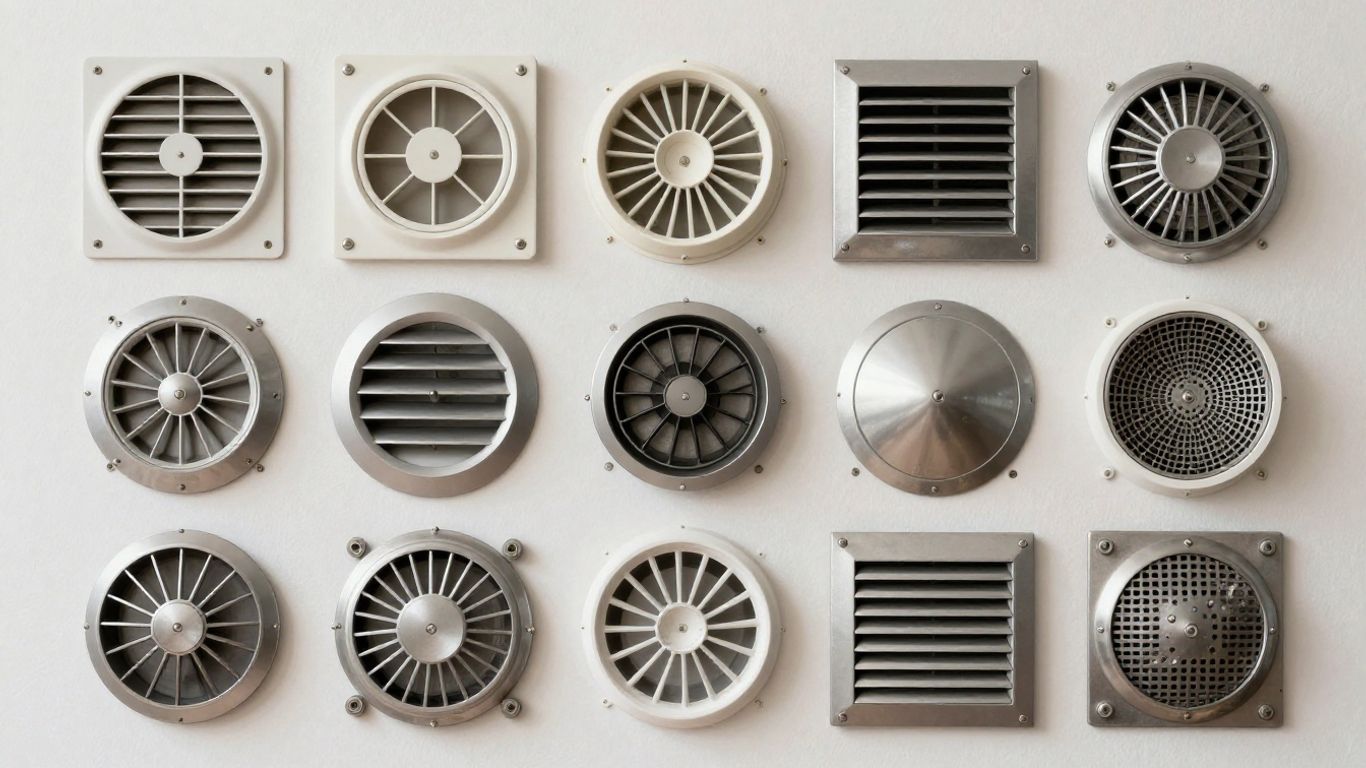
In a ventilation system, air vents are the most visible components. They play a crucial role in air circulation and, consequently, in the indoor air quality of your home. It is therefore important to be familiar with them to choose the ones that best suit your needs.
Extraction Vents: Characteristics and Applications
Extraction vents are designed to evacuate stale air, laden with moisture and odours, from the rooms where it is most present. They are therefore mainly found in kitchens, bathrooms, and toilets. Their function is to renew indoor air by removing it from critical areas. Their diameter is often adapted to the room they serve: generally 125 mm for a kitchen and 80 mm for a bathroom or toilet. Several technologies exist for these vents.
- Manual Vents: They require your intervention to adjust the airflow, for example, by opening or closing a flap. They are simple but less effective for fine regulation.
- Self-Regulating Vents: These models maintain a constant airflow, regardless of pressure variations in the home. They are reliable and require no intervention from you.
- Humidity-Sensitive Vents: They automatically adjust their airflow based on the ambient humidity level. When humidity increases (after a shower, for example), the vent opens more to evacuate more air. When the air is dry, it partially closes, which saves energy.
Supply Vents: Role and Nuances
Unlike extraction vents, supply vents are used to introduce fresh air into the home. They are generally installed in living areas such as the living room and bedrooms. In a single-flow VMC, fresh air enters through air inlets located above the windows, and in a double-flow VMC, it is supply vents that distribute pre-heated and filtered air. The nuances lie in their ability to regulate airflow.
- Fixed Air Inlets: Simple and without adjustment, they provide a constant flow.
- Humidity-Sensitive Air Inlets: As with extraction, they adjust the fresh air supply based on humidity, thus optimising ventilation and comfort.
In the case of a double-flow VMC, these supply vents play an important role in distributing fresh air, contributing to both air quality and thermal comfort. It is important not to block them and to ensure they are not too close to dust sources to avoid disrupting airflow.
Humidity-Sensitive and Self-Regulating Technologies: Key Differences
The main distinction between these two technologies lies in their method of airflow regulation. Self-regulating vents are designed to maintain a constant airflow, regardless of ambient conditions (pressure, wind). This is a simple and effective solution for ensuring stable air renewal. Humidity-sensitive vents, on the other hand, are smarter. They incorporate a sensor that measures the humidity level in the room. If humidity increases, the vent opens to allow more air to pass through, thus evacuating moisture more effectively. If the air is dry, it closes slightly to limit heat loss and save energy. This type of vent is particularly suitable for rooms like bathrooms or kitchens. The choice between these two technologies will depend on your priorities: simplicity and consistency with self-regulating, or energy optimisation and comfort with humidity-sensitive. For example, a humidity-sensitive vent may be more expensive to purchase, but it allows for savings on heating bills. Physical dimensions can also vary; for instance, ALIZE AUTO and ALIZE HYGRO vents have size differences [8d9a].
The correct choice of air vent, whether for extraction or supply, is a key step in ensuring efficient and appropriate ventilation for each room in your home. A well-chosen vent directly contributes to your comfort and the preservation of your building.
Choosing and Sizing Air Vents Correctly
Choosing the right air vent is a bit like choosing the right shoe size: if it’s not the right fit, it won’t work well and can even cause problems. It’s not just about finding a model you like visually, but above all about ensuring it performs its ventilation task effectively and without wasting energy. An ill-chosen or incorrectly sized vent can lead to poor air quality, excessive electricity consumption by your VMC system, or even moisture problems.
Essential Selection Criteria
To make the right choice, several factors need to be considered. First, the type of your Mechanical Ventilation system (VMC) is crucial. Is it self-regulating, humidity-sensitive, or single-flow? The answer will guide you towards compatible vent types. Next, you need to consider the required airflow for each room. This airflow is generally expressed in cubic metres per hour (m³/h) and depends on the size of the room, its use (kitchen, bathroom, bedroom), and its occupancy. Don’t forget to check the noise level of the vent, especially for living areas or bedrooms. A vent that is too noisy can quickly become a nuisance. Finally, ease of maintenance is a significant point for ensuring long-term performance. A vent that is easy to clean will be cleaned more often.
- Compatibility with your VMC system (self-regulating, humidity-sensitive, etc.)
- Required airflow (in m³/h) for each room
- Noise level (in decibels, dB)
- Ease of maintenance
- Aesthetics (to blend with your decor)
Sizing: Airflows, Pressures, and Practical Calculations
Sizing is where things get a bit more technical, but it’s crucial. It’s about ensuring that the chosen vent can actually provide the required airflow under the real conditions of your home. This means looking beyond the simple diameter of the vent. You need to take into account the available pressure in your ductwork. Each VMC system has a certain
Optimal Installation and Adjustment of Air Vents
Once you have chosen the right air vents for your home, the next step is to install them correctly and adjust them precisely. This is a crucial phase to ensure the efficiency of your ventilation system and, consequently, the indoor air quality and your comfort.
Installing an air vent requires a methodical approach. Here are the essential points to follow for a successful installation:
- Determine Specific Needs: Assess the required airflow for each room based on its surface area, its use (kitchen, bathroom, bedroom), and the number of occupants. Standards, such as DTU 68.3, provide valuable guidance.
- Choose the Ideal Location: Extraction vents are generally placed high up (in damp rooms like bathrooms or kitchens), while supply vents (for living areas) are often positioned lower down, away from doors and windows to avoid direct drafts.
- Connect to the Ductwork: Ensure the connection is airtight and securely fastened. A poor connection can lead to airflow losses and increased consumption.
- Perform Initial Adjustments: Depending on the type of vent (self-regulating or humidity-sensitive), adjustments may be necessary. We will go into more detail on this later.
- Test Airflows: Once the installation is complete, it is recommended to check the airflow in each room using an anemometer to ensure it matches the calculated needs. This is an often-overlooked but very important step to validate the system’s performance.
To carry out the installation successfully, you will need a few basic but essential tools:
- A tape measure and a spirit level for precise positioning.
- A hole saw or jigsaw to make the necessary openings in walls or ceilings.
- Clamps and couplings to ensure proper connection of the ducts.
- An anemometer to measure airflow, a key tool for final verification.
- The technical documentation for the chosen vents, which contains specific information on adjustments and performance.
After installation, check the airtightness of all connections and ensure that no duct is pinched or bent, which could restrict airflow. Careful installation is the first guarantee of efficient and durable ventilation.
Adjusting air vents is a crucial step, especially for humidity-sensitive models. These vents automatically adjust the airflow based on the room’s humidity level. Here are a few points to consider for optimal adjustment:
- Adapt to Room Needs: The adjustment should take into account the room size, the number of occupants, and your lifestyle habits (frequent cooking, long showers, etc.). For example, a bathroom will require a higher airflow during intensive use.
- Define Min/Max Airflows: For humidity-sensitive vents, you can often set a minimum and a maximum airflow. It is important to find the right balance to ensure sufficient ventilation without excessive energy consumption.
- Consult Manufacturer Curves: Each vent has specific performance characteristics. Manufacturers provide curves that indicate airflow based on pressure. It is useful to consult this data to ensure the vent will function correctly in your system, which has a certain pressure drop.
Precise adjustment, even if it takes a little time, can have a significant impact on your ventilation system’s energy consumption. An incorrectly adjusted vent, too open or too closed, can lead to overconsumption or, conversely, insufficient ventilation, promoting humidity and bad odours. It is sometimes wise to call in a professional for this step, especially to check the available pressure in your system.
Regular Maintenance to Preserve Air Vent Performance
For your ventilation system to continue functioning correctly and ensure healthy air in your home, regular maintenance of air vents is essential. Neglecting this step can not only reduce the efficiency of your VMC but also lead to increased energy consumption. It is therefore important to know how to proceed.
Recommended Cleaning Frequency and Method
It is advisable to dust your air vents every three months. In environments less exposed to dust, cleaning every six months may suffice. Vents located in damp rooms such as the kitchen, bathroom, or toilet require particular attention.
Here is a simple maintenance procedure:
- Turn off your VMC system or switch it to a reduced flow mode to work safely.
- Gently remove the front cover of the air vent. Most models disassemble easily.
- Vacuum the accumulated dust inside using a vacuum cleaner. If the grille is clogged, you can wash it with warm soapy water. Ensure it is perfectly dry before reassembling it.
- Check the condition of the filters if your model has them, and the sleeves connecting the vents to the ducts.
- Reassemble the front cover and, if possible, test the airflow to ensure everything is working as before.
Clogged air vents force the VMC motor to work harder to maintain the necessary airflow. This directly translates into an increase in your electricity consumption.
Equipment Required for Effective Maintenance
To perform this maintenance, you do not need complicated tools. Basic equipment includes:
- A vacuum cleaner with a suitable attachment to reach corners.
- A soft, dry cloth.
- Warm water and a little mild soap if washing is necessary.
- A small screwdriver if some front covers need to be unscrewed.
For a more thorough cleaning of the ducts, especially for older or heavily clogged systems, it may be advisable to call in professionals who have specific equipment, such as that used for air duct cleaning.
The Impact of Maintenance on Energy Consumption
Regular maintenance has a direct and positive impact on your ventilation system’s energy consumption. A clean and unobstructed air vent allows air to circulate freely, without excessive resistance. This means the VMC motor does not need to force itself to achieve the required airflow. As a result, the system’s electricity consumption is optimised. A well-maintained VMC can contribute to a reduction in the overall energy consumption of the home. Furthermore, an efficient system helps prevent moisture and mould problems, which can have costly long-term consequences. An annual full system check by a technician, especially for double-flow VMCs, is also good practice to maintain the performance of your installation.
Ensuring the Longevity and Efficiency of Your Ventilation System
Preventing Moisture and Mould Problems
A well-maintained ventilation system is your best ally against moisture and its harmful consequences. The air we produce, and activities in the kitchen or bathroom generate water vapour. If this moisture is not evacuated properly, it can condense on walls and ceilings, creating an environment conducive to the development of mould and bad odours. Efficient ventilation ensures constant air renewal, thus evacuating excess moisture before it causes damage. This not only protects your home from structural damage but also contributes to a healthier indoor environment, limiting the risks of allergies and respiratory problems.
Extending the Lifespan of the VMC System
Neglecting the maintenance of your air vents is a bit like ignoring your car’s warning lights. Eventually, it leads to costly breakdowns and premature wear of components. Dust, debris, and other particles accumulate in the ducts and on the fans, forcing the motor to work harder. This overwork can lead to increased electricity consumption and, ultimately, damage the motor or other key parts. Regular cleaning of the grilles and filter replacement, for example, every six months for extraction vents, helps keep the system in good working order and extends its lifespan. Consider checking your system’s motor at least once a year. Regular maintenance is therefore a direct investment in the longevity of your installation.
Sustainable Tips for Efficient Ventilation
To ensure your ventilation system continues to operate optimally in the long term, adopt these best practices:
- Cleaning Air Vent Grilles: Do this every six months. Use a damp cloth or a vacuum cleaner to remove accumulated dust.
- Maintenance of Extraction Vents: Clean them with soapy water every six months as well. Rinse and dry thoroughly.
- Filter Replacement: For double-flow VMCs, filters should be cleaned or replaced according to the manufacturer’s recommendations, often every six months to a year. The cleaning frequency may vary.
- Motor Inspection: Have your VMC motor checked by a professional at least once a year, ideally in the spring.
A well-maintained ventilation system not only ensures healthy air; it actively contributes to your home’s energy efficiency. By preventing blockages, you reduce the electricity consumption required for the VMC to function properly, which translates into savings on your bills. It’s a simple action for your comfort and for the planet.
Conclusion: Healthy Air, Healthy Home
There you have it, you now know the essentials about air vents. By choosing them wisely, installing them correctly, and above all, paying attention to them regularly, you ensure better air quality in your home. It’s a small gesture, but it truly changes daily comfort and helps your ventilation system last longer. Don’t forget, simple and regular maintenance is the key to everything working well and avoiding problems later on. Take care of your air vents, your home will thank you.
Frequently Asked Questions
What is the difference between an air vent that lets air in and one that lets it out?
Imagine your house as a lung. The vents that let air in, called supply vents, bring in fresh air, especially into the rooms where you spend the most time, like the living room or bedrooms. The vents that let air out, called extraction vents, are there to evacuate stale and humid air from places like the kitchen, bathroom, or toilets. It’s a bit like inhaling and exhaling for your house.
Why is it important to clean my air vents regularly?
Your air vents are like the nose of your house: they need to stay clean to function properly! If they are dirty and dusty, air can no longer circulate correctly. This means the air in your home becomes less healthy, more humid, and your ventilation system has to work harder. By cleaning them, you ensure purer air, prevent bad odours, and help your system consume less energy.
How do I know if my air vents are properly adjusted?
Good adjustment means ensuring the right volume of air enters and leaves each room. If a vent is incorrectly adjusted, you might have too much air in one room and not enough in another. Vents called ‘humidity-sensitive’ adjust themselves based on humidity, which is very practical. For others, you may need to call a professional to check that the airflow is correct, neither too strong nor too weak, for each room.
Does my ventilation system consume more electricity if my vents are dirty?
Absolutely! When vents are blocked by dust or other things, air has difficulty passing through. Your ventilation motor then has to force itself more to try and do its job. This requires more effort, and therefore more electricity. Cleaning your vents is like giving your system a boost so it consumes less and works better.
Can I replace an old air vent with a new one without changing the entire ventilation system?
In most cases, yes! You can definitely change an air vent without touching the rest of your system. You just need to ensure that the new vent is compatible with your existing system, particularly in terms of size (diameter) and airflow. It’s often a good idea to check this with a professional to be sure you make the right choice.
What is a ‘humidity-sensitive’ air vent and is it really useful?
A ‘humidity-sensitive’ vent is a smart air vent! It measures the humidity level in the room. If there is a lot of humidity (for example, after a shower), it opens more to let more air out. When the air is dry, it closes a bit. This is very useful because it allows you to ventilate just what you need, when you need it, which saves energy and makes your home’s air more comfortable.
