
You might be wondering what an electric generator is and what it’s actually used for. It’s a rather clever device that converts a source of energy, like movement or heat, into electricity. You can find them everywhere, whether it’s for backup power at home during an outage, powering a construction site, or even in large installations. In this article, we’ll take a closer look at the definition of an electric generator, its different types, and how we use them in everyday life. You’ll see, it’s not that complicated!
Key Takeaways
- An electric generator converts primary energy (mechanical, thermal, etc.) into electrical energy through electromagnetic induction.
- Common types include petrol, diesel, gas, and photovoltaic generators, each suited for specific needs.
- They are used as backup power, for areas without grid access, and for construction sites or events.
- Choosing a generator depends on the required power, fuel type, and considerations like noise and location.
- Regular maintenance and checks are important to ensure the generator’s performance and reliability.
Definition and Operating Principle of an Electric Generator
An electric generator, at its core, is an ingenious machine designed to transform a form of primary energy into electrical energy. Think of it as an energy converter. Whether this initial energy comes from a mechanical, thermal, hydraulic, or even chemical source, the generator makes it usable in the form of electric current.
Conversion of Primary Energy into Electrical Energy
The main role of a generator is therefore to make electricity available where the public grid is not present, or as a backup solution in case of failure. It is a key component for ensuring a continuous power supply, whether for a home, a business, or critical infrastructure.
The Role of Electromagnetic Induction
The operation of most electric generators is based on a physical principle discovered by Michael Faraday: electromagnetic induction. In simple terms, when you move an electrical conductor (like a wire) within a magnetic field, or when you vary a magnetic field around a conductor, an electrical voltage is created in that conductor. It is this variation in magnetic flux that is at the heart of electricity production.
The relative motion between a magnetic field and a conductor is the key. It is this interaction that
Different Electric Generator Technologies
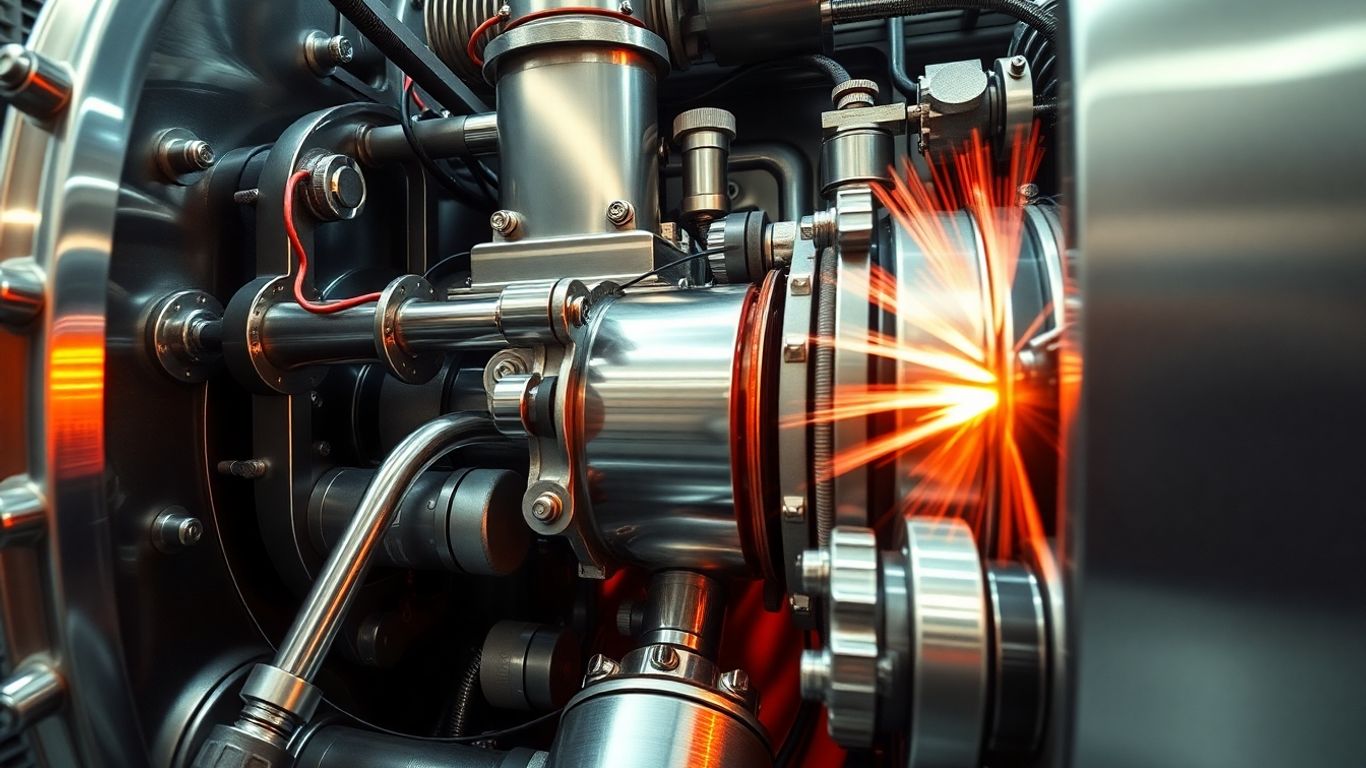
To meet your specific needs, the market offers a variety of electric generator technologies. Each has its advantages and is suited for different uses. It is therefore important to be familiar with them to make the most informed choice.
Petrol Generators: Versatility and Portability
Petrol generators are often favoured for their lightness and ease of transport. They are perfect for occasional needs or as a backup solution for low-power devices. Their start-up is generally quick, making them practical for mobile use, whether on a construction site, camping, or at outdoor events. However, their autonomy can be limited by the fuel tank capacity, and the cost of fuel can be higher in the long run compared to other technologies.
Diesel Generators: Robustness and Heavy-Duty Use
If you are looking for a reliable solution for long-term power and frequent use, diesel generators are an excellent option. They are known for their robustness and longevity. The diesel engine is more fuel-efficient than a petrol engine, which can represent significant savings, especially for industrial applications or as backup power for entire buildings. They are often larger and noisier than their petrol counterparts, but their reliability makes them a preferred choice for critical applications.
Gas Generators: Economical and Eco-Friendly Alternative
Generators running on gas (natural or propane) offer a dual advantage: they are generally more economical to run and more environmentally friendly. Gas produces fewer polluting emissions than petrol or diesel. Furthermore, if you are connected to natural gas, you benefit from an almost unlimited power source, eliminating the need to store fuel. These models are ideal for residential backup power or for fixed installations where a gas connection is possible. However, the installation of a dedicated gas line must be considered.
Photovoltaic Generators: Solar Energy for Electricity
Photovoltaic generators, more commonly known as solar panels, directly convert sunlight into electricity. It is an excellent renewable energy solution, silent and without greenhouse gas emissions. Although the initial investment may be higher, operating costs are very low once the installation is complete. They are often paired with battery storage systems to compensate for the intermittency of sunlight and ensure a continuous power supply. These systems are perfect for the energy independence of remote homes or to reduce your carbon footprint.
Common Applications of Electric Generators
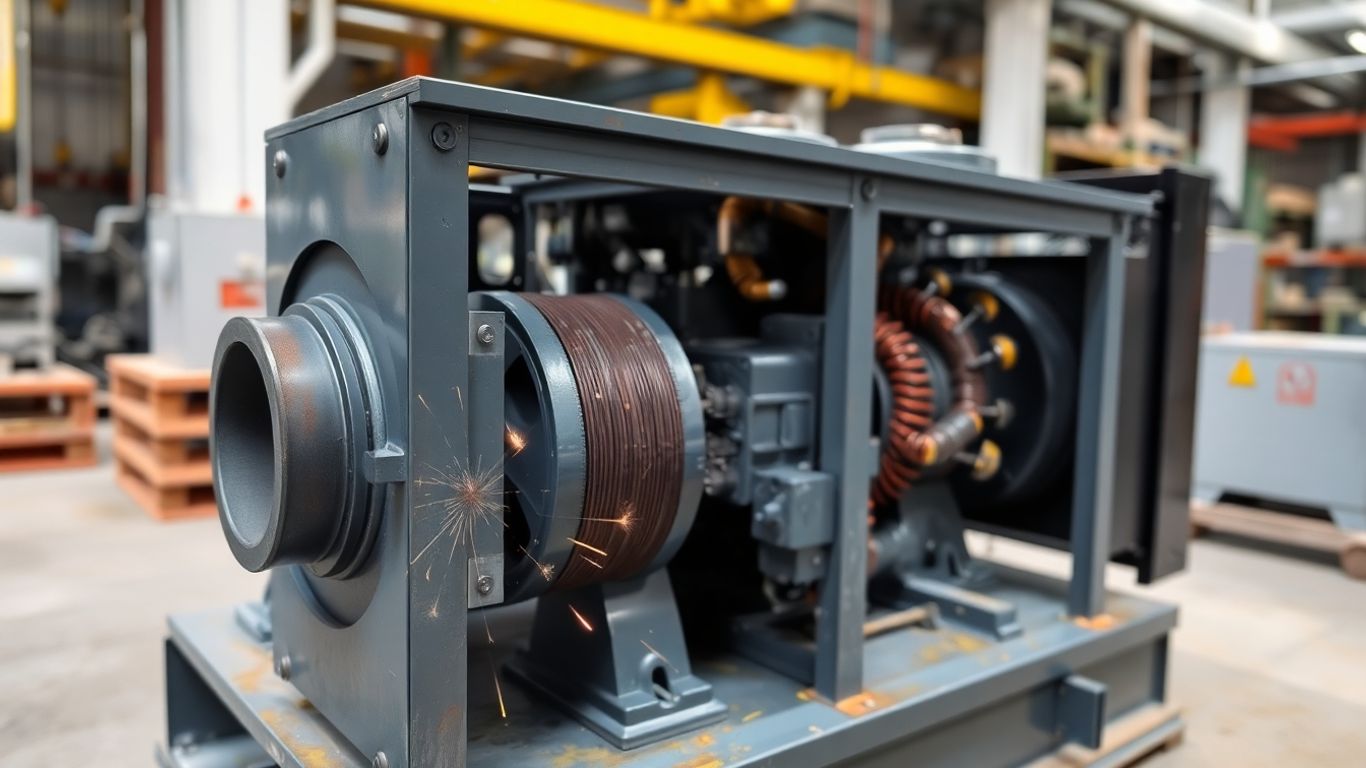
Electric generators play a more significant role in our daily lives than we often realise. They are there to help us out when the grid fails, but also to enable activities in places where electricity is not easily accessible. Let’s look together at where you might encounter these useful machines.
Backup Power During Grid Outages
This is probably the best-known use. When the power goes out, whether due to a storm, a grid problem, or maintenance, a generator takes over. It ensures the continuity of power for essential appliances. For a home, this can mean keeping the refrigerator running, powering the heating or air conditioning system, and keeping the lights on. In a professional context, such as a hospital or data centre, a backup generator is absolutely vital to prevent considerable losses, whether human or financial. The required power varies, but it is often advisable to allow for a safety margin of 20 to 30% above your estimated needs so that the generator is not constantly at its limit.
Installing a backup generator, especially if it is automatically connected via an Automatic Transfer Switch (ATS), offers invaluable peace of mind. You don’t even have to think about it; it starts up on its own when needed.
Energy Independence for Remote Areas
In remote regions, where connection to the electricity grid is expensive or simply impossible, generators are a solution for independence. Whether for a primary residence, a second home, a farm, or even a small business, they provide the necessary electricity to operate equipment. Generators running on natural gas or propane can be an attractive option in these cases, offering a more constant energy source if supply is possible. For more modest needs, such as a fishing cabin or a shelter, smaller, portable models are perfectly adequate. The goal is to make these places habitable and functional without relying on distant infrastructure.
Power Solutions for Construction Sites and Events
Construction sites, outdoor festivals, markets, or any other temporary event need electricity to operate. Generators are the ideal solution for powering power tools on a construction site, stage lighting, food stalls, or sound systems at an event. Portability is often a key factor here, with more compact and easily transportable models. It is important to choose a generator that matches the power required by all the equipment that will be used simultaneously. Furthermore, noise levels can be a concern, especially for events or construction sites near residential areas; inverter models are often quieter and more fuel-efficient.
Here is an overview of common applications:
- Backup Power: For homes, businesses, hospitals, data centres.
- Remote Areas: Homes, farms, shelters, research sites.
- Construction Sites: Powering tools, lighting, safety equipment.
- Events: Stages, stalls, sound systems, lighting, catering.
- Leisure Activities: Camping, boats, recreational vehicles.
Selection Criteria for an Electric Generator
Choosing the right generator is a bit like choosing a car: you need to think carefully about what you really need. You wouldn’t take a truck to go and buy bread, would you? There are several points to consider to avoid making a mistake and ending up with a device that doesn’t meet your expectations.
Determining the Required Power
This is the first step, and it’s quite important. You need to tally up all the appliances you plan to connect to the generator. Consider their usual consumption, but also their starting surge. Motors, for example, require much more energy to start than a simple light bulb. For a home, we often talk about 5000 to 6000 watts, but for a construction site, you need to aim higher, sometimes 10,000 kW or more. It is advisable to have a safety margin, say 20 to 30% above your calculation. If you have sensitive electronic devices, such as computers or audio equipment, opt for a model with Inverter technology. These generators produce a more stable current, with lower total harmonic distortion (THD), which protects your fragile equipment.
Choosing the Fuel Type and Technology
The choice of fuel will depend on your usage. Petrol is practical for occasional and mobile use. Diesel is more suitable for sustained, long-term use, such as for a construction site or extended backup power. Gas (LPG or natural gas) is often quieter and produces fewer emissions, which can be an advantage in urban areas or if you are looking for a more ecological solution. There are also hybrid generators that combine different energy sources.
Don’t forget to check the compatibility of the current (single-phase or three-phase) with your appliances. For a home, single-phase is usually sufficient, while industry often uses three-phase.
Noise and Installation Considerations
Noise is a factor not to be overlooked, especially if the generator is intended for residential use or near neighbours. Noise levels vary greatly from one model to another. Soundproofed generators are more expensive, but they can make a big difference. Also, think about where you will install it. It needs a well-ventilated space, away from windows and doors, and protected from the weather. Good ventilation is crucial to prevent overheating and the accumulation of exhaust gases. If you need automatic power in case of an outage, an ATS (Automatic Transfer Switch) system is necessary. It’s a bit like a smart circuit breaker that switches your home’s power from the grid to the generator without you having to intervene.
Here’s a small table to help you visualise the differences:
| Fuel Type | Typical Use | Advantages | Disadvantages |
|---|---|---|---|
| Petrol | Occasional use, mobility | Easy start-up, lightweight | Higher consumption, less durable |
| Diesel | Heavy-duty use, long duration | Robust, economical to run | Heavier, noisier |
| Gas | Urban use, ecological | Quieter, fewer emissions | Requires gas supply |
Finally, consider autonomy. For backup use, an autonomy of 8 to 12 hours is often sufficient. For a construction site, you need to aim for longer, taking into account work cycles.
Generator Components and Complementary Equipment
For your electric generator to function optimally and safely, it’s not enough to focus solely on the machine itself. You also need to consider everything that goes with it. These elements, often called complementary equipment, play an important role in the power supply, starting, control, and protection of your device. Without them, your generator would not be as efficient or reliable.
Fuel Supply and Starting Systems
Fuel supply is the lifeblood of a combustion generator. This includes the tank, of course, but also the pumps that deliver fuel to the engine and the injection systems that distribute it precisely. Everything needs to be properly sized so that the engine always receives the right amount of fuel, neither too much nor too little. For starting, we often think of the battery, but it’s the electric starter motor that does the heavy lifting to get the engine running. A well-maintained battery and a starter motor in good condition are therefore essential for a quick start-up, especially when electricity is needed urgently. Remember to regularly check the condition of your battery, as a weak battery can cause many problems.
Control, Monitoring, and Safety Devices
These elements are there to inform and protect you. Electronic control modules provide real-time information on your generator’s operation: voltage, frequency, temperature, fuel level, etc. It’s a bit like a car’s dashboard, but for your generator. Monitoring allows you to track these parameters and alert you in case of a problem. On the safety side, there are circuit breakers to protect against overloads, temperature sensors to prevent overheating, and other devices that cut off power in case of an anomaly. These systems are essential for preventing breakdowns and ensuring user safety. It is also important to consider earthing your unit, connected to the site’s earth network, to avoid any electrical risks. For compliant installation, it is recommended to use a qualified electrician.
Voltage and Speed Regulators
The voltage regulator, often called an AVR (Automatic Voltage Regulator), is a key component. Its role is to maintain the generator’s output voltage stable, regardless of load variations. This is particularly important for powering sensitive electronic devices that could be damaged by voltage fluctuations. Similarly, the speed governor ensures that the engine runs at the correct speed to produce the desired electrical frequency (50 Hz in Europe, for example). Without these regulators, the quality of the electricity produced would be poor and potentially dangerous for your equipment. For very sensitive devices like computers or audio equipment, an inverter type generator is often preferable as it provides a purer voltage waveform than conventional AVRs.
Installing an electric generator is not just about placing the unit. You also need to consider its environment: adequate ventilation to evacuate hot gases and fumes, soundproofing to limit noise, and a secure fuel storage system with a containment bund. These aspects are often overlooked but are fundamental for safe and compliant use.
Maintenance and Servicing for Optimal Performance
For your electric generator to always perform at its best and not let you down when you need it most, regular maintenance is truly key. It’s a bit like taking care of your car: if you neglect oil changes and filters, it ends up costing a lot.
Importance of Regular Component Checks
You need to look at your generator from time to time, if only to see if there are any leaks or if everything seems to be in place. A quick visual inspection can save you a lot of trouble. Check oil levels, ensure air and fuel filters are not clogged, and take a look at the electrical connections. It’s often in the details that potential problems lie.
Specific Maintenance Procedures According to Generator Type
Each type of generator has its quirks. A petrol generator will require different maintenance than a diesel or gas model. For example, for petrol models, changing the spark plugs is an important step. For diesels, draining the water filter may be necessary. Gas-powered generators require checking the lines and connections.
Here are some points not to forget:
- Engine Oil: Check the level before each use and change it according to the manufacturer’s recommendations (often every 50 to 100 hours of use).
- Filters: Clean or replace the air filter and fuel filter regularly. A clogged filter reduces performance and increases consumption.
- Spark Plugs (for petrol engines): Inspect them and replace them if they are worn or dirty.
- Battery: Ensure the terminals are clean and the battery is well charged, especially if the generator is used infrequently.
Periodic Tests to Ensure Reliability
Don’t let your generator gather dust for too long. It is advisable to run it at least once a month, even under no load, for a few minutes. Better yet, give it a load test from time to time. This allows you to check that it starts properly and can deliver the expected power. It’s an excellent way to ensure it will be ready on the day, when the power goes out.
Preventive maintenance is not an expense, it’s an investment. It extends the lifespan of your equipment, reduces the risk of unexpected breakdowns, and ensures you will have electricity when you need it. Ignoring this step is taking the risk of being left in the dark at the worst possible moment.
In Summary: Your Electrical Ally
There you have it, you now know a bit more about what an electric generator is and what it can be used for. It’s a really practical device, whether for having power when the grid falters, for a construction site, or even for camping. There are many different models, so you need to look carefully at what suits you best. Consider the power you need, the type of fuel, and also the noise it makes. Choosing well and maintaining it well is the key to it serving you for a long time. I hope this helps you see things more clearly!
Frequently Asked Questions
What is an electric generator and how does it produce electricity?
An electric generator is a device that converts another form of energy, such as the movement of an engine, into electricity. It uses a principle called electromagnetic induction: when a moving part (the rotor) rotates near a stationary part (the stator), it creates a magnetic field which, in turn, produces an electric current in conductive wires.
What are the different types of electric generators available?
There are several kinds of generators. The most common ones run on petrol, diesel, or gas engines. There are also generators that use solar energy (photovoltaic), water (hydroelectric), or wind (wind turbines). Each has its advantages depending on the use.
In what situations is an electric generator most useful?
A generator is very useful for several reasons. It serves as a backup in case of power outages at home or in a business. It also provides electricity in places that are not connected to the grid, such as on construction sites, while camping, or in remote areas.
How do I choose the right power for a generator?
To choose the right power, you first need to list all the appliances you want to power with the generator and add up their electricity consumption. It is advisable to choose a power slightly higher than this total, about 20 to 30% more, to ensure the generator is not overloaded and functions well.
What are the important things to check for generator maintenance?
For your generator to work well and last a long time, you need to regularly check several things. This includes the engine oil level, the air filter, the condition of the spark plugs (for petrol generators), and ensuring the fuel tank is clean. Regular maintenance, as indicated in the manual, is essential.
Are electric generators very noisy?
The noise of a generator depends on its type and design. Some models, especially those designed for camping or residential areas, are ‘soundproofed’ or ‘silent’ and are much quieter than older or more powerful models used on construction sites. It is important to check this feature if noise is a concern for you.
