
Wondering how to optimise the airflow in your ventilation system? This is an important question, as good airflow is essential for the comfort and health of your home. Knowing how to measure and adjust it might seem complicated, but with the right information, you can achieve it. We will explore the methods and tools together to help you gain a clearer understanding.
Key Takeaways
- Understanding airflow means grasping the importance of the amount of air circulating in your ventilation system. It is a direct indicator of your system’s performance.
- Several instruments exist to measure airflow: consider differential pressure, volumetric, electromagnetic, or ultrasonic flow meters. The choice depends on your specific needs.
- Static pressure plays a role in thermal comfort. Incorrectly adjusted pressure can cause temperature and noise issues in your home.
- Tools like the Pitot tube help assess static pressure. It is also very important to ensure your measuring devices are properly calibrated.
- Adjusting your ventilation network, by optimising ducts and air vents, allows for optimal airflow and good air distribution.
Understanding Airflow in Ventilation Systems

In the field of ventilation, airflow is an absolutely central concept. It represents the amount of air that circulates in a given system over a defined period. Think of it like the volume of water flowing through a pipe each second; it’s the same for air, but we generally talk in cubic metres per hour (m³/h) or cubic metres per second (m³/s). A good understanding of this parameter is the first step to ensuring your ventilation system is working as it should.
Definition and Importance of Airflow
Airflow is simply the volume of air moved by your ventilation system per unit of time. It’s a measurement that tells us how quickly the air is being renewed in a given space. Why is it so important? Well, adequate airflow is essential for several reasons. It allows for the removal of stale air, laden with humidity, CO2, or pollutants, and its replacement with fresh air. This is what guarantees the quality of the indoor air you breathe, and by extension, your comfort and health. An undersized system, with too low an airflow, will not be able to achieve this renewal effectively, leading to a build-up of pollutants and a feeling of discomfort. Conversely, too high an airflow can lead to excessive energy consumption and unpleasant drafts.
Airflow as a Performance Indicator
Consider airflow as the pulse of your ventilation system. Regular measurement allows you to assess whether your system is operating optimally. If the measured airflow is lower than what was planned during design, it can signal a problem: partially blocked ducts, a less efficient fan, or incorrect settings. Conversely, an airflow higher than expected could indicate an overly generous design or leaks in the network. By monitoring airflow, you can therefore anticipate breakdowns, optimise energy consumption, and ensure that the expected performance is achieved. It is a key indicator for preventive maintenance and fine-tuning your system. A fan’s ability to move air is often expressed in CFM (Cubic Feet per Minute), a measurement that directly reflects its efficiency in circulating air, which is directly linked to your system’s airflow.
Factors Influencing Airflow
Several elements can affect the airflow in your system. The very design of the ductwork plays a major role: their diameter, length, the number of bends, and even their surface condition can create resistances that limit air circulation. The power and condition of the fan are obviously crucial. A tired motor or a dirty fan will not be able to deliver the expected airflow. Static pressure, which is the pressure exerted by the air in the ducts, is also an important factor; too high a pressure can slow down the airflow. Finally, extraction and supply vents, if they are poorly adjusted or blocked, can also disrupt the airflow balance throughout the network. Therefore, the entire system must be considered to understand and control airflow.
Methods for Measuring Airflow
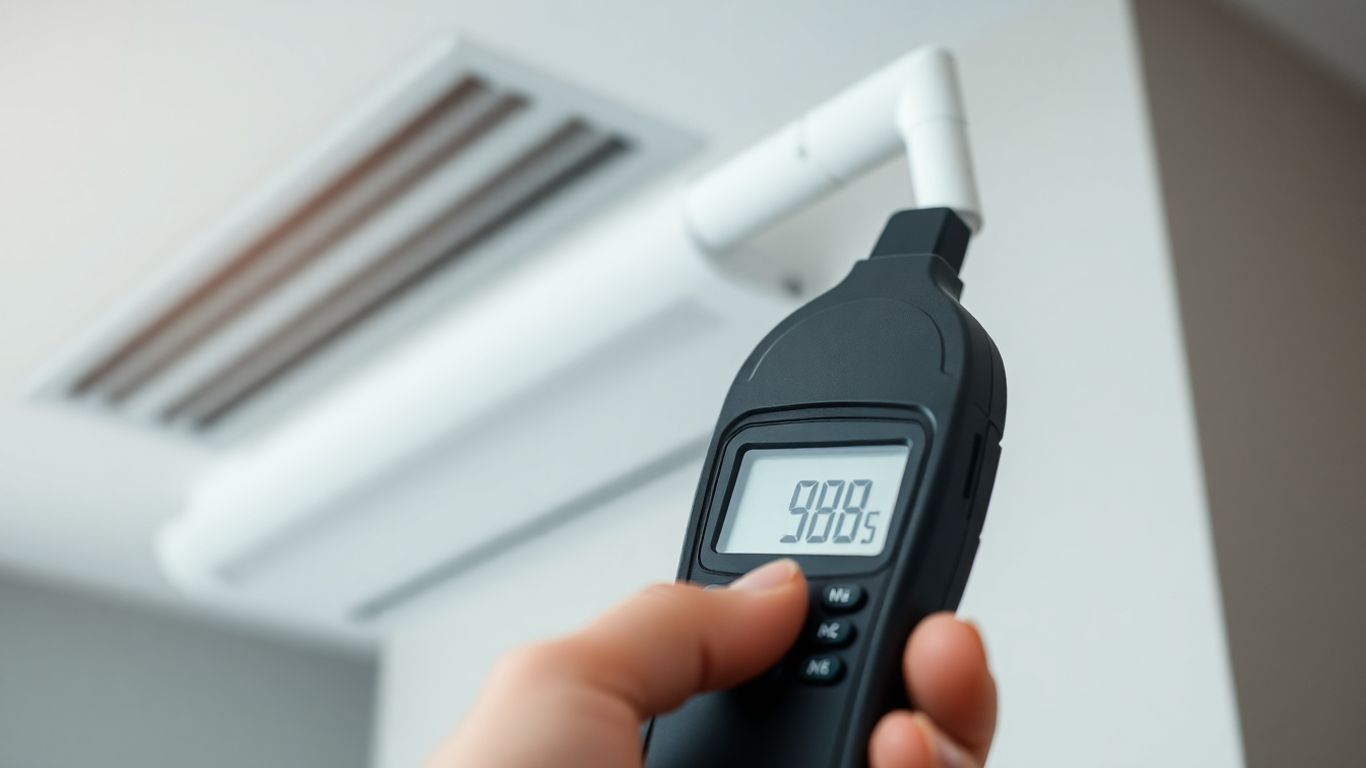
To effectively manage your ventilation system, it is essential to know how to measure airflow. This is a key step to ensure everything is working as it should. Fortunately, there are several tools and techniques for this. Let’s take a closer look.
Using Differential Pressure Flow Meters
These devices are quite common. They work by measuring the difference in pressure before and after an obstruction placed in the duct. This obstruction creates a pressure drop, and by analysing this pressure difference, the airflow can be calculated. This is a fairly reliable method, especially for continuous airflows. You just need to ensure that the obstruction is appropriately sized for the duct to get accurate measurements.
Principles of Volumetric and Electromagnetic Meters
Volumetric meters, on the other hand, work by directly measuring the volume of air that passes through. Imagine it like a small meter that records each time a certain amount of air passes through a chamber. It’s a fairly direct approach. As for electromagnetic meters, they are a bit more sophisticated. They use the principles of electromagnetic induction to measure fluid velocity. When conductive air passes through a magnetic field, it generates an electric current whose intensity is proportional to the velocity. This is an interesting technology, often used for more complex fluids, but it can also be applied to air in certain cases.
Application of Ultrasonic Flow Meters
Ultrasonic flow meters are another modern option. They send sound waves through the airflow and measure the time it takes for the wave to travel from one point to another, or the frequency difference between a wave sent in the direction of the flow and another sent against it. Essentially, the faster the air moves, the more the wave’s travel time changes. The advantage is that they do not create a pressure drop in the duct, which is quite good for the system. They are also often non-contact, which limits wear and tear.
Choosing the Right Measuring Instrument
So, how do you choose the right tool? It depends on several things. You need to consider the accuracy you require, the type of duct, the potential presence of dust or moisture, and of course, your budget. For simple, regular measurements, a differential pressure flow meter may suffice. If you are looking for high accuracy without disrupting the flow, ultrasonic is a good option. It is also important to check that the instrument is properly calibrated. A poorly adjusted device will give false information, and that’s not what you want. Consider consulting the technical specifications of each device and, if possible, seek advice from a professional to make the best choice for your installation.
Principles of Static Pressure Measurement
Static pressure is the silent engine of your ventilation system. It represents the force that air exerts, at rest, against the walls of the ducts. Without properly managed static pressure, air will not circulate as it should, and you risk having poorly ventilated areas or, conversely, excessively strong flows. It is therefore an element not to be overlooked for optimal comfort and controlled energy consumption.
Definition and Role of Static Pressure
Imagine the air in your ducts like a crowd in a corridor. Static pressure is the force that this crowd exerts on the corridor walls, simply by being there, without actively moving. In a ventilation system, this pressure is what pushes the air out through the vents. It is directly linked to airflow: the more adequate the static pressure, the more regular and well-distributed the airflow will be throughout all the rooms in your home. Well-balanced static pressure is therefore the guarantee of a uniform air distribution, whether for heating or cooling.
Difference Between Static Pressure and Overpressure
It is important to distinguish static pressure from overpressure. Static pressure is the normal pressure of moving air in the ducts. Overpressure occurs when the air encounters excessive resistance. Think of a blockage in the corridor: the crowd builds up and exerts greater pressure on the walls just before the blockage. In your ducts, this can be caused by clogged filters, tight bends, or undersized ducts. Overpressure can not only reduce the efficiency of your system but also cause noise and accelerate wear on components.
Impact of Static Pressure on Thermal Comfort
Thermal comfort is that pleasant feeling of having the right temperature at home, without unpleasant drafts or cold or hot spots. Static pressure plays a major role in this. If it is too low, the air will not reach all the rooms, leaving some areas poorly heated or cooled. Conversely, if it is too high, you may hear air circulation noise in the ducts, and your system may consume more energy than necessary to operate. Precise adjustment therefore helps maintain a uniform and pleasant temperature while optimising energy consumption.
Static pressure is a measure of the force of air at rest in the ducts. It is essential to ensure a constant airflow and good distribution throughout the ventilation system. An imbalance can lead to comfort and energy efficiency problems.
Tools and Techniques for Assessing Airflow
To properly understand and control the airflow in your ventilation system, it is essential to know how to measure it accurately. This allows you to verify if your system is performing as expected and to quickly identify any potential problems.
Using the Pitot Tube for Measurement
The Pitot tube is a common instrument for measuring air velocity, and by extension, airflow. It works by measuring the difference between the total (or dynamic) pressure and the static pressure of the air. By inserting this tube into the airflow, you can obtain valuable data. It is often used in ventilation ducts for spot measurements.
Reading and Interpreting Pressure Values
Once you have taken your measurements, the most important part is knowing how to read and understand them. The values obtained, often expressed in Pascals (Pa) for static pressure, should be compared to your system’s specifications. If the static pressure is too high, it may indicate obstructions in the ducts or a fan that is too powerful for the network. Conversely, too low a pressure may indicate leaks or an undersized fan.
Correct interpretation of pressure measurements is key to diagnosing imbalances in your ventilation system and planning necessary adjustments.
Importance of Instrument Calibration
It is absolutely essential that the instruments you use to measure airflow are properly calibrated. An uncalibrated device can provide erroneous readings, leading to incorrect diagnoses and ineffective, or even harmful, adjustments to your system. Calibration involves comparing your device’s measurements to those of a reference instrument known for its accuracy. You must regularly check that your tools are still reliable.
Here are some points to consider for calibration:
- Frequency: Calibration should be performed periodically, according to the instrument manufacturer’s recommendations and frequency of use.
- Conditions: Ensure that the ambient conditions during calibration are similar to those in which the instrument will be used.
- Traceability: Prefer calibration services that offer traceability of measurements to national or international standards.
- Documentation: Keep calibration certificates to maintain a record of your equipment’s maintenance.
Adjusting the Ventilation Network for Optimal Airflow
For your ventilation system to work as it should, adjustments to the network are sometimes necessary. It’s not just a matter of putting ducts everywhere; the air needs to circulate well. If the air doesn’t go where it should, or if there’s too much resistance, it can cause problems. Let’s see how to fix that.
Optimising Duct Design
The way your ducts are designed has a direct impact on airflow. Ducts that are too long, too small, or have too many sharp bends create resistance. It’s like trying to drink a smoothie through a straw that’s too thin: it doesn’t work well. You need to ensure that the ducts are the right size for the amount of air to be moved. Sometimes, it’s better to use wider ducts or reduce the number of bends to facilitate air passage. Think of it like a highway for air: the wider and more direct it is, the better.
Precise Adjustment of Vents and Air Outlets
The vents are where the air enters and exits. If they are not properly adjusted, the air will not be evenly distributed throughout the rooms. Imagine trying to fill several glasses of water with a single carafe; if you’re not careful, some glasses will be full and others empty. Therefore, these vents must be adjusted so that each room receives the correct amount of air. It’s a bit like balancing the flow so that everyone is satisfied.
Solutions to Improve Airflow
If you find that the air is not circulating well, there are several solutions. You can consider installing larger ducts, as mentioned, or installing devices that help regulate airflow. Regular cleaning of filters and ducts is also very important. A duct blocked by dust is like a blocked artery for your system. Everything needs to be kept clean so that air can circulate freely. Regular maintenance is key to maintaining optimal airflow and a well-functioning system.
The initial installation plays a major role. If the ducts are not installed correctly from the start, it will be more difficult to correct later. It is therefore better to ensure that the work is done properly from the beginning, even if it takes a little longer or costs a little more. Work done well initially avoids many future headaches.
Maintenance and Airflow Control
For your ventilation system to function correctly in the long term, regular maintenance is essential. It’s not enough to install good equipment; you also need to ensure it continues to perform. This is where maintenance comes in.
Regular Maintenance of Flow Meters
Flow meters, those devices that give you the numbers you need, also require a little attention. Think of it like car maintenance: if you don’t change the oil, it eventually gives up. For flow meters, this means checking that they are not dirty, that the sensors are clean, and that nothing is hindering their operation. A dirty or blocked device will not provide reliable measurements, and you could make bad decisions based on bad information. Periodic cleaning, according to the manufacturer’s recommendations, is therefore a key step.
Checking Instrument Calibration
Calibration is a bit like checking that your scales always show the correct weight. Over time and with use, measuring instruments can drift. A flow meter that is no longer calibrated may indicate a higher or lower airflow than reality. This can have significant consequences for the adjustment of your system. It is therefore advisable to have your instruments’ calibration checked by a professional at regular intervals. The frequency will depend on the type of device and the conditions of use, but an annual check is often a good starting point.
Importance of Constant Airflow
A well-designed and well-maintained ventilation system should provide a stable airflow. Significant variations can indicate an underlying problem, such as a clogged filter, a failing fan, or a blocked duct. Maintaining a constant airflow ensures that indoor air quality remains optimal and that the system operates efficiently without excessive energy consumption. It is a direct indicator of the overall good condition of your installation.
The goal of maintenance is not just to fix what is broken, but above all to prevent breakdowns and ensure that the system always operates at its best. This saves energy and ensures lasting comfort.
In Conclusion: The Importance of Controlled Airflow
As you will have understood, controlling airflow is not a mere technical formality. It is a necessary step for your systems to function correctly, whether for your comfort or for the efficiency of your equipment. By taking the time to accurately measure and adjust this airflow, you ensure not only better performance but also optimised energy consumption and a longer lifespan for your installations. Do not hesitate to consult your appliance manuals or call a professional if you have any doubts. A well-adjusted system is a system that brings you long-term satisfaction.
Frequently Asked Questions
What is airflow and why is it important for me?
Airflow is like the amount of air circulating in your ventilation systems, such as air conditioning or heating. It’s important because good airflow ensures that warm or cold air is well distributed throughout all the rooms. If the airflow isn’t right, some areas will be too hot or too cold, and your system will work harder, consuming more energy.
How do I know if the airflow in my house is correct?
To check the airflow, you can use special devices called flow meters. They connect to the ducts or vents to measure the amount of air passing through. If you’re not comfortable with these tools, a professional can easily take this measurement for you and tell you if everything is okay.
What factors can change the airflow?
Several things can affect airflow. For example, if the ducts are too small, too long, or full of dust, the air will have difficulty passing through. Poorly adjusted vents or dirty filters can also reduce airflow. Even the outside weather can have a small influence.
What happens if the pressure in my ducts is too high or too low?
If the pressure is too high, it can mean that the air is encountering too many obstacles, such as blocked ducts. This can make your system noisy and less efficient. If the pressure is too low, the air won’t circulate enough, and some rooms won’t be properly heated or cooled. In either case, the system needs to be adjusted.
What are some tips for improving air circulation in my home?
To improve air circulation, you can start by regularly cleaning your ventilation system’s filters. Also, check that the vents are not blocked by furniture. If your system is old, it might be useful to have a professional check the condition of the ducts to ensure they are not leaking or obstructed.
Should I have my ventilation system checked regularly?
Yes, it’s a good idea to have your ventilation system checked from time to time. Regular maintenance ensures that everything is working properly, that airflow measurements are correct, and that the devices are still properly adjusted. This helps prevent problems and keeps your system performing efficiently and energy-savingly.
