
Choosing and installing ventilation ducting may seem complex, but it’s an important step to ensure the air quality in your space. This article guides you through the essential aspects, from materials to use to techniques for minimising energy and comfort loss. You’ll discover how good management of your ventilation ducting contributes to a healthier and more pleasant environment. We will explore the different elements together to help you make the best choices.
Key Takeaways
- The choice of materials for your ventilation ducting (aluminium, PVC, HDPE) will depend on the specific application and type of building. Each material has its advantages and disadvantages in terms of cost, durability, and performance.
- Understanding and minimising pressure drop in your ventilation ducting is essential for energy efficiency. This involves choosing the right duct size, limiting bends, and ensuring air speed is well controlled.
- The airtightness of your ventilation system is paramount to guarantee the intended airflows, prevent leaks, and reduce energy consumption. Joints are critical points to monitor.
- Thermal insulation of ventilation ducts, especially in unheated areas, prevents condensation and limits heat loss, thereby improving comfort and overall energy efficiency.
- Noise management is also important. Solutions such as acoustic insulation of ducts or careful network design can reduce noise pollution related to ventilation operation.
Understanding Ventilation Ducting Materials
The choice of materials for your ventilation ducts is an important step that directly influences the performance of your air system. It’s not just about circulating air, but doing so efficiently, durably, and appropriately for your environment. Various options are available, each with its own characteristics.
Material Options for Ventilation Ducts
You will primarily encounter several types of materials for ventilation ducts, each with its own characteristics:
- PVC Ducts: Often used for their lightness and ease of installation. They are generally flexible and can be reinforced. PVC is resistant to corrosion, which is an advantage in certain environments.
- Aluminium Ducts: Available in flexible or semi-rigid form, they are valued for their robustness and heat resistance. Aluminium is also rodent-resistant, which is a significant point.
- Galvanised Steel Ducts: More rigid and durable, they are often used in industrial applications or for more permanent networks. Their mechanical resistance is a major asset.
- Insulated Ducts (wadding, fibreglass): These ducts combine a base material (often aluminium or PVC) with an insulating layer. They are designed to limit thermal and acoustic losses.
Advantages and Disadvantages of Different Materials
Each material presents a balance between its strengths and weaknesses. It is therefore essential to know them to make the right choice.
| Material | Advantages | Disadvantages |
|---|---|---|
| PVC | Lightweight, easy to install, corrosion-resistant | Less heat-resistant, can degrade over time under UV light |
| Flexible Aluminium | Easy to bend, adapts to complex configurations, rodent-resistant | Can be less aerodynamic, risk of punctures if mishandled |
| Semi-rigid Aluminium | Good shape retention, more aerodynamic than flexible, rodent-resistant | Less flexible than the previous model, more rigid installation |
| Galvanised Steel | Very resistant, durable, good mechanical strength | Heavy, more complex installation, less adaptable to tight bends |
| Insulated | Reduced thermal and sound loss, increased comfort | Bulkier, higher cost, more delicate installation |
Criteria for Selecting Materials for Your Ventilation Ducting
To choose the most suitable material for your installation, consider the following points:
- Installation Environment: Is it a humid, hot, or temperature-variable space? Is the presence of potential rodents a factor?
- Site Configuration: Do you need flexibility to bypass obstacles, or is a straighter, more rigid installation possible? Confined spaces may favour more flexible materials or specific shapes.
- Performance Requirements: Are you looking for specific thermal or acoustic insulation? Is resistance to pressure and airflow paramount? A well-designed single-flow VMC will also depend on the quality of its ducts.
- Budget: Costs vary significantly from one material to another. The initial cost must be balanced against the expected long-term durability and performance.
The choice of material impacts not only the ease of installation and durability of the system but also its energy efficiency and the acoustic comfort of your home. Well-chosen ducting contributes to better air renewal, which is crucial for health.
In summary, taking the time to evaluate these different aspects will allow you to select the ventilation ducting material that best meets your specific needs.
Optimising Performance with Pressure Drop
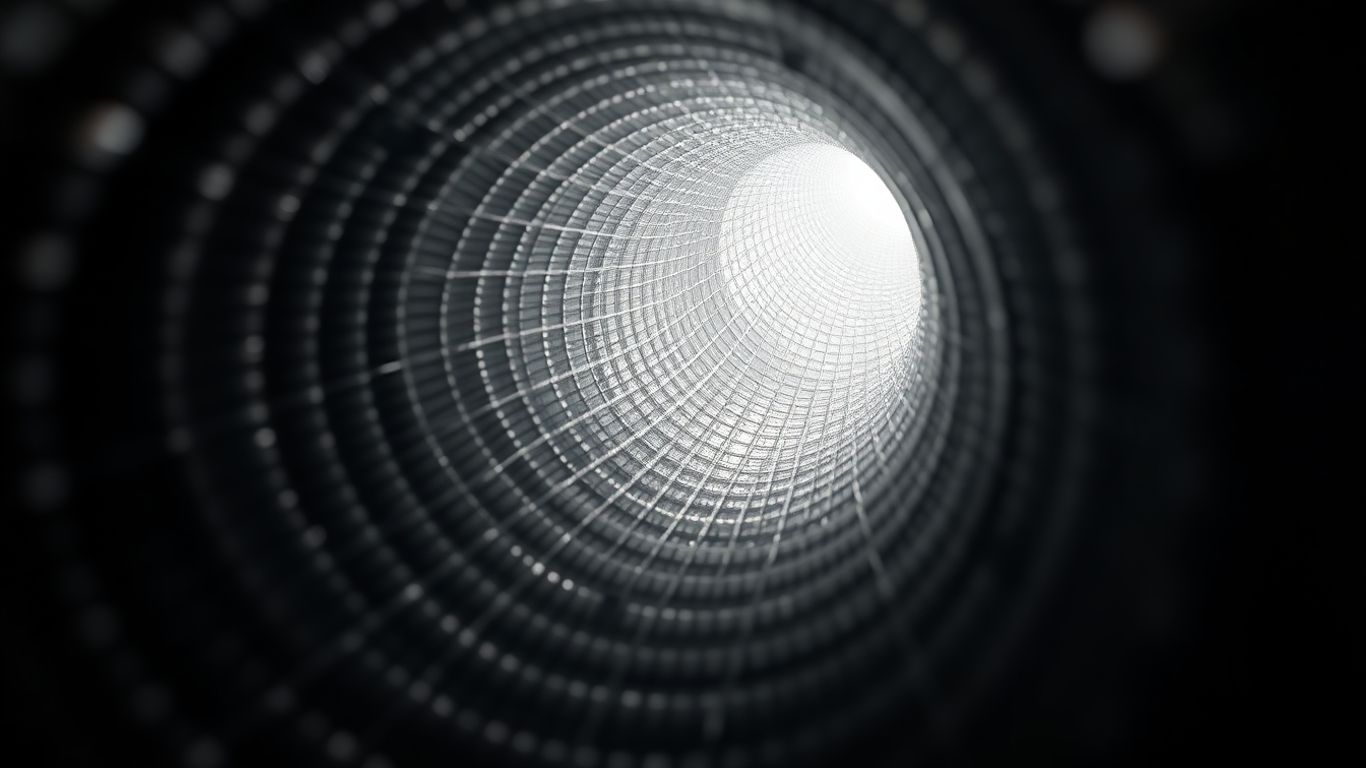
In any ventilation system, airflow is never perfectly smooth. It encounters resistance, known as pressure drop. This directly impacts the overall efficiency of your installation and energy consumption. It is therefore essential to understand it well to optimise your system.
Understanding Pressure Drop in Ventilation Ducts
Pressure drop corresponds to the decrease in air pressure as it flows through the ducts. Imagine water in a pipe: the longer the pipe, the more bends it has, the more the water pressure decreases at the outlet. It’s the same principle for air in your ventilation ducts. These losses are due to friction of the air against the inner walls of the ducts, as well as changes in direction (bends, tees) and changes in cross-section.
Factors Influencing Pressure Drop
Several elements will affect the magnitude of these pressure drops. Air speed is a key factor: the faster the air moves, the greater the friction, and therefore the greater the pressure drop. The roughness of the inner walls of the ducts also plays a role; smooth surfaces cause less loss. The total length of the duct network is obviously a determining factor, as are the number and type of joints and bends present. A small diameter duct will also result in greater losses than a larger duct for the same airflow. It is therefore important to choose the diameter of your ducts carefully, taking into account the required airflows. For example, for offices, air speed should ideally not exceed 4 m/s to limit noise and losses. For a single-family home with a flow rate of 300 m³/h and 125 mm ducts, a pressure drop of 1 Pa/m can represent an air leak of nearly 30% of the nominal flow rate if the airtightness is not perfect. Moving to a higher airtightness class can reduce this figure to around 3%.
Strategies to Minimise Pressure Drop
To limit these losses and ensure good performance of your system, several strategies are available. The first is to choose ducts of a diameter suitable for the required airflow. Precise sizing, often carried out with specialised software, is essential here. Next, you should try to reduce the total length of the network and the number of bends as much as possible. Prefer rigid ducts over flexible ducts where possible, as they generally offer less resistance to flow. The use of circular ducts is also often more efficient than rectangular shapes. Finally, good airtightness of the joints is paramount, as air leaks not only increase effective pressure drop but also energy consumption. Ensuring careful installation in compliance with standards is therefore a key step to optimising your ventilation system and reducing your energy consumption. If you need help designing or optimising your system, professionals can assist you in analysing your installation.
The Crucial Importance of Ventilation Duct Airtightness
You know, when we talk about ventilation, we often think about airflow, noise, or even materials. But there’s an aspect that’s sometimes a bit overlooked, and yet, it’s really important: airtightness. If your ducts let air pass where it shouldn’t, everything else can become less effective. It’s a bit like having a super sports car with leaky tyres; it’s not going to get very far.
Definition and Stakes of Airtightness
Airtightness, for a ventilation duct, means that air flows only where you want it to, i.e., from the room to the ventilation system, and from the system to the outside (or to another room, depending on your setup). This doesn’t mean there should be absolutely no leaks, but rather that these leaks should be minimal. Air leaks can come from the joints between different duct sections, the connections to appliances (like the VMC or the fan unit), or even small holes in the duct itself. When air escapes, you lose energy, whether it’s hot air in winter or cool air in summer. And that shows up on your electricity bill. Furthermore, these leaks can bring unwanted air into your home, which can cause humidity problems or even infiltrations. A well-sealed house is a house that consumes less energy, up to 20% less in some cases. It is therefore really useful to detect leaks to ensure everything is well protected.
Classification of Airtightness Levels
To give you an idea, there are classifications to measure this airtightness. We often talk about airtightness classes, ranging from A to D. Class A is the minimum, with quite significant leaks. Class D is the best, with very low leaks. For most residential installations, we aim for at least class B or C. Airflow standards define these classes based on the amount of air escaping per square metre of duct, under a certain pressure. For example, for class C, the maximum allowable leakage flow rate is 0.9 m³/h per m² of duct surface area, at a pressure of 400 Pa. It’s quite technical, but it shows that there are standards to ensure your system works correctly.
Methods for Ensuring Joint Airtightness
So, how do we make sure all this is well sealed? For the joints, it’s often a combination of things. First, the parts need to fit together well. If you cut your ducts precisely, it helps a lot. Then, we use sealing products. For metal ducts, good old aluminium tape, applied well, works wonders. There are also special sealants or more technical sealing tapes. For flexible ducts, you need to ensure the clamps are tightened properly and the cuffs are well secured. Sometimes, specific gaskets are even used between components. The idea is to create a continuous barrier to prevent air from escaping. Pressure tests, such as infiltration tests (or ‘blower door tests’), can be carried out to verify the overall airtightness of your installation and ensure it meets the performance requirements expected.
Sizing and Installation of Ventilation Ducts
Essential Parameters for Duct Sizing
For your ventilation system to work as it should, you first need to choose the right size of ducts. It’s a bit like choosing the right size pipe for your plumbing; if it’s too small, the water doesn’t flow well, and if it’s too big, it’s wasteful. For ventilation, it’s the same, but with air.
Several things come into play here. First, the required airflow. This depends on the size of the room, its use, and the type of ventilation you have (single flow, double flow, etc.). For example, a kitchen needs a higher airflow than a bedroom. This is measured in cubic metres per hour (m³/h).
Next, there’s the air speed in the duct. If the air moves too fast, it makes noise and increases pressure drop. If it moves too slowly, the air doesn’t renew properly. There are limits not to be exceeded, often around 4 m/s in offices, for example. You need to find the right balance.
And then, there’s the famous pressure drop. This is the resistance the air encounters as it flows through the ducts. The longer the duct, the more bends it has, the smaller it is, the greater the pressure drop. This requires precise calculation so that the fan doesn’t have to work too hard and the air reaches everywhere it needs to. For rooms under 15m², 160mm ducts are often used [46f8].
Considerations for Optimal Installation
Once you’ve chosen the right size, you need to install it correctly. A shoddy installation is an open door to problems. The fewer bends and the shorter the ducts, the better. Each bend, each metre of duct, is a small additional resistance for the air.
You also need to consider the materials. Rigid ducts are generally better for airflow as they offer less resistance than flexible ducts. But flexible ducts are practical when you need to go through complicated places. You need to choose the right type for the right place.
Here are a few points to keep in mind for a robust installation:
- Limit the total length of the ducts as much as possible.
- Reduce the number of changes in direction (bends).
- Ensure the ducts are straight and free of kinks, especially if they are flexible.
- Consider accessibility for potential future cleaning or repairs.
The goal is to create the smoothest possible path for the air, to minimise the effort of the ventilation system and maximise its efficiency. It’s a bit like building a highway for air, without unnecessary traffic jams or slowdowns.
Compliance with Air Duct Installation Standards
There are precise rules for installing ventilation ducts. It’s not just a matter of common sense; there are standards to follow to ensure everything is safe and efficient. These standards guarantee that your system will work well and will not cause problems, whether in terms of safety or energy performance.
Among the important aspects is the airtightness of the joints. If air escapes through the seals, you lose efficiency and consume more energy. Special cuffs and adhesives are often used to seal everything properly. Tests, such as infiltration tests (blower door tests), can be carried out to verify that everything is airtight.
Rules regarding materials must also be followed. Aluminium, PVC, or other plastics can be used. The choice depends on the application and the building’s requirements. And of course, the ducts must be cut precisely so that they fit together perfectly. It’s meticulous work that requires attention to detail for a durable and effective result.
Improving Energy Efficiency with Insulated Ducts
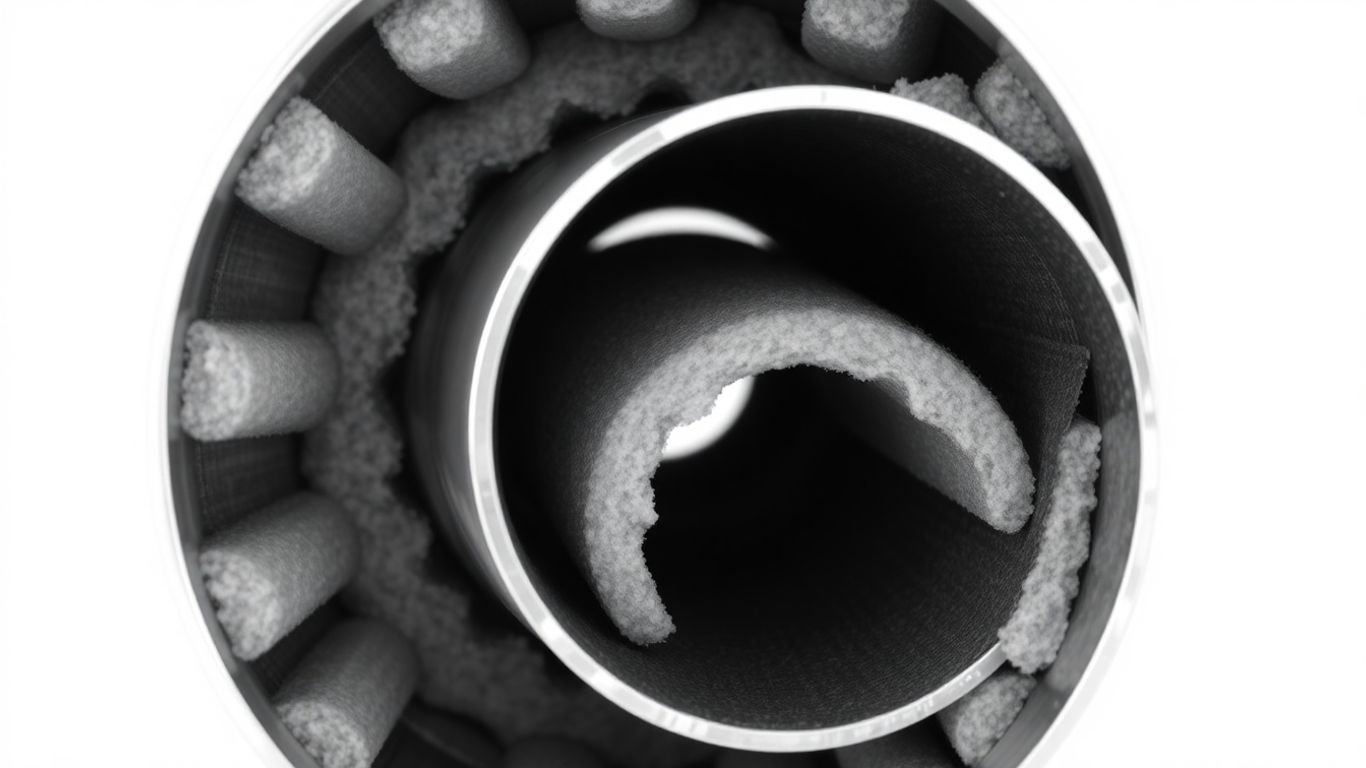
Benefits of Thermal Insulation for Ducts
Insulating your ventilation ducts is not just an option; it’s a key step to making your system more efficient and less energy-intensive. When your ducts pass through unheated areas, such as attics or garages, the air circulating within can lose a lot of its temperature. Insulation acts as a shield, keeping warm air inside in winter and cool air inside in summer. This means your heating or cooling system doesn’t have to work as hard to compensate for these losses. Less effort for the system directly equates to a lower energy bill.
Furthermore, insulation prevents a common and unpleasant problem: condensation. When warm, humid air comes into contact with the cold surface of an uninsulated duct, water can form. This moisture can cause damage, promote mould growth, and affect indoor air quality. An insulated duct maintains a more stable temperature inside, significantly reducing this risk.
Types of Insulators and Their Application
There are several types of insulators you can use for your ducts, each with its own characteristics. The most common are:
- Mineral Wool (rock wool or fibreglass): This is a very common option, offering a good performance/price ratio. It is usually wrapped in aluminium foil, which also acts as a vapour barrier. Its thickness is often 25 mm, but can vary.
- Natural Wool: Some ducts use more ecological insulators, such as natural fibres. The advantage is that they don’t scratch, making installation more comfortable, especially in confined spaces like false ceilings.
- Synthetic Foams: Materials like polyurethane or polyethylene can also be used, offering good moisture resistance and effective insulation.
The choice of insulator will depend on your budget, thermal and acoustic performance requirements, and the installation environment. For double-flow ventilation systems, where heat recovery is paramount, effective insulation is particularly recommended.
Preventing Condensation and Thermal Losses
To prevent condensation, it is important that the insulation is applied correctly and forms a continuous barrier. This includes careful treatment of joints and connections between different duct sections. The use of specific adhesive tapes, such as aluminium tape, is often necessary to ensure the overall airtightness.
Thermal losses in a ventilation system can represent a significant portion of a building’s overall energy consumption. By adequately insulating your ducts, you are not just reducing your bills; you are also contributing to better indoor comfort and preserving air quality.
Insulated ducts are particularly useful in the following cases:
- Ducts passing through unheated premises (attics, garages, basements).
- Controlled Mechanical Ventilation (VMC) double-flow systems, to maximise heat recovery.
- Air conditioning or heat recovery applications.
- Areas where the risk of condensation is high due to significant temperature variations.
Managing Noise Nuisances in Ventilation Systems
Ventilation systems, while essential for building comfort, can sometimes become a source of unwanted noise. It is therefore important to understand where this noise comes from and how to control it. Noise nuisances mainly stem from the fan’s operation itself and the movement of air through the ducts. What you hear is often the sound of wind circulating in the duct, and this can be quite noticeable.
Sources of Noise in Ventilation Ducts
Several phenomena contribute to noise in your system: fan noise propagating through the ducts, noise generated by airflow (flow noise), noise radiating into rooms, structural noise caused by vibrations, and finally, intercommunication, which is the transmission of sound from one room to another via the ducts. Each element of your network can potentially add noise.
Here are the main types of noise you may encounter:
- Fan Noise: Mechanical noise generated by the motor and the rotation of the blades.
- Flow Noise: Caused by air turbulence when it encounters obstacles such as bends, tees, or dampers.
- Radiation Noise: Sound escaping from the ducts themselves, especially if they are not well insulated.
- Structural Noise: Vibrations transmitted to walls and ceilings by the ducts and their fixings.
- Intercommunication: Sound passing between different rooms through the ventilation network.
Solutions for Acoustic Insulation of Ducts
To limit these inconveniences, several strategies are available. Acoustic insulation of ducts is an effective method. Using absorbent materials, such as mineral wool or acoustic foam, directly on or inside the ducts, can significantly reduce noise. Ducts specifically designed with integrated sound insulation are also available. For fixings, favour collars equipped with flexible supports to absorb vibrations. Adding silencers to the network can also greatly help to reduce noise. If you are installing ducts in sensitive areas, at least 5 cm of insulation thickness is recommended. Also, consider properly sealing duct passages through walls and floors with flexible materials.
Impact of Air Speed on Noise
The speed of the air in your ducts has a direct impact on the noise level. The faster the air flows, the more turbulence it generates, and therefore the more noise it produces. It is therefore advisable to adhere to recommended air speeds when sizing your system. For example, for residential premises, standard NBN S 01-400-1 sets noise limits according to the room. In a bedroom, the noise level should ideally not exceed 25 dB for superior comfort. Well-controlled air speed contributes to quieter operation of your controlled mechanical ventilation system.
It is often simpler and more effective to prevent noise from the outset during system design rather than trying to correct it afterwards. Good planning can save you a lot of acoustic hassle.
In Conclusion
There you have it, we’ve covered ventilation ducts. You see, choosing the right material, paying attention to pressure drop, and especially ensuring good airtightness are not just technical details. They are what make your system breathe well, be efficient, and not cost you an arm and a leg in energy. Think carefully about this during your installations or renovations; it’s worth doing things right for healthier air and increased comfort in your home.
Frequently Asked Questions
Why is the choice of materials for my ventilation ducts so important?
The choice of materials influences the lifespan of your ducts and their efficiency. For example, aluminium is resistant, while PVC is lighter. You need to choose based on where the duct will be installed and what it needs to do, such as exhausting hot or cold air.
What is pressure drop and how can I reduce it?
Pressure drop is like a brake for the air circulating in the duct. The higher it is, the harder the fan has to work and the more energy it consumes. To reduce it, you need to avoid tight bends and ducts that are too long or too small. A straight duct of the right size is better!
Why do my ventilation ducts need to be airtight?
An airtight duct is one that doesn’t let air escape. If air escapes, your ventilation system doesn’t work as well as it should. It can also cause unpleasant drafts and increase your electricity bill. You need to seal all joints properly.
How do I know what size duct to choose for my house?
The size of the duct depends on the amount of air to be circulated (the flow rate) and the room to be ventilated. For a kitchen, for example, you need a larger duct than for a small bathroom. It is often useful to ask a professional for advice to be sure you don’t make a mistake.
Do I really need insulated ducts?
Yes, especially if your ducts pass through cold or unheated areas, such as a garage or attic. Insulation prevents the air from losing its heat (or coolness) along the way and avoids condensation, which can cause humidity problems. It’s also good for saving energy.
My ventilation system is noisy, what can I do?
Noise often comes from the fan itself or from air moving too fast through the ducts. To reduce noise, you can use ducts with special sound insulation, or install silencers. It is also advisable not to let the air move too fast through the ducts and to position the fan far from living areas.
