
In the world of heat pumps, the expansion valve plays a discreet but absolutely vital role. You may be wondering what exactly this component does and why it is so important for the proper functioning of your unit. This article will shed light on the role of the heat pump expansion valve, the different models that exist, and how their adjustment influences the overall performance of your system.
Key Takeaways
- The expansion valve is an essential component of a heat pump, responsible for regulating the pressure and flow rate of the refrigerant.
- Proper functioning of the expansion valve ensures the efficiency of the evaporator and protects the compressor from damage.
- There are several types of expansion valves, the most common being the thermostatic expansion valve and the electronic expansion valve, each with its own specificities.
- The thermostatic expansion valve regulates flow based on superheat temperature, while the electronic expansion valve offers increased precision through digital control.
- Regular maintenance and verification of operating parameters are necessary to ensure the longevity and performance of your heat pump expansion valve.
The Essential Role of the Expansion Valve in a Heat Pump
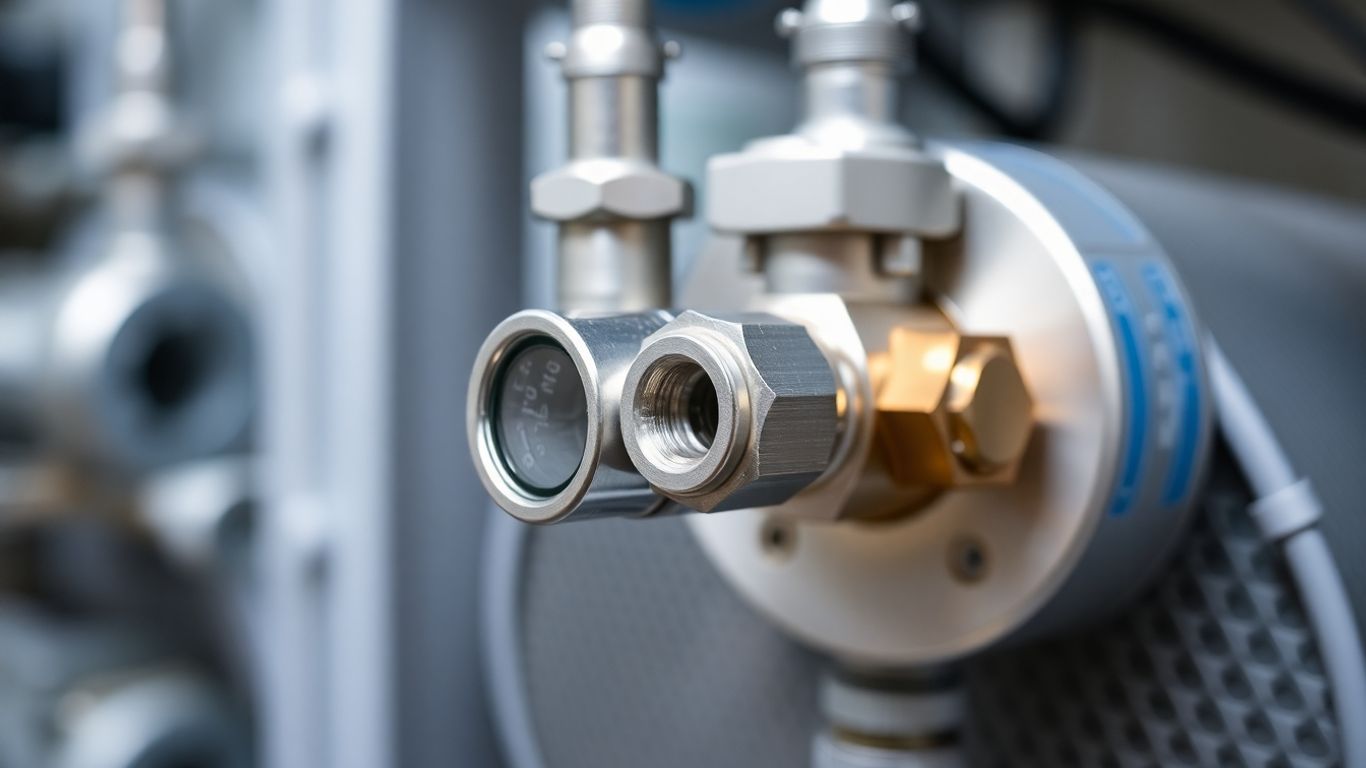
In a heat pump’s circuit, the expansion valve occupies a central position. Its primary role is to manage the pressure of the refrigerant, a key element for the proper functioning and efficiency of the entire system. Without it, the heat pump could not operate correctly, as it ensures the necessary transition between the high pressures of the condenser and the low pressures of the evaporator.
Principle of Operation of the Expansion Valve
The refrigerant, after passing through the condenser, is at high pressure and in a liquid or supercritical state. The expansion valve acts as a bottleneck. By forcing the fluid to pass through a reduced section, its pressure drops sharply. This expansion causes partial vaporisation of the fluid, leading to a significant drop in its temperature. The fluid, now colder and at low pressure, is ready to absorb heat in the evaporator. The expansion valve thus modulates the flow of fluid injected into the evaporator to maintain optimal conditions.
Consequences of Incorrect Flow Rate Adjustment
Inadequate adjustment of the expansion valve can have serious repercussions on the performance and longevity of your heat pump. If too little fluid is injected, the evaporator will not be sufficiently filled. The remaining fluid will evaporate completely and continue to heat up, reducing the efficiency of heat exchange and potentially leading to compressor overheating. Conversely, if the flow rate is too high, some of the fluid will not have time to evaporate due to insufficient heat. This unevaporated liquid can then be drawn into the compressor, causing what is known as a “liquid slug,” which can be very damaging to the compressor.
Importance of Pressure Regulation
Precise pressure regulation is at the heart of the expansion valve’s function. It ensures that the refrigerant circulates in the circuit at the correct pressures and temperatures, allowing the heat pump to operate efficiently, whether for heating or cooling. Good regulation ensures:
- Stable evaporation temperature.
- Controlled superheat of the fluid at the evaporator outlet.
- Protection of the compressor against liquid return.
- Optimisation of energy consumption.
The expansion valve is a mechanical component that, through a balance between fluid pressure and the force of a spring or a temperature-sensitive bulb, maintains a constant outlet pressure. It is essential to the overall performance of your heating system.
Different Types of Expansion Valves for Heat Pumps
In a heat pump’s circuit, the refrigerant must pass from high pressure to low pressure. This is the role of the expansion valve. Several devices accomplish this task, each with its own specificities.
The Thermostatic Expansion Valve
This is the type of expansion valve you will most often encounter in heat pumps. It operates automatically to adjust the refrigerant flow rate. Its main purpose is to maintain constant superheat at the evaporator outlet. It regulates the flow based on the temperature of the refrigerant at the evaporator outlet, via a sensing bulb.
There are two main configurations for the thermostatic expansion valve:
- Internal Equalisation: The pressure at the evaporator inlet is used to assist regulation. This system is simple and suitable for circuits with low pressure drop.
- External Equalisation: A separate pipe connects the evaporator outlet to the expansion valve. This allows for the actual pressure drop in the evaporator to be taken into account, offering more precise regulation, especially in more complex systems.
These expansion valves are valued for their reliability and their ability to adapt evaporator supply to variations in thermal load. Some reversible models can even operate in both directions, which is practical for reversible heat pumps.
The Electronic Expansion Valve
For increased precision and performance, the electronic expansion valve is a prime choice. It uses electronic components, such as a controller and sensors, to digitally control the refrigerant flow rate. This approach allows for fine optimisation of the heat pump’s efficiency.
The advantages are notable:
- Precise Regulation: It adapts quickly to changes in operating conditions.
- Energy Optimisation: Reduces energy consumption.
- Adaptability: It can handle a wide range of refrigerants and integrate easily into advanced control systems.
Although more expensive to purchase, its efficiency and ability to maintain optimal operating conditions make it a worthwhile investment for modern installations.
The Expansion Capillary
The capillary is a small-diameter tube that acts as a simple throttling device. It causes a pressure drop and partial vaporisation of the refrigerant. Its operation is passive and it does not have an active regulation system like the thermostatic or electronic expansion valve.
It is often used in small systems or applications where load variations are limited. Its main advantage lies in its simplicity and low cost. However, it offers less precise regulation and may be less efficient in variable operating conditions.
The choice of expansion valve type will depend on the complexity of your installation, the expected performance, and the allocated budget. Each technology has its strengths and weaknesses that must be carefully considered.
Detailed Operation of the Thermostatic Expansion Valve
Superheat Regulation Principle
The thermostatic expansion valve is a key component in your heat pump, and its operation is based on a rather clever principle: superheat regulation. Its role is to ensure that the refrigerant arriving at the evaporator is in liquid form, but just enough so that it can absorb maximum heat without any liquid returning to the compressor. To do this, it maintains constant superheat at the evaporator outlet. It is the temperature at this outlet that dictates the opening or closing of the expansion valve.
The core of this system is a sensor, often called a bulb, placed at the evaporator outlet. This bulb is filled with a temperature-sensitive fluid. It is connected to the body of the expansion valve by a capillary tube. If the temperature of the refrigerant at the evaporator outlet increases (meaning there is too little fluid and it is overheating), the bulb detects it. The fluid in the bulb expands, exerting pressure on a diaphragm inside the expansion valve, which opens the valve further. More refrigerant is then injected into the evaporator, allowing better heat absorption and reducing superheat. Conversely, if the superheat is too low, the bulb cools down, the pressure decreases, and the valve closes slightly, reducing fluid injection.
Internal and External Pressure Equalisation
For this regulation to be as precise as possible, the expansion valve takes the evaporator pressure into account. There are two main ways to do this: internal equalisation and external equalisation.
- Internal Equalisation: In this case, the evaporator pressure is measured directly inside the expansion valve body, upstream of the valve. This is a simple solution, often used in small installations where the pressure drop in the evaporator is low. The expansion valve adjusts its opening based on the superheat measured by the bulb and the internal pressure.
- External Equalisation: Here, the evaporator pressure is measured at its outlet, after the fluid has passed through the evaporator and the liquid distributor (if any). A small pipe connects the evaporator outlet to the expansion valve. This allows the expansion valve to know the actual outlet pressure, independent of pressure drops in the circuit. This is more accurate, especially in larger or more complex systems.
Advantages and Limitations of the Thermostatic Expansion Valve
The thermostatic expansion valve is very common for good reason. It offers fairly reliable regulation and adapts well to the thermal load variations of your heat pump. It optimises evaporator efficiency by ensuring good vaporisation of the refrigerant. Furthermore, some models can operate in both directions, which is practical for reversible heat pumps.
However, it also has its limitations. Its response is not always instantaneous, and there can be a slight delay between a change in conditions and the flow rate adjustment. Additionally, its adjustment requires some attention to ensure it operates under the best conditions without risking compressor damage from excess liquid or excessive overheating.
Here is a table summarising the key points:
| Characteristic | Description |
|---|---|
| Basic Principle | Superheat regulation at the evaporator outlet. |
| Main Component | Temperature sensor (bulb), diaphragm, needle, spring. |
| Equalisation Types | Internal (pressure measured in the expansion valve) or external (pressure at the evaporator outlet). |
| Advantages | Reliability, adaptation to thermal loads, some reversible models. |
| Limitations | Sometimes slow response, precise adjustment required. |
The Electronic Expansion Valve: Precision and Performance
Digital Regulation and Efficiency Optimisation
The electronic expansion valve represents a significant advancement over older models. It uses digital regulation to adjust the refrigerant flow rate with great finesse. This system maintains lower superheat, which optimises the overall efficiency of your heat pump. In practice, this means your unit operates more efficiently, consuming less energy while providing the necessary heat. Even a few degrees increase in evaporation temperature can reduce compressor consumption. It’s a bit like fine-tuning a musical instrument to get the perfect sound.
Key Components: Controller and Sensors
To function, the electronic expansion valve relies on several essential elements. The controller, often called the “brain” of the system, analyses information received from sensors. These sensors, typically temperature probes and pressure transducers, measure the refrigerant conditions in real-time at various points in the circuit. The controller then uses an algorithm to interpret this data and command the motorised expansion valve. This valve, often a stepper motor, can make very precise adjustments, sometimes up to 2,500 distinct positions. This precision is the key to its effectiveness.
Adaptability to Different Refrigerants
One of the major advantages of the electronic expansion valve is its flexibility. It can adapt to a wide range of refrigerants. To change refrigerant, it is usually sufficient to modify the controller’s settings, which contain the pressure/temperature correlations specific to each refrigerant. This adaptability makes it particularly interesting for modern systems, including air-to-water heat pumps, which are an advantageous heating solution. Furthermore, the expansion valve can close completely when not in use, acting as a liquid stop valve, which is useful during system shutdown periods.
Other Expansion Devices and Their Applications
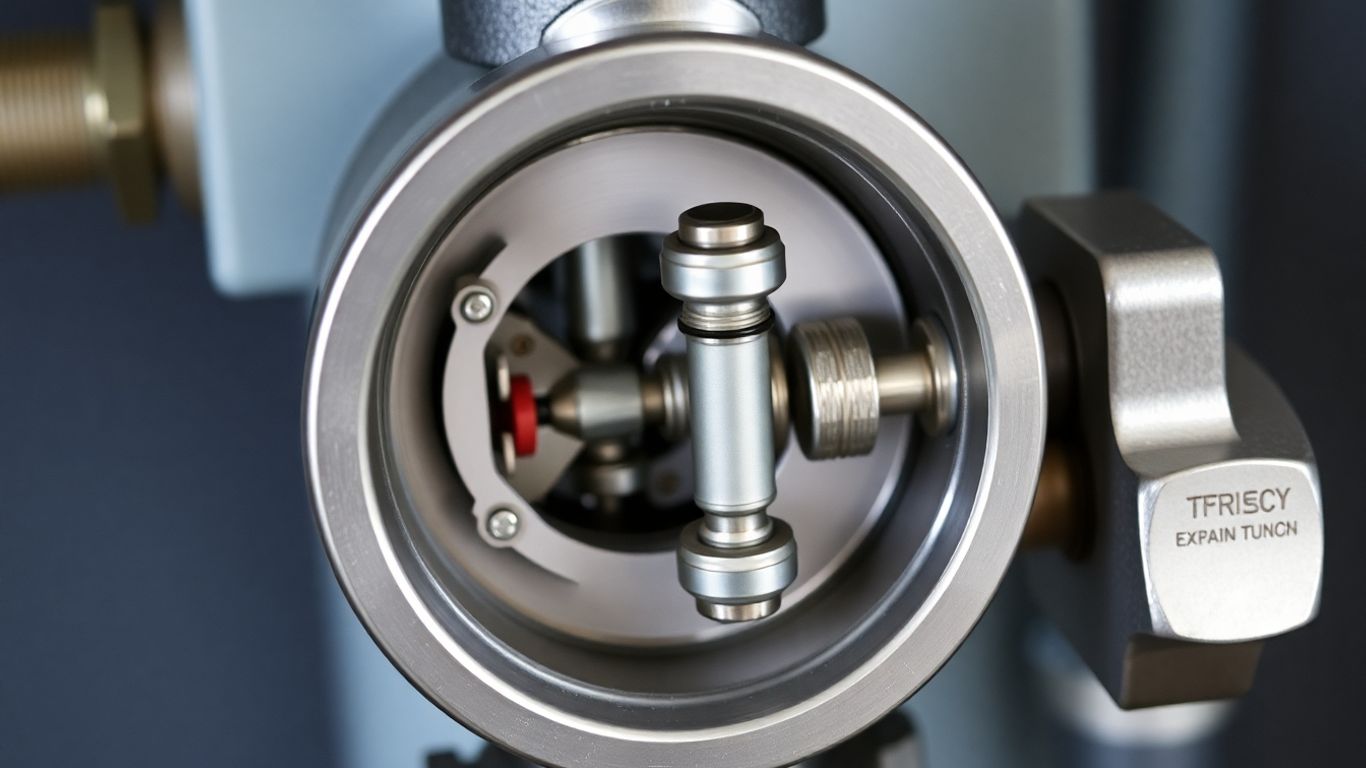
In addition to thermostatic and electronic expansion valves, other devices play a role in regulating refrigerant within a heat pump. Although less common in modern systems, they are worth knowing to understand the full range of expansion solutions.
The Orifice and Its Specificities
The calibrated orifice, also known as an expansion capillary, is a simple and economical solution. It is essentially a low-diameter tube whose length and diameter are precisely calculated by the manufacturer. This tube creates a pressure drop that lowers the refrigerant pressure. It does not allow for active regulation but ensures constant evaporator supply. Its main advantage lies in its simplicity and low cost. However, it does not adapt to load or temperature variations, which can limit system efficiency in certain conditions. It is often used in small units or applications where operating conditions are stable. The pressure balance established between the condenser and the evaporator during compressor shutdown facilitates its restart.
The Float Expansion Valve
The float expansion valve is a less common device in residential heat pumps, but it finds its use in certain industrial or commercial refrigeration applications. Its principle is based on a float that controls the opening of a valve. When the liquid level in the evaporator drops, the float descends, opening the valve to allow more fluid in. Conversely, if the level rises, the valve closes. This system allows for flow regulation based on the liquid level, which can be advantageous for maintaining good evaporation. It is particularly suitable for systems where the refrigerant charge can vary significantly.
The Manual Regulator as a Backup Device
In some cases, a manual regulator may be present, often as a backup solution or for very specific applications. It is a valve that can be manually adjusted to change the refrigerant flow rate. Its use requires some knowledge of the system and constant monitoring, as it does not automatically adapt to changing conditions. It can be useful during testing phases, maintenance, or in systems where regular human intervention is planned. It is important to note that using such a device requires great caution to avoid damaging the compressor through incorrect adjustment, such as excess liquid being drawn in. Modern air-to-air heat pump systems generally favour automatic devices for better performance and safety.
All these expansion devices, whether automatic or manual, aim to manage the transition of the refrigerant from liquid to gaseous state while controlling pressure and temperature. Their choice will depend on the complexity of the system, the expected performance, and the cost.
Adjustment and Maintenance of the Heat Pump Expansion Valve
For your heat pump to function optimally, its expansion valve needs attention. It’s a bit like getting an oil change for your car; it prevents future problems. If you don’t pay attention, you risk encountering issues.
Checking Operating Parameters
It’s important to check the settings from time to time. We’re talking about the superheat at the evaporator outlet, for example. If it’s too low, you risk sending liquid into the compressor, and that’s definitely not good. Conversely, too high superheat means the evaporator isn’t using its full capacity. You need to find the right balance. Electronic expansion valves do this automatically thanks to their sensors and controller, which is a significant advantage for optimising efficiency.
Importance of Circuit Cleanliness
Imagine small bits of dirt getting lodged in the expansion valve. This can block the flow of refrigerant or, worse, damage it. That’s why the circuit needs to be kept clean. If you see dust or debris, they need to be removed. Gentle cleaning, without harsh chemicals, is often sufficient. Keep this in mind, especially if you’ve just installed the system or after an intervention.
Interventions and Precautions During Maintenance
Maintenance of the expansion valve is not something to be improvised. You need to check for leaks, for example, by using a special spray or soapy water on the connections. This is a simple step but can save you a lot of trouble. It is also advisable to have the entire installation checked by a professional at least once a year. They will know what to do to ensure everything runs smoothly.
Cleanliness and regular parameter checks are key to ensuring the longevity and efficiency of your expansion valve. Do not neglect these steps; they are simple and will save you costly repairs.
Here are some points to check during maintenance:
- Absence of leaks at the connections.
- General cleanliness of the expansion valve body and surrounding area.
- Check of the superheat at the evaporator outlet (for non-electronic expansion valves).
- Visual inspection of the general condition of connected components.
In Summary
There you have it, you now know what an expansion valve does in a heat pump. It’s truly a key component for everything to function correctly, whether for heating or cooling. We’ve seen that there are several types, from the simplest like the capillary, to the more sophisticated like the electronic expansion valve. The choice will depend on your installation and what you expect in terms of performance and precision. Properly adjusting your expansion valve ensures that your heat pump runs efficiently and without issues. If you have any doubts, don’t hesitate to call a professional to check or adjust the settings. It’s often a small detail that makes a big difference to your comfort and your energy bill.
Frequently Asked Questions
What is the main role of an expansion valve in a heat pump?
The expansion valve is like the flow guardian in your heat pump. Its job is to reduce the pressure of the refrigerant, which is hot and under pressure after passing through the condenser. By doing so, it allows the liquid to become colder and ready to absorb heat in the evaporator. This is essential for your heat pump to function properly.
What happens if the expansion valve is not properly adjusted?
If the expansion valve lets too little liquid through, the evaporator won’t have enough ‘material’ to capture heat effectively, making the system less efficient. Conversely, if it lets too much through, the liquid may not have time to fully turn into gas and could reach the compressor still in liquid form. This can seriously damage this key component.
What are the differences between a thermostatic expansion valve and an electronic expansion valve?
The thermostatic expansion valve uses a temperature-sensitive bulb to adjust the flow rate. It’s a reliable and quite common solution. The electronic expansion valve, on the other hand, is more high-tech: it uses sensors and a small computer (a controller) to precisely control the flow rate. It allows for even greater optimisation of the heat pump’s efficiency.
Is the capillary tube a type of expansion valve?
Yes, the capillary tube is a very simple form of expansion valve. It’s a very thin tube through which the refrigerant passes. The pressure reduction occurs naturally due to the narrow passage. There is no adjustment possible once installed, but it is very robust and requires little maintenance. It is often used in smaller systems.
Why is it important to clean the heat pump circuit, especially around the expansion valve?
Imagine small dirt particles or moisture entering the circuit. They can clog the expansion valve or damage it. A clean circuit ensures that the expansion valve can do its job correctly and without hindrance. That’s why it’s crucial to keep the system clean, especially during interventions.
Can you adjust a heat pump expansion valve yourself?
Adjusting an expansion valve is a delicate operation that requires precise technical knowledge and specific tools. It is strongly advised to call a qualified professional. Incorrect adjustment can not only impair your unit’s efficiency but also cause costly damage.
