
Have you ever felt like your heating system was working a bit randomly? It’s possible you’re not making the most of your thermostatic system. Knowing how to set it up can really make a difference, both for your comfort and your wallet. Let’s look at how to optimise everything, room by room.
Key Takeaways
- Understanding the role of each component, such as the sensor and the valve, is the first step towards efficient heating control.
- Adjusting the temperature room by room with thermostatic valves helps avoid unnecessarily heating little-used areas.
- The correct placement of the room thermostat is essential for it to measure the actual room temperature and act correctly.
- Choosing the right type of thermostat, whether programmable or connected, can simplify heating management and improve savings.
- Regular maintenance, including checking for proper functioning and preventing valve seizure, ensures the longevity and efficiency of your thermostatic system.
Understanding How a Thermostat Works
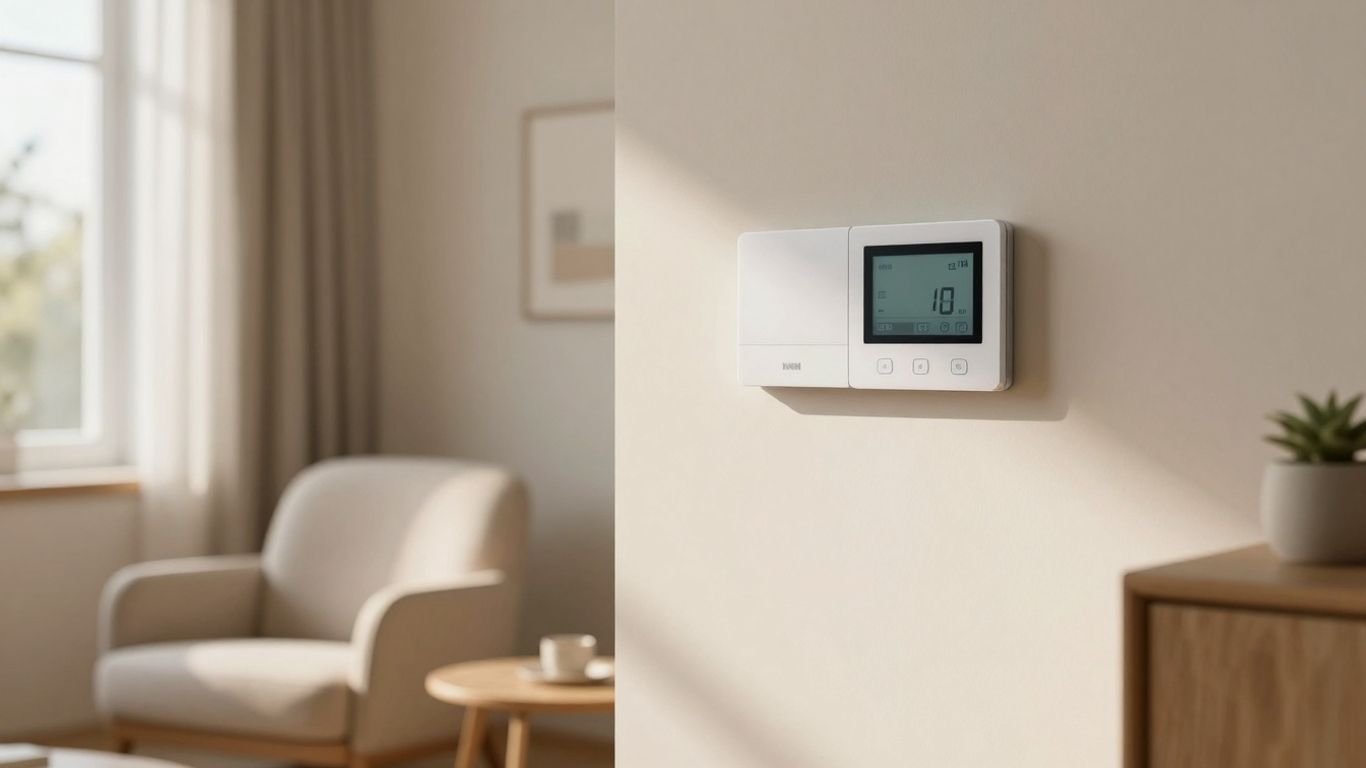
To effectively control the heat in your home, it’s useful to understand how your heating system works. The thermostat, often seen as a simple dial to turn, is actually an ingenious device that regulates the temperature of your rooms.
The Role of the Temperature Sensor
At the heart of every thermostat is a temperature sensor. Its job is simple but essential: it continuously measures the ambient air temperature in the room where it’s installed. Think of it as the thermometer for your heating system. It doesn’t just read the temperature; it constantly compares it to the temperature you’ve chosen, known as the “setpoint temperature.” If the measured temperature is lower than what you want, the thermostat signals the heating system to turn on. Conversely, if the temperature reaches or exceeds your setting, it turns off the heating to prevent overheating and wasting energy.
Interaction Between the Thermostatic Head and Valve
The thermostatic head, the part you see and operate on your radiator, is the local brain of the system. It contains the temperature sensor and a mechanism that acts on the thermostatic valve. The valve, in turn, is located at the base of the radiator and controls the flow of hot water circulating through it. When you turn the head, you adjust the position of the valve. If you request more heat (by turning the head in the appropriate direction, often towards lower numbers), the valve opens further, allowing more hot water into the radiator. If you want less heat, the head closes the valve, reducing the water flow. It is this direct interaction that allows for the modulation of heat emitted by each radiator individually.
Principles of Heating Water Flow Regulation
The general principle is to regulate the amount of hot water entering the radiator. The thermostatic head, by acting on the valve, functions like a tap. The more the valve is open, the more hot water circulates, and the more the radiator heats up. The more it is closed, the less water circulates, and therefore the less the radiator heats up. The numbers you see on the head (often from 1 to 5) correspond to approximate temperatures, but their main function is to adjust the travel of the stem that controls the valve. For example, a ‘3’ setting might correspond to around 20°C, while a ‘1’ setting will be much lower, and ‘5’ higher. It’s important to note that each number represents a precise adjustment of the water flow, not a fixed and absolute temperature, as this also depends on the radiator’s output and the heating water temperature.
Here’s an overview of common settings on a thermostatic valve:
| Head Position | Approximate Temperature | Typical Use |
|---|---|---|
| * (Snowflake) | 6-8°C | Frost protection |
| 1 | 12-14°C | Little-used rooms (hallway, guest bedroom) |
| 2 | 16-18°C | Bedrooms, study |
| 3 | 19-21°C | Living room, living areas |
| 4 | 22-24°C | Bathroom (depending on use) |
| 5 | Maximum | Rapid heating (avoid for regular use) |
It is essential to place the room thermostat away from direct heat sources such as radiators, fireplaces, or direct sunlight, as well as drafts. Incorrect placement would distort measurements and lead to unnecessary energy consumption.
Optimising Room-by-Room Control
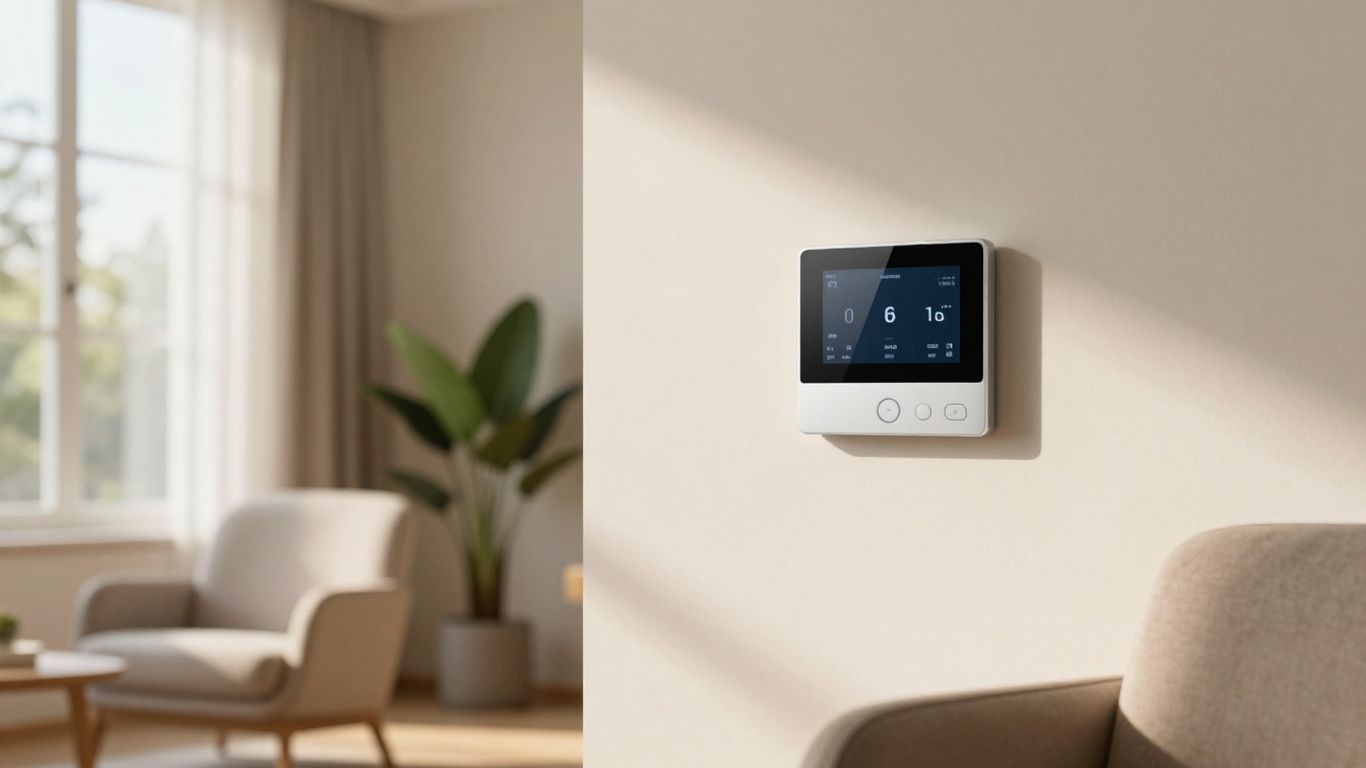
Once you understand how your heating system works, it’s time to move on to the next step: adjusting the temperature for each room in your home. This is where the magic of room-by-room control comes into play, allowing you to gain comfort while reducing your consumption.
Using Thermostatic Valves for Fine Adjustment
Thermostatic valves, those small heads found on most of your radiators, are your best allies for precise control. They act like intelligent taps, regulating the flow of hot water into each radiator. Each valve has a scale, often from 1 to 5, which corresponds to a target temperature. These are not exact numbers, but rather indications:
- Position 1: Approximately 12-14°C. Ideal for little-used rooms or guest bedrooms.
- Position 2: Approximately 16-17°C. Suitable for hallways, kitchens, or dining rooms.
- Position 3: Approximately 20°C. The comfort temperature for living areas such as the living room or study.
- Position 4: Approximately 23-24°C. Perfect for the bathroom when in use.
- Position 5: Maximum temperature.
It is important never to completely close a valve (position 0) during the heating season, unless you want the radiator to not heat up at all. In summer, it is advisable to leave them on a low setting (like 1 or 2) to prevent the mechanism from seizing.
Adapting Temperature According to Room Usage
Each room in your house has a different function and therefore different heating needs. It would be absurd to heat your bedroom to 20°C at night, or your garage to the same temperature as your living room. Consider the actual occupancy of each space:
- Living areas (living room, dining room): Maintain a comfortable temperature (around 19-20°C) when you are present.
- Bedrooms: A cooler temperature is often preferable for sleep (around 17-18°C).
- Kitchen, bathroom: These may require a slightly higher temperature, especially when in use.
- Hallways, stairs, unoccupied rooms: Reduce heating to a minimum (around 14-16°C) to avoid unnecessary heating.
By adjusting these settings, you avoid overheating areas that don’t need it, which directly translates into savings.
Ideal Placement of the Room Thermostat
If you have a central room thermostat, its location is crucial for effective control. It should be placed in a main living area, away from direct heat sources (radiators, sun, electronic devices) and drafts (windows, doors). The goal is for it to measure the actual temperature of the room where you spend most of your time, not a temperature distorted by an external factor. Incorrect placement can lead to heating cycles that are too short or too long, thus wasting energy. If you have a portable thermostat, place it in the room where you want the most comfort at that moment.
Different Types of Thermostats and Their Benefits
Programmable Analogue and Digital Thermostats
In the past, a thermostat was often just a simple white dial on the radiator. Today, the thermostat landscape has expanded considerably. You’ll first find analogue models, which, although simple, can still be useful. But for finer control and more significant energy savings, programmable digital thermostats are an excellent option. They allow you to set specific time slots and temperatures for each moment of the day. Installing a programmable thermostat can reduce your heating consumption by 5 to 15%, according to ADEME. This means you don’t heat unnecessarily when you’re away or asleep. It’s an investment that pays for itself quickly, especially with the current rise in energy prices. Remember to consult your device’s manual, as each model has its specificities for optimal use [d782].
Connected Thermostats and Remote Control
To go even further in customisation and comfort, connected thermostats offer unprecedented possibilities. Via an app on your smartphone or tablet, you can control your heating from anywhere. Are you coming home earlier than planned? A simple click is enough to warm up your home before you arrive. These systems are particularly practical for managing a second home or simply for adapting to life’s unexpected events. They offer remarkable flexibility and contribute to intelligent management of your energy consumption.
Room Thermostats for Centralised Control
Beyond the individual thermostatic heads on each radiator, the room thermostat plays a central role. It measures the temperature in a reference room and controls the boiler based on this measurement. Its placement is therefore crucial: it must not be exposed to direct sunlight, nor placed near a heat source like a radiator, otherwise the readings will be inaccurate. Inadequate placement can lead to overconsumption or, conversely, insufficient heating. It is important to choose its location carefully for the system to function as intended [6bb7].
Here’s an overview of the indicative temperatures often associated with the graduations on thermostatic valves:
| Position | Indicative Temperature | Recommended Use |
|---|---|---|
| 0 | Radiator off | Outside heating period |
| 1 | 12-14°C | Little-used room, guest bedroom |
| 2 | 16-17°C | Kitchen, hallway, child’s bedroom |
| 3 | 19-20°C | Living room, main living area |
| 4 | 21-22°C | Bathroom (before use) |
It is essential to understand that these values are benchmarks. The actual temperature will depend on your home’s insulation, your radiator’s output, and the room’s configuration. Feel free to experiment to find the setting that best suits you.
Practical Tips for Effective Setting
Avoiding Obstructions and Drafts
For your heating system to work at its best, it’s important to pay attention to the immediate environment of your appliances. A thermostat, for example, needs to reliably measure the ambient temperature. If curtains fall on it, or if furniture is placed too close, heat can build up. The thermostat then thinks it’s warmer than it actually is and reduces the heating unnecessarily. Also, remember not to place the thermostat near a direct heat source, such as a radiator or an electronic device that generates heat. Similarly, drafts can distort measurements. If a window is not properly closed or if there is an air leak, the thermostat will receive incorrect information and the heating may come on more often than necessary. Regularly check that nothing is obstructing your thermostats and that your windows are well sealed.
The Importance of Hydraulic Balancing
Hydraulic balancing is an often-overlooked step, yet it is key to good heat distribution throughout your home. It involves adjusting the water flow in each radiator so that they all receive the correct amount of hot water. Without this balancing, some radiators will be too hot while others remain cold, even if the thermostat indicates the correct temperature. It’s a bit like having a team where some runners go too fast and others not fast enough: the overall result is not optimal. To achieve this balancing, you often need adjustable thermostatic valves on your radiators. If your valves are old, it might be wise to replace them to improve your system’s efficiency.
Adapting Settings to Lifestyle Habits
Each room in your home has a different function and therefore does not need to be heated in the same way. For example, a little-used guest bedroom can be kept at a lower temperature than a living room where you spend your evenings. The thermostatic valves on your radiators are perfect for this. They allow for fine adjustment, room by room. Here are some benchmarks to help you:
- Position 0: The radiator is off.
- Position 1: Approximately 12-14°C, ideal for little-used rooms or bedrooms at night.
- Position 2: Approximately 16-17°C, suitable for hallways or kitchens.
- Position 3: Approximately 20°C, the standard temperature for living areas such as the living room or study.
- Position 4: Approximately 23-24°C, often reserved for the bathroom during its use.
Remember that these figures are indicative. The best approach is to observe how your system reacts and adjust according to your own feelings and needs. It is also important not to create too large temperature differences between rooms, as this requires more energy from your system to compensate.
Maintenance of the Thermostatic System
For your heating system to function optimally and for you to enjoy constant thermal comfort, regular maintenance of your thermostats is essential. This goes beyond simply checking the boiler; thermostatic heads and room thermostats also deserve your attention.
Regular Functionality Checks
It is important not to consider your system as a black box that works flawlessly. Take the time to periodically check that everything is in order. This may seem tedious, but it will save you more significant problems later on. Ensure that the radiators are heating as expected and that the displayed temperatures match your expectations. A visual inspection of the thermostatic heads can also reveal signs of wear or blockage.
Battery and Connection Management for Modern Models
If you have programmable or connected thermostats, battery management is a recurring task. A low battery can lead to malfunctions, such as communication interruptions or erratic settings. Remember to replace them preventatively, usually once a year. For connected models, also check the stability of your Wi-Fi connection, as an unstable connection can disrupt remote control and programming.
Preventing Valve Seizure During Summer
Thermostatic valves, those small taps on your radiators, can sometimes seize, especially if they are not used for a long period, such as during the summer. To prevent this, it is advisable to operate them manually from time to time, even when the heating is off. A simple trick is to set them to the maximum position (often 5) and then return them to their usual position. If you have a radiator that is not heating, it is possible that the valve is blocked. In this case, it may be necessary to descale or replace it.
A well-maintained system is a system that lasts longer and consumes less. Do not neglect these small checks; they make a big difference to your comfort and your energy bill.
Benefits of Optimised Thermostatic Control
Once you have implemented an effective thermostatic control system, the benefits are quickly felt. It’s not just about marginal savings; you can observe a noticeable difference on several fronts.
Significant Reduction in Energy Consumption
Heating accounts for a significant portion of your energy expenses, often more than half. By precisely adjusting the temperature room by room, you avoid unnecessarily heating unoccupied spaces or overheating where it’s not needed. Every degree Celsius less can translate into savings of around 7% on your heating bill. Over a year, this can represent several hundred euros. It’s an investment that pays for itself quickly.
Improved Individual Thermal Comfort
No more compromises where one room is too hot and another too cold. With room-by-room control, you can set the ideal temperature for each space according to its use and your preference. For example, a cooler temperature in bedrooms at night and a milder temperature in the living room during the day. This allows you to enjoy constant and personalised thermal comfort without waste.
Contribution to Environmental Preservation
By reducing your energy consumption, you directly decrease your carbon footprint. Less heating means fewer fossil fuels burned and therefore fewer greenhouse gas emissions. It’s a concrete action for the environment, part of a broader sustainable development approach. Your heating system thus becomes an ally for the planet.
Here’s an overview of potential savings:
| Temperature Setting | Estimated Savings on Heating Consumption |
|---|---|
| 1°C reduction | Approximately 7% |
| Low temperatures at night/during absence | 10% to 25% |
Optimising your thermostatic system is not just a matter of savings. It’s a holistic approach that improves your daily well-being while actively contributing to the protection of our environment. Think of it as a smart investment for your home and for the planet.
In Conclusion: A Well-Controlled Home Means Mastered Comfort
There you have it, you now have all the keys to properly use your thermostats and thermostatic valves. By taking the time to set each room according to its needs, you will not only improve your daily comfort but also make significant savings on your bills. Don’t forget that these small adjustments, repeated over time, make a real difference, both for your wallet and for the planet. Also, remember to check from time to time that everything is working properly; a quick look is often enough to avoid many problems. A well-managed home is a home where it’s good to live, without waste.
Frequently Asked Questions
How does a thermostatic valve work?
Imagine the thermostatic valve as a small tap on your radiator. When you turn it, you tell this tap to let more or less hot water through. If you set it to a high number, more hot water comes in, and the radiator heats up strongly. If you set it to a low number, less water passes, and it heats up less. This is how you can adjust the heat in each room.
Why isn’t my room heating enough despite adjusting the thermostat?
There can be several reasons. Sometimes, the thermostat is hidden by a curtain or furniture, which prevents it from sensing the room temperature properly. It thinks it’s warmer than it actually is and turns off the heating too soon. Also, check that there are no drafts misleading it.
Can I set the temperature of each room differently?
Absolutely! That’s the whole point of having thermostatic valves on each radiator. You can set a higher temperature in the living room where you spend time, and a lower temperature in a guest bedroom that you use infrequently. This prevents unnecessary heating.
What is a room thermostat and how can I use it best?
A room thermostat is a device that measures the temperature of the room it’s in. It tells your boiler when to start and stop to maintain the temperature you’ve chosen. For it to work well, it needs to be placed away from heat sources like a radiator or direct sunlight, and also away from cold drafts.
How can I save energy with my thermostatic system?
By setting your thermostats and valves correctly, you avoid heating unoccupied rooms or heating too much. Lowering the temperature by just 1°C can already reduce your heating bill. Using programmable or connected thermostats also helps you adapt heating to your habits, by lowering the temperature when you’re asleep or away.
What should I do if my thermostatic valves seem stuck in the summer?
During the summer, when the heating is off, the mechanisms of the valves can sometimes seize. To prevent this, it is advisable to set all valves to the highest setting (usually number 5) before the summer period. This helps keep them in good working order for the following winter.
