
Wondering what a split system is and how it works? It’s perfectly normal; there are several types of air conditioning systems, and it’s easy to get confused. Whether you’re looking to cool a single room or your entire house, understanding the differences between mono, bi, and multi-split systems will help you make the right choice. This article will shed light on the subject, simply explaining how these appliances work and what to consider for your installation.
Key Takeaways
- A split system consists of an outdoor unit and one or more indoor units, connected by refrigerant and electrical lines.
- A mono-split air conditioner is ideal for a single room, offering targeted comfort.
- A bi-split allows you to manage the temperature of two rooms with a single outdoor unit.
- A multi-split system adapts to multiple zones in your home, offering maximum flexibility.
- Professional installation and regular maintenance are important to ensure the performance and lifespan of your split system.
Understanding the Split Air Conditioning Concept
Definition and Operating Principle
The term “split” comes from English and means “separated.” This clearly indicates the design of these systems: they are divided into two main units. You have an indoor unit, installed in the room you wish to air condition, and an outdoor unit, placed outside your home. This system operates on a thermodynamic cycle, much like an air-to-air heat pump. The outdoor unit houses key components like the compressor and condenser, and its role is to dissipate heat. The indoor unit, on the other hand, contains an evaporator that captures heat from the ambient air. A fan in this unit then circulates the cooled air into the room. This separation principle helps reduce noise indoors and improve overall efficiency. Reversible models, which can heat your home in winter, are also available.
Essential Components of a Split Installation
A split installation comprises several interdependent elements to function correctly:
- Outdoor Unit: This is the heart of the system, housing the compressor, condenser, and expansion valve. It manages heat exchange with the outside air.
- Indoor Unit: This contains the evaporator and fan. It is responsible for distributing cool (or warm, if reversible) air into the room.
- Refrigerant Lines: These are insulated pipes that transport the refrigerant fluid between the outdoor and indoor units. They facilitate heat transfer.
- Electrical Wiring: This connects the two units for power and communication.
- Control Panel or Remote Control: For adjusting temperature, operating mode, and fan speed.
The Role of Refrigerant and Electrical Lines
Refrigerant lines are absolutely vital for the operation of a split system. They typically consist of two insulated copper tubes. One transports the refrigerant fluid in liquid form to the indoor unit, where it evaporates, absorbing heat from the room. The other tube returns the fluid in gaseous form to the outdoor unit to be cooled and condensed. These lines must be installed carefully to prevent any fluid leaks, which are not only inefficient but also harmful to the environment. The electrical cables, meanwhile, provide power to both units and enable communication between them, thus synchronising their operation for optimal comfort. Correct installation of these lines is often the job of a qualified professional.
The efficiency of a split system relies on the harmonious interaction between its components. The physical separation of the units allows noise and heat to be concentrated outside, making the indoor unit more discreet and pleasant in your living space.
The Mono-Split Air Conditioner: A Targeted Solution
Mono-Split Features and Operation
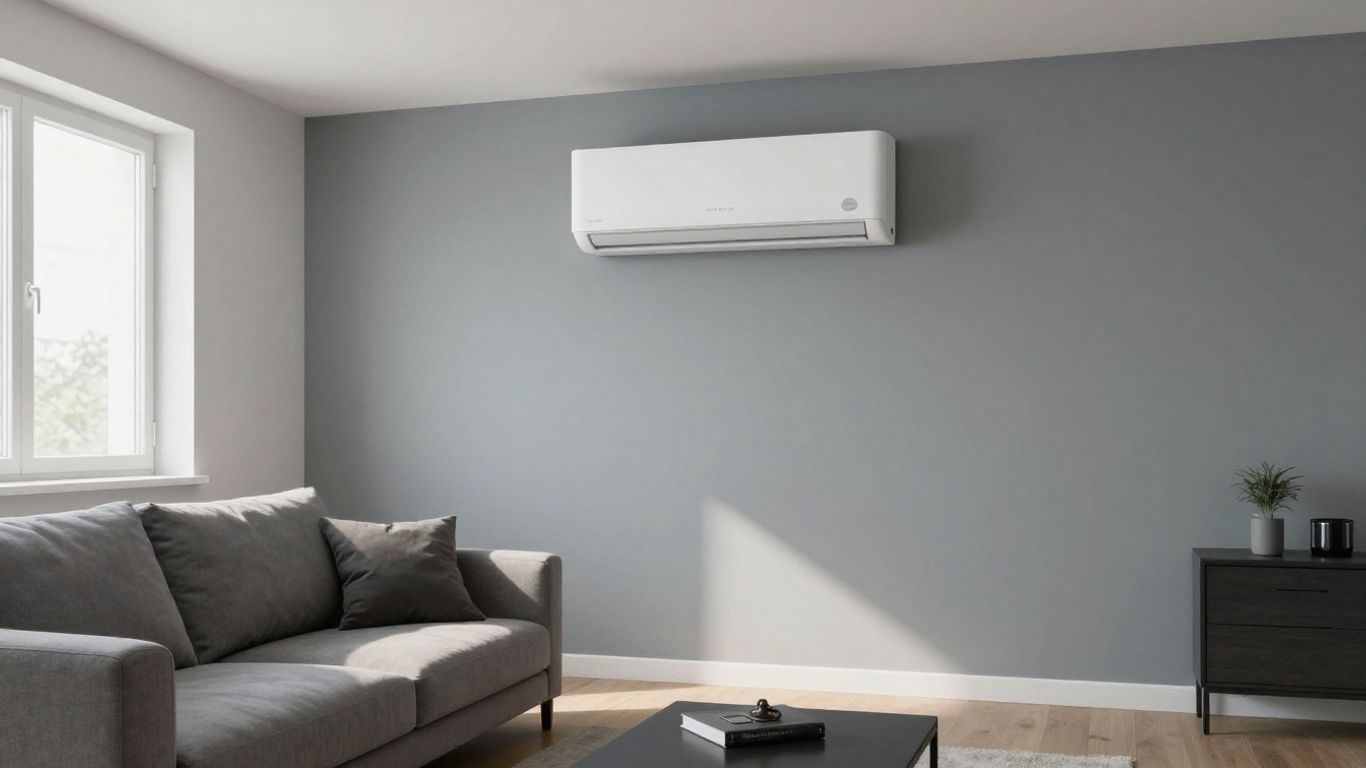
The mono-split air conditioner is the simplest configuration of a split system. It consists of an outdoor unit, which manages heat exchange with the environment, and a single indoor unit, installed in the room you wish to air condition. This indoor unit distributes hot or cold air. The operating principle is that of an air-to-air heat pump: in summer, it captures heat from your room to release it outside, and in winter, it captures heat from the outside air to return it inside. This solution is ideal when your air conditioning needs are focused on a single space.
Advantages and Limitations for a Single Room
The main advantage of the mono-split lies in its simplicity and cost. Installation is generally quicker and less expensive than a multi-zone system. Furthermore, temperature management is independent for the room concerned, allowing for optimised energy consumption. You only air condition the space you need.
However, its limitation is obvious: it can only air condition one room. If you need to treat multiple spaces, you would have to install multiple mono-split systems, which increases the cost, management complexity, and the visual impact outside with several units.
Here’s a summary of the key points:
- Advantages:
- More affordable purchase and installation cost.
- Simplified and quick installation.
- Optimised energy consumption for a single room.
- Precise temperature control in the treated area.
- Easier maintenance (only one indoor unit).
- Limitations:
- Suitable for only one room.
- Multiplying outdoor units is costly and unsightly for multiple zones.
The mono-split is an efficient and economical solution for those looking to air condition or heat a specific room in their home, without needing to treat the entire dwelling.
Ideal Use Cases for the Mono-Split
The mono-split air conditioner is relevant in several scenarios:
- Apartments: Often, only one space like the living room or the master bedroom requires air conditioning. The mono-split perfectly meets this need without unnecessary extra cost.
- Studios: For a single living space, the mono-split offers a complete and economical solution.
- Rooms for Specific Use: A guest bedroom, a home office, or an attic room that particularly suffers from temperature fluctuations can benefit from targeted treatment with a mono-split.
- Existing Homes: When you want to add air conditioning to a room without undertaking major work throughout the house, the mono-split is a sensible option.
Exploring the Bi-Split System for Two Zones
Bi-Split Operating Principle
The bi-split system is a logical step if you need to air condition two separate rooms in your home. Unlike installing two separate mono-split air conditioners, the bi-split uses a single outdoor unit that powers two independent indoor units. Imagine a single unit outside, but capable of serving two spaces inside. Refrigerant circulates from the outdoor unit to each indoor unit via dedicated refrigerant lines. Each indoor unit has its own thermostat and remote control, giving you complete control over the temperature of each zone. It’s a bit like having two air conditioners, but with one large unit outside managing everything.
Advantages over Mono-Split
The main advantage of the bi-split over installing two mono-splits lies in managing outdoor space and, often, in some energy optimisation. You only have one outdoor unit to install, which is more discreet and can be simpler in terms of permits or space constraints on a balcony or facade. Furthermore, the outdoor unit’s compressor is designed to adjust its power based on the combined needs of the two rooms. This can lead to more controlled energy consumption compared to two independently operating mono-split systems.
Here are some key points that differentiate the bi-split from the mono-split:
- Less Outdoor Clutter: One outdoor unit instead of two.
- Independent Control: Each room can have its own temperature.
- Potential Energy Savings: The compressor adapts to the actual needs of the two zones.
- Simplified Installation: Fewer outdoor connections to manage.
Adaptability to Specific Needs
The bi-split system is particularly interesting for configurations where two rooms have different temperature requirements, but installing two outdoor units is not ideal. For example, you might want to air condition the living room and a bedroom, or two separate bedrooms. The ability to adjust each indoor unit independently allows you to adapt comfort to the use of each space. If one room is occupied and the other is not, you can adjust the power accordingly. This flexibility is at the heart of the bi-split system’s appeal.
It is important to note that the total power of the outdoor unit must be sufficient to supply both indoor units, even if they are not operating at full capacity simultaneously. Incorrect power assessment can lead to poor performance or premature wear of the system.
Multi-Split Air Conditioning: Extended Comfort
Definition and Configuration of Multi-Split
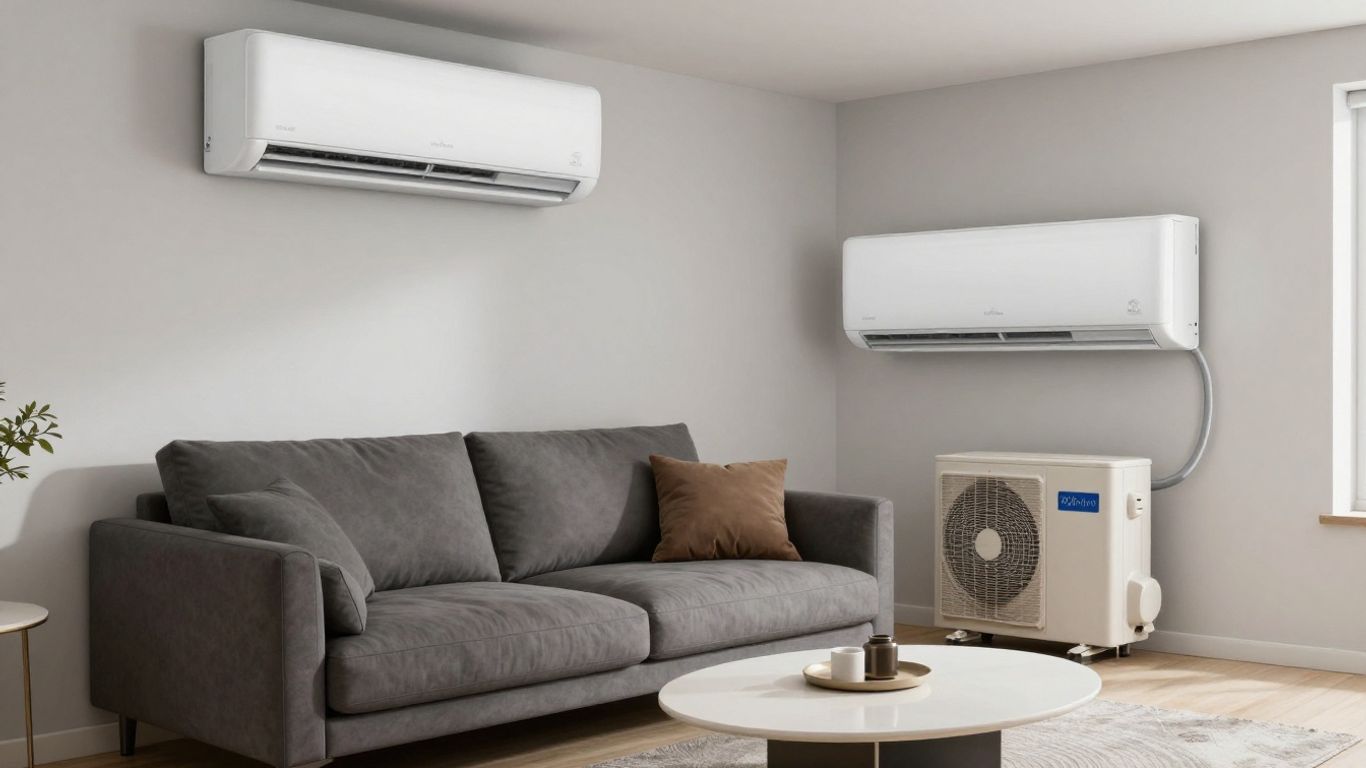
The multi-split system is essentially the logical evolution of the split system when you have more than one room to air condition. Imagine: a single outdoor unit, like for a mono-split, but connected to several indoor units. Each indoor unit can be placed in a different room of your home. This allows you to manage the temperature independently in each space. You can have a cooler temperature in the living room while the bedroom remains at a milder temperature, for example. It’s a solution that offers great flexibility to adapt comfort to your specific needs and those of each occupant.
Temperature Management in Multiple Rooms
With a multi-split system, you no longer have to choose between being cold or hot throughout the house. Each indoor unit can be controlled separately. You can set the temperature in your office to stay focused, in the children’s bedroom for peaceful sleep, and in the living room for your relaxation moments. It’s a bit like having multiple air conditioners, but with a single outdoor installation. This simplifies installation and, often, maintenance. Furthermore, many of these systems are reversible, meaning they can also serve as heating during winter, offering you a complete solution for year-round comfort. You can even add a WIFI kit to control everything remotely, which is quite convenient when you’re not at home.
Flexibility and Customisation of Comfort
What makes the multi-split particularly interesting is its ability to adapt to your lifestyle. You don’t need to air condition all rooms constantly. You can choose to activate only the units you need. This allows for significant energy savings compared to a system that would air condition everything uniformly. Indoor units come in various forms (wall-mounted, console, ducted), allowing you to choose the ones that best fit your decor. It’s a solution that gives you complete control over your indoor environment. Think of it as a detailed customisation of your comfort, room by room. It’s a truly modern approach to managing the temperature of your house or flat.
The multi-split system is an air conditioning solution that allows multiple indoor units to be connected to a single outdoor unit. Each indoor unit can be controlled independently, thus offering personalised temperature management in different areas of your home. This flexibility makes it an attractive option for those seeking comfort tailored to each room.
Here are some points to consider for a multi-split installation:
- Number of Indoor Units: Determine how many rooms you want to air condition.
- Total Power: Ensure the outdoor unit’s power is sufficient to supply all indoor units.
- Type of Indoor Units: Choose the model (wall-mounted, console, etc.) that best suits each room.
- Control: Check the control options, such as individual remote controls or WIFI connectivity.
Installation and Maintenance of Split Systems
The installation and maintenance of your split air conditioning system are important steps to ensure its proper functioning and longevity. Unlike portable appliances, split systems, whether mono, bi, or multi, require professional intervention for their setup. Improper installation can cause problems such as refrigerant leaks, excessive energy consumption, or even premature equipment wear. Hiring a certified technician is therefore not an option, but a necessity for your comfort and the performance of your appliance.
Need for Professional Installation
Entrusting the installation to a qualified professional is essential. The latter holds the required certification to handle refrigerants, substances that can be harmful to the environment. Furthermore, an expert will be able to advise you on the appropriate sizing of your system based on the size of your rooms and the insulation of your home. Good thermal insulation, for example, can allow you to choose a less powerful and therefore more economical appliance to run. Even before considering installation, assess the condition of your insulation; old windows or poorly insulated walls increase air conditioning needs.
Key Steps for a Successful Installation
The installation of a split air conditioner follows a precise process. Here are the main phases your installer will follow:
- Preliminary Study and Sizing: The technician assesses your needs and the configuration of your space.
- Unit Placement: Choosing optimal locations for the indoor units (homogeneous distribution) and outdoor units (stability, protection, acoustic discretion).
- Laying the Lines: Installing insulated copper pipes between the units, requiring precise wall drilling.
- Connections: Electrical connections in compliance with safety standards.
- Commissioning: Performing a vacuum pull to remove air and moisture from the circuit, followed by functional tests and leak checks. This step is often considered the most technical and guarantees the proper operation of the installation.
The entire intervention generally lasts between four and eight hours, depending on the complexity of the system.
Importance of Regular Maintenance
Regular maintenance is just as important as installation to preserve your air conditioner’s performance and extend its lifespan. Professionals generally recommend a complete annual maintenance, ideally before the start of the warm season. This check verifies the overall condition of the appliance, cleans the filters, ensures there are no leaks, and maintains energy efficiency. For systems containing more than 2 kg of refrigerant or with a power exceeding 12 kW, periodic checks are even mandatory. A maintenance contract with your installer can help you not to neglect this aspect.
Choice Criteria for Your Split System
Choosing the right split air conditioning system for your home is an important step. It impacts your comfort, your electricity bill, and the environment. It’s not about rushing, but rather about carefully analysing your real needs. Consider the area to be covered, the number of rooms involved, and the frequency of use. These factors will help you determine the necessary power and the most suitable type of system.
Analysis of Air Conditioning Needs
First and foremost, determine precisely what you expect from your air conditioner. Do you simply want to cool a specific room, such as your bedroom or living room? Or do you need to air condition multiple areas of your home? The answer to this question will guide your choice between a mono-split, bi-split, or even multi-split system.
- Single Room to Air Condition: A mono-split system is generally sufficient. It consists of an outdoor unit and a single indoor unit.
- Two Rooms to Air Condition: A bi-split system, with one outdoor unit connected to two indoor units, will be more appropriate.
- Multiple Rooms or Zones: A multi-split system offers the flexibility to connect several indoor units to a single outdoor unit, allowing for personalised comfort management in each space.
It is also relevant to consider how you will use the appliance. Will it be intensive daily use during the summer months, or rather occasional use during heatwaves? Intensive use will require a more robust and potentially more efficient unit.
Technical and Energy Considerations
Several technical aspects should be checked to make an informed choice and achieve long-term savings. Energy efficiency is a key point. Look at the SEER (Seasonal Energy Efficiency Ratio) for cooling mode and SCOP (Seasonal Coefficient Of Performance) for heating mode. The higher these figures, the more efficient the appliance and the less electricity it consumes.
The power of the appliance, expressed in kilowatts (kW), must be adapted to the surface area of the room or rooms to be air conditioned. An undersized appliance will run constantly without ever reaching the desired temperature, while an oversized appliance will consume unnecessarily and may wear out faster.
Here is a general estimate to help you:
| Room Area | Recommended Power | Recommended Split Type |
|---|---|---|
| Up to 20 m² | 2 kW | Compact Monosplit |
| 20 to 35 m² | 2.5 to 3.5 kW | Standard Monosplit |
| 35 to 60 m² | 4 to 5 kW | Monosplit or Bi-split |
Don’t forget to check the noise level of the indoor and outdoor units. An excessively noisy appliance can become a nuisance, especially in bedrooms or living areas.
The environmental impact of air conditioners should also be taken into account. Opt for models using more environmentally friendly refrigerants, such as R32, and with an energy class of A++ or A+++. These choices will help you reduce your ecological footprint while saving on your bills.
Impact on Aesthetics and Space
The installation of an outdoor unit and one or more indoor units will alter the appearance of your home. Indoor units are available in different designs (wall-mounted, console, cassette) and colours. Choose a model that harmoniously blends with your interior decor. Also, consider the location of the outdoor unit: it must be installed in a place that does not disturb neighbours and allows for good air circulation. The indoor unit should be placed so as to optimally distribute air into the room, without creating direct drafts on occupants.
To Conclude on Split Systems
There you have it, you now have a better idea of what split systems are, whether they are mono or multi. We’ve seen that the choice really depends on your needs: one room to treat, or several? That’s the main question. Don’t forget that installation, especially for split systems, often requires the intervention of a professional to be done correctly. This is important for safety and for the appliance to function well. If you still have doubts, don’t hesitate to look at other articles or seek advice from experts. Choosing the right system means ensuring lasting comfort, summer and winter.
Frequently Asked Questions
What is a split air conditioner and how does it work?
A split air conditioner is an appliance divided into two parts: an outdoor unit that expels heat and an indoor unit that distributes cool air. They are connected by pipes. It’s a bit like a heat transfer system that makes your room pleasant.
What is the difference between a mono-split and a multi-split air conditioner?
A mono-split air conditioner has a single indoor unit to cool one room. A multi-split system, on the other hand, has several indoor units connected to a single outdoor unit, allowing multiple rooms to be air conditioned simultaneously.
Can a split air conditioner also be used for heating?
Yes, absolutely! Many split air conditioners are reversible. This means they can also operate in heating mode during winter, using the same technology to warm the air in your home.
Why do you need to use a professional to install a split air conditioner?
Installing a split air conditioner requires specific skills, particularly for handling refrigerant fluid which can be dangerous. A professional ensures that the installation is done correctly, safely, and for the appliance to function optimally.
What are the advantages of a bi-split system?
A bi-split system is ideal if you want to air condition two separate rooms with a single outdoor unit. It’s a practical solution that allows you to manage the temperature of two different zones without multiplying outdoor installations.
How do I choose the right split air conditioner for my home?
To choose well, you need to consider the size of the rooms to be air conditioned, the number of rooms, and the required power. It’s also good to consider energy consumption and the aesthetics of the units. Don’t hesitate to seek advice from a specialist.
