

In the world of HVAC systems, precise flow control is essential. This is where a valve, an often underestimated but vital component, comes into play. Whether you’re looking to optimise comfort in a building or reduce energy consumption, understanding how these devices work and their specificities is a key step. This article guides you through the different types of valves, their role in networks, the importance of the Kv coefficient, and the practical aspects of their maintenance.
Key Takeaways
- Zone valves, often motorised, regulate fluid flow in HVAC systems to maintain the desired temperature in each space, opening or closing as needed.
- The main distinctions are between two-position (on/off) valves and three-way valves (diverting or mixing fluids), classified by their number of ports.
- They are characterised by their compactness, watertightness, and energy efficiency, with specific versions such as pressure-independent flow limiters.
- These valves are found in various HVAC equipment such as fan coil units, underfloor heating systems, radiators, as well as domestic hot water and irrigation systems.
- The Kv coefficient is a key measure for selecting the right valve, as it determines the valve’s capacity to allow a certain flow rate under a given pressure, directly influencing flow modulation.
Understanding Valve Operation and Types
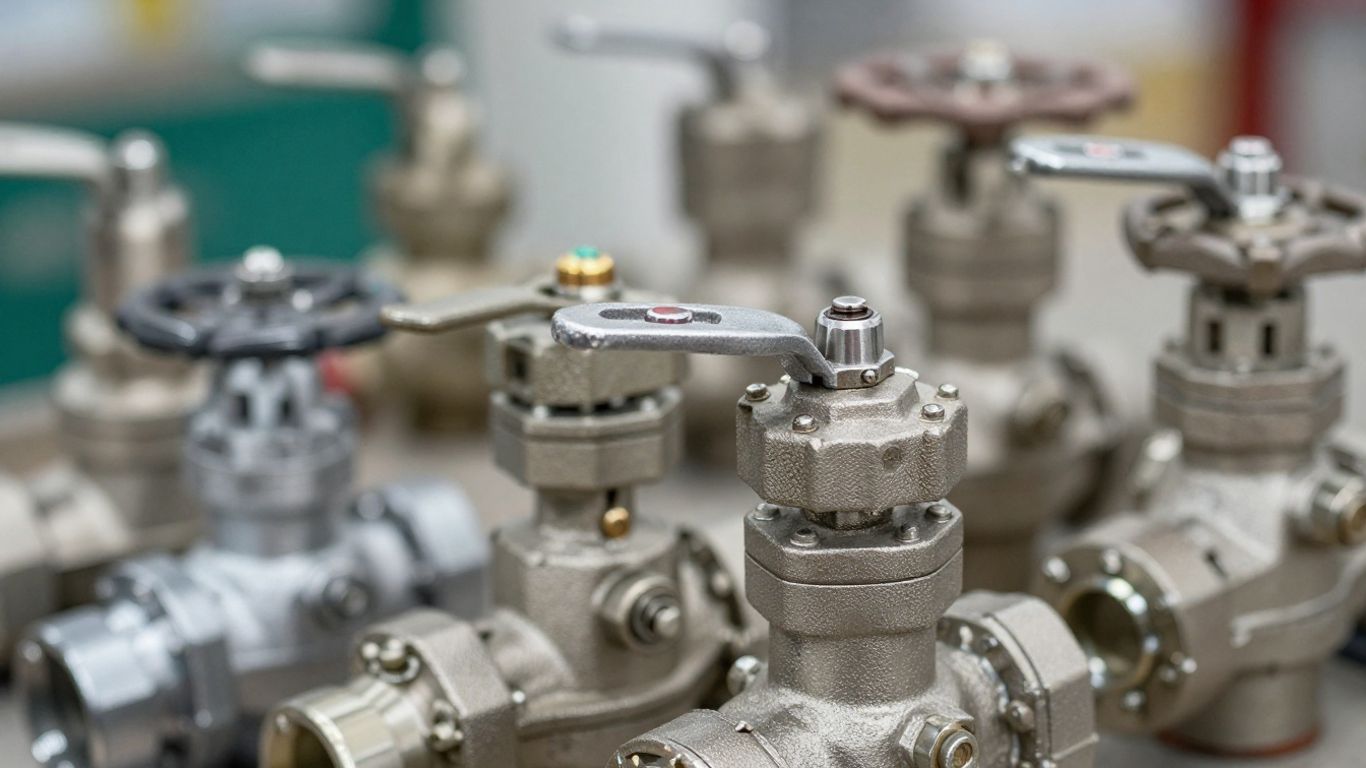
In heating, ventilation, and air conditioning (HVAC) systems, precise fluid flow control is essential for maintaining comfort and optimising energy consumption. Zone valves play a central role in this management. They act as gatekeepers, regulating the supply of hot or cold water to different parts of a building. Imagine a thermostat in your living room that, when it detects a temperature that is too low, sends a signal to open a specific valve, allowing hot water to circulate to that room’s radiator. Conversely, when the desired temperature is reached, the valve closes, cutting off the flow. It’s a simple but incredibly effective mechanism for zoning a building.
Principle of Operation of Zone Valves
The basic operation of a zone valve relies on an actuator, often electric, which controls the opening or closing of a passage for the fluid. This signal usually comes from a centralised control system or local thermostats. Most zone valves are designed to be watertight to prevent any unnecessary fluid loss when closed. They are often compact, making them easy to install even in confined spaces. The goal is to allow independent temperature control in each zone, thereby optimising occupant comfort and reducing energy waste.
Classification of Valves by Number of Ports
The most common way to classify zone valves is by the number of ports they have. This determines their primary function: directing, mixing, or simply opening/closing a circuit.
- Two-Position Valves: Binary Flow Control
These valves, as their name suggests, have two ports. They operate on an on/off principle: either the passage is fully open, or it is fully closed. They are ideal for applications where simple circulation control is sufficient. In the event of a power failure, an internal mechanism, often a spring, ensures that the valve returns to a predefined position (usually closed) for safety reasons. - Three-Way Valves: Diverting and Mixing Fluids
Three-way valves have three ports. They are more versatile as they can either divert flow from one inlet to one of two outlets, or mix two incoming flows to achieve an intermediate temperature. For example, they can be used to mix hot and cold water to achieve a precise setpoint temperature for a fan coil unit. Some of these valves even offer a manual override function, allowing the flow to be split equally between two circuits, which can be an important safety measure to prevent boiler overheating. You can find information on different types of valves in our article on the fundamental principles of valves.
These distinctions in valve design allow installers to choose the most suitable solution for the specific needs of each HVAC network, whether for heating, cooling, or a combination of both.
Technical Characteristics and Advantages of HVAC Valves
Compact Design and Watertightness
Valves used in modern HVAC systems are often designed to be as discreet as possible. Their compact design is a major advantage, especially when installation space is limited, as is often the case in false ceilings or technical ducts. You will find models that integrate easily without cluttering the network. Furthermore, watertightness is a non-negotiable feature. These valves must prevent any fluid leaks, whether hot water, cold water, or steam. Good watertightness not only ensures installation safety but also energy efficiency by preventing unnecessary circulation losses.
Flow Performance and Energy Efficiency
A valve’s ability to regulate flow is directly linked to its energy efficiency. Modern valves often feature specific flow characteristics, such as equal percentage profiling. This means that for a given change in valve opening, the flow rate change is proportional. This allows for more precise modulation of heating or cooling in each zone. This precision translates into optimised energy consumption, as the system does not unnecessarily overheat or undercool. The actuator, which controls the opening and closing of the valve, is also designed to be energy-efficient, consuming very little, if any, in standby mode.
Pressure-Independent Flow Limiters
In HVAC networks, pressure variations can occur. To counteract this, some systems incorporate pressure-independent flow limiters. These devices are particularly useful for ensuring stable hydronic balancing. Here are their main advantages:
- Automatic maintenance of a constant flow rate, regardless of pressure fluctuations in the network.
- Ability to handle significant flow rates while remaining precise.
- Adaptability to fluids that may contain impurities, thanks to often self-cleaning designs.
- Reliable and durable operation, even in harsh conditions.
The integration of these components ensures predictable and consistent performance of the HVAC system, reducing the need for frequent manual adjustments and improving overall occupant comfort.
Specific Applications of Valves in HVAC Networks
In heating, ventilation, and air conditioning (HVAC) systems, zone valves play a discreet but essential role in ensuring comfort and energy efficiency. They allow for segmented temperature control, room by room, or zone by zone. Let’s see how they integrate into different equipment.
Use in Fan Coil Units and Ceilings
Fan coil units, those units often found under windows or mounted on walls, rely on zone valves to regulate the flow of hot or cold water passing through them. A zone valve, typically a two- or three-way type, controls the supply of the heat transfer fluid. When the room thermostat indicates that it is warm enough (or cold enough), the valve closes (or opens less), thus limiting the water flow. It’s a bit like adjusting the music volume to set the mood.
In heated or cooled ceiling systems, the principle is similar, but the application is more diffuse. Water circulates through pipes integrated into the ceiling. The zone valve, controlled by the building management system, adjusts the flow rate to maintain the desired temperature in the room. These valves allow for fine regulation, preventing overheating or undercooling of spaces.
Integration in Underfloor Heating Systems
Underfloor heating, appreciated for its thermal comfort, also uses zone valves. Here, hot water circulates through loops of pipes under the floor covering. Each circuit, or group of circuits, can be controlled by a zone valve. If a room is already at the correct temperature, the associated valve closes, stopping the circulation of hot water in that specific zone. This avoids unnecessarily heating unoccupied or already comfortable spaces.
- Zone Control: Allows heating only occupied rooms.
- Increased Comfort: Even distribution of heat.
- Energy Savings: Reduction in overall consumption.
Role in Radiators and Central Heating Systems
For more traditional central heating systems equipped with radiators, zone valves can be used in various ways. In large installations, they can be used to isolate entire sections of the building or to regulate flow to groups of radiators. In some cases, a zone valve can even be installed on the main supply to a radiator, acting as a more sophisticated thermostatic valve capable of precise flow modulation. This allows for individual adjustment of each radiator’s temperature, thus offering personalised thermal control in each room.
The Role of the Kv Coefficient in Valve Selection
Definition and Importance of the Kv Coefficient
The Kv coefficient is a bit like the hydraulic identity card of your valve. It represents the flow rate of water in litres per minute that passes through the valve when the pressure difference between the inlet and outlet is 1 bar. In essence, the higher the Kv, the more fluid the valve allows through. This is essential technical data for correctly sizing your HVAC system. Without a good understanding of Kv, you risk ending up with a system that doesn’t heat or cool as it should, or worse, consumes energy unnecessarily.
Influence of Kv on Flow Modulation
The Kv is not a fixed value for all valves, far from it. It varies depending on the valve’s position. When it is fully open, it offers its maximum Kv. When it is closed, the Kv is zero, obviously. But it’s in the intermediate positions that it becomes interesting. A well-designed valve allows for fine flow modulation, meaning it can precisely adjust the amount of fluid passing through. This is particularly important for thermal comfort, as it allows for stable room temperature to be maintained without abrupt changes. Think of it like a water tap: you can turn it on just a little to get a trickle of water, or fully open for a powerful jet. The valve does the same, but with heating or cooling water.
Variability of Kv According to Valve Configurations
It’s important to know that the Kv can change depending on the type of valve and its configuration. For example, a two-way valve will not behave the same as a three-way valve, even if they have the same nominal size (DN). Furthermore, some valves are designed to have a specific flow characteristic, such as a so-called « equal percentage » characteristic. This means that for an equal increase in valve travel, the flow rate increases proportionally. It’s a bit like if, no matter where you turn the knob, the result is always predictable and linear. Other valves may have a « linear » or « equal percentage » characteristic, each having a different impact on how the flow is controlled. The choice will therefore depend on the precise application and the desired level of control.
Here is a small table to illustrate how Kv can vary:
| Valve Type | Size (DN) | Max Kv (m³/h) | Flow Characteristic |
|---|---|---|---|
| Ball Valve | 15 | 2.5 | Equal Percentage |
| Seat Valve | 20 | 4.0 | Linear |
| 3-Way Valve | 25 | 6.0 | Mixing |
It is therefore essential to consult the manufacturer’s technical data sheet to know the exact Kv of the valve you are considering installing. This is a step that should not be overlooked to ensure the efficiency of your HVAC system.
Other Relevant Uses of Zone Valves
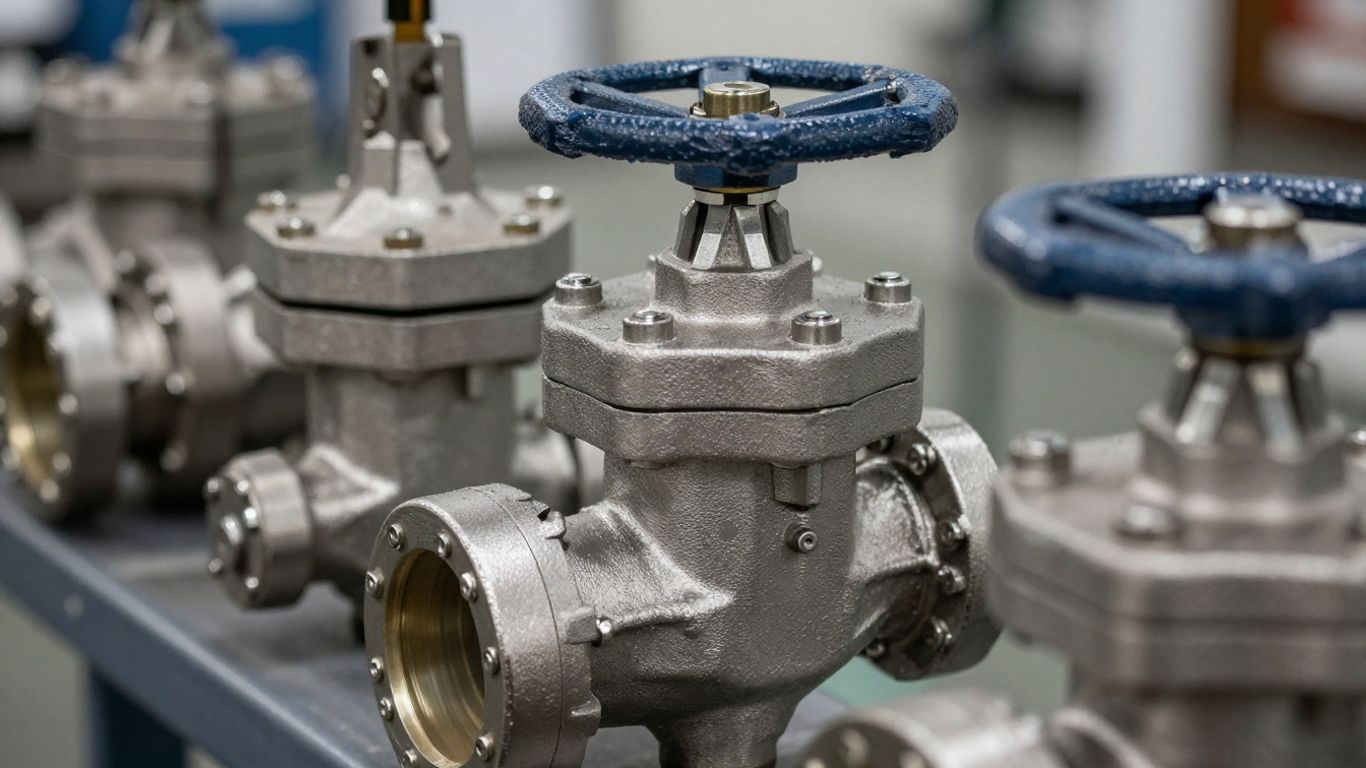
Although zone valves are most commonly associated with HVAC systems, their usefulness extends far beyond. You will find them in applications where precise fluid flow control is necessary, even outside of heating and air conditioning.
Application in Domestic Hot Water Tanks
In domestic hot water production systems, zone valves play an important role in optimising the distribution and storage of hot water. They direct the water heated by the boiler to different destinations. For example, when radiators or fan coil units have reached the desired temperature, the valve can close the supply to these appliances. Simultaneously, it can open a passage to the hot water storage tank. This stored water will then be available for other uses, such as showers or taps. This system helps to better allocate energy costs and store heat efficiently in the building.
Some three-way valves have a manual override function. This can be useful as a safety measure. For example, they can split the flow equally (50/50) between two paths. This is a precaution that can help prevent boiler overheating, for instance.
Flow Control in Irrigation Systems
Irrigation systems also use zone valves. They are used to regulate water supply to different sections of a garden or landscape. These valves are typically controlled by an irrigation timer. They open or close to allow water to pass or to block it in the relevant zone. Designed for outdoor use, these valves are made from materials resistant to weather and moisture to ensure their longevity.
Heating and Cooling Management in 4-Pipe Systems
So-called « 4-pipe » systems are designed to provide both heating and cooling, using two separate circuits. One is dedicated to hot water, the other to cold water or refrigerant. In this type of installation, specific valves, such as 6-way valves, are used. They allow switching between heating and cooling modes. They control the flow of hot or cold water to achieve the desired temperature in a room. The advantage is that a single valve can replace several components, such as four two-way valves, four actuators, and two control units. This simplifies installation, especially in false ceilings, and ensures clear separation between heating and cooling circuits for increased safety.
The use of zone valves in various applications beyond HVAC demonstrates their versatility. They are essential for precise fluid control, thus contributing to energy efficiency and the proper functioning of many systems.
Here are some points to consider for these applications:
- Energy Efficiency: By precisely controlling where and when fluid circulates, waste is avoided.
- Comfort: Allows adaptation of conditions (water temperature, flow rate) to the specific needs of each zone.
- Reliability: Modern valves are designed to last and operate reliably, even in harsh environments.
Maintenance and Troubleshooting of Zone Valves
Even the most reliable zone valves can encounter problems. Regular maintenance and a good understanding of common faults will help you keep your HVAC system in good working order. It is important to know how to identify and resolve these issues to avoid inconvenience.
Identifying Common Failure Modes
Zone valves can exhibit several types of malfunctions. The most frequent include:
- Leaks: Unwanted water flows can occur at the connections or the valve body. This may be due to a worn seal or improper tightening.
- Sticking: The valve may remain stuck in the open or closed position, thus preventing flow control to the relevant zone. This can be caused by debris in the circuit or an internal mechanical problem.
- Actuator Malfunction: The actuator, which controls the opening and closing of the valve, may fail. This often manifests as the valve being unable to move, even if the system is sending a signal.
- Motor Overheating or Burning: In the case of motorised valves, overheating can damage the motor, rendering it inoperable.
Causes and Solutions for Operational Problems
When you encounter a problem, it is useful to know the possible causes and the solutions to apply. For example, a valve that does not close properly could be clogged with limescale or sediment. Internal cleaning or replacement of the part may be necessary. If the actuator does not respond, first check the power supply and wiring. Sometimes, a simple system reset is sufficient. For leaks, tightening the connections is often the first step, but if this does not resolve the problem, replacing the seals or the entire valve may be essential. It is often recommended to consult the manufacturer’s instructions for specific procedures, especially when replacing a valve. Prompt intervention on technical faults, such as replacing defective parts, is often necessary to restore proper operation curative maintenance and troubleshooting.
Importance of Adequate Ventilation
Good air circulation in the technical rooms where valves are installed is often overlooked, but it plays a role. Insufficient ventilation can lead to heat build-up, especially around motorised actuators. This excessive heat can accelerate the wear of electronic and mechanical components, leading to premature failures. Ensure that the areas where the valves are located are well-ventilated to maintain optimal operating temperatures and extend the lifespan of your equipment.
Conclusion
There you have it, we’ve covered valves, their different types, and that famous Kv coefficient. You see, it’s not that complicated once you have the right information. Knowing how to choose the right valve, understanding how it works, and why that Kv is important can really make a difference in your HVAC installation. Think about it next time you work on your system; it could save you a lot of trouble and help you achieve optimal comfort. Don’t forget that regular maintenance is also key to keeping everything running smoothly. So, get to work on your installations!
Frequently Asked Questions
How do zone valves work in a house?
Imagine your house is divided into several rooms, like zones. A zone valve is like a little guardian for each zone. It receives commands from a thermostat. If a room is too hot, the thermostat tells the valve to close to stop the hot water. If it’s too cold, it tells it to open to let the hot water through. It’s like opening or closing a tap to control the temperature of each room separately.
What are the different types of zone valves I can find?
There are mainly two types of zone valves. Two-way valves are simple: they are either fully open or fully closed. They control whether water passes through or not. Three-way valves are a bit smarter: they can send water in two different directions or even mix hot and cold water to achieve the right temperature.
Why is the Kv coefficient important for choosing a valve?
The Kv coefficient is a bit like the size of a door for water. It measures the amount of water that can pass through the valve when it is open. If you choose a valve with too small a Kv, the water won’t be able to circulate enough, and your room won’t be heated or cooled properly. If the Kv is too large, the control will be less precise. Therefore, you need to choose the right Kv for the valve to do its job perfectly.
In what appliances are these zone valves often found?
You’ll find them in many places to regulate temperature effectively. For example, in fan coil units (those boxes that blow hot or cold air), in underfloor heating systems, or even in conventional radiators. They are everywhere where you want to control the temperature room by room.
What happens if a zone valve stops working correctly?
If a valve stops working, you might have problems like a room that stays too hot or too cold. Sometimes the valve might leak, get stuck open or closed, or even make noise. It’s important to check from time to time that they are working properly, much like checking that everything is okay with a household appliance.
Are these valves used for anything other than heating and air conditioning?
Yes, absolutely! They are also very useful for domestic hot water, for example, to direct hot water to your hot water tank or to the radiators. They are also found in irrigation systems to control water in different parts of your garden. They are truly versatile for managing liquid flows.
