

Today, we’re going to talk about heating regulation. It’s a topic that might seem a bit technical, but good regulation is truly the key to a comfortable home without wasting energy. You know those moments when it’s too hot, or not hot enough? Well, good regulation can greatly improve that. We’ll look together at how it works, with sensors, the famous water curve, and the different devices that help you control it all. The idea is to make your heating system smarter and more efficient.
Key Takeaways
- Heating regulation allows you to adapt your home’s heat to your actual needs, taking into account factors like outside temperature and room occupancy, for optimal comfort and energy savings.
- The outdoor sensor measures the outside temperature and helps the system anticipate heating needs, adjusting the water temperature in the radiators to avoid overheating or underheating.
- The water curve defines the relationship between the outside temperature and the heating water’s flow temperature. Its adjustment, often done through trial and error, is important for maximum efficiency.
- There are several types of controllers: ‘on/off’ (simple), proportional (finer), and weather-compensated (which use the outdoor sensor and the water curve).
- Room sensors complement the outdoor sensor by measuring the indoor temperature. They are particularly useful for fine-tuning regulation, especially with underfloor heating, and take into account free heat gains.
Understanding Heating Regulation
Definition and Objectives of Regulation
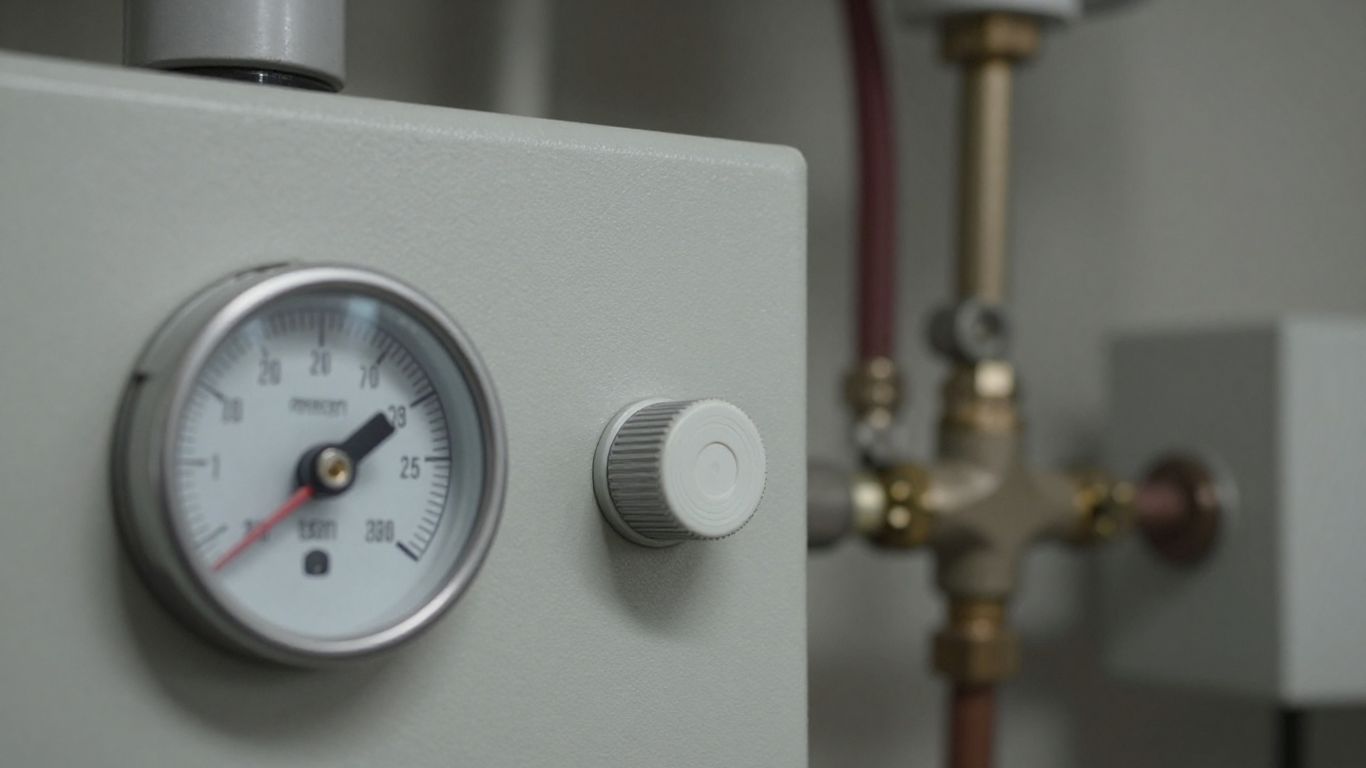
Heating regulation is essentially the brain of your heating system. Its main role is to ensure that the temperature in your home remains pleasant without you having to constantly think about it. It makes sure that the heat produced by your boiler or other system matches what you need at any given time. Imagine: when it’s cold outside, it tells the heating to work a bit harder. When the sun shines through the window or you’re cooking, it can reduce the power because there’s already heat in the room. The objective is to maintain a setpoint temperature, meaning the temperature you’ve chosen, while taking into account everything that can influence the heat in your home.
It aims to adapt heat production to actual needs for optimal thermal comfort and controlled energy consumption. This not only prevents it from being too hot or too cold but also leads to savings. We often talk about consumption reductions that can range from 10 to 25%, which is significant, not to mention the positive impact on the environment.
Benefits of Optimised Regulation
Good regulation first and foremost means increased comfort. No more unpleasant temperature fluctuations; you enjoy constant heat adapted to each moment of the day and each room. But beyond comfort, the benefits are also economic and ecological. By avoiding unnecessary heating, you reduce your energy bill. Furthermore, by consuming less, you lessen your impact on the environment, particularly greenhouse gas emissions. It’s a win-win situation for your wallet and for the planet.
Open-Loop and Closed-Loop Operation
There are two main ways to operate a regulation system: open-loop and closed-loop.
- Closed-loop regulation: This is the most common and most effective method for comfort. Here, the system takes into account what’s happening *inside* your home (the ambient temperature measured by a sensor) and *outside* (the outside temperature, also measured). It uses this information to adjust the heating. It’s a reactive system that adapts in real-time.
- Open-loop regulation: In this case, the system does not directly measure the indoor temperature. It relies on calculations and predefined parameters, such as the outside temperature, to anticipate needs. For example, it might be based on a curve that states that if it’s 5°C outside, the heating circuit water should be at 50°C. This is a more predictive approach, often used when precise measurement of indoor temperature is not deemed necessary or possible for all zones.
The choice between these two modes depends on your home’s configuration and your expectations regarding comfort and savings.
The Essential Role of the Outdoor Sensor
How the Outdoor Sensor Works
The outdoor sensor, often installed away from prevailing winds and direct sunlight, is a key component for efficient heating regulation. Its main role is to measure the outside air temperature. This information is then transmitted to your heating system. The lower the outside temperature, the more your heating system will need to produce heat to maintain a comfortable temperature inside. Conversely, in milder weather, the system can reduce its output. This prevents unnecessary heating and saves energy.
It is particularly relevant for systems that require a modulated flow temperature, such as underfloor heating or boilers supplying multiple circuits. It allows for real-time adjustment of the water temperature circulating in your radiators or underfloor heating. It’s a proactive approach to anticipating your home’s needs.
Optimal Sensor Placement
The placement of the outdoor sensor is more important than it might seem. For it to provide reliable data, it must be installed in a location representative of the actual outside temperature. This means it should be kept away from direct heat sources, such as ventilation outlets, walls exposed to the sun all day, or areas sheltered from the wind. Incorrect placement could falsify measurements and, consequently, your heating regulation.
Here are some recommendations for good placement:
- Choose a facade that is not constantly in sunlight.
- Avoid corners where air circulation is poor.
- Ensure it is protected from direct weather, while still being exposed to the open air.
Adaptation to Different Heating Systems
The outdoor sensor is compatible with many types of installations. For central heating systems, it is often coupled with a controller that applies the *water curve*. This curve defines the relationship between the outside temperature and the heating water’s flow temperature. For example, if it’s 0°C outside, the water might be heated to 50°C, whereas if it’s 15°C, it would not exceed 30°C. This setting optimises the performance of your heating system.
For underfloor heating, where thermal inertia is greater, the outdoor sensor helps anticipate and finely modulate the water temperature. It can also be used in conjunction with a room sensor for even more precise regulation, taking into account both external conditions and the desired indoor comfort. Modern weather-compensated controllers often include this feature for optimal management of the temperature of your radiators.
Using an outdoor sensor allows for more intelligent management of your heating system. By constantly measuring the outside temperature, it helps your boiler proactively adjust its heat output. This results in increased comfort and substantial energy savings, as the system never overheats unnecessarily.
The Water Curve: A Predictive Approach
Definition and Principle of the Water Curve
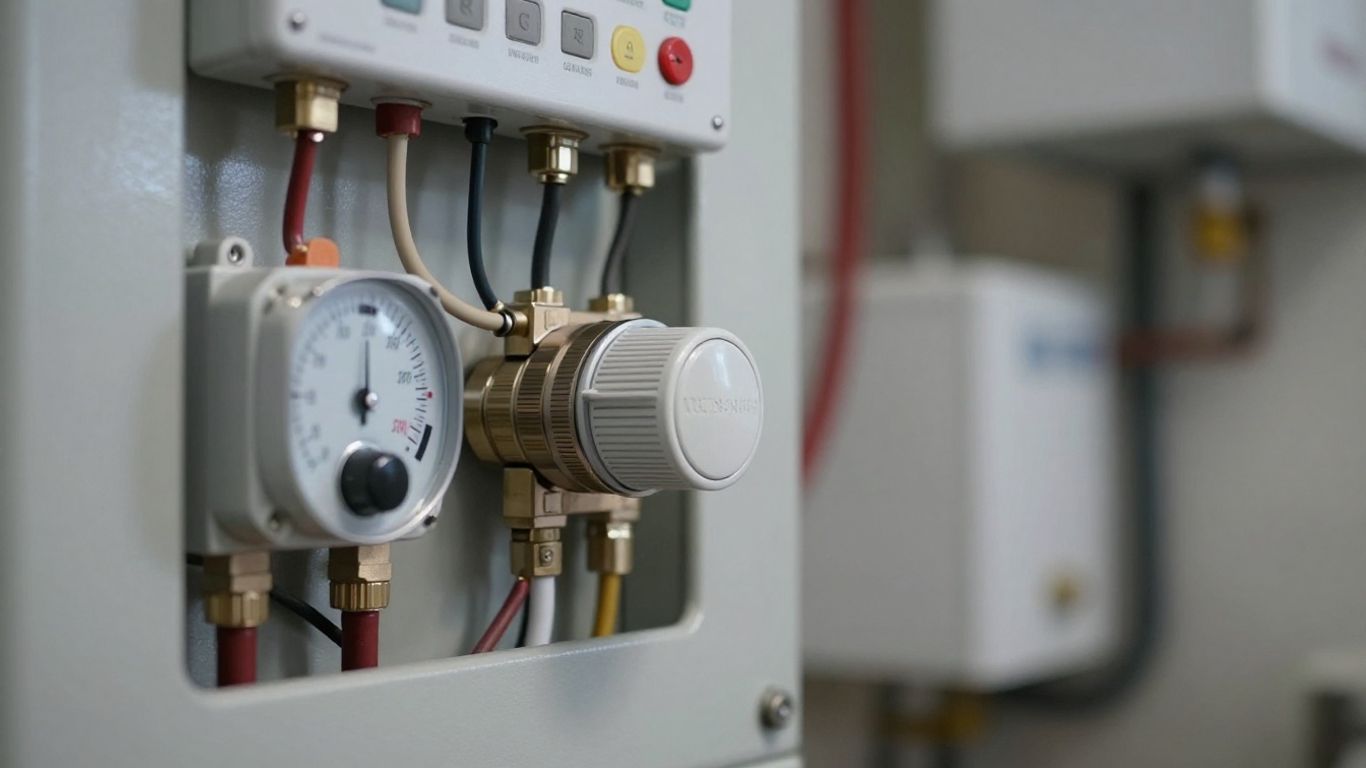
The water curve is essentially the brain of your heating system when it’s cold outside. It allows you to adjust the temperature of the water circulating in your radiators or underfloor heating based on the outside temperature. The idea is not to heat at full blast when it’s mild and, conversely, not to let your house turn into an icebox when the thermometer plummets. It establishes a direct relationship between the outside temperature and the heating water’s flow temperature.
In practice, this translates into a curve, often a straight line, called the *heating curve*. This curve is defined by at least two points: for example, when it’s 0°C outside, the radiator water could be at 50°C, and when it’s 15°C, it could drop to 30°C. The slope of this curve indicates how quickly the water temperature increases as the outside temperature drops. A steeper slope means the water heats up more for each degree lost outside.
Setting and Adjusting the Heating Curve
Finding the right heating curve isn’t always easy. It often requires a bit of patience and observation. Every house is different; its insulation, its sun exposure, all play a role. The adjustment is usually done through trial and error. You need to observe how your house reacts and adjust the curve until comfort is optimal without wasting energy.
Here are some steps to help you:
- Observe the indoor temperature: Note the temperature in key rooms when it’s cold outside and when it’s milder. Is it too hot? Not hot enough?
- Adjust the slope: If your house is generally too cold when it’s freezing, you need to increase the slope (the heating water will be hotter). If it’s too hot when it’s just cool, you need to decrease it.
- Adjust the offset: Sometimes the slope is good, but the flow temperature is permanently too high or too low. You can then shift the entire curve up or down.
- Allow time for the system: Changes are not immediately apparent. You need to wait at least 24 to 48 hours after an adjustment to see its real effect, especially if your house has good thermal inertia.
It is advisable to note down the adjustments made and the date, so you can revert if necessary. If your system allows, a room sensor can help fine-tune these settings by taking into account the actual temperature in a living room.
Impact on Water Flow Temperature
The main objective of the water curve is to control the water’s flow temperature. This temperature is directly linked to the power that your emitters (radiators, underfloor heating) can deliver. By adapting this temperature to the actual demand, dictated by the outside temperature, you avoid running the boiler or heat pump at full power unnecessarily. This not only saves energy but also extends the lifespan of your equipment by preventing short, repetitive cycles. A well-adjusted flow temperature guarantees stable thermal comfort and controlled consumption.
Setting the water curve is a subtle balance. You need to find the right compromise between your home’s heating needs and your system’s ability to provide it, while taking into account changing external conditions. A good water curve is like having a smart thermostat that anticipates your needs.
Different Types of Heating Controllers
To effectively manage your heating system, it’s essential to understand the different types of controllers available. They play a key role in adapting heat production to your actual needs, thereby enabling savings while maintaining appreciable thermal comfort. Each type of controller has its specificities, influencing how the temperature is controlled.
On/Off (Two-Position) Controllers
This type of controller is the simplest. It operates on a binary principle: either the heating is on, or it is off. When the measured temperature drops below the threshold you’ve set (the setpoint temperature), the controller activates the heating system. As soon as the temperature reaches or exceeds this threshold, the heating is switched off. This is a basic system that can lead to more pronounced temperature variations. It is often used in older installations or for simple regulation needs. Although economical to purchase, it does not offer the precision of more advanced systems and can generate frequent on/off cycles, which is not always ideal for comfort or the longevity of certain equipment.
Proportional and Multi-Position Controllers
These controllers offer finer temperature management. A *proportional* controller (or with a proportional band) adjusts the heating power continuously. The closer the ambient temperature gets to the setpoint, the lower the power delivered. This avoids sudden changes and achieves a more stable temperature. Multi-position controllers, on the other hand, are between on/off and proportional. They have several power levels (e.g., 3 or 4 speeds). The controller selects the most appropriate speed based on the difference between the measured temperature and the setpoint temperature. These systems are more effective at maintaining a constant temperature and are often paired with multi-speed or modulating boilers.
Weather-Compensated Controllers
Weather-compensated controllers are the most sophisticated and effective for optimising your energy consumption. They primarily operate on the *water curve* principle, using the outside temperature to anticipate heating needs. By measuring the outside temperature, the controller adjusts the temperature of the water circulating in your radiators. For example, if it’s cold outside, the water will be hotter; if it’s milder, it will be less hot. These controllers can often be supplemented by a room sensor to further refine the setting, taking into account solar gains or heat generated by occupants and appliances. They allow for very precise and economical regulation, suitable for modern systems like heat pumps. You can find information on room sensors and their role in optimising comfort.
The choice of controller will depend on your type of heating installation, your home’s configuration, and your priorities regarding comfort and energy savings. A well-chosen and correctly set controller is a major asset for your thermal comfort and your budget.
Optimising Comfort with Room Sensors
While the outdoor sensor provides valuable information about your home’s needs based on the outside temperature, the room sensor refines the setting by directly measuring the temperature in a living space. It’s a bit like having a personal thermometer for your living room.
Complementarity Between Outdoor and Room Sensors
The ideal for optimal thermal comfort is to combine both. The outdoor sensor provides the general trend, while the room sensor ensures that the desired temperature is reached where you are. Think of it like an orchestra conductor (the outdoor sensor) and a solo musician (the room sensor) ensuring the melody is perfect.
- The outdoor sensor anticipates: It informs the boiler of external temperature variations to adjust heating in advance.
- The room sensor reacts: It measures the actual temperature in the room and adjusts heat production if necessary.
This dual approach helps prevent overheating or insufficient heating, thus saving energy. However, care must be taken to place the room sensor in a room representative of your home’s temperature, away from direct heat sources like a radiator or electronic device, and protected from drafts. Good placement is key for accurate measurement. For thermostats not integrated into the heating unit, judicious placement is crucial for accurate readings. Understanding heat distribution principles will help you avoid common mistakes.
Taking into Account Solar and Internal Gains
Modern room sensors can also take into account free heat gains, such as from sunlight through your windows or heat generated by electrical appliances and occupants. This prevents the heating system from activating when the room is already sufficiently heated by these gains. The comfort temperature setting is generally between 19 and 20°C, but it’s possible to lower this setpoint during periods of non-occupancy or at night.
Here is an example of a possible schedule for a weekday:
- Night: 18°C
- Day (absences): 18°C
- Evening (presence): 20°C
For longer absences, such as a long weekend, a temperature of 14 to 16°C can be considered.
Fine Regulation for Underfloor Heating
Underfloor heating systems, due to their greater thermal inertia, particularly benefit from precise regulation. The room sensor allows for fine adjustment of the water flow temperature in the circuit, thus ensuring a gentle and progressive temperature rise, and homogeneous comfort without sudden changes. This prevents overheating the home and helps maintain a stable and pleasant temperature over time. It may sometimes require a bit of trial and error to find the right balance between the desired temperature and the heating-up time of your house.
Advanced Features of Modern Controllers
Modern heating controllers go far beyond simple temperature management. They incorporate intelligent functions to optimise your comfort while achieving substantial energy savings. These advanced systems allow for fine adaptation to lifestyles and environmental conditions.
Night Setback and Management of Unoccupied Periods
For intermittently occupied homes, as is often the case, the concept of « setback » is particularly relevant. This involves reducing the setpoint temperature during periods when the building is empty, whether at night or during your absences. Modern controllers manage this more sophisticatedly than a simple lowering of the heating curve. They can offer a parallel shift of this curve, adjusting the water temperature based on the desired ambient temperature for the return to normal. This setting can be done through various means:
- A potentiometer graduated in water temperature (e.g., each graduation corresponds to a 5°C variation).
- A potentiometer graduated in ambient temperature.
- A potentiometer graduated from 0 to 10.
- A dialogue box integrated into the controller.
It is important to consult your device’s documentation to understand precisely how it applies this setback mode. Good management of these periods allows for savings without sacrificing comfort upon your return.
High and Low Temperature Limits
Some advanced controllers offer the ability to set temperature limits for the water circulating in your heating system. The low limit, for example, can prevent the system from heating unnecessarily when the outside temperature is already high or when solar gains are sufficient. Conversely, a high limit can protect your installation from accidental overheating or excessive system demand. These thresholds contribute to safer and more economical management of your heating.
Automatic Compensation and Correction of Settings
The most efficient controllers incorporate automatic compensation and correction algorithms. They can, for example, adjust the heating curve based on the discrepancies observed between the setpoint temperature and the actual measured temperature, taking into account external disturbances such as wind or sunshine. Communication protocols like OpenTherm allow thermostats to exchange information with the boiler to precisely modulate the water’s flow temperature. These PID (proportional, integral, derivative) systems act proactively to maintain a stable and comfortable indoor temperature, thus reducing variations and overconsumption. They adapt in real-time to your home’s changing needs.
Conclusion on Your Heating Regulation
So, we’ve covered sensors, water curves, and the various controllers that can help you manage your heating better. It’s true that it can seem a bit technical at first, but once you understand the principle, it becomes simpler. The idea is really to adapt your heating system to your actual needs, without wasting energy. By correctly adjusting these elements, you should not only improve your comfort but also save money on your bills. Don’t hesitate to consult your device’s documentation or seek advice from a professional if you have any doubts about the settings. Good regulation is a bit like finding the right balance so that your home is heated just right, when you need it.
Frequently Asked Questions
Why is it important to have a regulation system for my heating?
A regulation system is like the brain of your heating. It allows you to maintain the right temperature in your home without wasting energy. Imagine, it adjusts the heating so it’s neither too hot nor too cold, even when the weather changes outside. Plus, it can help you save money on your bills and is better for the planet!
What is an outdoor sensor and how does it work?
The outdoor sensor is a small device placed outside that measures the temperature. When it’s very cold, your heating needs to work harder. When it’s milder, it can ease off. The outdoor sensor tells the controller what the outside temperature is so that the heating can adjust the water temperature in the pipes. It’s as if it predicts your home’s needs before you even feel too cold or too hot.
Can you simply explain the ‘water curve’?
The ‘water curve’ is a rule that dictates what temperature the water in your radiators (or underfloor heating) should be based on the outside temperature. For example, when it’s freezing, the water will be hotter than when it’s 10°C. This rule is often represented by a curve called the ‘heating curve’. It helps the system know exactly how much heat needs to be produced.
What is the difference between an ‘on/off’ controller and a ‘proportional’ controller?
An ‘on/off’ (two-position) controller is simple: it turns the heating on full blast when it’s too cold and turns it off completely when the temperature is right. It’s a bit like a switch. A ‘proportional’ controller, on the other hand, is smarter. It can vary the heating power, a bit like a volume knob, so that the temperature rises gently and stays stable, without sudden changes.
Is a room sensor really useful in addition to the outdoor sensor?
Yes, absolutely! The outdoor sensor anticipates, but the room sensor measures the actual temperature inside your home. It takes into account things the outdoor sensor doesn’t see, like the sun shining on a window or heat generated by your appliances. By combining the two, your heating becomes even more precise, and you’re more comfortably settled, without unnecessary overheating.
What does ‘night setback’ mean on some controllers?
‘Night setback’ is a feature that allows you to lower the temperature in your home during the night, when you’re sleeping, or during your absences. The system heats less to save energy. Before you wake up, it restarts to ensure the house is warm when you need it. It’s a smart way to manage heating when occupancy isn’t constant.
