
Are you considering installing an air conditioning system and wondering about cassette models? That’s an excellent idea, as this type of air conditioner offers numerous benefits, particularly for large spaces. We will explore together what cassette air conditioning is, where it is most often used, its advantages, and what you need to know before getting started.
Key Takeaways
- Cassette air conditioning is a split system where the indoor unit is housed in a false ceiling, making it very discreet.
- It is particularly effective for cooling and heating large volumes, making it ideal for offices and commercial premises, but also for large homes.
- Its major advantages include significant space-saving, quiet operation, and good energy efficiency, especially for reversible models.
- Installation requires a false ceiling and must be carried out by a qualified professional to guarantee performance and safety.
- Although the initial investment may be higher, reversible and high-performance models allow for long-term energy savings, with government aid sometimes available.
What is cassette air conditioning?
Cassette air conditioning, sometimes called a ceiling unit, is a type of split system distinguished by the integration of its indoor unit directly into the ceiling. Only the decorative grille remains visible, giving it great discretion. This system blows conditioned air downwards, allowing for homogeneous distribution throughout the room. Depending on the number of air outlets, there are one, two, or four-way cassettes. Their compact design allows them to easily blend into your interior décor.
This type of air conditioner is composed of three main elements:
- An outdoor unit that houses the noisier components and ensures heat rejection to the outside.
- One or more indoor units, discreetly recessed into the false ceiling.
- Refrigerant lines that connect the indoor units to the outdoor unit, allowing for heat transfer.
This system operates on the principle of an air-to-air heat pump. For cooling, the indoor unit captures heat from the ambient air using a refrigerant fluid. This fluid then transports the warm air to the outdoor unit for expulsion. In addition to cooling, cassette air conditioning can also purify and dehumidify the air. Many models are also reversible, thus offering an efficient heating solution during the colder months, making it an ally for thermal comfort throughout the year. For installation in your home, it is recommended to call upon a qualified professional, such as an electrician specialising in home automation, who can advise you on the best solutions for your smart home.
Unlike a monobloc air conditioner, which requires venting through a window or door, the split cassette system is more efficient and quieter because the noisy elements are located outside. It is often preferred for large volumes, such as offices or commercial premises, but more discreet models also adapt to spacious homes. If you are looking to optimise your comfort and achieve energy savings, exploring air conditioning options can be a good step for your energy renovation project, as offered by the E-Home platform.
Applications of Cassette Air Conditioning
Cassette air conditioning, although historically favoured for professional spaces, is increasingly finding its place in modern homes. Its ability to handle large volumes and its discretion make it particularly suitable for certain types of premises.
Use in Commercial and Tertiary Premises
Cassette air conditioning systems are commonly installed in offices, shops, and other tertiary spaces. Their main advantage in these environments is their ability to cover large areas, often between 50 and 150 m², or even more for some high-performance models. They allow for homogeneous air distribution in large living or working rooms, thus ensuring uniform thermal comfort for occupants. The possibility of reversibility, offering both heating and air conditioning, makes it an all-in-one solution for the annual comfort of these spaces.
Adaptation to Spacious Residential Areas
If you own a large living room, a loft, or a house with large open volumes, cassette air conditioning can be an excellent option. Unlike wall-mounted units which can sometimes be perceived as intrusive, cassettes integrate directly into the false ceiling. This frees up wall space and contributes to a more streamlined aesthetic. It is ideal for spaces where a single unit can effectively treat the entire volume.
Capacity to Cover Large Volumes
The very design of cassette air conditioning allows it to diffuse conditioned air in multiple directions thanks to its adjustable louvres. This feature is particularly advantageous for large surface area rooms or open-plan spaces where a single unit may be sufficient to regulate the temperature. Its power allows it to manage larger volumes than classic wall-mounted split systems, making it a relevant choice for large flats or houses.
Installation in a false ceiling is a prerequisite to benefit from the discretion and efficiency of this type of system. It is therefore important to check the feasibility of this type of arrangement before making your choice.
Advantages of Cassette Air Conditioning
Are you wondering what the concrete benefits of opting for cassette air conditioning are? That’s an excellent question, because beyond the simple cooling function, this system offers several notable advantages that improve your daily life.
Space Optimisation and Discretion
One of the primary strengths of cassette air conditioning lies in its integration. Designed to be recessed into a false ceiling, it is remarkably discreet. Unlike wall-mounted units which can sometimes clash with your interior décor, the cassette blends into the background. It typically occupies the space of a standard ceiling tile (often 60×60 cm) and its compact size, with models not exceeding 20 cm in thickness, means it doesn’t encroach on your living space. It’s an ideal solution if you’re looking to air condition without altering the aesthetics of your rooms.
Ease of Use and Quiet Operation
Ease of use is another major advantage. Thanks to its split system design, the outdoor unit houses the noisier components (compressor, fan). The indoor unit, on the other hand, is particularly quiet. You thus benefit from air conditioning without unpleasant noise disturbances. Furthermore, temperature management is simplified thanks to remote controls (wired or infrared), allowing you to precisely set the desired climate in each room. This is a real bonus for controlled thermal comfort.
Energy Efficiency and Performance
Cassette air conditioning is renowned for its excellent efficiency. It is capable of covering large areas and large volumes effectively. If you opt for a reversible model, you also benefit from an economical heating solution. Operating on the principle of heat pumps, these appliances produce more energy than they consume, which can result in significant savings on your energy bills. Remember to check your home’s insulation to maximise these gains, much like one would to optimise the management of a home automation box.
Reversible Features for Year-Round Comfort
The possibility of reversibility transforms your cassette air conditioner into a true heating system for winter. By capturing heat from the outdoor air and recovering heat from the compressor, it diffuses pleasant warm air into your rooms. This ensures optimal thermal comfort, summer and winter, with a single appliance. It’s a versatile solution that meets your air conditioning and heating needs throughout the year.
Features and Performance
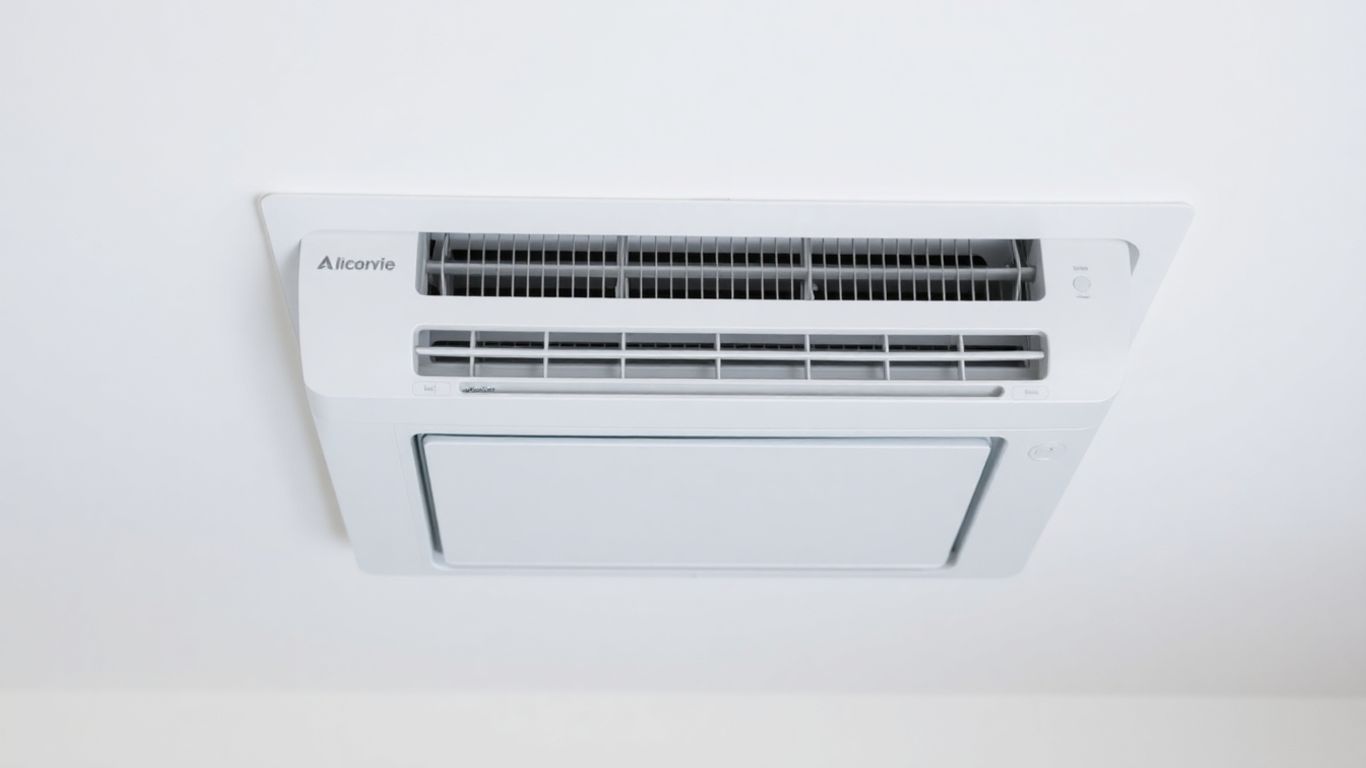
Cassette air conditioning systems do more than just regulate temperature; they offer a range of features designed to enhance your comfort and indoor air quality. These appliances are often equipped with advanced technologies for optimal performance.
Air Purification and Dehumidification
Beyond simple cooling or heating, many cassette air conditioning models integrate air purification functions. They can include filters capable of capturing fine dust, pollen, and other allergens, thus contributing to a healthier indoor environment. Furthermore, the dehumidification function helps regulate the humidity level in the room, which is particularly valuable during hot and humid periods for increased comfort. Good humidity management also prevents the development of mould.
Power Modulation with Inverter Technology
Inverter technology is a major asset of modern cassette air conditioners. It allows the compressor to modulate its speed according to the actual needs of the room, rather than operating in on/off cycles. This results in several advantages: a more stable temperature, reduced energy consumption, and quieter operation. The appliance continuously adjusts its power to maintain the set point, thus avoiding unpleasant temperature variations. It’s a bit like adjusting your car’s speed to maintain a constant pace rather than constantly accelerating and braking.
Homogeneous Distribution of Conditioned Air
One of the strengths of cassette air conditioners lies in their ability to distribute air uniformly throughout the room. Thanks to their adjustable louvres, often remotely controllable, you can direct the airflow in multiple directions. This avoids areas that are too hot or too cold and ensures a homogeneous temperature across the entire surface of the room. This targeted distribution greatly contributes to overall comfort, an important aspect for the installation of ceiling air conditioners.
- 360° Distribution: Most cassettes distribute air in all directions.
- Louvre Orientation: Allows directing the airflow to avoid direct draughts on occupants.
- Maintaining Uniform Temperature: Reduces temperature differences between the floor and the ceiling.
Installation Considerations
The installation of cassette air conditioning, although discreet once in place, requires particular attention and cannot be improvised. It is important to fully understand the prerequisites to fully benefit from your system.
Need for a False Ceiling for Integration
The main aesthetic advantage of cassette air conditioning lies in its integration. Designed to be recessed into a false ceiling, it is remarkably discreet. This necessarily implies the presence of a false ceiling. Without this structure, installation becomes technically impossible or, at the very least, very complex and aesthetically unpleasing. If your property does not have one, you will need to consider creating a false ceiling, which represents an additional cost and work to be taken into account from the outset. It’s a bit like wanting to install a home automation system without a good network connection; it won’t work as expected to optimise your network.
Installation Complexity and the Need for a Professional
It’s important to know that cassette air conditioning systems are generally not offered as “ready-to-install” versions, unlike some wall-mounted air conditioners. Their installation is more complex and requires specific technical skills. This includes the handling of refrigerants, which are subject to strict regulations due to their potential impact on the environment and health. Furthermore, the routing of ducts and the connection of units (indoor and outdoor) demand precise expertise to guarantee the system’s efficiency and safety. It is therefore highly recommended, and often mandatory, to call upon an artisan certified as a Recognised Environmental Guarantor (RGE). This professional will ensure that the installation complies with current standards and that your appliance will operate optimally.
Importance of a Property’s Energy Assessment
Even before considering installation, it is wise to carry out an energy assessment of your property. This diagnosis allows for the evaluation of your home’s overall performance in terms of insulation and energy consumption. Installing an air conditioning system, even a high-performance one, in a poorly insulated property can lead to excessive electricity consumption and thus a significant increase in your bills. A good energy assessment will help you identify any thermal bridges or insulation problems that should be corrected as a priority. This will allow you to correctly size your air conditioning system and optimise its efficiency, for lasting thermal comfort and controlled consumption. This is a key step to ensure that your investment will truly be profitable in the long term.
Economic Aspects and Available Aid
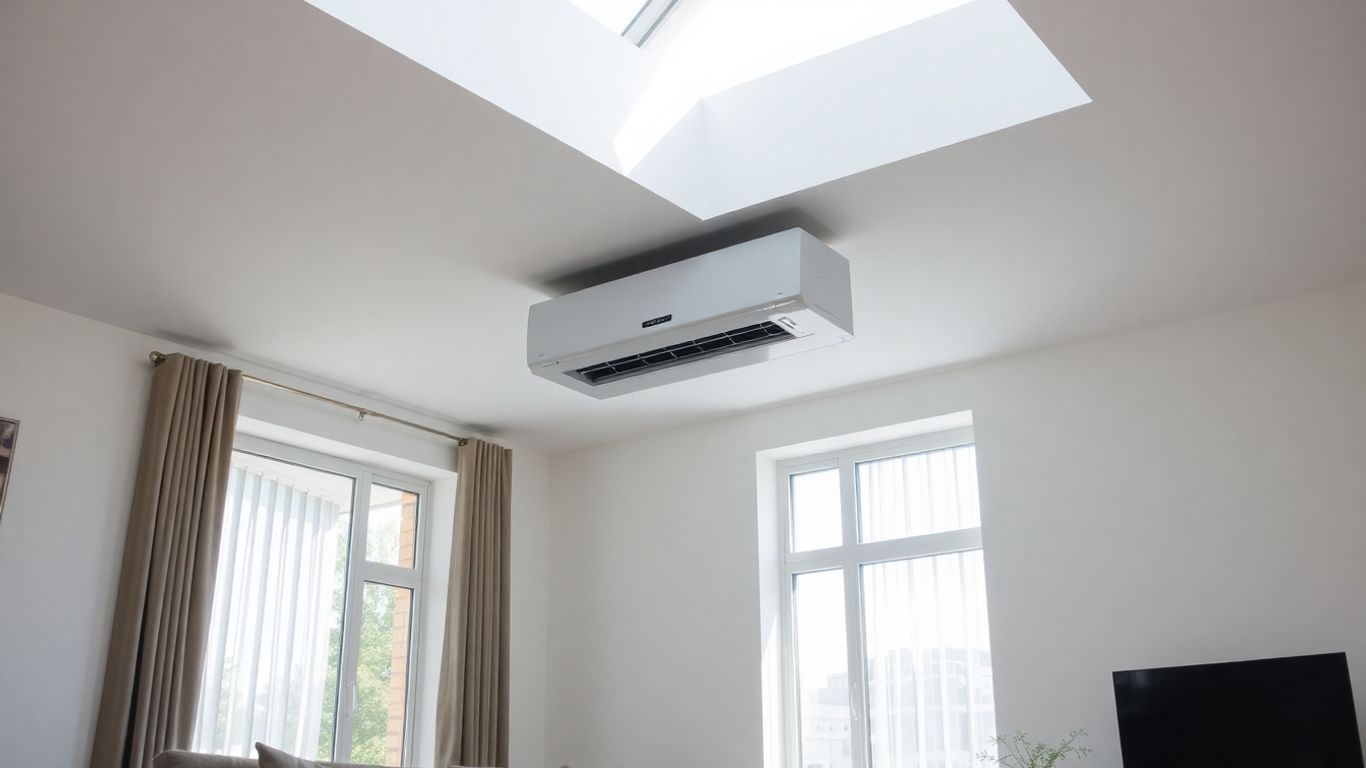
Potential for Energy Bill Savings
Installing a reversible cassette air conditioning system may represent an initial investment, but it is designed to optimise your energy consumption. By choosing a high-performance appliance, you can observe a notable reduction in your electricity bills, especially if your current system is old or less efficient. Remember to check the energy label when purchasing; a well-rated appliance will consume less daily. It is also wise to carry out an energy assessment of your property before installation to ensure your insulation is adequate, thereby avoiding any unnecessary energy loss.
Eligibility for Government Aid for Installation
To help you finance your project, several government aid schemes exist. For example, you could benefit from the Effy Grant, which falls under the Energy Savings Certificates (CEE) framework. There is also MaPrimeRénov’ Sérénité, aid from the National Housing Agency (Anah) aimed at modest households. Furthermore, a reduced VAT rate of 10% is often applied directly to quotes. Don’t forget to inquire with your local council, as local aid may also be available in your region. These subsidies can make the acquisition and installation of cassette air conditioning more affordable. If you are in Quebec, programmes like Hydro-Québec’s LogisVert may also concern you.
Variability of Acquisition Costs According to Models
The price of a cassette air conditioning unit can vary considerably. Several factors come into play: the chosen brand, the appliance’s power, its energy rating, and the specific features it offers, such as Inverter technology for finer temperature regulation. Entry-level models can be found for around €300, while more sophisticated and high-performance systems can reach €3500 or more. It is therefore important to compare offers and request several quotes to find the system that best suits your needs and budget. Don’t forget to include installation costs in your budget, which must be carried out by an RGE (Recognised Environmental Guarantor) certified professional to be eligible for certain aid.
In Conclusion: Is a Cassette a Wise Choice?
So, now you know a little more about what cassette air conditioning is for and what benefits it can bring you. It’s true that it can seem a bit technical at first, especially with its installation in a false ceiling. But if you have large rooms, or if you’re looking for a discreet and efficient solution to heat and cool your space, it’s definitely worth considering. Don’t forget that for a professional installation, you need to go through a professional. It requires a bit more organisation, but the comfort gained is worth it, especially if you opt for a reversible model that will serve you all year round. Keep it in mind for your next project!
Frequently Asked Questions
What is cassette air conditioning and how does it work?
Cassette air conditioning is an appliance that cools the air. It is part of ‘split’ systems, meaning it has an outdoor part (the outdoor unit) and an indoor part (the indoor unit). The indoor unit is hidden in the ceiling. Warm air from the room is drawn in, cooled, then returned to the room. It’s a bit like a heat pump that uses a special liquid to transfer heat.
What types of premises can cassette air conditioning be installed in?
Historically, these appliances were mainly found in shops, offices, or large commercial spaces because they are very effective at cooling large areas, sometimes up to 200 m². But now, more discreet models exist that are also very suitable for large rooms in houses or spacious flats.
What are the main advantages of cassette air conditioning?
The big advantage is that it is hidden in the ceiling, so it doesn’t take up wall space and remains discreet. It is also very efficient at cooling large volumes and operates quietly, as the noise is mainly produced by the outdoor unit. In addition, many models can also heat, which is practical all year round.
Can cassette air conditioning also be used for heating?
Yes, absolutely! Many cassette air conditioners are ‘reversible’. This means that in addition to cooling in summer, they can also heat in winter. They then function like a heat pump, recovering heat from the outdoor air to diffuse it indoors.
Is a false ceiling required to install cassette air conditioning?
Yes, it is essential. The indoor unit of cassette air conditioning is designed to be integrated directly into a false ceiling. This is what allows it to be so discreet. If you do not have a false ceiling, this type of installation is not possible.
Is the installation of cassette air conditioning complicated?
The installation is quite technical. It involves fixing the unit in the ceiling, installing the pipes that connect the indoor unit to the outdoor unit, and making the electrical connections. To ensure everything works correctly and for safety reasons, it is strongly advised to call upon a qualified professional for the installation.
