
Do you care about the quality of the air you breathe, whether outdoors or indoors? This is a legitimate concern. Maintaining clean air is essential for our health and overall well-being. In this article, we will explore the objectives set for healthier air, the indicators that help us track our progress, and the various methods we can employ to achieve them. We will cover both major national strategies and everyday actions that each of us can take to contribute to a cleaner environment.
Key Points for Clean Air
- National objectives for clean air are based on precise ambient air quality indicators and set targets for pollutant reduction with clear deadlines.
- Improving indoor air quality involves identifying and reducing sources of contaminants, adopting good building management practices, and choosing healthy materials.
- Engineering measures, such as optimising ventilation and using high-performance filtration systems, are fundamental to ensuring healthy air.
- Administrative measures, training, and personal protective equipment play a role in managing air quality risks, complementing technical approaches.
- In the face of poor outdoor air quality events, strategies such as enhanced filtration and the creation of cleaner spaces are necessary, while continuous evaluation of corrective measures ensures their effectiveness.
National Objectives for Clean Air

Achieving clean air is a national priority that relies on clear and measurable objectives. These objectives aim to protect your health and that of the environment by reducing exposure to air pollutants. This is a collective effort that requires an understanding of current indicators, targets to be met, and set deadlines.
Ambient Air Quality Indicators
To know where we stand, we rely on precise indicators that measure the concentration of pollutants in the air you breathe. This data allows us to assess the current situation and track progress. For example, the percentage of the population living in areas that meet Canadian Ambient Air Quality Standards is a key indicator. In 2022-2023, this figure was 64%, with the goal of reaching 85% by December 2030. It is important to note that these figures can vary from year to year, reflecting ongoing efforts and persistent challenges.
Air Pollutant Reduction Targets
Reduction targets are set for specific pollutants to ensure a tangible improvement in air quality. These targets are established based on current scientific knowledge of the effects of pollutants on health and the environment. The aim is to decrease the concentrations of harmful substances in the air, which will have a direct impact on your well-being and the preservation of ecosystems.
Deadlines for Meeting Standards
Clear deadlines are set for meeting established air quality standards. These deadlines serve as benchmarks for evaluating the effectiveness of implemented measures and for adjusting strategies if necessary. For example, the revision of standards for fine particulate matter (PM2.5) is planned by the end of 2025, with the aim of proposing updated standards. Meeting these deadlines is *essential* to ensure continuous and predictable improvement in the quality of the air you breathe.
Strategies for Improving Indoor Air Quality
Improving the quality of the air you breathe indoors is a process that requires a thoughtful approach. It’s not just about feeling better, but also about preserving your long-term health. Indoor air quality problems can arise when pollutants, whether chemical or biological, reach levels that can affect occupants. It is therefore important to know that some people may be more sensitive to these exposures.
Identifying and Reducing Sources of Contaminants
The first, and perhaps most important, step is to identify what is causing poor air quality and take action to reduce or eliminate it. Pollution sources don’t always come from outside; they can be much closer than you think. Consider the cleaning products you use, building materials, furniture, or even moisture that accumulates in certain areas. Reducing or eliminating these sources is the most effective strategy for improving indoor air.
Here are some avenues for identifying and managing these sources:
- Household and Cleaning Products: Opt for eco-friendly or fragrance-free products. Read labels carefully and ventilate well during and after use.
- Building Materials and Furniture: When renovating or purchasing, look for products with labels indicating low volatile organic compound (VOC) emissions.
- Moisture: Ensure good ventilation in damp rooms like bathrooms and kitchens. Promptly repair any water leaks.
- Indoor Activities: Cigarette smoke, the use of certain auxiliary heating appliances, or even cooking can generate pollutants. It is best to smoke outdoors and use extractor hoods.
Proactive management of indoor air quality begins with constant vigilance regarding the elements that can introduce pollutants into your environment. A simple action like opening a window can sometimes make a big difference.
Good Building Management Practices
Rigorous building management is essential for maintaining healthy air. This involves regular maintenance and attention to details that may seem minor but have an impact.
- Housekeeping: Regular and thorough cleaning helps remove dust and allergens that accumulate on surfaces and in carpets.
- HVAC System Maintenance: Heating, ventilation, and air conditioning systems should be inspected and serviced periodically. Replacing filters is a simple but vital task.
- Humidity Control: Maintaining a relative humidity level between 30% and 50% helps prevent the growth of mould and dust mites.
- Communication: Informing occupants about good practices and raising their awareness of the importance of indoor air quality can greatly contribute to a healthier environment for everyone.
Choosing Low-Emission Materials and Furniture
When choosing new materials for your living or working space, or when buying new furniture, it is wise to consider their impact on air quality. Many materials, including paints, varnishes, adhesives, carpets, and some particleboard furniture, can release volatile organic compounds (VOCs) into the air. These VOCs can cause headaches, eye and throat irritation, and other long-term health problems. Opting for certified low-VOC products is a simple yet significant step. Look for recognised labels that guarantee materials have been tested and approved for their low contribution to indoor air pollution. This includes not only finishing materials but also textiles, curtains, and even mattresses.
Engineering Measures for Healthy Air
To ensure healthy air in your spaces, targeted engineering measures are essential. These actions aim to isolate people from pollution sources, relying on a hierarchy of controls where they are positioned just after the elimination or substitution of the hazard. These are technical solutions that act directly on the work environment.
Optimising Ventilation Systems
Ventilation is at the heart of engineering strategies for air quality. Whether natural or mechanical, it plays a key role in renewing indoor air. It is important to ensure that ventilation systems are correctly sized and balanced to meet the current occupancy and design needs of the premises. This may involve adjustments to increase outdoor air flow, especially if occupancy has changed since the initial building design. Particular attention must be paid to outdoor air intakes to ensure they are located away from contaminant sources such as vehicle exhaust fumes or industrial emissions. Maintaining slight positive pressure within the building is also good practice to limit the infiltration of unwanted outdoor air and contaminants. The goal is to dilute and evacuate present pollutants.
Using Advanced Filtration Systems
When ventilation alone is insufficient, advanced filtration systems can be implemented. This includes the use of separate or portable HEPA (High Efficiency Particulate Air) filtration units to capture fine particles, dust, and other airborne contaminants. These systems are particularly useful for removing specific pollutants or during episodes of poor outdoor air quality. It is essential to choose systems with proven effectiveness and to adhere to the safety standards associated with their use. Regular maintenance is also necessary to ensure their optimal performance and prevent them from becoming a source of pollution themselves.
Emission Control Through Containment
Containment is another engineering approach that involves isolating pollution sources or limiting their spread. This can be done in several ways:
- Relocating potentially polluting tasks or processes away from occupied areas. If an activity generates contaminants, it is best to carry it out in a dedicated space, ideally maintained under negative pressure so that pollutants are drawn out and exhausted directly outdoors.
- Managing new materials and furniture by airing them out in a separate space before introducing them into work areas. This allows volatile organic compounds (VOCs) to dissipate.
- Installing physical barriers during dust-generating activities, such as construction or renovation work, to prevent dust from dispersing into the ambient air and reaching the ventilation system.
These measures, combined with good management of ventilation and filtration systems, contribute significantly to maintaining a healthy indoor environment. It is important to refer to technical recommendations, such as those from ASHRAE Standard 44, for proper implementation to keep indoor air clean.
The implementation of engineering measures must follow a hierarchical approach, prioritising solutions that eliminate or reduce the hazard at the source before isolating people. The effectiveness of these measures must be regularly evaluated to ensure they achieve the intended objectives without creating new problems.
Role of Administrative and Individual Measures
To ensure healthy air, both outdoors and indoors, it is not enough to rely solely on technical solutions. The actions you take on a daily basis, as well as the rules established by your organisation, play an equally important role. These measures, often called administrative and individual, aim to change behaviours and practices to limit exposure to pollutants.
Work Procedures and Awareness
The way work is organised and executed has a direct impact on air quality. It is therefore essential to establish clear procedures. This may include guidelines on the use of certain products, working hours in potentially exposed areas, or waste management. Awareness is key: informing occupants of potential risks and good practices to adopt helps create an air quality culture. Transparent communication about pollution sources and the measures taken is paramount.
- Define protocols for the use of chemicals or potentially emitting materials.
- Schedule tasks that generate dust or odours during periods of low occupancy.
- Implement signage systems to warn of areas where air quality may be compromised.
- Encourage prompt reporting of any unusual odours or respiratory discomfort.
Eliminating or controlling sources of contamination remains the most effective method. When this is not possible, administrative measures complement it to reduce exposure.
Indoor Air Quality Training
Adequate training enables individuals to better understand the issues related to indoor air quality and how to respond. This includes recognising the signs of poor air quality, understanding product labels, and applying barrier gestures against pollutants. Well-designed training can transform potentially harmful practices into healthy habits.
Importance of Personal Protective Equipment
Personal protective equipment (PPE) is the last line of defence. It does not replace source control or engineering measures, but it is essential when these are not sufficient to reduce exposure to an acceptable level. PPE must be chosen based on specific risks, fitted correctly, and used properly. Its use should be considered a temporary or complementary measure, pending the implementation of more sustainable solutions.
Complementary Technologies for Air Purification
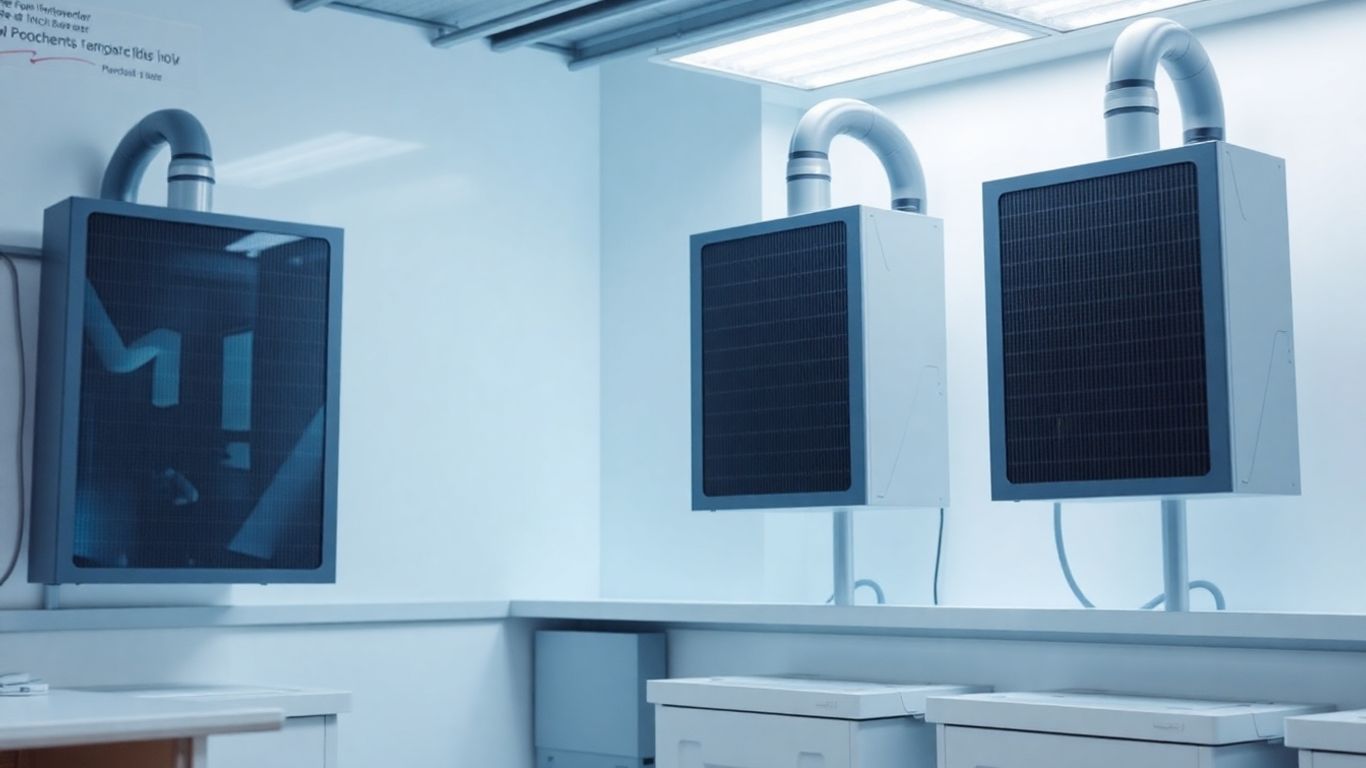
Beyond basic strategies like ventilation and source reduction, various technologies can enhance your efforts to achieve cleaner air. It is important to approach them with discernment, as their effectiveness and safety vary. The goal is to add layers of protection without introducing new problems.
Air Purifiers and Their Proven Effectiveness
Portable air purifiers, often equipped with HEPA filters, are designed to capture fine particles, pollen, dust, and even some viruses and bacteria. For maximum effectiveness, it is recommended to choose devices with clearly demonstrated effectiveness and safety. Larger filtration systems, designed to be integrated into HVAC systems or wall-mounted, can offer broader coverage. These systems should ideally have multiple filtration stages:
- A pre-filter for the largest particles.
- An activated carbon layer to neutralise odours.
- A HEPA filter for the finest particles.
This approach helps extend the lifespan of HEPA filters, which are often more expensive, by replacing pre-filters more regularly.
Safety Standards for Purification Systems
When choosing a purification system, it is crucial to verify that it complies with established safety standards. For example, devices that use technologies such as ions or photocatalytic oxidisers can potentially produce ozone. To avoid this, look for certifications such as UL 2998, which guarantees zero ozone emissions. ASHRAE Standard 241 also provides a framework for testing the effectiveness and safety of these systems, particularly against microorganisms, while setting limits for UV radiation and degradation by-products. Consulting lists of certified appliances by recognised organisations can help you make an informed choice.
Potential for Harmful By-products
Some air purification technologies, while effective at removing particles, can have an undesirable effect: the production of harmful by-products. Ozone, for example, is a respiratory irritant that can worsen asthma and other lung conditions. It is therefore essential to favour technologies that have proven to be safe. Devices that do not emit ozone, or whose emissions are negligible, are preferable. Good general ventilation remains a key measure to dilute any contaminants potentially generated by these devices. Using MERV 13 or higher filters in your HVAC system can also help reduce the entry of outdoor particles, such as those from wildfire smoke, into commercial buildings.
It is important to remember that these technologies are complements, not substitutes, for good ventilation and pollution source reduction. An integrated approach is always the most effective for maintaining good indoor air quality.
Managing Poor Outdoor Air Quality Events
Air Filtration During Smoke Episodes
When an episode of poor outdoor air quality occurs, particularly due to wildfire smoke, it is essential to protect building occupants. The first step is to *limit the entry of polluted outdoor air*. This involves closing windows and doors, and reducing mechanical ventilation that draws in outdoor air. If your ventilation system allows, prioritise the internal recirculation mode. The use of high-performance air filtration systems is then essential to purify indoor air.
Monitoring Indoor Fine Particles
It is important to monitor the concentration of fine particulate matter (PM2.5) inside your building during these events. Air quality sensors can help you assess the effectiveness of your filtration measures. PM2.5 levels should ideally remain below public health recommended thresholds. Regular monitoring allows for real-time adjustments to ventilation and filtration strategies.
Creating Temporary Cleaner Air Spaces
In situations where outdoor air quality is particularly poor and usual measures are insufficient, it may be necessary to create temporary refuge areas indoors. These spaces, often called
Evaluation and Re-evaluation of Corrective Measures
Once you have implemented solutions to improve air quality, it is essential to check if they are truly working. This is not just a formality; it is a key step to ensure that the air you breathe is healthy in the long term. Therefore, the effectiveness of the actions taken must be evaluated and, if necessary, adjusted.
Qualitative Improvement Criteria
To know if your measures are paying off, first look at the occupants. Have complaints about air quality decreased? Do people feel better? A significant reduction in reports of headaches, irritation, or fatigue can indicate that you are on the right track. This is a subjective assessment, but it is very telling.
- Decrease in symptoms reported by occupants.
- General improvement in perceived well-being.
- Fewer days of absence due to health problems potentially related to air quality.
Measurable Quantitative Parameters
Next, you need to look at the numbers. This involves concretely measuring pollutant levels before and after the intervention. For example, if you have installed a new filtration system, measure the concentration of fine particles before and after its activation. The results should show a notable improvement compared to established standards.
Here are some examples of parameters to monitor:
| Parameter Measured | Before Measures | After Measures | Target Standard |
|---|---|---|---|
| Fine Particulate Matter (PM2.5) | 35 µg/m³ | 10 µg/m³ | < 15 µg/m³ |
| CO2 | 1200 ppm | 600 ppm | < 1000 ppm |
| Relative Humidity | 65% | 50% | 40-60% |
It is important to document these measurements. Keeping a record of evaluations allows for tracking trends and reacting quickly if a problem reappears or if new problems arise in other areas of the building.
Communication with Occupants
Throughout this process, communication is paramount. Keep occupants informed of the measures taken, the results obtained, and the next steps. Their feedback is valuable for adjusting actions. Organise meetings or distribute newsletters to maintain open dialogue. Transparent collaboration builds trust and buy-in for the implemented measures.
Conclusion
Ultimately, improving the quality of the air you breathe, whether indoors or outdoors, requires a thoughtful approach. You have seen that there are clear objectives, ways to measure progress, and various methods to achieve them. Whether through ventilation, filtration, reducing pollution sources, or even simple everyday actions, every effort counts. It is important to stay informed and apply good practices to ensure a healthier environment for yourself. Remember that air quality is everyone’s business and that your efforts contribute to collective well-being.
Frequently Asked Questions
What is air quality and why is it important to you?
Air quality is the cleanliness of the air you breathe, whether outdoors or indoors. Clean air is essential for your health. When the air is polluted, it can cause problems like coughing, headaches, or even more serious long-term illnesses. It is therefore crucial to ensure that the air you inhale is healthy.
How do you know if the air quality is poor?
You can get an idea of air quality through indicators. For example, the amount of small particles or harmful gases in the air is measured. Sometimes, a bad smell or a feeling of discomfort in a building can also be signs. There are devices that measure air quality to give you precise information.
What actions can you take to improve the air quality in your home?
At home, you can do several simple things. Ventilate your home often by opening windows, even in winter for a few minutes. Avoid using overly chemical cleaning products or strong air fresheners. If you have plants, they can help purify the air. Also, remember to regularly change the filters on your appliances like vacuum cleaners or extractor hoods.
What is ventilation and how does it help to have healthier air?
Ventilation is the renewal of air. It helps to remove stale air, which contains things like the CO2 we exhale, and bring in fresh air from outside. Good ventilation, whether natural (opening windows) or mechanical (with a system), helps to dilute pollutants and reduce the risk of airborne illnesses.
When should you be concerned about outdoor air quality?
You should pay attention to outdoor air quality during special events, such as days with high pollution due to cars or industries, or when there is smoke from wildfires. In these cases, it is advisable to limit time spent outdoors and to keep windows closed to prevent polluted air from entering your home.
What are the general objectives for cleaner air?
The objectives are to make the air we breathe, both indoors and outdoors, healthier for everyone. This means reducing the amount of pollutants in the air to levels that are good for health. Dates are set for achieving this, and strategies are put in place, such as stricter regulations for factories or incentives to buy less polluting cars.
