
You may be wondering whether a heat recovery unit is really worth it for your building. It’s true, they’re often discussed, but with all the different models, the numbers you see, and the installation constraints, it’s not always obvious to know where to start. In this article, we’ll take a look together at the possible gains, the types of systems available, and what you can realistically expect in terms of efficiency. No jargon, just clear and practical explanations to help you make the right choice.
Key points to remember
- A heat recovery unit allows you to reuse the energy from extracted air, which significantly reduces your heating bill.
- There are several technologies: plate heat exchangers, rotary wheels, glycol water loops or heat pipes, each suited to different needs.
- Efficiency can range from 50 to 95%, depending on the technology chosen and correct system sizing.
- The installation must take into account the available space, compatibility with existing equipment, and accessibility for maintenance.
- Regular maintenance and appropriate regulation are essential to maintain long-term energy savings.
Operating principles of a heat recovery unit
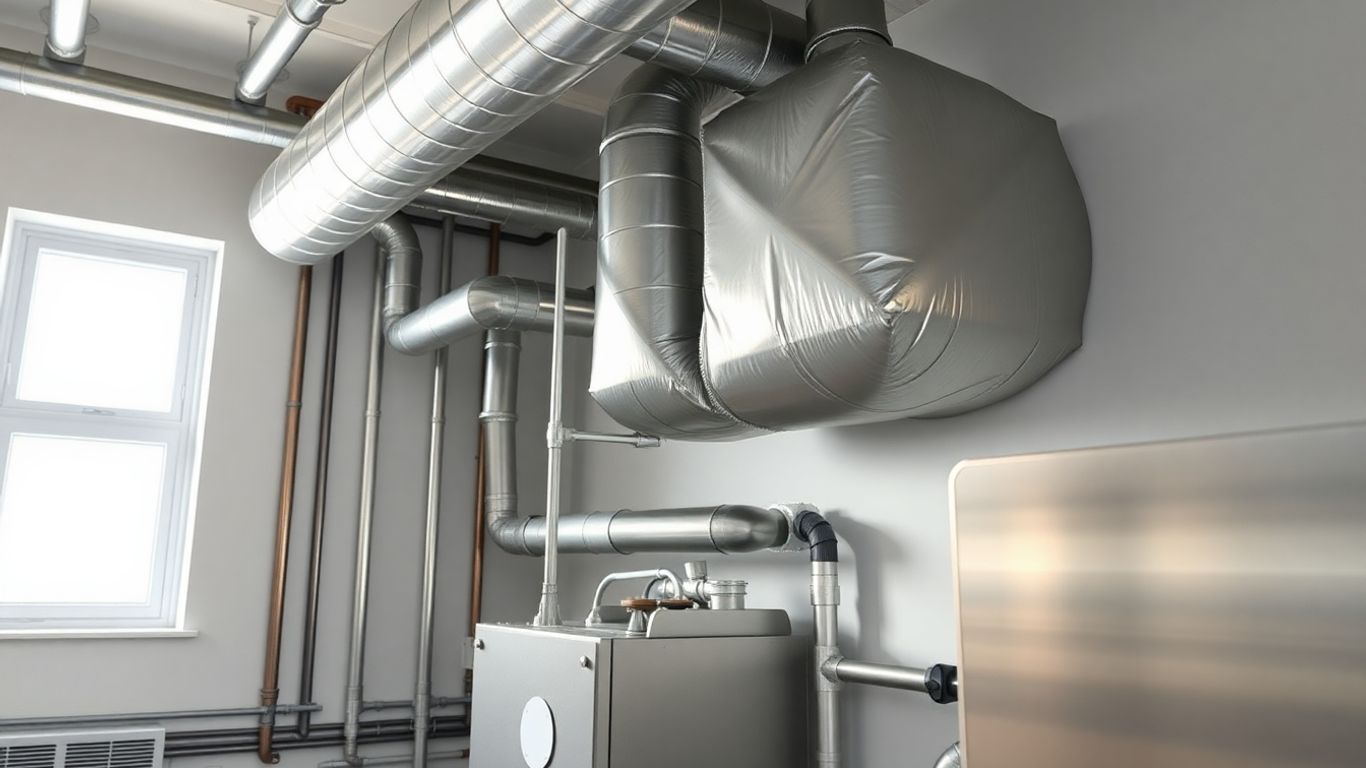
The way a heat recovery unit works is based on the aim of limiting energy wastage, relying on thermal transfer between two airflows at different temperatures. As a building manager or occupant, your primary goal is to optimise comfort while reducing heating costs.
Heat transfer between extracted air and fresh air
In a mechanical ventilation with heat recovery (MVHR) system, the role of the heat recovery unit is to capture the heat present in the extracted air (stale air removed from the building) and transfer it to the incoming fresh air, which is colder and comes from outside. So, instead of simply exhausting warm air rich in calories, you’re using it to preheat the incoming air, reducing the need for supplementary heating from conventional equipment.
This process can achieve the recovery of up to 90% of the heat from the extracted air, depending on the technology used.
Here’s how it usually works:
- The extracted air passes through a heat exchanger where it gives up its heat to the fresh intake air.
- There is no direct contact between the two flows: only thermal energy is transferred.
- This transfer is passive, without additional energy consumption dedicated to this stage.
By capturing this free energy, your ventilation system becomes much more efficient throughout the building’s lifespan.
The role of enthalpy and humidity
Enthalpy, a concept that’s hard to avoid when discussing heat recovery, measures the total energy content (sensible heat + latent heat linked to humidity) in the air.
In some areas, such as offices or swimming pools, the exhausted air contains not only heat but also a lot of humidity. Depending on the technology of the heat exchanger (enthalpy exchanger, for example), it is possible to:
- Transfer part of the humidity from the extracted air to the fresh intake air
- Maintain a more stable humidity level inside the building, limiting both excessive dehumidification in winter and over-humidification in summer
- Reduce the need for humidification, which further lowers the energy bill
Indicative table: Difference in enthalpy according to interior air type
| Situation (Type of air) | Difference in recovered enthalpy (kJ/kg) |
|---|---|
| Very dry indoor air | 7 – 14 |
| Normal indoor air (offices) | 7 – 23 |
| Very humid indoor air | 7 – 49 |
Factors impacting energy performance
Different factors that deserve your attention come into play in the efficiency of a heat recovery unit:
- Quality of the exchanger: materials, design, airtightness
- Airflow rate and balancing of the ventilation system
- Outdoor and indoor temperatures
- Relative humidity of extracted and fresh air
- Cleanliness, regular maintenance, and absence of obstructions
If these elements are poorly managed, the system loses efficiency, which means less energy savings. Take time to check each factor during design and monitoring of the system.
Types of heat recovery unit suited to buildings
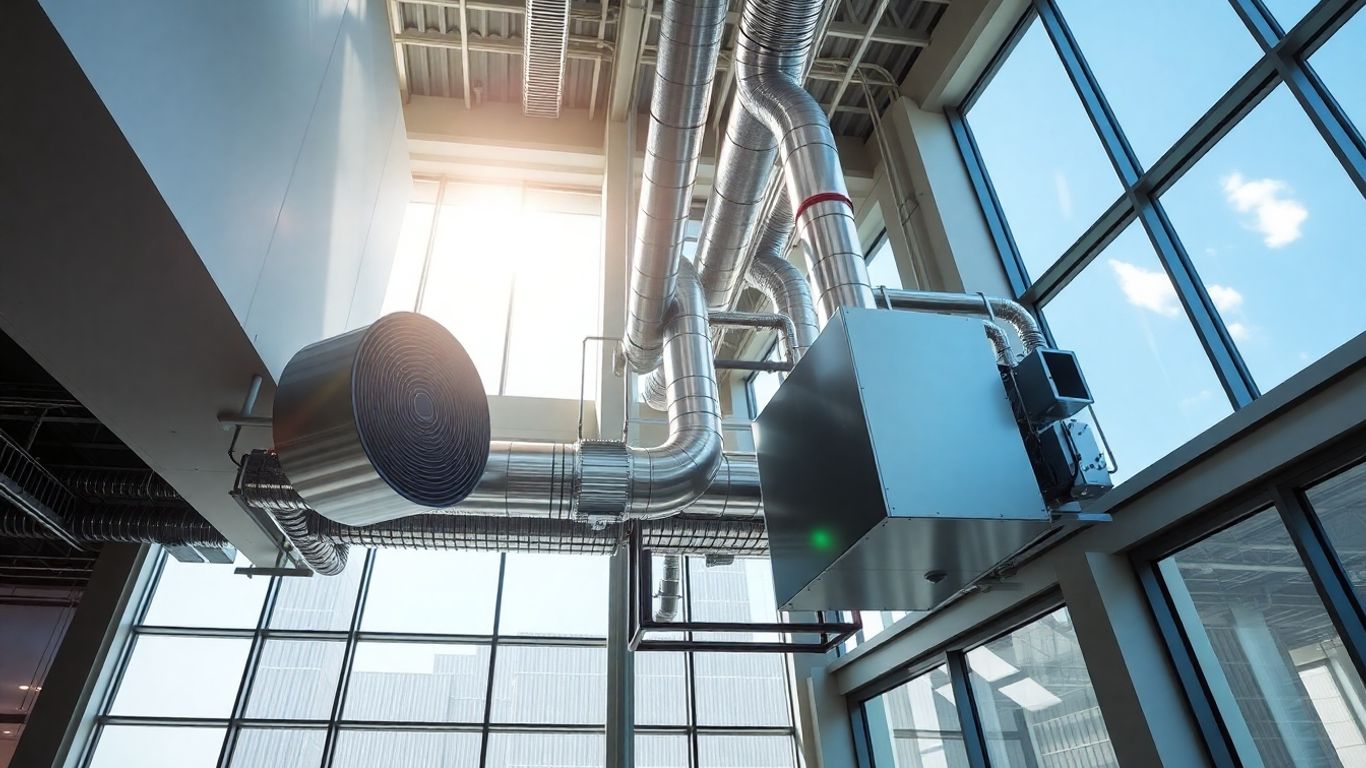
When considering integrating a heat recovery unit into a building, it’s vital to understand the different technologies available. Each system has its advantages, limitations, and specific uses, suited to the building’s layout or installation constraints.
Plate heat exchanger: structure and applications
The plate heat exchanger is the most common solution in ventilation installations. It consists of a series of thin metal plates with two airflows passing between them: the extracted air from the premises and the incoming fresh air. These plates provide direct heat transfer while keeping the airflows separate, guaranteeing the cleanliness of the supplied air.
- High average energy efficiency, especially for flows below 5,000 m³/h.
- Ideally suited for offices, individual homes, and small commercial buildings.
- Low maintenance, only regular cleaning of the exchange surfaces required.
In residential and small buildings, the plate heat exchanger is often the best option, offering an excellent balance between efficiency and installation simplicity.
Regenerative system (rotary wheel, accumulator materials)
Regenerative systems use a rotary wheel or specially designed materials to temporarily store heat before releasing it to the incoming air. This technology is well-suited to large air volumes requiring heat recovery:
- Higher efficiency, particularly when the airflow exceeds 10,000 m³/h.
- Ability to also recover part of the humidity from the extracted air.
- Suitable for large commercial buildings or industrial sites.
Comparison table of main types (for 10,000 m³/h):
| Type of heat recovery unit | Size (m) | Thermal efficiency (%) |
|---|---|---|
| Plate exchanger | 1.5 – 2 | 50 – 70 |
| Regenerative system (wheel) | 0.5 – 2 | 65 – 80 |
| Heat pipe | 0.5 | 45 – 60 |
| Glycol water loop | 0.5 – 1 | 45 – 60 |
Glycol water loop and heat pipes: use cases
When the layout of a building does not allow the extracted and fresh air flows to be positioned side by side, other devices are preferable, such as the glycol water loop or heat pipes:
- Glycol water loop: A closed circuit transports heat over a distance via a heat-carrying fluid, particularly when physical separation of the airflows is required.
- Heat pipes: Their tubular structure enables heat transfer even over large distances, especially where space is restricted.
- Typical applications: buildings with complex layouts or requiring flexible positioning of the units.
To maximise overall efficiency, these systems are often coupled with other ventilation equipment, even a thermal destratifier to optimise heat distribution in the premises (for uniform air distribution).
To sum up, choosing the type must always take into account the nature of the building, the air volume to be treated, spatial constraints, and ease of maintenance. Without this consideration, the potential gain can quickly be reduced during daily use.
Energy and financial gains achievable with a heat recovery unit
The installation of a heat recovery unit, especially on a mechanical ventilation with heat recovery (MVHR) system, allows you to significantly reduce your heating costs. By recovering part of the energy contained in the extracted air, it’s possible to limit heat losses due to air renewal, a factor too often neglected in modern buildings.
Estimating heating savings
Installing a heat recovery unit can reduce your heating bill by up to 50%, or even more in some cases.
The proportion of energy recovered usually ranges between 50% and 95%, depending on the efficiency of the equipment chosen, the airflow, and the temperature difference between inside and outside.
The method for calculating annual savings is based on the amount of air handled, the duration of use, and your heating system’s performance. Here is a simplified example:
| Data | Value |
|---|---|
| Ventilation rate | 10,000 m³/h |
| Operating hours/year | 1,750 h |
| External / Indoor temperature | 8°C / 22°C |
| Heat recovery unit efficiency | 50 % |
| Annual energy saved | 52,000 kWh |
| Financial saving | €3,234 / year |
Don’t forget to factor in the increased electricity consumption by the fans and control system, which can slightly reduce the final net gain.
Recovery of sensible and latent heat
The heat recovery unit doesn’t just work on sensible heat (related to temperature), but can also recover part of the latent heat, i.e. the energy from the water vapour in the extracted air.
For environments that are very humid, such as swimming pools or some industrial settings, this recovery potential is particularly high. Depending on the humidity of the extracted air, the proportion of latent heat recovered can represent up to 50% of the total gain.
- Sensible heat: energy linked to the temperature difference
- Latent heat: energy linked to condensation of moisture
- The warmer and more humid the extracted air, the more effective the recovery unit will be
If you work in spaces where the humidity level is high, heat recovery must be paired with fine humidity management, so you’ll need a thorough analysis before choosing the technology.
Impact of building type and usage
The level of savings achievable depends a lot on the type of building and its use. Large airflows are more common in offices, schools, or workshops, whereas individual homes also benefit from this technology, but with sometimes longer payback periods. Integration with a smart home solution, such as a high-performance smart home box, can further optimise savings, thanks to intelligent management based on occupancy and weather.
List of influencing factors:
- Fresh air flow to be treated daily
- Temperature difference between inside and outside
- Operating regime (continuous/daytime)
- Current thermal and electrical kWh cost
- Requirement for humidification/dehumidification
In some cases, a heat recovery unit becomes worthwhile from 2,000 m³/h in continuous operation or 5,000 m³/h for daytime use. For each building type, it’s wise to compare initial investment, maintenance costs, and payback time.
Ultimately, installing a heat recovery unit often proves sensible and cost-effective over time, especially with today’s volatile energy prices.
Analysis of efficiency by heat recovery unit technology
Factors determining efficiency
When assessing the performance of a heat recovery unit, several elements come into play. Among the most important:
- The temperature gap between extracted and supply air
- The humidity content of the air handled
- Technical design: exchange surface area, materials, wall thickness
- The condition of filters and cleanliness of exchange surfaces
The combination of these factors delivers an overall efficiency usually ranging between 50% and 95% depending on the technology used. For example, a plate exchanger can ensure efficient heat transfer at low or medium flows, while a rotary wheel solution has its limits mainly in installations with very humid air. The actual usage of the building and the applied regulation also influence the measured efficiency over time.
Sample installation calculations
Let’s take a concrete example to illustrate the benefit of a heat recovery unit:
| Airflow (m³/h) | Indoor T (°C) | Outdoor T (°C) | Efficiency (%) | Recovered energy (kWh/h) |
|---|---|---|---|---|
| 10,000 | 22 | 6 | 75 | 40.5 |
| 21,000 | 22 | -10 | 76 | 110 |
Everything depends on the airflow handled and the temperature difference. The standard formula used is:
0.34 x Airflow (m³/h) x (Extract temperature – Outdoor temperature) x Efficiency
So, in a 21,000 m³/h installation with a thermal gap of 32°C and an efficiency of 76%, around 110 kWh is recovered on average each hour.
The energy saved by a heat recovery unit can be measured every hour of operation. Over a typical heating season, this represents a considerable reduction in your heating cost.
Influence of airflow and system sizing
The theoretical efficiency can be noticeably affected by the airflow, system sizing, and regulation.
- At low flows (less than 5,000 m³/h), plate exchangers are often more cost-effective, especially as their cost remains moderate.
- Conversely, for flows over 20,000 m³/h, you see that accumulation systems (wheel or specialist materials) become more competitive: their efficiency stays consistent and they can handle large air volumes.
- An oversized or poorly regulated ventilation system risks, on the contrary, reducing the amount of energy recovered, while variable control optimises each recovery period.
The choice of building type, whether it’s a multi-occupancy block or an industrial site, determines system selection and the regulation method. For further information on payback for different solutions, see how savings and incentives are available for block-ownership thanks to these units (savings in multi-occupancy blocks).
Technical constraints for installing a heat recovery unit
Before installing a heat recovery unit, several technical points must be carefully considered. These constraints affect not just the project’s feasibility, but also its long-term viability. Poor decisions at this stage can lead to significant extra costs or reduced performance.
Space requirements and recommended locations
During planning, available space plays a central role. Here’s what you should consider:
- Size of the unit: each technology takes up different space. Plate exchangers often require more room than heat pipes or glycol water loops.
- Strategic locations: a plant room, basement, or service duct is preferred for accessibility and maintenance.
- Specific building needs: ceiling height, proximity to ducting, space for ventilation.
| Type of heat recovery unit | Size (m for 10,000 m³/h air) |
|---|---|
| Glycol water loop | 0.5 – 1 |
| Plate exchanger | 1.5 – 2 |
| Heat pipe | 0.5 |
| Accumulator exchanger | 0.5 – 2 |
It’s best to anticipate the space requirements from the design stage to avoid surprises during installation. For precise advice about energy management, E-Home.fr offers practical solutions.
Compatibility with existing systems
A heat recovery unit must be able to integrate easily with the existing installation:
- Check the type and condition of the existing ductwork: old materials or sections that are too small may require adaptation.
- Compatibility with the existing heating system is often good; the technology works well with a boiler or heat pump.
- If the heat recovery unit is to work with a hot water cylinder, you should plan for temperature offsets and the risk of condensation.
Remember that interconnection of systems, even older ones, is possible but may require updates to components.
Considerations about accessibility and ventilation
Accessibility is a key factor for equipment maintenance and monitoring. To ensure good operation over time:
- Prioritise locations with easy access for routine maintenance (cleaning exchanger surfaces, checking filters, visual inspection).
- Avoid overly confined rooms; good ventilation prevents premature wear.
- Maintain a minimum ceiling height, especially for vertical systems, generally several metres are needed.
Always plan for access for regular maintenance, as neglecting this can reduce system lifespan and increase the risk of breakdown.
In summary, installing a heat recovery unit means anticipating physical building constraints, network compatibility, and accessibility for safe and simple maintenance. Each case requires a bespoke assessment to optimise return on investment and long-term benefits.
Control settings and maintenance of heat recovery units
When you install a heat recovery unit, you should never overlook the question of control and maintenance. A well-adjusted and maintained system ensures regular energy savings over the long term. Let’s look at the key points to favour to get the best possible investment return.
Control modes to manage frost and overheating risks
The management of heat recovery depends a lot on the season:
- In winter, the main risk is frost forming on the exchanger. To avoid this, strategies such as gradually reducing the recovery power or using a bypass are very effective.
- In mid-season and summer, overheating must be limited. You can then use variable speed control, free cooling or the bypass to stop the incoming air from increasing the indoor temperature.
- Some systems such as wheels or accumulators are less sensitive to frost, meaning you may be able to reduce the size of auxiliary heating equipment, with greater cost-effectiveness, as explained in this content on effective control of industrial heating installations.
| Control function | Season | Main effect |
|---|---|---|
| Bypass | Winter/Summer | Prevention of frost or overheating |
| Variable speed (wheel) | Mid-season | Precise adjustment of heat recovery |
| Defrost cycle | Winter | Protection of exchanger against freezing |
Monitoring the temperature of incoming and outgoing air remains the basic action for controlling frost or overheating risks.
Preventive maintenance and checks to be carried out
Wear or fouling quickly hampers the expected performance. For each technology, you should apply specific routines:
- Careful cleaning of exchange surfaces and filter replacement
- Check for airtightness (external and internal leaks), especially for plate or heat pipe systems
- Regular checks of heat transfer fluid for glycol loops: antifreeze level, purging, flow
- Monitoring regulation parameters: antifreeze, wheel speed, bypass controls
| Type of heat recovery unit | Clean surface | Leak check | Fluid maintenance | Regulation check |
|---|---|---|---|---|
| Plate exchanger | X | X | – | X |
| Glycol water loop | X | X | X | X |
| Heat pipe | X | X | – | X |
| Accumulator/rotary | X | X | – | X |
Impact of maintenance on long-term savings
Neglected maintenance quickly brings its share of problems: reduced airflow rates, loss of heat exchange, even premature wear. If the recovery unit no longer works as it should, all your financial benefit disappears.
A few good practices to put in place:
- Schedule annual performance monitoring with inlet/outlet temperature readings.
- Check and clean filters every three to six months.
- Plan for enough access space around the recovery unit to enable easy intervention.
One often underestimated point: the maintenance cost varies by technology. Some systems require more time and attention than others, which should be considered at purchase or when calculating payback.
Keeping your system clean and well adjusted means securing your energy savings for many years, with no nasty surprises.
Humidity recovery and indoor air quality
Managing humidity in buildings is often overlooked, yet an adequate humidity level significantly improves comfort and reduces problems related to air that’s too dry or too humid. A well-chosen heat recovery unit can also make use of the humidity in extracted air to balance the supply air, while maintaining air quality.
Humidity recovery techniques
Methods vary according to the recovery unit technology. Here are the main ones:
- Hygroscopic rotary wheels: able to transfer both heat and moisture by adsorption/desorption using a special material.
- Mixing boxes with a proportion of recirculated extracted air, suitable if the contamination risk is controlled.
- Conventional exchangers condensing the extracted air, which recover latent heat, but don’t significantly increase humidity in the fresh air.
In some cases, adjusting the rotation speed of hygroscopic wheels optimises humidity control depending on the season or the building’s specific needs.
Effects on humidification needs
Recovering humidity limits the use of humidifiers, especially in winter when outside air is cold and dry. This brings real savings:
| Type of room | Energy saving on humidification |
|---|---|
| Office (indoor air at 20°C/60%) | 15-25% |
| Swimming pool (28°C/65%) | 25-40% |
| Dry home (20°C/35%) | Low (5-10%) |
The more humid the extracted air, the more cost-effective the recovery. For some applications, the initial investment is quickly paid back thanks to the reduced energy use for humidification.
Contamination risks and precautions
Any system enabling moisture transfer must also minimise the transfer of contaminants from extract to supply air. This is particularly relevant in rotary or mixing systems. Here’s what to check:
- Quality of seals and internal airtightness
- Regular hygiene checks
- System adaptation to building type (schools, pools, commercial buildings)
Poor technology choice or neglected maintenance can affect air quality, with consequences for health and system performance.
Automation and remote monitoring, as used in a connected home where comfort and optimised ventilation go hand in hand, also make it easier to manage humidity and prevent risks.
In summary, remember to factor in humidity management when choosing your heat recovery unit so you achieve a balance between energy savings, health and comfort.
Conclusion
In conclusion, you can see that a heat recovery unit can really make a difference to the energy management of a building. Depending on the type chosen, the savings will vary, but in all cases, there’s real potential to reduce your bills and limit losses. You need to look closely at your installation’s configuration, the airflow, and the available space before getting started. Don’t neglect maintenance, as a well-maintained system keeps delivering good efficiency over time. Finally, remember to compare different options and check what financial support is available. By taking the time to study your project properly, you’ll be able to benefit from an effective, tailored system that pays for itself quickly. It’s not always simple, but it’s definitely worth it.
Frequently Asked Questions
How does a heat recovery unit work in a building?
A heat recovery unit takes the heat from the air leaving the building and transfers it to the fresh air coming in. This pre-heats the incoming air without extra energy use. The system usually uses plates or a special material to pass heat from one airflow to another.
What are the different types of heat recovery units?
There are several types: plate exchangers, rotary (regenerative) systems, heat pipes, and glycol water loops. Each type has its advantages depending on the building size and energy requirements. For example, plate exchangers are simple and effective for small flows, while rotary systems suit larger buildings better.
How much can you save with a heat recovery unit?
A heat recovery unit can reduce your heating bills by 50 to 95%, depending on the technology and installation. The warmer and wetter the extracted air, the greater the saving. In some cases, you can save several hundred euros per year.
How do I know if my building is suitable for a heat recovery unit?
You need to check there’s enough space to install the unit, easy access to ducts, and compatibility with your existing heating system. A professional can carry out a study to see if the project is possible and cost-effective in your case.
What maintenance is needed to keep a heat recovery unit efficient?
It’s important to clean the filters regularly, check the condition of the exchange surfaces, and inspect seals and connections. An annual check by a specialist helps prevent breakdowns and maintains energy savings.
Can a heat recovery unit improve indoor air quality?
Yes, some models also recover humidity from the extracted air, helping to prevent indoor air from becoming too dry. But you should beware of contamination risks and choose a model suited to maintaining healthy air.
