
Wondering how those little devices that measure temperature and humidity work? It’s perfectly normal, as understanding how a sensor functions is the first step to using it effectively. Whether you’re in industry, home automation, or simply curious, knowing what’s behind these measurements is important. This article guides you through the world of sensors, explaining their role, different types, and how to choose the right one for you.
Key Takeaways
- A sensor converts physical quantities (temperature, humidity, pressure) into usable electrical signals.
- Temperature sensors are essential for accurate humidity measurement, as these two elements are linked.
- There are several types of humidity sensors: capacitive, resistive, and thermal conductivity, each with its own specificities.
- These sensors have varied applications, from environmental control to precision manufacturing and industrial monitoring.
- Choosing the right sensor depends on the application, required accuracy, durability, and cost, not to mention the importance of calibration.
Understanding How Temperature and Humidity Sensors Work
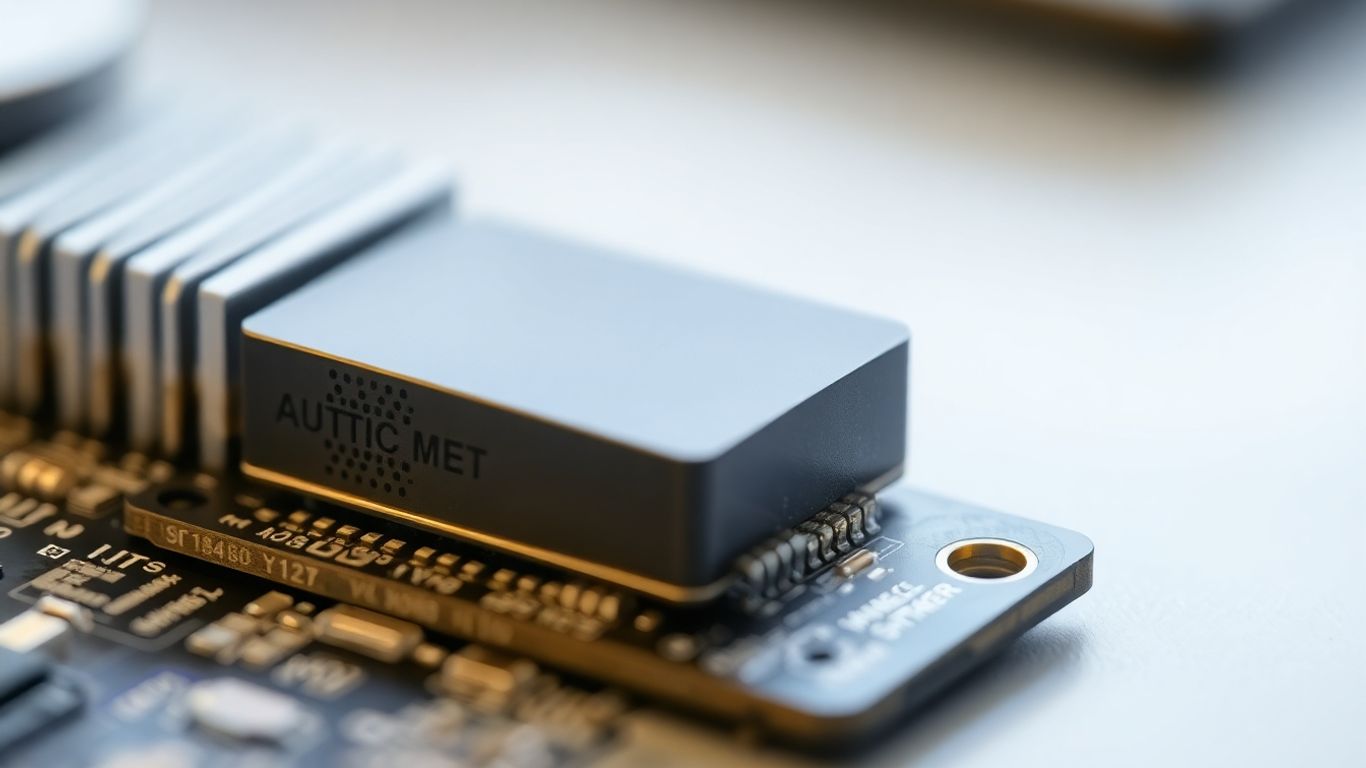
The Role of Temperature Sensors in Humidity Measurement
You might wonder why a temperature sensor is so important when talking about humidity. Well, it’s quite simple: relative humidity, the measurement we see most often, depends directly on air temperature. Imagine air as a sponge; the warmer it is, the more water it can hold. A temperature sensor therefore provides the essential context to correctly interpret the amount of water vapour present. Without this data, the humidity measurement alone would be incomplete, even misleading, especially if the temperature varies. The accuracy of humidity measurement therefore intrinsically depends on the accuracy of temperature measurement. This is why, for demanding applications, it is often recommended to aim for a temperature accuracy of ±0.2 to 0.5°C, as suggested by recommendations for selecting digital sensors [c22e].
Why Combine Temperature and Humidity Sensors?
Combining these two types of sensors is like having a complete view of the environment. As we’ve just seen, temperature directly influences the measurement of relative humidity. By having both pieces of information simultaneously, you can not only know the humidity level but also understand how it is affected by the ambient temperature. This allows for the correction of any errors or variations due to thermal fluctuations. For heating, ventilation, and air conditioning (HVAC) systems, industrial processes, or even simple room monitoring, this dual measurement offers increased reliability and relevance. You thus obtain more stable and representative data of reality.
Measuring Humidity and Temperature for Optimal Control
To truly master the conditions of a space, whether it’s a greenhouse, a warehouse, or a cleanroom, you need to be able to measure and control both temperature and humidity. Combined sensors are designed for this. They provide real-time data, which is vital for automated systems that adjust parameters to maintain a stable environment. For these measurements to be useful, the sensors must be reliable and well-maintained. This involves regular calibration and careful installation, away from direct heat sources or drafts that could skew readings. Good installation is the first step towards effective control.
The Different Types of Humidity Sensors
To choose your equipment wisely, it’s useful to know the different ways humidity sensors measure ambient humidity. These devices, also called hygrometers, convert humidity variations into an electrical signal. There are mainly three broad families of sensors, each with its own specificities.
The Principle of the Capacitive Sensor
Capacitive sensors are often favoured for their accuracy and long-term stability. They work by using a dielectric film, usually a polymer or ceramic, placed between two conductive electrodes. As the air humidity changes, the dielectric constant of this film varies. This variation alters the component’s capacitance, which is then measured. The most advanced models can achieve an accuracy of ±1% RH, making them perfect for demanding applications such as HVAC systems, industrial monitoring, or even meteorology. They are particularly appreciated for their ability to operate over a wide humidity range and their good durability, even in harsh conditions. If you’re looking for reliable measurement for automated systems, these sensors are an excellent option for effectively regulating environments. They are often used in HVAC/R equipment.
How Resistive Sensors Work
Resistive sensors measure humidity based on changes in the electrical resistance of a water-sensitive material. This material, often a polymer salt, sees its resistance decrease as it absorbs moisture from the air. The more humid the air, the better the material conducts electricity. These sensors are generally less expensive than capacitive ones and are found in everyday devices or more affordable environmental monitoring systems. Their accuracy can reach ±2% RH, with fast response times for recent models. They are robust and can operate over a very wide humidity range (0 to 100% RH). Their continuous development makes them increasingly reliable for industrial and commercial uses.
Measurement by Thermal Conductivity
Although less common today, thermal conductivity measurement remains a relevant method in certain industrial contexts. This type of sensor typically uses a pair of thermistors. One is exposed to the ambient air, while the other is insulated. By analysing the difference in heat dissipation between the two thermistors, the humidity level can be estimated. Humid air dissipates heat differently from dry air, allowing for this indirect measurement. It’s an approach that can be useful for specific applications where other types of sensors might be less suitable.
Applications and Importance of Humidity Sensors
Humidity sensors play an increasingly important role in many fields. They help you maintain stable environmental conditions, improve product quality, and optimise system performance.
Environmental Condition Control
In many situations, it is vital to precisely control the humidity level. Consider, for example, the preservation of certain foods or the protection of moisture-sensitive materials. Humidity sensors allow for real-time monitoring of these conditions. They can trigger alerts or automatically adjust ventilation or dehumidification systems to maintain desired levels. This is particularly true for fragile items that could be damaged by excessively high or low humidity. Constant monitoring is key to preventing degradation.
Improving Precision Manufacturing
In the industrial sector, humidity control is often a strict requirement. During the manufacture of electronic components, textiles, or plastics, humidity variations can lead to production defects, material deformation, or loss of quality. The use of humidity sensors ensures that the production environment remains within specified limits, thereby reducing waste and improving the final product quality. For example, in the assembly of electronic devices, a relative humidity range of 40% to 60% is often maintained. These sensors are therefore essential for quality manufacturing.
Monitoring HVAC and Industrial Systems
Heating, ventilation, and air conditioning (HVAC) systems greatly benefit from the integration of humidity sensors. By measuring humidity, these systems can operate more efficiently, reducing energy consumption while maintaining optimal thermal comfort for occupants. Studies show that modern HVAC systems incorporating humidity measurement can reduce energy consumption by 15% to 20%. Furthermore, in industrial environments, such as warehouses where sensitive components are stored, these sensors ensure compliance with quality and safety standards. They are also useful in areas like 3D printing to protect water-absorbing filaments. You can find humidity sensors for various applications on specialised websites.
The integration of humidity sensors into industrial processes and HVAC systems is no longer a luxury, but a necessity to optimise efficiency, reduce costs, and ensure quality and comfort.
Accuracy and Reliability of Sensor Measurements
When using sensors to measure temperature and humidity, it’s important to understand that the accuracy of readings isn’t always as straightforward as it seems. A sensor’s datasheet will give you an indication of its accuracy, but this figure alone doesn’t tell the whole story. Several factors can affect the reliability of your measurements over the long term.
Compensating for Temperature Errors
Temperature has a direct influence on how a sensor measures humidity. Imagine trying to read a thermometer on a very hot or very cold day; the numbers might seem a bit off, right? It’s a bit like that with humidity sensors. Relative humidity, by definition, depends on air temperature. If the temperature changes, the amount of water vapour the air can hold also changes, even if the actual amount of water vapour remains the same. This is why many modern sensors include a temperature sensor. These two measurements work together to correct for temperature-induced variations. Good temperature compensation is therefore essential for obtaining reliable humidity readings. Without it, your readings could be skewed, especially if temperature conditions vary significantly.
The Impact of Linearity on Measurement
A sensor’s linearity refers to the consistency of its response across its entire measurement range. Ideally, a sensor should react proportionally to the changes it measures. For example, if the humidity increases by 10%, the sensor’s signal should increase by a predictable and constant amount. However, this is not always the case. Over time, or under extreme conditions, the relationship between actual humidity and the sensor’s signal can become less linear. This means the sensor might be very accurate within a certain range but less accurate in another. It’s therefore important to check if the linearity specification is adequate for the intended application, especially if you are working at very low or very high humidity levels.
The Importance of Calibration and Drift
Calibration is the process of comparing your sensor’s measurements to those of a reference device known to be accurate. It’s a bit like checking your watch against an atomic clock. Over time, sensors can
Choosing the Right Sensor for Your Application
Factors Influencing Sensor Choice
Selecting the right sensor for a specific task can seem complex, but by considering a few key points, you’ll greatly simplify the process. It’s not just about finding a device that measures temperature or humidity; you need to ensure it does so reliably in your environment and for your specific needs. First, think about the environment in which the sensor will be used. Is it a dry and stable place, or are there significant variations in temperature, pressure, or even chemicals that could interfere? The sensor’s durability in these conditions is therefore paramount.
Next, what level of accuracy do you actually need? An application for controlling ambient temperature in an office doesn’t require the same rigour as an industrial process where a few tenths of a degree can make all the difference. You also need to consider the measurement range. A sensor that measures from -10°C to +50°C won’t be suitable if you’re working at more extreme temperatures. Response speed is also a factor: some processes require near-instantaneous detection of changes, while others can tolerate a slight delay.
Aligning Specifications with Intended Use
To make the right choice, it’s essential to carefully compare the sensor’s technical specifications with your application’s requirements. Don’t just read the headings; delve into the details. For example, if you’re measuring humidity, look at the measurement range (often expressed as a percentage of relative humidity, RH), but also the accuracy at different points within that range. A sensor might be very accurate at 50% RH but less reliable at 90% RH.
Here are a few points to check:
- Operating Temperature Range: Ensure it covers the temperatures the sensor will encounter.
- Accuracy and Repeatability: Define the acceptable tolerance level for your measurements.
- Response Time: Estimate how quickly changes need to be detected.
- Long-Term Stability (Drift): Some sensors may see their accuracy decrease over time. Check drift specifications.
- Output Type: The output signal (analogue, digital, voltage, current) must be compatible with your control or data acquisition system.
It’s often tempting to choose the cheapest sensor, but this can prove more expensive in the long run if reliability is lacking or if incorrect measurements lead to production or quality issues. A thorough analysis of needs and a rigorous comparison of datasheets are therefore non-negotiable steps.
Durability and Cost Considerations
The initial cost of a sensor is an important consideration, but it shouldn’t be the sole deciding factor. You need to think about the total cost of ownership. A cheaper but less durable sensor might require more frequent replacements, increasing maintenance costs and potentially downtime. Conversely, a more expensive but very robust and reliable sensor may prove more economical over time.
Durability isn’t just about physical resistance. It also includes the sensor’s ability to maintain its performance over time, despite repeated exposure to measurement conditions. For example, a humidity sensor exposed to corrosive vapours or fine dust could degrade quickly if not designed for it. It is therefore advisable to inquire about the materials used, any certifications (such as IP ratings), and the manufacturer’s reputation for reliability and technical support. Don’t hesitate to ask for information on the expected lifespan of the sensor under conditions similar to yours.
In Conclusion
You now have a better idea of what temperature, pressure, and hygrometric sensors are and their importance. It’s not enough to look at the accuracy on a datasheet to choose the right device. Consider the temperature range, how the device will be calibrated, its long-term stability, and the environmental conditions. To avoid problems, carefully examine product details, talk to manufacturers, and ensure the specifications match your needs. Also, remember good practices for installation, maintenance, and calibration. If you have any questions, don’t hesitate to contact us.
Frequently Asked Questions
What is a sensor and what is it used for?
A sensor is like a small device that senses things in the world, like heat or humidity. It turns what it senses into an electrical signal that computers can understand to operate machines or systems.
Why is it important to measure temperature at the same time as humidity?
Heat greatly influences how we measure humidity. By measuring both together, we ensure that the humidity measurement is correct, even if the temperature changes. It’s like having two eyes to see better!
How do capacitive sensors work to measure humidity?
These sensors are a bit like capacitors. When the air is more humid, there is more water vapour between the parts of the sensor. This changes its electrical capacitance, and it’s this change that it measures to determine the humidity level.
What is a resistive sensor and how does it measure humidity?
A resistive sensor uses a special material that absorbs water from the air. When there is more humidity, this material becomes saturated with water and its electrical resistance changes. The sensor measures this resistance to estimate the humidity level.
Why should we pay attention to sensor accuracy and calibration?
For measurements to be reliable, the sensor must be accurate. Calibration is like checking and adjusting the sensor so that it provides correct information. Without it, measurements can be wrong, much like a poorly set clock.
How do I choose the right humidity sensor for what I want to do?
You need to consider where you will use it, the accuracy you need, and whether the sensor needs to be robust. You also need to look at the cost. Choosing well means ensuring it will do its job properly for a long time.
