
You have undoubtedly already heard of gas MVHR, especially if you live in an older building or use combustion appliances. This system, different from a standard MVHR, manages both stale air and gases from combustion, which is vital for safety. However, it is not always easy to understand how everything works or what rules must be followed for installation. Between regulations, maintenance and choosing the right duct, it’s easy to get lost. In this article, we will explain the principle, types of gas MVHR, technical constraints, and obligations to know, not forgetting the pitfalls to avoid.
Key points to remember
- The gas MVHR extracts polluted air and evacuates combustion gases at the same time, which distinguishes it from standard systems.
- For each installation, strict standards must be respected (such as DTU 68.3) and the right duct materials must be chosen to avoid risks.
- Regular maintenance is mandatory: lack of maintenance can lead to serious problems, notably the accumulation of carbon monoxide.
- Installing a gas MVHR in an old building can be complicated, especially if the ducts are not suitable or if several dwellings are concerned.
- Safety devices (CO detectors, non-return valves) are essential to protect occupants in case of malfunction.
Understanding how a gas MVHR works
The gas MVHR is designed to provide safe ventilation in collective housing equipped with combustion appliances such as gas boilers and water heaters. Its main aim is to ensure a constant air quality in the dwelling while effectively evacuating potentially dangerous combustion gases. Unlike other systems, a gas MVHR simultaneously manages the extraction of stale air and the by-products of gas combustion.
Differences between gas MVHR and standard ventilation systems
You’ll notice that gas MVHR is only installed in collective buildings where several dwellings often share the same evacuation duct. Here are a few points to distinguish gas MVHR from other types of ventilation:
- It handles both polluted air and combustion gases.
- The ducts and extraction vents are specially designed to withstand the heat and humidity of the gases.
- It is always paired with additional safety devices to prevent carbon monoxide poisoning.
The concrete definition of gas MVHR highlights its specificity: a network dedicated to collective and secure evacuation.
Interaction with combustion appliances
The gas MVHR must work closely with gas appliances:
- Non-sealed appliances must be directly connected to the gas MVHR for the extraction of combustion products.
- In the event of an extraction failure, the gas appliances are automatically switched off to avoid any risk of gas build-up.
- Connecting a room-sealed (balanced flue) boiler to a gas MVHR is prohibited: these models handle their own external evacuation.
Perfect coordination between combustion equipment and the ventilation system is essential to guarantee continuous safety in the dwelling.
Simultaneous management of stale air and combustion gases
This dual role truly distinguishes gas MVHR. The system collects stale air from wet rooms and combines it with the extraction of fumes from connected boilers or water heaters. Through the same duct, everything is evacuated to the outside by means of a specific extractor.
To visualise the distribution of tasks:
| Role | Description |
|---|---|
| Extraction of stale air | Bathrooms, kitchen, WC |
| Evacuation of gases | Non-sealed boiler, gas water heater |
| Safety devices | Roof fan, smoke detectors and automatic shut-off |
Without this type of simultaneous management, an air flow problem or an extraction fault can quickly become a health hazard for residents, as carbon monoxide is odourless and particularly dangerous in poorly ventilated homes.
In short, gas MVHR plays a vital role in collective buildings with gas appliances: it provides continuous protection against the risks associated with indoor air pollution and poisoning from combustion gases. For your peace of mind, it’s important to check that the system is working correctly, especially regarding the simultaneous extraction of both types of pollutants.
The different types of gas MVHR available on the market
The range of gas MVHR systems available today meets specific needs depending on your dwelling layout and the type of gas appliances installed. The choice between single flow, dual flow, or even a balanced flue boiler will affect not only safety, but also comfort and the ease of installation.
Single flow gas MVHR: operation and specificities
The single flow gas MVHR remains the most widely adopted solution in collective housing, especially where several dwellings share the same extraction duct. Its operation is based on a single network to evacuate, simultaneously, the stale air from wet rooms and the combustion products from gas appliances. Your installation must absolutely be supplemented with a collective safety device to prevent any risk of toxic gas backflow.
Key points to remember about single flow gas MVHR:
- Common extraction of stale air and combustion products
- Extraction vents fitted in kitchens, bathrooms and boiler rooms
- Mainly suitable for multi-dwelling buildings
- Prohibited in individual houses
You can compare performance with other technologies with this overview of MVHRs.
Dual flow gas MVHR: advantages and limits
Less common, the dual flow gas MVHR integrates heat recovery. The incoming fresh air is pre-heated by the extracted air, thus limiting heat loss. This provides better comfort and energy savings, but the technical complexity is clearly increased.
Here are the advantages and drawbacks:
- Heat recovery from extracted air
- Heavier installation and maintenance
- Much less compatible with gas combustion product evacuation systems
- Mainly for new or thoroughly renovated homes
Your choice should always depend on the building’s insulation and the type of combustion appliances installed.
Comparison of alternatives for balanced flue boilers
The balanced flue boiler is an alternative that often dispenses entirely with gas MVHR: it is described as sealed, as the air for combustion and flue gas evacuation never circulate in the occupied volume. Installing a balanced flue boiler offers several advantages:
- No need for a dedicated gas MVHR network
- Suitable for both individual houses and flats
- Lower risk of CO poisoning (closed circuit)
| Type of installation | Requires gas MVHR? | Ease of installation | Carbon monoxide safety |
|---|---|---|---|
| Non-sealed gas boiler | Yes | ++ | Medium |
| Balanced flue gas boiler | No | +++ | High |
| Single flow gas MVHR (multi-dwelling) | Yes | ++ | Good |
In summary, each type of gas MVHR or equivalent has its constraints and advantages, and your installation context often dictates the most suitable option. Always check the current standards and put safety first.
Design and sizing of gas MVHR ducts
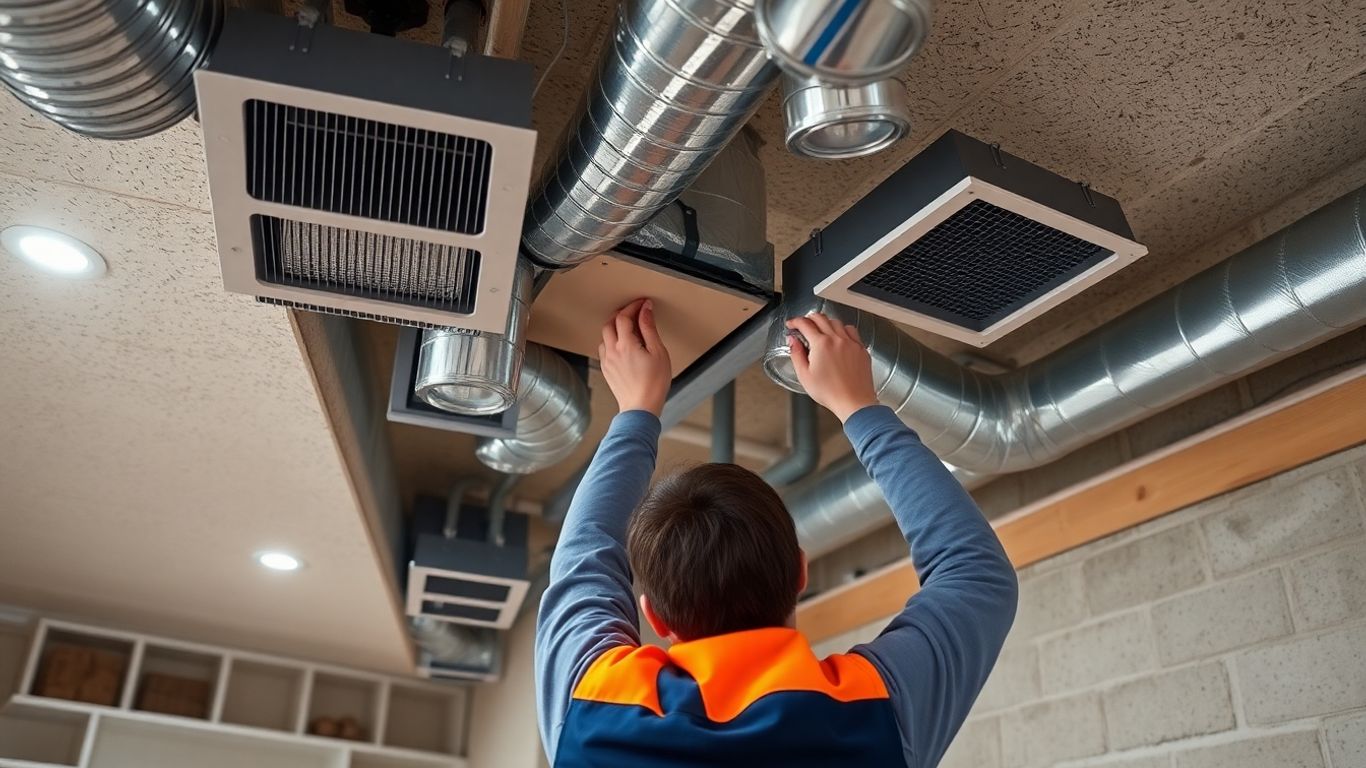
For a proper installation of gas MVHR, it’s not enough just to connect ducting at random. Every stage of the design must focus on safety, efficiency and compliance with regulations. Here’s how to approach the choice and layout of ducts for a high-performance, lasting installation.
Choice of materials and temperature resistance
The choice of material for your ducts is not trivial. Ducts exposed to heat or located outside heated areas must be insulated. This prevents condensation and limits heat loss. Common materials include:
- Galvanised steel (rigid or semi-rigid)
- Aluminium
- High resistance PVC (for zones not exposed to intense heat)
| Material | Temperature resistance | Recommendation |
|---|---|---|
| Galvanised steel | High | Heated/cold settings |
| Aluminium | Medium | Small networks |
| Insulated PVC | Low to medium | Heated area only |
Insulated ducts are mandatory outside of heated areas (R ≥ 0.6 m².K/W).
Draft reserve and evacuation safety
Safety depends on sufficient draft in the ducts, i.e. ensuring the evacuation of stale air and combustion gases is constant and effective. For this:
- Respect the maximum duct length (often 10 m for rigid, 1.5 m for flexible, with each 90° bend counting as 2 m)
- Avoid unnecessary bends which restrict flow
- Install ducts with a minimum slope of 3% to drain condensate
Never mix gas MVHR and standard ventilation networks: the extraction of combustion gases must remain on a dedicated circuit. Connecting combustion gas evacuation appliances to a standard MVHR system is strictly prohibited, as explained here: the connection of appliances intended for combustion gas evacuation.
Installation rules to ensure airtightness and performance
There are specific rules to make sure your ducts are reliable and effective:
- The duct must not cross other living spaces than the one where the appliance is installed
- Embedded installation is to be avoided: an embedded duct makes checks difficult if there’s an incident
- Use suitable clamping collars for the materials and airtight sleeves
Avoid unnecessary crossings of ducts, which reduce the available ceiling height and increase pressure losses. Anticipate your route from the design stage, especially if you plan a false ceiling or technical void.
For effective and reliable extraction, it’s best to favour a direct route, limit bends, and choose the right materials. This attention will save you a lot of trouble later.
In summary, proper preparation of the gas MVHR duct network will make your installation safer and more durable. Take the time to study every detail before starting.
Regulatory requirements and installation standards for gas MVHR
The installation of gas MVHR is not improvised; it is governed by a set of strict rules, primarily designed for occupants’ safety and system reliability. Here’s how to comply with these requirements and which standards to follow for a proper installation.
Respecting DTU 68.3 and official regulations
DTU 68.3 constitutes the main reference for the design and installation of gas MVHR. This document explains the required methods and technical choices to guarantee safe operation, especially regarding duct sizing, extraction vent positioning, and mandatory maintenance.
Since 2023, the use of gas MVHR is effectively prohibited, but this DTU previously explained all obligations around maintenance and annual inspection.
| Regulation | Main requirement |
|---|---|
| DTU 68.3 | Sizing, installation, maintenance and annual inspection |
| Decree 30 May 1989 | Implementation of the collective safety system (DSC) |
| Decree 23 February 2018 | Mandatory maintenance for collective buildings |
For up-to-date details of the standards and the current situation, you can consult this page on DTU 68.3 regulation.
Conditions for positioning extraction vents
The location of extraction vents is critical:
- Fit a vent in each room with a non-sealed combustion appliance.
- The height of installation must allow direct evacuation of flue gases.
- Obstruction is prohibited: each vent must remain accessible and free from any obstruction.
Poor placement can cause build-up of harmful gases, sometimes without odour, requiring great care during installation.
Specific obligations for collective buildings
Blocks of flats have particular requirements:
- Annual maintenance contract with a qualified specialist.
- Mandatory installation of a collective safety device (DSC) on all gas MVHR systems installed after 31/07/1989. This system cuts off the supply to boilers if the extractor stops.
- Regular checks on the operation of draft-blocking valves, carbon monoxide detectors, and monitoring air extraction rates.
Collective buildings are the strictest context: a failure of the central extractor can affect all the flats, hence the importance of the collective device.
In short, gas MVHR must always be installed according to current official regulations and regularly inspected, even if it is based on technology no longer allowed for new installations.
Safety devices and risk prevention for gas MVHR
When installing a gas MVHR, safety is not limited to just a fan and a few ducts. This system ensures proper evacuation of fumes from combustion appliances, while renewing indoor air. Given the dangers linked to carbon monoxide and combustion gases, certain devices are required to protect occupants.
How collective safety devices (DSC) work
The Collective Safety Device or DSC plays a central role in preventing major incidents.
- Extraction fault detector: detects any failure in the extraction system.
- Command transmission system: relays the alert to every connected boiler.
- Shut-off mechanism: immediately stops the operation of gas appliances in case of a problem.
- Alert signal: informs residents of the shutdown.
The DSC is mandatory for all gas MVHR systems installed after 31 July 1989. Older installations must undergo a specific safety test. This collective system complements the individual safety features integrated into each appliance.
The role of the carbon monoxide detector
Carbon monoxide (CO) is an invisible, odourless and potentially lethal gas. Your gas MVHR must integrate a detector capable of continuously measuring CO concentration in the air. At the slightest detection of a dangerous threshold, this sensor triggers an alarm and may even shut off the network to prevent poisoning of residents. This device is essential, above all in collective housing.
A responsive, regularly serviced CO sensor clearly reduces domestic accidents, and also ensures your installation is legally compliant.
Importance of non-return valves and flow monitoring
Another crucial point: avoiding any backflow of fumes. Here are the devices used:
- Non-return valves in the ducts, preventing gases returning to the flats.
- Thermal detectors (klixons) installed near the flue outlet: if backflow is detected, the appliance is automatically put into safety mode.
- Strict and regular monitoring of air flow at each extraction vent.
The mandatory annual service of your gas MVHR helps prevent carbon monoxide poisoning and protects your installation’s compliance.
Summary of main safety devices
| Device | Main function |
|---|---|
| CO detector | Alert/shut-off if concentration becomes dangerous |
| DSC (collective safety) | General shut-off if extraction fault is detected |
| Non-return valve | Prevents gas backflow into flats |
| Thermal detector | Puts the appliance into safety mode if backflow occurs |
| Flow control | Ensures sufficient air flow for evacuation |
In summary, if you care about the safety of your home and its occupants, never neglect these devices. A well-designed system protects against invisible dangers and complies with (often stringent) current standards.
Maintenance and servicing of a gas MVHR installation
Gas MVHR maintenance is never left to chance: this type of ventilation requires careful monitoring, as your safety depends on it. Forgetting or delaying maintenance can expose occupants to very real risks, such as carbon monoxide poisoning. To guarantee optimum operation, several actions need to be planned each year and every five years, especially in shared buildings.
Periodic tasks to be carried out
There are two levels of servicing:
- Mandatory annual servicing: Hire a qualified contractor to clean the gas MVHR, check the extraction vents, measure flow rates and issue an annual certificate of compliance.
- Five-year inspection: Every five years, maintenance becomes more thorough. The ventilation network is checked and adjusted, air vents and extraction units are replaced if necessary, and the fan speed or flow rate is adjusted.
- Preventive replacement: As your system approaches 15 years old, its energy efficiency and reliability become uncertain. Replacing it with a newer model improves safety and reduces consumption.
Servicing carried out to the proper standard prolongs lifetime and reduces unexpected breakdowns whilst avoiding emergency call-out charges.
Cleaning and checking extraction vents
Dust and residues from solvents or grease quickly accumulate in the ducts and on extraction vents. If they are not cleaned regularly, ventilation becomes less effective and the risk of blockage increases. Be sure to stick to a maintenance schedule.
| Task | Suggested frequency |
|---|---|
| Cleaning vents | Annually |
| Checking flow rates | Annually |
| Duct/fan inspection | Every 5 years |
Working with a specialist company also ensures traceability and regularity of interventions, similar to what is done in home automation to sustain the longevity of your installations (particular importance of maintenance).
Consequences of lack of maintenance on safety
Poorly maintained gas MVHR is anything but trivial. By allowing dust to accumulate or neglecting checks, you encourage the build-up of carbon monoxide. This invisible and odourless gas can cause headaches, tiredness, or much more serious accidents. In addition, a clogged MVHR uses more electricity to extract the same volume of air and puts extra load on the gas appliance, increasing the risk of breakdown or overheating.
In short, whilst mechanical controlled gas ventilation may be unobtrusive on a daily basis, its maintenance certainly is not. Planning, cleaning, and checking is the winning trio for everyone’s safety.
Constraints and installation limits for gas MVHR in existing buildings
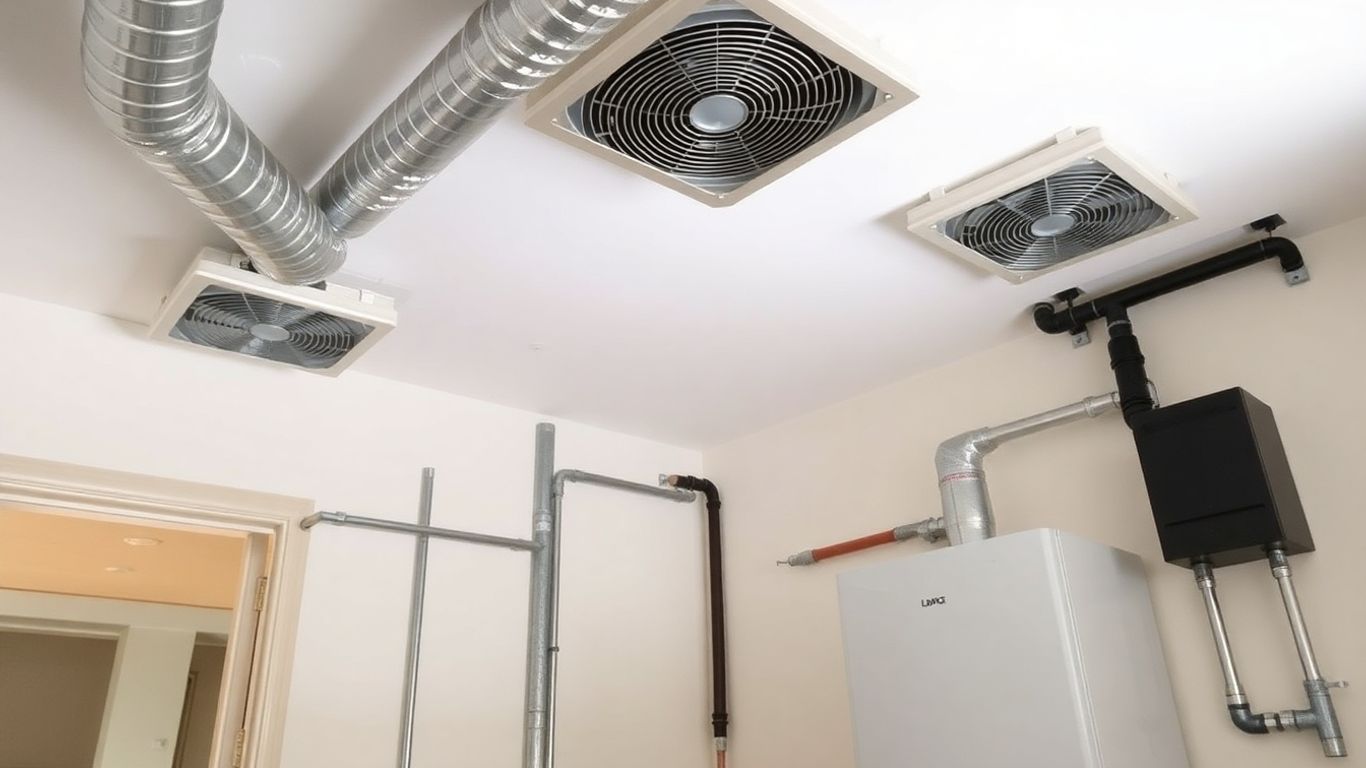
Installing a gas MVHR in an existing property can be quite a challenge, particularly if the layout was not designed for this type of system from the outset. You will encounter technical obstacles and have to pay special attention to specific safety requirements.
Compatibility with older buildings
Older buildings do not always offer the necessary conditions for installing a gas MVHR without major modifications. Problems often include:
- Lack of suitable ducts for evacuating flue gases
- Difficulty ensuring sufficient air supply for combustion appliances
- Confined or crowded spaces making it impossible to install dedicated extraction vents
- Fragile structures or conservation constraints restricting works
If your property does not have a dedicated duct designed for this, installing a compliant gas MVHR could be complicated and costly. Safety comes first, and it is sometimes better to consider other solutions, like replacing equipment with room-sealed models (balanced flue).
Problems with collective connections
In a block of flats, integrating a gas MVHR often requires an overall rethink. Connecting the flue gases to an ordinary collective network is not permitted: ducts must be designed specifically for this purpose. Poor configuration can lead to:
- Risk of draft reversal if several appliances share the same duct
- Difficulty ensuring airtightness and separation between stale air and flue gases
- Risks for the entire building in case of incident or leak
Here is a table of the main situations:
| Situation | Is gas MVHR possible? | Main remarks |
|---|---|---|
| Existing collective duct | Rarely | Duct must be reserved for gas MVHR |
| Old single dwelling | Difficult | Major works often necessary |
| New build | Yes | Planned from design stage |
Risk of incompatibility with certain appliances
Not all gas appliances are compatible with gas MVHR, especially:
- Balanced flue boilers which do not use room air
- Hybrid appliances that require specific combustion air management
- Older equipment for which the compliance certificate is missing
It is also essential to check the compatibility of existing safety devices. Neglecting these points can put occupants in serious danger, especially if duct airtightness is faulty or there’s a breakdown.
For more information on planning technical installations, including integration into existing buildings, considering a central and stable location is just as relevant as for home automation systems.
In summary, fitting gas MVHR to an older building must be carefully assessed: it is neither systematic nor always recommended. It’s better to seek professional advice and consider all available alternatives.
Conclusion
To sum up, gas MVHR remains a safe choice for ventilating a dwelling equipped with combustion appliances. You have seen that its installation requires strict compliance with precise rules, particularly for ducts and safety. This system protects against risks related to carbon monoxide, but it also entails regular maintenance and sometimes extra costs. If you are hesitant or if your home is old, it is better to seek advice from a professional. By respecting regulations and ensuring thorough maintenance, you guarantee your household’s safety. Take the time to get properly informed before embarking on this type of project.
Frequently asked questions about gas MVHR
What is a gas MVHR and what is it used for?
A gas MVHR is a ventilation system that extracts polluted air and combustion gases produced by gas appliances (such as a boiler or a water heater). It protects occupants against poisoning risks, especially from carbon monoxide.
What is the difference between a gas MVHR and a standard MVHR?
The gas MVHR, in addition to ventilating the dwelling’s stale air, also evacuates toxic fumes from gas appliances. A standard MVHR only manages indoor polluted air, without dealing with gases from combustion.
Is it mandatory to service a gas MVHR?
Yes, servicing is compulsory. You must have the system checked regularly to ensure it is functioning smoothly and to avoid any danger, such as carbon monoxide build-up. This includes cleaning the extraction vents and checking the safety devices.
Can you install a gas MVHR in an old property?
It’s possible, but it can be complicated. Older homes do not always have suitable ducts for gas evacuation. Additional work is sometimes needed to meet safety rules.
What are the signs of a problem with the gas MVHR?
If you smell something unusual, the air feels heavy or the MVHR is making strange noises, this may indicate a problem. You might also notice condensation on windows or appliances shutting off on their own. In this case, you should call a professional urgently.
What are the main disadvantages of a gas MVHR?
Gas MVHR is more expensive to install than a normal MVHR, as special ducts are required. It also needs regular maintenance and installation can be difficult in older buildings. Finally, strict rules must be followed to ensure the safety of all.
