
Choosing the right indoor unit for your air conditioning system can sometimes seem complicated. You might be wondering about the different types available, how they work, and most importantly, which one will best suit your home and needs? This article is here to shed some light on the matter. We will explore the options together, from the most common to the most discreet, so you can make an informed decision for your thermal comfort.
Key Takeaways
- There are primarily three types of indoor units for air conditioning: wall-mounted splits, consoles, and ducted systems, each with its advantages depending on the space and use.
- Wall-mounted units (splits) are very common, easy to install in most rooms, and available in various designs to match your decor.
- Ducted systems offer maximum discretion as the indoor unit is hidden, with only the air vents visible, making them ideal for new builds or major renovations.
- The choice of indoor unit depends on several factors such as the type of dwelling, the surface area, the number of rooms, the desired aesthetics, and the budget.
- Technologies like Inverter improve the energy efficiency of indoor units by regulating power to maintain a stable temperature, thus reducing consumption and noise.
Types of Indoor Units for Air Conditioning
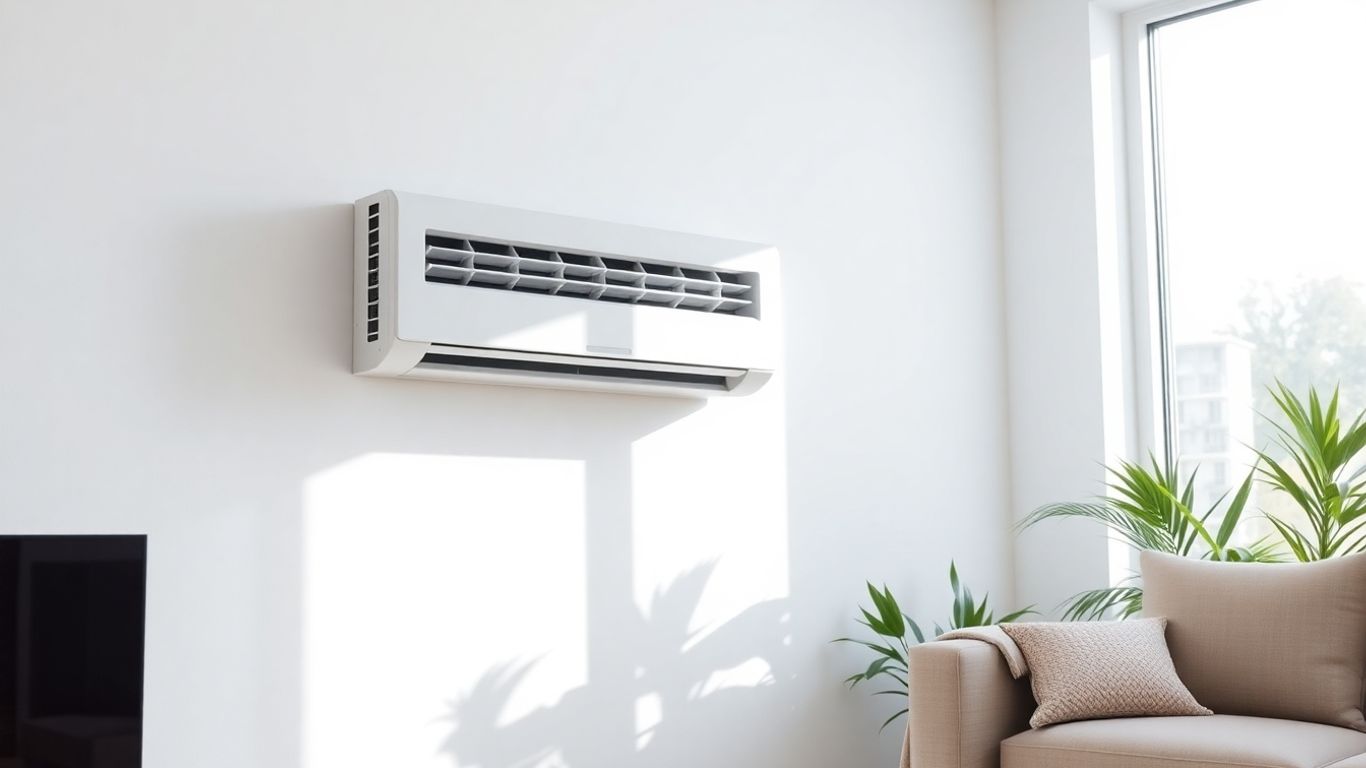
When considering the installation of an air conditioning system, the choice of the indoor unit is a crucial step. Several options are available, each with its own characteristics and advantages. It is important to be well-informed about them to make an enlightened choice that will meet your specific needs and the configuration of your home.
The Wall-Mounted Indoor Unit: The Split
The wall-mounted indoor unit, more commonly known as a ‘split’, is undoubtedly the most widespread on the market. Its popularity is due to its compactness and great installation flexibility. These units, often around 80 cm wide and 30 cm high, can fit in many places, for example, above a door. However, for optimal air distribution, it is advisable to position it centrally relative to the volume to be air-conditioned, while respecting the recommended distances from the ceiling.
Splits are particularly well-suited for standard-sized rooms. For smaller spaces, such as bedrooms or small studios, some manufacturers offer low-power models, sometimes even adjustable downwards during installation, to avoid oversizing and ensure precise thermal comfort. The design of wall-mounted units also varies, ranging from basic all-white finishes to more sophisticated models with flat fronts and discreet contours, thus integrating more easily into your interior decor. You can find various air conditioning systems that include this type of unit.
Console Indoor Units
Console indoor units represent an interesting alternative to wall-mounted splits. They are distinguished by their low installation, generally near the floor or integrated into low furniture. This type of unit is particularly appreciated for its discreet aesthetics and its ability to distribute air evenly, for both heating and cooling. They are often chosen for rooms where aesthetics are a priority and where one wishes to avoid the visual clutter of wall-mounted units.
Their operation is similar to that of splits, with an outdoor unit connected to one or more indoor units. Consoles can be a good option for living areas where thermal comfort is desired without compromising design. They are also effective for quickly heating a room thanks to their low positioning, which promotes the circulation of warm air.
Ducted Indoor Units
The ducted system stands out for its absolute discretion. The indoor unit is concealed in a false ceiling, with only the air vents appearing in each room. This type of installation is ideal for new builds or major renovations where the creation of a false ceiling is feasible. It allows for perfect architectural integration, with no visual impact on the interior decor.
The operating principle is based on a network of ducts that distribute conditioned air from a central unit to the different rooms. This solution is particularly suitable for air-conditioning multiple rooms simultaneously, offering great flexibility and uniform comfort throughout the home. Although the initial installation can be more complex and costly, the discretion and efficiency of the ducted system make it a preferred choice for those seeking an invisible and high-performance air conditioning solution. It is an option to seriously consider for modern houses or apartments.
The choice between these different types of indoor units will depend on several factors, including the configuration of your home, your aesthetic preferences, and the importance you place on the discretion of the installation. It is always recommended to consult a professional to best assess your needs.
Features and Benefits of Splits
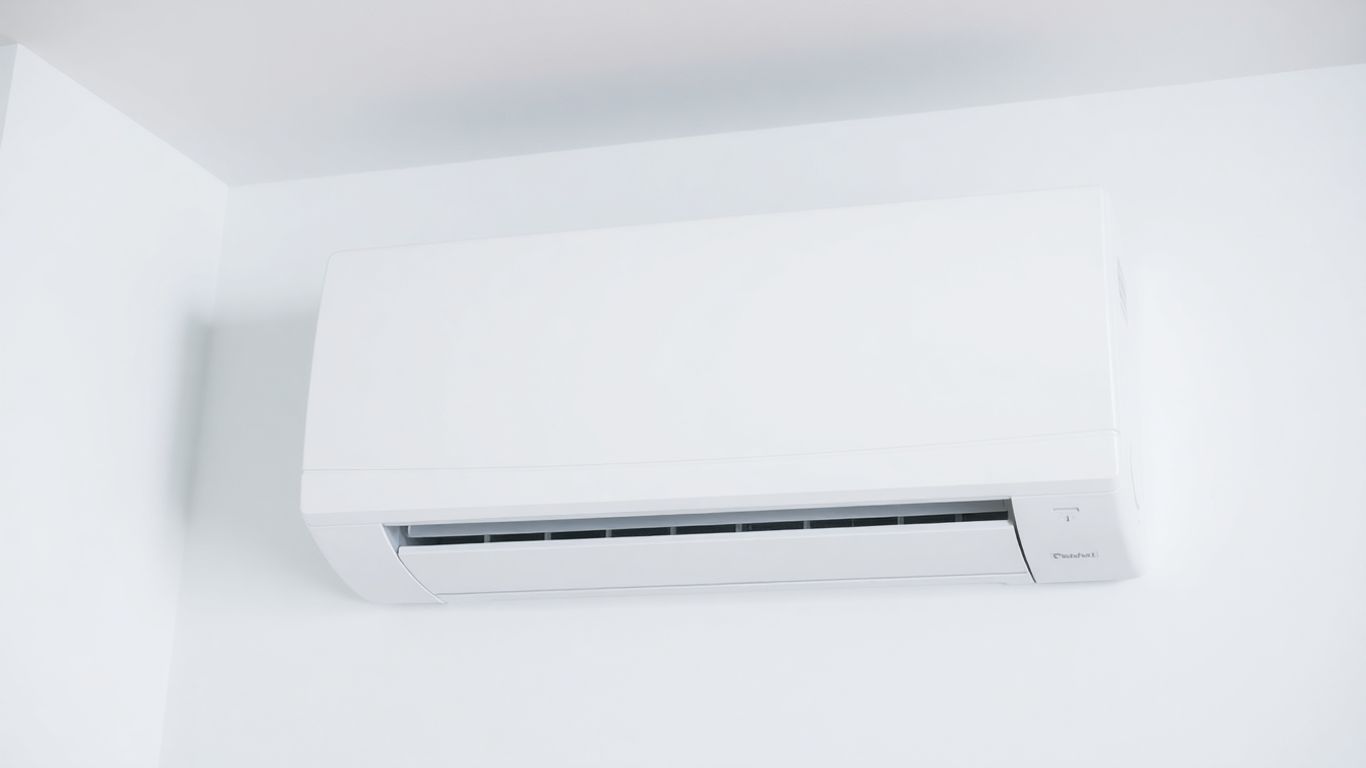
Split-type indoor units, often simply called ‘splits’, are a very common air conditioning solution. They are distinguished by their modular design and installation flexibility, making them suitable for a wide variety of situations.
Adaptability and Installation of Splits
One of the major advantages of splits lies in their great adaptability. Unlike ducted systems that require more substantial work, installing a split is generally simpler, especially in existing homes. It involves connecting a wall-mounted indoor unit to an outdoor unit via refrigerant and electrical lines, requiring only a passage through the wall. This feature makes splits particularly attractive during renovations or when you want to air-condition a specific room without significantly altering the building’s structure.
- Simplified Installation: Less structural work required compared to ducted systems.
- Placement Flexibility: The indoor unit can be installed in different wall locations to optimise air distribution.
- Ideal for Renovations: Allows for thermal comfort upgrades without major structural work.
Design and Finishes of Wall-Mounted Units
Manufacturers have put a lot of effort into the aesthetics of wall-mounted units. Once perceived as obtrusive elements, modern split units now feature sleek designs and refined finishes. They are available in a wide range of colours and shapes, allowing them to integrate more harmoniously into your interior decor. You will find ultra-slim models, finishes that mimic wood or stone, and compact dimensions to minimise their visual presence. The choice of design can thus transform a technical constraint into a decorative element.
Performance of Splits for Different Room Sizes
The performance of a split system is directly linked to its power, expressed in BTU (British Thermal Units) or Watts. It is essential to choose a unit whose power is adapted to the size of the room to be air-conditioned to ensure optimal comfort and controlled energy consumption. An undersized unit will struggle to cool effectively, while an oversized unit will operate in short cycles, which is less economical and can create unpleasant temperature variations.
Here is a general guide for choosing the power:
| Room Area (m²) | Recommended Power (BTU) |
|---|---|
| 15-20 | 7,000 – 9,000 |
| 20-30 | 9,000 – 12,000 |
| 30-45 | 12,000 – 18,000 |
| 45-60 | 18,000 – 24,000 |
It is important to note that these values are indicative. The insulation of the home, sun exposure, ceiling height, and number of occupants can influence the required power. It is always advisable to consult a professional for precise sizing.
The Ducted Air Conditioning System
The ducted air conditioning system represents a particularly discreet and efficient thermal comfort solution. Unlike visible wall-mounted units, ducted systems are fully integrated into the structure of your home, offering a sleek aesthetic. They are often preferred for new builds or major renovations, as their installation requires dedicated space, usually in the attic or a false ceiling, to conceal the central unit and the ductwork. This system is ideal for large areas or open spaces where uniform air distribution is desired.
How Ducted Systems Work
The operating principle of a ducted system relies on a single indoor unit, often called a cooling unit, which treats the air. This air is then distributed to the different rooms of your home via a network of ducts. These ducts, usually insulated to optimise energy efficiency, deliver conditioned air to discreetly integrated air vents in the ceilings or walls. The air is then drawn back through ventilation grilles to be recycled. The central unit, housed in a non-visible space, treats the air, whether cooling or heating it, depending on the selected mode. Inverter technology is increasingly common, allowing the compressor’s power to be adjusted according to actual needs, which reduces energy consumption and maintains a more stable temperature.
Discretion and Architectural Integration
One of the major advantages of the ducted system is its discretion. The entire indoor unit and distribution network are hidden, with only thin air vents visible. This allows for perfect architectural integration, with no aesthetic constraints. You have no visible units in your rooms, which preserves the interior decor. This solution harmonises with all interior styles, from the most modern to the most classic. This invisibility greatly contributes to the visual comfort of your living space.
Adaptability to New Builds and Major Renovations
The ducted system is particularly well-suited for new construction projects. Installation can be planned from the initial design of the building, allowing for optimal integration of the ductwork and central unit. Architects and installers can collaborate closely to ensure seamless technical and aesthetic integration. For major renovations, especially those involving the creation of false ceilings, the ducted system is also an excellent option. It allows for the modernisation of the air conditioning system while preserving the aesthetics of the premises. Installation in these contexts allows for optimisation of the system’s performance and avoids technical constraints related to retrofitting into existing structures. This type of system is an excellent option for invisible air conditioning.
The initial cost of a ducted system is generally higher than that of a split system. However, its energy efficiency and ability to distribute air evenly over large areas can lead to long-term savings. The initial investment is often between €10,000 and €15,000 for a complete installation, including the central unit, ductwork, and air vents.
Here are some points to consider when choosing a ducted system:
- Appropriate Power: It is crucial to correctly size the power of the central unit based on the area to be air-conditioned and the home’s insulation.
- Zoning: For more precise temperature control in each room, opt for a multi-zone ducted system with independent thermostats.
- Maintenance: Regular maintenance of filters and ducts is necessary to maintain efficiency and air quality.
- Noise Level: Although the central unit is hidden, ventilation noise can be a factor. Choose models known for their acoustic discretion.
Air Vents for Ducted Air Conditioning
Once your ducted air conditioning system is installed, the air vents are the most visible elements. They are the point of contact between the system and your living space. Their role is not limited to letting air pass through; they directly influence comfort, air distribution, and even the aesthetics of your rooms. Choosing and placing these vents correctly is therefore an important step to fully enjoy your installation.
Role and Function of Air Vents
Air vents, sometimes called diffusion grilles, are the final outlets of your ducted system’s ducts. Their primary function is to distribute conditioned air (hot or cold) into the room. But they do more than that. They help create uniform air circulation, thus avoiding overly hot or cold spots. They also contribute to the evacuation of stale air. A well-chosen vent ensures pleasant and discreet air distribution. It is important to understand that the type of vent and its placement have a direct impact on how air is distributed in the room. Poor design can lead to unpleasant drafts or a feeling of discomfort, even if the air conditioning system itself is efficient.
Types of Air Vents Available
There are several types of air vents, each with its own characteristics and advantages. The choice will depend on your specific needs and the desired aesthetics.
- Linear Vents: These are long, thin grilles, often integrated into the ceiling or wall. They are very discreet and blend well with modern designs. They allow for wide and uniform air distribution.
- Round Vents: This is the most common type. Generally installed in the ceiling, they are effective for distributing air and come in various diameters. They are simple and reliable.
- Adjustable Vents: These vents allow you to direct the airflow. This is useful if you want to target a specific area, such as a study corner, or avoid directing air directly onto occupants.
- Slatted Vents (or Louvred Vents): Equipped with angled slats, they allow for better control of air direction and prevent direct drafts, offering a gentler distribution.
- Fixed or Mobile Blade Vents: Similar to adjustable vents, those with mobile blades offer increased flexibility to adjust air distribution according to the room’s needs.
Each type has its advantages and disadvantages, particularly in terms of aesthetics and airflow control. It is advisable to consult a professional to choose the most suitable model for your installation.
Selection Criteria for Air Vents
To make the right choice, several factors need to be considered. It’s not just about appearance, but also about performance.
- Room Size: Large rooms often require larger vents or multiple vents to ensure good air distribution. For small rooms, smaller vents will suffice.
- Required Airflow: Each room has different air requirements depending on its size and use. A living room will need a higher airflow than a bedroom.
- Aesthetics and Integration: You will want the vents to blend well with your interior decor. Some are designed to be almost invisible.
- Airflow Direction: If you need to precisely control where the air goes, opt for adjustable or slatted vents.
- Noise Level: Some vents can generate slight noise. If silence is a priority, choose models designed to be discreet.
The placement of air vents is as important as their type. A well-thought-out installation, which takes into account the natural air circulation in the room, is the key to optimal comfort. For example, placing vents in the ceiling often allows for better distribution, as warm air rises and cold air descends. It is essential to carefully consider the placement of ventilation grilles to optimise the performance of your ducted system.
In summary, the choice of air vents is a technical and aesthetic decision that deserves attention. A good selection greatly contributes to the efficiency of your ducted air conditioning system and your daily comfort.
Selection Criteria for an Air Conditioning Indoor Unit
Choosing the indoor unit for your air conditioning system is an important step that requires considering several aspects to ensure your comfort and the efficiency of the installation. It’s not just about choosing an appliance, but about finding the one that best fits your home and lifestyle. Several factors should guide your decision.
Adaptability to the Type of Dwelling
The configuration of your home plays a major role in choosing the indoor unit. For an apartment or an existing house where renovation work is limited, wall-mounted units (splits) are often the most practical solution. They are easily installed on a wall without requiring significant structural modifications. If you have convertible attic space or the possibility of creating a false ceiling, the ducted system becomes a very interesting option for discreet integration. It is also important to consider the total area to be air-conditioned and the number of rooms involved. A multi-split system may be more suitable for a house with several bedrooms, while a single room may suffice with a mono-split.
Visual Impact and Integration into Decor
The aesthetics of your interior are a criterion not to be overlooked. Wall-mounted units, although increasingly stylish and available in various finishes, remain visible elements in the room. Their size and shape can influence the harmony of your decor. Ducted systems, on the other hand, offer almost complete discretion, as only the air vents are visible. This preserves the architectural integrity of your spaces. If you prioritise invisible integration, the ducted system is often the preferred choice, especially in new builds or major renovations where space is available to conceal the unit.
Technical and Comfort Considerations
Beyond the visual aspect, technical elements are decisive. The unit’s power must be adapted to the room size and its insulation. Incorrectly calibrated power can lead to excessive energy consumption or insufficient thermal comfort. The noise level of the indoor unit is also an important point, especially for bedrooms or workspaces. Manufacturers today offer very quiet models. Also consider air distribution: some units distribute air better in the room to avoid drafts. Finally, the budget allocated to the installation is a key factor, with ducted systems generally representing a larger initial investment than split systems.
Advanced Features of Air Conditioning Units
Beyond their primary role of thermal regulation, modern air conditioning indoor units incorporate advanced features designed to optimise your comfort and control your energy consumption. These technologies aim to make your system smarter, quieter, and better suited to your specific needs.
Inverter technology represents a major advancement in air conditioning. Unlike traditional systems that operate in on/off cycles, Inverter units continuously adjust the compressor’s power. This means the unit modulates its electricity consumption to maintain the desired temperature with great precision, without the power spikes associated with frequent restarts. This fine regulation allows for substantial energy savings, potentially up to 30% compared to older models. Furthermore, it ensures a more stable and uniform temperature in the room, thus improving overall comfort. Multi-split systems particularly benefit from this technology for independent and efficient management of each climate zone.
Current indoor units offer remarkable flexibility in airflow management. You can often adjust the direction and intensity of the airflow to avoid direct drafts and direct air where you need it most. This customisation greatly contributes to your well-being. At the same time, manufacturers are committed to reducing the noise level of appliances. Thanks to optimised designs and sound-absorbing materials, many units operate at very low decibel levels, sometimes comparable to a whisper, allowing you to enjoy a quiet environment even when the system is running.
The goal is to distribute conditioned air as evenly as possible throughout the room. Some indoor units are equipped with multi-directional motorised louvres that allow the air to sweep the room horizontally and vertically. Other systems, such as ducted units, use a network of ducts to distribute air more discreetly and uniformly through strategically placed vents. The intelligence of these systems also lies in their ability to adapt to the room’s configuration and the presence of occupants to adjust distribution and maximise comfort while limiting energy waste.
The integration of these advanced features transforms your air conditioner from a simple thermal regulation device into a truly intelligent system, capable of adapting to your lifestyle and comfort requirements, while ensuring controlled energy consumption.
Concluding Your Choice of Indoor Unit
There you have it, you now have a better idea of the different indoor units for your air conditioning system. Whether you opt for a split, console, or ducted model, each solution has its advantages. Consider the size of your rooms, the insulation, and of course, the aesthetic aspect. Don’t forget that the right choice of these units, and their air vents if you choose a ducted system, is important for your daily comfort. Take the time to compare carefully and don’t hesitate to ask for advice to find the solution best suited to your home and your needs.
Frequently Asked Questions
What is the difference between a split air conditioner and a ducted system?
Imagine that a split system is like having a small visible unit in each room you want to cool or heat, connected to an outdoor unit. A ducted system, on the other hand, is more discreet: a large hidden unit (often in the ceiling or attic) sends air through invisible ducts to small grilles in each room. It’s a bit like a central ventilation system, but for temperature.
Can air conditioning indoor units detract from my home’s decor?
That’s an excellent question! Split units, being visible, can sometimes disrupt the harmony. However, manufacturers today offer increasingly attractive models with sleek designs and various colours to blend better with the decor. For ducted systems, this problem is almost non-existent, as only the air vents are visible. You can even choose grilles that are very discreet.
How do I choose the right size indoor unit for my room?
This is very important for your air conditioner to function well and not consume too much energy. You need to consider the size of the room, its insulation, and how many people are usually in it. A professional can calculate the exact power you need. For example, for a small bedroom, an overly powerful unit is not ideal because it will cool too quickly without properly dehumidifying the air, and it will consume more.
What is Inverter technology and why is it beneficial?
Inverter technology is like an intelligent accelerator and regulator for your air conditioner. When you turn it on, it heats or cools very quickly to reach the desired temperature. Then, instead of stopping and restarting all the time (which consumes a lot), it continuously adjusts its power to maintain the temperature. This makes it more energy-efficient and quieter, while also extending its lifespan.
Which indoor unit is most suitable for an old house undergoing renovation?
For an old house where you don’t want to undertake major work, the split system is often the most practical. The indoor units are installed on the walls, and discreet pipes are simply run between the interior and exterior. Ducted systems require more space and work to hide the ducts, which is easier in a new build or a very significant renovation.
Do air vents in a ducted system make noise?
The noise from air vents depends heavily on their design and how they are installed. Modern models are designed to be very quiet. If silence is very important to you, for example in a bedroom, you will need to choose vents specifically designed for this purpose and ensure that the installation is done correctly to avoid any whistling or air noise.
