
Considering installing an air conditioner for your home but put off by the idea of an outdoor unit? The monobloc air conditioner could be the solution you’re looking for. This all-in-one appliance, without an external unit, simplifies installation and preserves the aesthetics of your facade. But is it suitable for your situation? This article explains how it works, its advantages, and when a monobloc unit is the most sensible choice.
Key Takeaways
- The monobloc air conditioner integrates all its components into a single unit, eliminating the need for a visible outdoor unit.
- Installation is generally simpler and less expensive than a split system, primarily requiring two wall penetrations.
- It is particularly suitable for city centre properties, older buildings, or apartment blocks where aesthetic and regulatory constraints are significant.
- While more discreet externally, it can be slightly noisier and less powerful than some split systems, depending on the model.
- Choosing a monobloc unit should take into account the required power, desired features (heating, dehumidification, connectivity), and the technical constraints of your home.
Understanding How a Monobloc Air Conditioner Works
The Principle of the All-in-One Air Conditioner
A monobloc air conditioner is a bit like a refrigerator, but for your room. Everything is concentrated in a single appliance, with no visible outdoor unit. It works using a closed circuit where a special fluid, refrigerant, circulates. This system incorporates the key components: a compressor, a diffuser, and an expansion valve. The goal? To take the heat from your room and expel it outside.
Here’s how it works, in brief:
- The air in your room first passes through a filter to catch dust.
- Then, this air passes through a cold coil (the evaporator).
- As the refrigerant circulates, it absorbs heat from the air. The air therefore becomes cooler.
- As it passes, the humidity in the air condenses on the cold parts, making the air feel less heavy.
- A fan blows this cooled, drier air into the room.
For this to work, the appliance must be fixed to an exterior wall. It needs two holes, each about 16 cm in diameter, to exchange air with the outside. This is where the hot air is expelled and fresh air enters.
If your unit is reversible, it can also do the opposite in winter: draw in outside air, extract heat from it, and distribute it into your room. It’s a bit like a compact heat pump.
Expelling Hot Air Through Wall Penetrations
The unique feature of the monobloc is how it expels hot air. Unlike split systems that have a dedicated outdoor unit for this, the monobloc uses holes in the wall. These penetrations are essential. They not only allow the hot, humid air captured from the room to be expelled but also draw in the outside air needed for the thermodynamic cycle to function correctly. Generally, two ducts with a diameter of about 16 to 20 cm are required. Installation therefore requires some planning to choose the right wall location.
Comparing Inverter and Condensing Technologies
When choosing a monobloc, you’ll often encounter two main technologies: inverter and condensing. Each has its advantages.
| Technology | Energy Efficiency | Noise Level | Purchase Price | Lifespan |
|---|---|---|---|---|
| Inverter | Excellent | Very Low | Higher | 8-12 years |
| Condensing | Good | Moderate | More Affordable | 5-8 years |
Inverter technology is more modern. It constantly adjusts the compressor’s power to maintain the desired temperature smoothly. This makes it more energy-efficient and quieter. Condensing models operate more on an on/off cycle, which can be a bit less gentle on electricity consumption and noise, but they are often more affordable to purchase.
Advantages of a Monobloc Air Conditioner for Your Home
Choosing a monobloc air conditioner means opting for a solution that simplifies life while preserving the integrity of your home. One of its major assets lies in its aesthetics: no more unsightly outdoor units marring facades. This discretion is particularly appreciated in historic centres or apartment blocks where building regulations can be strict.
Preserving Exterior Aesthetics and Facades
The absence of an outdoor unit is a significant advantage. Your facade remains intact, which is a considerable point for the architectural harmony of your building. It also avoids the constraints associated with installing an outdoor unit, such as noise or space requirements.
Simplified and Quick Installation
Installing a monobloc is generally simpler and quicker than a split system. It does not require complex refrigerant connections between an indoor and outdoor unit. Often, only two wall penetrations are needed for expelling hot air and admitting outside air. This can even be a solution for skilled DIYers, although a professional is always recommended to ensure optimal and compliant installation.
Easier Maintenance and Quiet Operation
With only one appliance to manage, maintenance is greatly simplified. It mainly involves cleaning the filters regularly, an operation you can do yourself. Furthermore, recent models are designed to be *relatively* quiet, comparable to the sound of a refrigerator, which is perfect for not disturbing your peace, whether in a bedroom or an office.
Preferred Use Cases for a Monobloc Unit
Properties in Historic Centres and Apartment Blocks
For homes located in protected areas or subject to strict co-ownership rules, the monobloc air conditioner is often the only viable solution. Its main advantage is the absence of a visible outdoor unit, which preserves the aesthetics of facades and complies with architectural regulations or decisions of the residents’ association. Installation is limited to two discreet wall penetrations, making the unit almost invisible from the outside. This greatly facilitates obtaining the necessary authorisations, whether from local authorities or the co-ownership management.
Homes with Architectural Constraints
Some buildings, due to their design or age, present particular challenges for installing traditional air conditioning systems. Thick walls, insufficient outdoor space for an external unit, or restrictions related to building materials can make installing a split system complex, or even impossible. The monobloc, with its compact design and indoor wall installation, adapts to these situations. All that is needed is an exterior wall to make the two penetrations required for expelling hot air and admitting fresh air.
Second Homes and Modern Offices
For second homes, the ease of installation and reduced maintenance of the monobloc are significant advantages. You can thus enjoy optimal thermal comfort without worrying about complex work or frequent maintenance. In modern offices, where aesthetics and efficiency are paramount, the monobloc integrates discreetly while offering an efficient air conditioning solution. Furthermore, recent models often offer connected features, allowing remote control via smartphone, which is particularly practical for managing comfort before your arrival or remotely.
Installing a monobloc air conditioner is an interesting alternative when aesthetic or regulatory constraints prohibit an outdoor unit. Its all-in-one design simplifies the installation process and reduces the visual impact on your home’s facade.
Installation and Technical Constraints of the Monobloc
The installation of a monobloc air conditioner, while simpler than that of a split system, has technical constraints that are important to be aware of. Unlike outdoor units that require specific mounting, the monobloc integrates directly into your wall.
Need for Suitable Wall Penetrations
The main feature of the monobloc air conditioner lies in its all-in-one design. To function, it must be able to exchange air with the outside. This involves making two penetrations in an exterior wall. These holes, generally between 16 and 20 cm in diameter depending on the model, allow ambient air to be drawn in for cooling and hot air to be expelled. It is *crucial* that these penetrations are made in a load-bearing or sufficiently strong wall to support the weight of the unit and withstand vibrations. A slight outward tilt of the holes is also recommended to prevent water ingress. Before proceeding, ensure your wall is compatible and you have the necessary tools, such as a core drill. For a hassle-free installation, consulting a technical guide can be very useful installation of a console unit.
Choosing the Optimal Location for Air Distribution
The efficiency of your monobloc air conditioner will largely depend on its location. It should be installed on an exterior wall, ideally fairly centrally in the room to ensure even distribution of cool air. Avoid placing the unit too close to the floor or ceiling, and above all, ensure there are no nearby obstacles (furniture, thick curtains) that could hinder air circulation. Proper positioning guarantees not only better performance but also quieter operation. Also consider the proximity of a suitable electrical outlet and accessibility for filter maintenance.
Administrative Procedures and Necessary Authorisations
Although installing a monobloc is less restrictive than a split system, it is always wise to check local regulations or those of your co-ownership. In most cases, drilling an exterior wall to install a monobloc air conditioner does not require specific authorisation, especially if the holes are discreet and do not significantly alter the external appearance of the facade. However, it is always best to consult your co-ownership’s regulations or inquire with your local council, particularly if you live in an old building or a protected area. Good preparation avoids unpleasant surprises and ensures a stress-free installation. To help you with this process, there is advice on technical criteria criteria for positioning.
Installing a monobloc air conditioner requires particular attention to wall penetrations and placement. These steps are crucial to ensure the efficiency, durability, and user comfort of your appliance. Do not hesitate to call a professional if you have any doubts.
Performance and Environmental Impact of the Monobloc
Energy Efficiency and Efficiency Classes
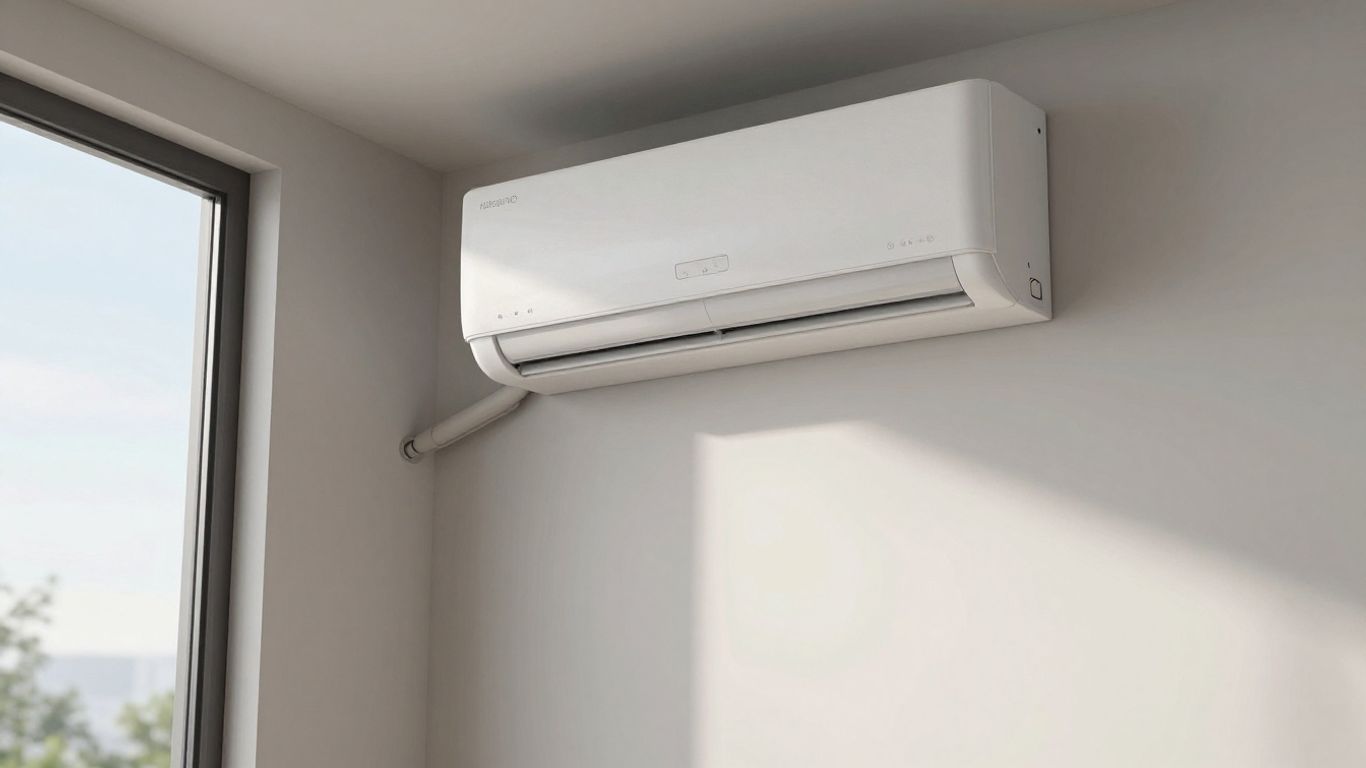
When considering a monobloc air conditioner, it’s natural to wonder about its electricity consumption and environmental impact. Current models have made enormous progress. They often display energy labels ranging from A++ to A+++, which is quite reassuring. To give you an idea, an A+++ rated unit can consume up to 40% less energy than an A model. Admittedly, the initial purchase price may be slightly higher, but the savings on your electricity bills will eventually offset this investment. It’s a bit like choosing a more fuel-efficient car: it costs a bit more upfront, but it saves you money in the long run.
Electricity Consumption Compared to Split Systems
It’s true that split systems, with their dedicated outdoor unit, are sometimes perceived as more powerful. However, modern monoblocs are increasingly competitive. Their electricity consumption has become very competitive, especially when considering the overall cost of installation and maintenance. A well-chosen and correctly sized monobloc unit can offer thermal comfort comparable to a split system, while being simpler to install and often more discreet.
Additional Features: Dehumidification and Heating
Beyond simple cooling, many monobloc air conditioners include additional features that can be very useful. Dehumidification is particularly useful in humid regions to improve indoor comfort without necessarily lowering the temperature. Furthermore, more and more models offer a heating function, turning your unit into a reversible air conditioning solution. This can be an excellent alternative for heating a room during shoulder seasons, thus reducing the use of your main heating system.
Technological advancements have enabled monobloc air conditioners to become efficient and environmentally friendly appliances. Choosing a model with a high energy rating and using eco-friendly refrigerants are points to consider to minimise your carbon footprint.
Choosing the Right Monobloc Air Conditioner
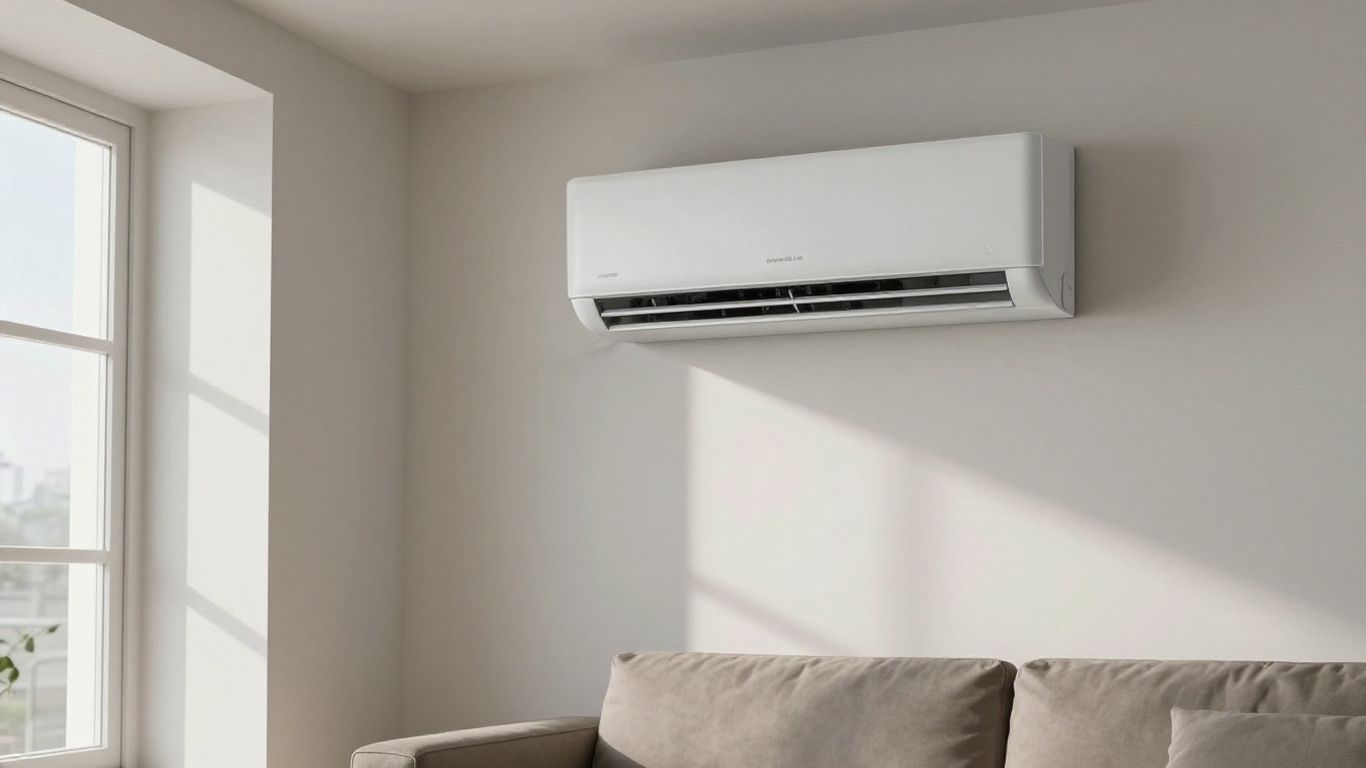
Selecting the appropriate monobloc air conditioner for your space requires careful attention to several technical and practical aspects. It’s not just about finding an appliance that cools, but one that integrates harmoniously into your home while effectively meeting your thermal comfort needs. Think of it as an investment in your well-being, and as with any investment, you need to think carefully before proceeding.
Essential Selection Criteria
To make an informed choice, several factors should guide your decision. It is important not to overlook these points to avoid any future disappointment. Energy efficiency is a determining factor that will directly impact your electricity bill.
- Cooling capacity: This must be suited to the size of the room. Insufficient capacity will not cool properly, while excessive capacity will lead to unnecessary overconsumption and reduced comfort.
- Noise level: Check the advertised decibels, especially if the unit is intended for a bedroom or office. The latest models are designed to be discreet, often comparable to the sound of a refrigerator.
- Energy rating: Opt for the most efficient appliances (often rated A++ or A+++) to minimise your electricity consumption and environmental impact.
- Additional features: Some monobloc units offer options such as dehumidification, air purification, or even a heating function (heat pump), which can be very useful.
Adapting Power to Room Volume
The power of a monobloc air conditioner is usually expressed in BTU (British Thermal Unit) or Watts. It is crucial to accurately calculate the required power based on the volume of the room to be air-conditioned, but also to take into account other factors such as your home’s insulation, sun exposure, and the number of people present.
Here is an indicative table to help you:
| Room Area (m²) | Room Volume (m³) | Recommended Power (BTU) |
|---|---|---|
| 15 – 20 | 37 – 50 | 7,000 – 9,000 |
| 20 – 25 | 50 – 62 | 9,000 – 12,000 |
| 25 – 35 | 62 – 87 | 12,000 – 15,000 |
It is always preferable to choose a power slightly higher than the minimum recommendation to ensure optimal operation and a long lifespan for the appliance. Feel free to consult reviews on air conditioners without outdoor units for user feedback.
Connected Features and Remote Control
Nowadays, many monobloc air conditioners incorporate connected technologies. The ability to control your appliance via a smartphone app is a major asset. This allows you to schedule operating times, adjust the temperature remotely before you even arrive home, or monitor your energy consumption. It’s a welcome convenience that contributes to smarter and more economical use of your air conditioner.
Installing a monobloc air conditioner, while simpler than a split system, still requires wall penetrations. Ensure the chosen wall is suitable and that you have the necessary authorisations, especially in a co-ownership. A professional can guide you on the best location and the steps to follow.
In Conclusion: Is the Monobloc the Right Solution for You?
As you’ve gathered, the monobloc air conditioner without an outdoor unit offers an interesting alternative for cooling your home, especially if you face installation or aesthetic constraints. It provides a simpler and often less expensive solution than traditional systems, while preserving the external appearance of your building. Although it may have some limitations in terms of power or noise discretion compared to split models, its advantages in terms of ease of installation and integration make it a sensible choice for many situations, whether you live in the city centre, an apartment, or a protected area. Weigh these factors carefully to determine if this type of appliance meets your expectations and your environment.
Frequently Asked Questions
Do I absolutely need to hire a professional to install this type of air conditioner?
Even if the law doesn’t always require it, it is strongly advised to seek the help of an expert. A professional will ensure everything is installed correctly, that the appliance will function properly, and that you will benefit from the manufacturer’s warranty. It’s a guarantee of safety and efficiency.
Are these air conditioners without outdoor units noisy?
Not at all! Modern models are designed to be very discreet. Their noise level is comparable to that of a refrigerator, which is perfect for bedrooms or offices where quiet is important.
Can I install this air conditioner on any wall of my house?
No, you must choose a wall that faces the outside. This wall must be strong enough to support the weight of the appliance and allow the air exchange necessary for its operation.
Are there models that can also be used for heating?
Absolutely! Many of these air conditioners are reversible. They can therefore cool you in summer and heat you in winter, saving you from having to buy a separate heating system.
Is it possible to control the unit remotely with my phone?
Yes, it is entirely possible for models equipped with Wi-Fi. You can control them via an app on your smartphone, even when you’re not at home. This is very practical for programming operation and saving energy.
Do I need to make large holes in the wall to install it?
No, that’s not necessary. Unlike older systems, you only need to make two small holes about 16 cm in diameter. This is much less work, quicker, and less expensive to carry out.
