

Wondering what a DRV system is and how it works? This article sheds light on the DRV definition, a climate control technology that adjusts refrigerant flow for optimal comfort. Whether you’re a real estate professional, the owner of a large property, or simply curious, discover the principles, benefits, and applications of this high-performance solution.
Key Takeaways
- A DRV (Variable Refrigerant Flow) system adjusts refrigerant flow to heat or cool different areas of a building independently.
- It consists of an outdoor unit connected to multiple indoor units via refrigerant lines, allowing for precise room-by-room control.
- DRV systems are available in cooling-only, reversible (cooling and heating), and heat recovery versions, offering flexibility and savings.
- The main advantages include high energy efficiency, personalised thermal comfort, and relatively simple installation for large buildings.
- This technology is particularly suited for office buildings, hotels, and large residences, while also being subject to specific regulations concerning refrigerants.
What is a DRV System Definition?
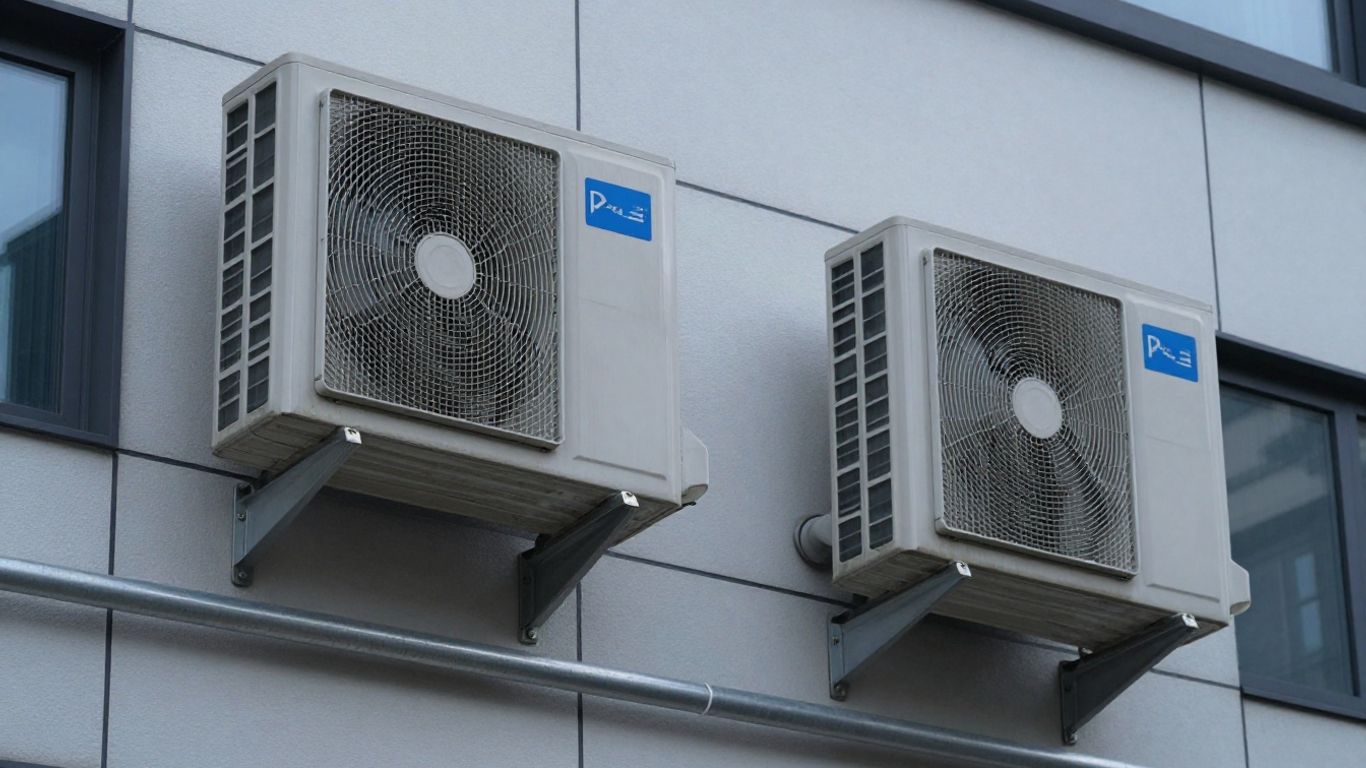
Definition of Variable Refrigerant Flow
Wondering what a DRV system is? It’s a climate control technology, also known as VRV (Variable Refrigerant Volume) or VRF (Variable Refrigerant Flow) in English. Its principle is based on the automatic adjustment of the amount of refrigerant circulating in the system. This modulation precisely adapts to the thermal needs of each zone in your building. The main objective is to offer individualised thermal control and increased energy efficiency.
General Operation of a DRV System
Imagine an air-to-air heat pump, but with much finer adjustment capabilities. That’s a DRV system, in a way. Unlike a conventional split system that primarily acts on the fan speed of the indoor unit, a DRV system modulates the flow of the refrigerant itself. Each indoor unit is equipped with an expansion valve and an evaporator. These components adjust the amount of refrigerant needed to meet the cooling or heating demands of the room. Meanwhile, the compressor in the outdoor unit adapts its speed to maintain constant pressure throughout the circuit. This allows for very precise temperature management in each space, even if the needs vary significantly from one room to another. It’s a solution that greatly facilitates thermal management of buildings, whether new or renovated, promising energy savings and improved living comfort.
Comparison with Split Systems
The major difference between a DRV system and a split system lies in how the cooling or heating is distributed. A conventional split system uses a fixed refrigeration circuit and adjusts the overall power. A DRV system, on the other hand, can vary the refrigerant flow to each indoor unit. This means that if one room needs more cooling, the system will send it more refrigerant, while another room with less demand will receive less. This flexibility is what distinguishes DRV.
Here is a simple comparison table:
| Characteristic | Split System | DRV System |
|---|---|---|
| Refrigerant Management | Fixed flow, overall power adjusted | Variable flow, adapted to each indoor unit |
| Zone Control | Limited (often one zone per outdoor unit) | Very precise (each indoor unit can have its own setpoint) |
| Energy Efficiency | Good | Excellent, especially under partial load conditions |
| Installation Cost | Generally lower | Generally higher, but offset by long-term energy savings |
The DRV system is particularly suited for buildings where heating and cooling needs vary considerably from one zone to another, such as office buildings or hotels. It allows for optimised energy management by only supplying the strictly necessary amount of refrigerant at any given time. For buildings requiring a uniform temperature everywhere, like some hospitals, a centralised system might be more appropriate, although DRV offers superior modularity for more complex applications. You can find information on DRV system applications to better understand their relevance.
DRV systems can be connected to a large number of indoor units, sometimes up to 64, and allow for significant piping lengths, thus offering great installation freedom. However, installation requires qualified professionals due to the handling of refrigerant.
Operating Principles of a DRV Air Conditioner
A Variable Refrigerant Flow (DRV) air conditioner operates much like a heat pump, but with added sophistication. The key difference compared to simpler systems, such as split systems, lies in how the refrigerant is managed. While a split system primarily adjusts the fan speed of the indoor unit, a DRV system modulates the flow of the refrigerant itself. It is this ability to precisely adjust the amount of refrigerant that allows for fine, personalised thermal regulation in each zone of the building.
The Role of the Outdoor Unit
The outdoor unit is the heart of the DRV system. It contains the compressor, whose operating speed can be adjusted. By varying this speed, the outdoor unit maintains constant pressure in the circuit while adapting the overall system capacity to actual needs. It distributes the refrigerant to the various connected indoor units. Depending on the configuration, a single outdoor unit can supply a large number of indoor units, sometimes up to 60.
Operation of Indoor Units
Each indoor unit, installed in a specific room or zone, is equipped with its own expansion valve and evaporator. The expansion valve plays a key role: it regulates the flow of refrigerant reaching the unit. If a room requires a lot of cooling, the expansion valve will allow a larger flow. Conversely, if the demand is lower, the flow will be reduced. This is how each zone receives exactly the amount of refrigerant needed to reach the desired temperature, whether for cooling or heating.
Refrigerant Flow Management
The true innovation of the DRV system lies in this dynamic refrigerant flow management. The outdoor unit’s compressor adjusts its performance to meet the overall demand, while the expansion valves in each indoor unit fine-tune local distribution. This prevents energy wastage, as the system only produces what is needed, when it is needed.
This approach allows for significant energy optimisation, as the system adapts in real-time to the specific conditions and needs of each space, rather than operating at full power constantly.
Here is a simplified overview of the flow:
- Outdoor Unit: Produces and regulates the refrigerant.
- Piping: Transports the refrigerant to the indoor units.
- Indoor Units: Receive the refrigerant, expand it, and use it to heat or cool the ambient air.
- Thermostats: Communicate the temperature needs of each zone to the system.
Different Variants of DRV Systems
DRV systems are not limited to a single configuration. They exist in several forms, each suited to specific needs. It is important to understand these distinctions to choose the most appropriate solution for your project.
Cooling-Only Systems
The most basic version of a DRV system is one that only offers cooling. These systems, often called “2-pipe” systems, work by circulating the refrigerant in a single direction to extract heat from indoor spaces and release it outdoors. They are ideal for regions where the need for air conditioning is predominant and where heating is not a priority or is provided by other means.
Reversible Systems (Cooling and Heating)
The majority of modern DRV installations are reversible. These systems, also based on a “2-pipe” architecture, have the ability to reverse the refrigerant cycle. This allows them to switch from cooling mode to heating mode, thus offering an all-in-one solution for thermal comfort throughout the year. They are particularly appreciated for their flexibility, allowing different zones to be heated or cooled according to needs, even simultaneously in some advanced cases.
Heat Recovery Systems
For maximum energy efficiency, heat recovery DRV systems are the solution of choice. These systems, which use a “3-pipe” architecture, go further by allowing different zones to be heated and cooled simultaneously, while recovering heat released by zones in cooling mode for use in zones requiring heating. This technology is particularly relevant for buildings where thermal needs are varied and often simultaneous, such as in office buildings or hotels. This ability to reuse energy significantly contributes to reducing overall consumption and operating costs.
Here is an overview of the main variants:
- 2-Pipe Systems (Cooling-Only or Reversible): Allow either cooling, or heating and cooling, but not both simultaneously in different zones.
- 3-Pipe Systems (Heat Recovery): Offer the ability to heat and cool different zones at the same time, by reusing waste heat.
The choice between these different variants will depend on your specific comfort needs, your budget, and your energy efficiency goals. It is always advisable to consult a professional to determine the most suitable configuration for your DRV installation.
Advantages and Benefits of DRV Technology
Opting for a Variable Refrigerant Flow (DRV) air conditioning system offers several major advantages, both economically and in terms of comfort. These systems are designed to provide optimised performance and tailor-made thermal management.
Energy Efficiency and Savings
One of the main attractions of DRV systems is their remarkable energy efficiency. Thanks to inverter technology, the compressor continuously adjusts its speed to precisely meet cooling or heating needs. This avoids the constant start-up and shut-down cycles of traditional systems, which consume a lot of energy. As a result, you can achieve substantial savings on your electricity bill, potentially up to 30% compared to conventional systems. This constant adjustment of refrigerant flow allows for a high performance coefficient (COP), synonymous with lower consumption for identical thermal comfort. It’s a smarter approach to managing the temperature of your spaces, contributing to the overall energy performance of the building. You can learn more about the benefits of this technology which optimises consumption.
Personalised Thermal Comfort
DRV systems excel at providing personalised thermal comfort. They allow for independent temperature control in each zone or room equipped with an indoor unit. Whether for an individual office, a meeting room, or a residential space, each user can set their own desired temperature. This flexibility is particularly valuable in buildings where thermal needs vary from one zone to another, for example, during shoulder seasons when some rooms may require heating while others need cooling. The precise management of refrigerant flow ensures a stable and uniform temperature, without the unpleasant fluctuations often experienced with other systems. The goal is to create an optimal indoor environment for everyone.
Ease of Installation and Maintenance
Installing a DRV system is often simpler and less disruptive than installing older systems. The indoor units are connected to the outdoor unit by small-diameter copper pipes, reducing bulk and wiring complexity. Furthermore, the indoor units are generally designed for easy access, which greatly simplifies maintenance and inspection operations. Washable filters also help reduce maintenance costs while maintaining good air quality. Although these systems incorporate advanced electronics, regular maintenance by certified professionals ensures their long-term proper functioning and preserves their energy efficiency.
Adopting a DRV system represents a wise investment for those seeking a high-performance, economical air conditioning solution that can adapt to the specific needs of each space. The combination of advanced technology and flexible management makes it a top choice for comfort and energy cost control.
Applications and Sectors of Use for DRV Systems
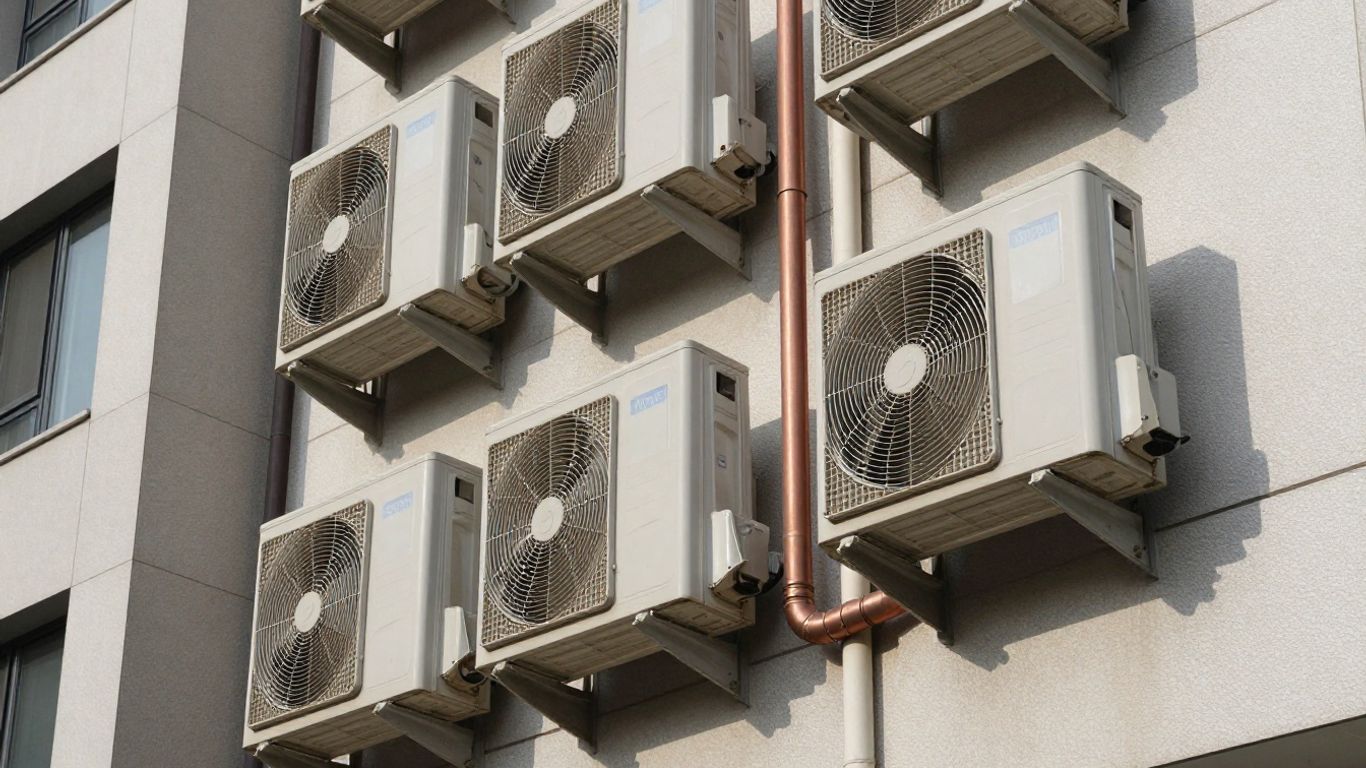
Commercial Real Estate and Hospitality
DRV systems find particularly relevant application in the commercial sector, especially for office buildings, hotels, shops, and other professional spaces. These environments often have varied and simultaneous heating and cooling needs, for example, when a sun-exposed meeting room requires cooling while offices on the north side need slight heating during shoulder seasons. The ability of DRV systems to manage these distinct demands, zone by zone, makes them a preferred solution. They allow for precise temperature control in each space, contributing to optimal comfort for employees and customers. Furthermore, their energy efficiency translates into substantial savings on operating costs, a significant argument for facility managers.
Large Residential Spaces
Although often associated with commercial buildings, DRV systems also prove to be an excellent option for large private residences, such as villas or luxury apartments. In these contexts, where multiple distinct bedrooms or living areas require independent thermal regulation, DRV offers unparalleled flexibility. You can thus maintain a pleasant temperature in the living room while ensuring coolness in the bedrooms, all from a single outdoor unit. This ability to personalise comfort room by room, while optimising energy consumption, meets the expectations of a clientele seeking both performance and well-being.
Public and Administrative Buildings
Public and administrative buildings, such as town halls, schools, hospitals, or cultural centres, greatly benefit from the advantages of DRV systems. These facilities are often characterised by variable occupancy rates and changing thermal needs throughout the day or week. The modularity of DRV systems allows air conditioning to be adapted to actual usage conditions, thus avoiding energy wastage. The possibility of connecting a large number of indoor units to a single outdoor unit also simplifies installation in existing, often complex, structures. Precise temperature management in each zone ensures a comfortable working or reception environment for users and staff.
The adaptability of DRV systems to various architectural configurations and specific comfort requirements makes this technology an increasingly preferred solution for efficient and economical thermal management in a wide range of buildings.
Regulations and Refrigerants in DRV Systems
Applicable Standards and Regulations
The installation and operation of DRV systems are governed by several regulations aimed at ensuring safety, energy efficiency, and environmental protection. You must comply with European and local texts that govern these systems. For example, the European F-Gas Regulation (Regulation (EU) No 517/2014) imposes constraints on the use and handling of refrigerants, particularly concerning their global warming potential (GWP). It is also important to consider local regulations, such as those relating to the maintenance and inspection of air conditioning systems, which may impose specific maintenance frequencies or particular qualifications for technicians working on your installation.
Types of Refrigerants Used
DRV systems primarily use HFC (hydrofluorocarbon) refrigerants. R410A is one of the most commonly used. Although effective, this refrigerant has a high GWP, meaning it contributes significantly to the greenhouse effect if released into the atmosphere. Regulations are evolving to encourage the use of refrigerants with a lower environmental impact. However, more environmentally friendly alternatives, such as hydrocarbons or ammonia, often present safety constraints (flammability, toxicity) that make them less suitable for complex DRV systems, especially in commercial or residential environments where occupant safety is paramount. The choice of refrigerant is therefore a balance between performance, safety, and compliance with environmental standards.
Environmental Impact of Refrigerants
The environmental impact of refrigerants is a major concern. HFCs, such as R410A, have a GWP that can be thousands of times higher than that of CO2. This means that even small leaks can have a significant effect on global warming. Regulations aim to progressively reduce the use of these high-GWP refrigerants. This translates into bans on their use for certain new equipment and import and market placement quotas for HFCs. It is therefore advisable to research next-generation refrigerants and ensure that your installation is designed to minimise the risk of leaks and facilitate environmentally friendly maintenance. A well-maintained and leak-free installation is key to limiting its ecological footprint.
The management of refrigerants in DRV systems is a significant regulatory and environmental issue. It is your responsibility to stay informed about legislative changes and to choose equipment and refrigerants that minimise the impact on the planet, while ensuring the performance and safety of your installation.
In Summary
As you will have understood, DRV systems represent a modern and efficient air conditioning and heating solution. They adapt well to the varied needs of buildings, whether large or small, and allow for significant energy savings. If you are considering replacing your air conditioning system or installing a new one, DRV is definitely worth considering. Think about it, it’s an investment that can improve your comfort while being more environmentally friendly.
Frequently Asked Questions
What is a DRV system and how does it work?
A DRV system is like a very intelligent air conditioner for large buildings. It adjusts the amount of refrigerant (the substance that makes the air cold or hot) sent to each room, just enough. Imagine that each room has its own thermostat, and the DRV system adapts to ensure each room has the perfect temperature without wasting energy. There’s a large unit outside and several small units inside, connected by pipes.
Can a DRV system heat and cool at the same time?
Yes, that’s one of the great strengths of the DRV system! Some models, called reversible or heat recovery systems, can heat one room and cool another at the same time. This is very practical, especially when the weather is mild and some rooms are sunny and need cooling, while others are cooler and need a little heating.
Is it complicated to install and maintain?
Installation is often simpler than you might think. The pipes are smaller than for other systems, and you don’t need a special technical room. For maintenance, it’s quite easy as the indoor units are often accessible. Furthermore, many manufacturers offer remote monitoring to detect problems before they become serious.
What are the advantages of a DRV system compared to a normal air conditioner?
The main advantage is energy savings. Since the system precisely adjusts the cooling or heating for each room, it doesn’t waste energy unnecessarily. You also benefit from personalised comfort, as each room can have its own temperature. It’s more efficient and more comfortable than a conventional system that sends the same temperature everywhere.
Where are DRV systems most often used?
They are mainly found in large buildings such as offices, hotels, hospitals, or schools. They are perfect for these places where there are many different rooms with varied temperature needs. They are also starting to be seen in large individual homes.
What types of gases are used in these systems and are they dangerous for the environment?
DRV systems use special gases called refrigerants. The most common is R410a. Unfortunately, this gas has an impact on global warming, even if it is less harmful to the ozone layer than older gases. Regulations are evolving to use less polluting refrigerants in the future, and it is very important to ensure there are no leaks.
