
Looking to improve your comfort while keeping an eye on your energy bills? The air circulator fan might just be the simple and effective solution you’ve been waiting for. This type of device, often underestimated, allows for better air distribution in your rooms, both summer and winter, and can even help you reduce your electricity consumption. No need for major work or complicated installation: simply choose the right model and install it where necessary. You’ll see, the effect on your wellbeing and expenses can be immediate.
Key Points to Remember
- An air circulator fan distributes air evenly in all rooms, whatever the season.
- It consumes much less energy than a traditional air conditioning unit, which is quickly noticeable on your bill.
- Using it in winter helps you benefit more from your heating without increasing the thermostat temperature.
- There are several models suited to each space: ceiling fans, directional, or industrial.
- Financial assistance such as MaPrimeRénov’ is available if you choose a fixed ceiling-mounted model.
Understanding How an Air Circulator Fan Works
Principle of Air Mixing and Thermal Effects
The air circulator fan operates on a simple principle: it sets the room’s air in motion by rotating blades around a central axis. This movement improves the thermal sensation, as air circulation speeds up the dissipation of body heat. You immediately notice a difference in comfort, even if the ambient temperature doesn’t really change. Air mixing is particularly useful in the summer for a cooling effect, without needing to lower the temperature or consume as much energy as with air conditioning.
In winter, the same principle is used to equalise the room’s temperature: the fan helps redistribute the warm air that tends to collect near the ceiling.
When air circulates properly, temperature “dead zones” disappear, which is quickly noticeable in poorly ventilated or insulated rooms.
Different Types of Air Circulators: Ceiling, Directional and Industrial
There are several categories of air circulators, each tailored to different needs:
- Ceiling Fans: Fitted to the ceiling, they provide whole-room air circulation. They are very common in residential homes or offices where even ventilation is desired (overview of connected solutions).
- Directional Fans: Installed on the wall or floor-standing, these models project air horizontally or in a specific direction. They are usually chosen for targeted areas, such as a workspace or an industrial corner with limited ventilation.
- Industrial Fans: Designed for very large spaces, they often have a generous diameter to efficiently mix a lot of air over large surfaces. They enable efficient destratification of hot air, particularly useful in warehouses and high-ceilinged industrial buildings (how mixed air works).
| Type | Location | Recommended Surface | Main Use |
|---|---|---|---|
| Ceiling | Ceiling | 10 to 60 m² | Residential/Office Ventilation |
| Directional | Wall / Floor | Local area | Workstation/Targeted area |
| Industrial | High ceiling | > 100 m² | Warehouses, workshops, large halls |
Impact on Indoor Air Quality
Beyond simple mixing, regular use of an air circulator fan helps:
- Limit air stagnation and thus reduce the concentration of pollutants or unpleasant odours.
- Prevent the formation of damp areas and therefore the growth of mould.
- Contribute to the overall sanitation of the indoor environment, especially in spaces where natural ventilation is limited.
Even in a well-insulated space, this constant air renewal improves the sense of wellbeing, which is not insignificant for your daily comfort.
Optimising Thermal Comfort with an Air Circulator Fan
When you’re aiming to maintain thermal comfort indoors, the air circulator fan proves particularly useful. Its ability to even out temperature, cool the space in summer and improve heating efficiency in winter makes it a discreet yet high-performing ally all year round.
Even Air Distribution All Year Round
The constant air movement generated by an air circulator ensures a stable and pleasant temperature in every corner of the room, limiting zones that are too hot or too cold. This is particularly noticeable in rooms with high ceilings or large surface areas.
Here’s how an air circulator works optimally:
- The hot air gathered near the ceiling is redistributed where you need it.
- Cold air doesn’t get the chance to stagnate on the floor, even in poorly ventilated areas.
- Temperature differences between various zones are reduced, contributing to better overall comfort.
When an air circulator is used correctly, discomfort caused by pockets of warm or cold air disappears, making the space more pleasant to live in, whatever the season.
Summer Cooling Without Using Air Conditioning
In the hot season, you don’t always need to rely on an energy-hungry air conditioner. The air circulator acts on the feeling of freshness because it speeds up the evaporation of sweat from the skin’s surface. You can feel a perceived drop in temperature of over 5°C compared to the ambient air, promoting real energy savings.
A small comparison table to better visualise summer energy savings:
| Equipment | Average Consumption (watts) | Cooling Effect |
|---|---|---|
| Ceiling Air Circulator | 15 to 75 | -5°C felt |
| Traditional Air Conditioning | 2000 to 3500 | -10°C real |
It is therefore possible to forgo air conditioning, at least in part, by using your air circulator intelligently, especially during periods when the heat isn’t extreme, or to combine it with air conditioning to distribute cool air more efficiently. For combined use, using an air circulator with heating or air conditioning optimises comfort without wasting energy.
Winter Use for Improved Heating
In winter, the air circulator doesn’t take a break. It reverses the air flow to gently push the warm air from the ceiling down towards the floor, near the occupants. This action, called destratification, limits heat loss at height and quickly provides a comfortable sense of warmth without increasing the thermostat. You can turn your heating down several degrees without feeling cold.
Some practical tips for optimal winter use:
- Angle the blades to gently circulate air from top to bottom.
- Reduce the fan speed — the objective is not to create a noticeable draught.
- Program the fan on regular cycles to maintain floor temperature without wasting energy.
By adjusting your air circulator for each season, you improve your quality of life and reduce your energy bills, as well as increasing the efficiency of your other heating or cooling systems.
Reducing Your Energy Consumption with an Air Circulator Fan
Comparison of Consumption with Traditional Air Conditioning
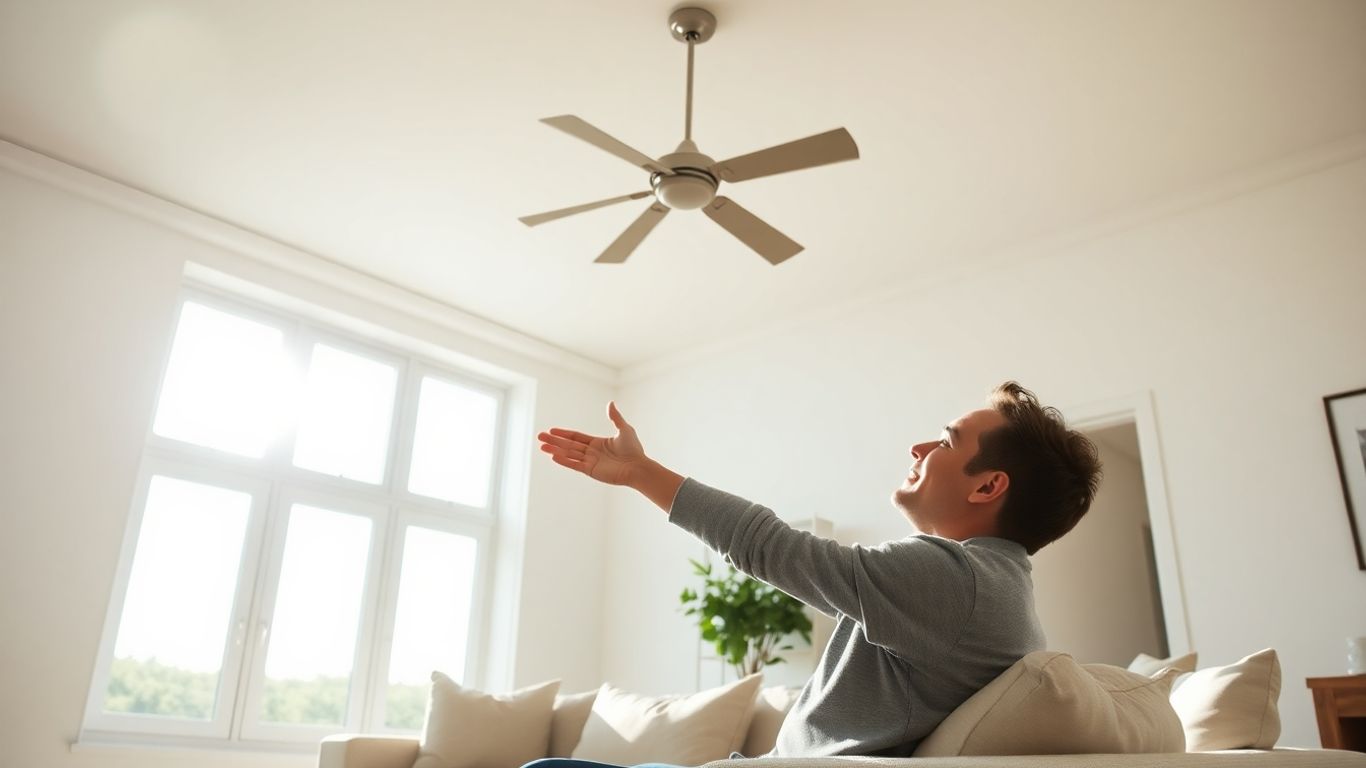
Wondering if replacing or supplementing air conditioning with an air circulator can really cut your bills? Well, the difference is striking. A simple air circulator fan consumes far less energy than an air conditioning system. For example, a ceiling fan rarely runs above 50 watts, compared with several hundred — or even thousands — of watts for an air conditioner in operation.
| Equipment | Annual Consumption (kWh) |
|---|---|
| Ceiling Fan | 5 |
| Air Conditioner | 100 to 700 |
According to statistics, a ceiling fan uses a very small amount of electricity, which clearly reduces your bills without sacrificing summer comfort.
Synergy with Heating and Ventilation Equipment
An air circulator isn’t just for summer ventilation. In winter, too, it helps you make the most of your heating. In winter mode, it evens out the hot air trapped at ceiling level. Result: fewer cold draughts at floor level and less need to turn up the thermostat.
Some benefits of this synergy:
- Optimises heat distribution
- Reduces heating start-stop cycles
- Extends the lifespan of HVAC equipment
Using both an air circulator and properly set-up heating can reduce your heating consumption by 10 to 30%, depending on insulation and room size.
Reduction of CO2 Emissions Across Sectors
By limiting the use of air conditioning and making better use of heating, you also reduce your CO2 emissions — particularly attractive in the tertiary sector, where spaces are large and needs are constant.
Some measurable impacts:
- Lower reliance on fossil fuel-derived electricity
- Reduced carbon footprint for your home or business
- Improved overall energy efficiency of buildings
Adopting air circulators is therefore attractive for both your wallet and the environment: investing in this technology is an accessible step towards combining thermal comfort and energy savings.
Choosing and Sizing an Air Circulator Fan for Your Needs
The Role of Diameter and Power for Each Space
The choice of diameter and power of an air circulator directly affects its effectiveness in the room where it’s installed. The bigger the room, the larger the blade diameter needs to be to ensure optimal air mixing. For small rooms, compact models suffice; on the other hand, for a large hall or workshop, you’ll need to consider a large-span fan.
| Room Size | Recommended Blade Diameter | Typical Power |
|---|---|---|
| Up to 15 m² | 132 cm | 28 W – 40 W |
| Up to 20 m² | 152 cm | 35 W – 50 W |
| 30 m² and above | Several 132 cm or consult an expert | 2 x 28 W – 40 W |
• Take the ceiling height into account (at least 2.5 m).
• Match the number of circulators to the configuration: sometimes, two small fans are better than one very large unit.
• Electricity consumption remains low compared to other cooling solutions.
For maximum efficiency and long-term savings, it’s often better to invest in a large-diameter fan than to install several small, low-powered devices.
Acoustic Criteria and Noise Level
Noise level is an essential criterion, particularly in living or working areas. Nobody wants to be disturbed by a constant hum. Check the decibel level indicated by the manufacturer at both minimum and maximum speed.
- Favour a noise level below 45 dB(A) at full power for comfortable use.
- A proper installation limits the spread of noise: follow recommendations for the type of ceiling and mount.
- The motor should be quiet, especially for night-time or office use.
Speed Control Options and Installation
The ability to vary the speed is essential for adapting the air flow to the room’s temperature or activity. A good air circulator generally has at least three speeds. This guarantees comfortable use in all seasons.
Some tips for properly installing your air circulator fan:
- Check the ceiling height (minimum recommended: 2.5 m).
- You don’t necessarily have to place the fan in the centre, but rather above the main usage area (sofa, workspace, etc.).
- Call a professional to secure installation, especially if the ceiling or building structure requires it.
- Opt for models with built-in speed control and, if possible, remote control or smart home compatibility.
There is no specific environmental certification for installation, but a qualified electrician can help you install the device in compliance with safety and efficiency standards.
Integrating the Air Circulator Fan in Modern Buildings
Adding air circulators to today’s architecture is about more than just putting a few fans on the ceiling. Integrating these solutions in a building requires thought, method, and adaptation to usage.
Layout and Design Methods for Large Spaces
Installing air circulators in large spaces — shops, gyms, industrial halls — requires careful planning of their positioning (layout). Several factors come into play:
- The volume of air to be moved and the ceiling height
- The distance between each unit for even coverage
- Constraints linked to electrical networks and any structural or architectural obstacles
Here’s an example of a typical layout for an industrial hall:
| Surface (m²) | Ceiling Height (m) | Recommended Diameter (cm) | Number of Circulators |
|---|---|---|---|
| 500 | 6 | 180 | 4 |
| 1000 | 10 | 220 | 6 |
| 2000 | 12 | 260 | 8 |
This table shows how much sizing depends on the volume, not just the surface area.
Adaptation to Architectural Constraints
Every building comes with its limits: specific structure, suspended ceilings, lighting, etc. Integration must then take into account:
- The ceiling’s load-bearing structure
- Routing of networks: electricity, ventilation, sprinklers
- The architectural or decorative aesthetic
- Compatibility with smart home solutions A powerful smart home hub
Sometimes, you also need to consider accessibility for maintenance or fire regulations.
User Feedback and Case Studies
Nothing beats daily user experience. In the most common feedback, users note:
- A clear improvement in thermal comfort, in both summer and winter
- A reduction in the feeling of “dead zones” where air stagnates
- Low noise levels for well-chosen models
- Sometimes a period of adjustment to find the right speed
Installing a ceiling circulator fan doesn’t transform a building overnight, but the effects are felt step by step: natural comfort, a slight drop in energy bills, and above all, an improved sense of wellbeing, without the need for major renovation work.
Overall, integrating air circulators is better received in buildings where there has been an overall assessment beforehand and where the choice of models genuinely matches the use and shape of each space. For more details on the concrete benefits, see ceiling fan and comfort.
Financial Support and Advantages Linked to the Installation of Air Circulators
Installing air circulators in your home or professional premises is often much more than just a matter of comfort. This choice is also attractive financially — notably thanks to certain grants and a tangible return on investment over the long term.
Eligibility for MaPrimeRénov’ and Technical Requirements
As of 1 January 2024, the MaPrimeRénov’ Parcours Accompagné scheme allows you to include the cost of installing ceiling air circulators in the eligible works package, provided certain conditions are met:
- The circulator must be fixed to the ceiling (ceiling fan),
- Its diameter must be at least 132 cm,
- It must offer at least three speeds,
- Its noise level must not exceed 45 dB(A) at maximum speed nor 35 dB(A) at minimum speed.
Unlike other renovation works, it is not necessary to employ an RGE-certified tradesperson to benefit from this grant — a regular electrician suffices, and the works do not need to appear in an energy audit.
| MaPrimeRénov’ Eligibility Criteria | Requirements |
|---|---|
| Mounting | Ceiling (fixed) |
| Diameter | ≥ 132 cm |
| Speeds | ≥ 3 |
| Max noise level (max speed) | ≤ 45 dB(A) |
| Min noise level (min speed) | ≤ 35 dB(A) |
Return on Investment and Long-Term Savings
Installing an air circulator can yield significant savings, notably compared to a traditional air conditioner. According to ADEME, an air circulator used 4 hours a day usually consumes around 90% less electricity than an air conditioner over the same period. Here’s what that means:
- Noticeably lower energy bills,
- Lower installation and maintenance costs compared to air conditioning,
- Extended lifespan for your complementary heating or ventilation equipment, thanks to reduced usage.
| Use | Estimated Annual Consumption | Potential Saving vs Air Conditioning |
|---|---|---|
| Air circulator 4hr/day | ~40 kWh | Up to 90% |
| Air conditioning 4hr/day | ~400 kWh |
By installing a suitable ceiling air circulator, you put yourself on course for substantial savings, whilst enjoying natural thermal comfort all year round.
Specifics for Homes and Businesses
In the residential sector, the financial advantages are clear: the purchase and installation cost remains affordable, especially compared to the price of electric heating and air conditioning systems. For companies and business premises, the logic is the same but on a bigger scale. The larger the area, the faster the energy savings add up, especially when combining air circulators with conventional ventilation or heating solutions.
To remember:
- The MaPrimeRénov’ scheme is accessible whatever the building type, provided technical conditions are met,
- Both individuals and businesses benefit from reduced annual energy bills,
- The air circulator offers a simple option to reduce both operational costs and CO2 emissions.
Optimising your air circulator installation means saving money every year with state financial support, while reducing your environmental impact.
Industrial and Commercial Applications of Air Circulators
Destratification and Even Temperature Distribution
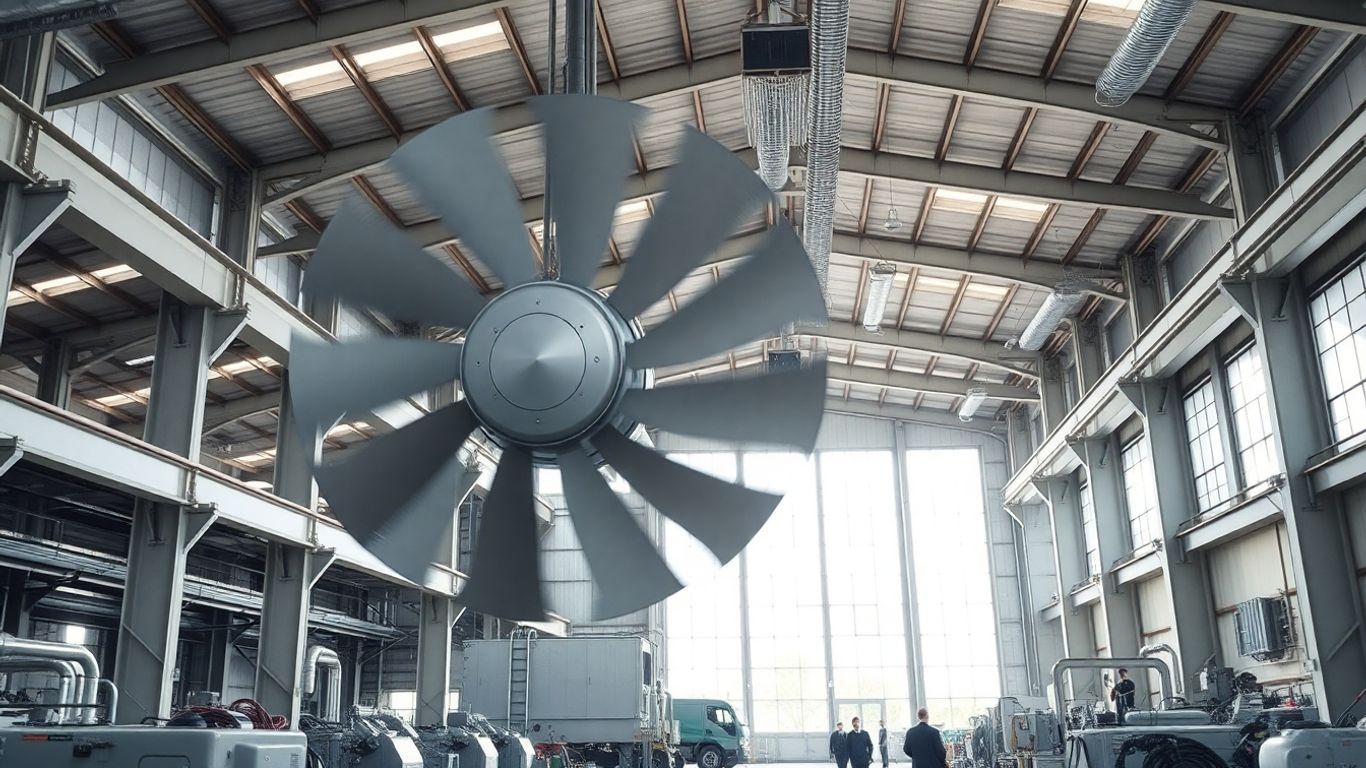
In large spaces such as workshops, warehouses or gyms, heat tends to rise and collect at ceiling level. You notice this quickly: the floor stays cold, while the air near the roof is much warmer. The air circulator allows you to destratify this heat. It brings warm air down to floor level, creating a more even temperature from floor to ceiling.
- Improves occupant thermal comfort
- Enables lower heating, since the warmth benefits the whole space
- Prevents persistent cold zones
Adopting destratification has shown a noticeable gain in heating efficiency reducing energy costs and CEE grants.
Effective Ventilation in Large Spaces
In industrial or commercial settings, standard ventilation often reaches its limits. Air circulators then take over to:
- Provide continuous air circulation
- Limit humidity and the stagnation of pollutants
- Support the renewal of indoor air, even across large areas
Using an air circulator helps maintain a healthy, stable environment for staff, which can prevent certain issues linked to dust or gas build-up.
Reducing Heating and Air Conditioning Costs
The most noticeable difference when switching to an air circulator is the concrete effect on your energy bill. In industry or offices, it significantly reduces heating demands in winter and limits air conditioning needs in summer.
| Equipment Type | Estimated Annual Use* |
|---|---|
| Industrial Air Circulator | 150 to 300 kWh |
| Air Conditioning Unit | 2000 to 5000 kWh |
| Electric Heating Only | 3000 to 8000 kWh |
*Indicative data – varies according to area and usage.
Energy savings are not limited just to cost; they also contribute to reduced CO2 emissions — which is increasingly important in these sectors.
To conclude, integrating air circulators in your industrial or commercial premises means choosing simplicity and efficiency, for lasting comfort and better controlled costs.
Conclusion
In conclusion, choosing an air circulator fan means taking a simple step towards greater everyday comfort while keeping an eye on your energy spending. Whether you are an individual or a business, these devices adapt to your needs and the size of your spaces. They operate quietly, have low electricity usage, and can be easily integrated into any interior. This allows you to enjoy a sensation of freshness in summer, or better distribute heat in winter, without the need to invest in costly or complex solutions. By taking the time to compare models and properly size your installation, you give yourself the best chance to improve comfort and save over the longer term. Be sure to look into available grants to help offset installation costs. All in all, the air circulator is a practical and accessible solution to boost your wellbeing while managing your energy budget.
Frequently Asked Questions
How does an air circulator fan work?
An air circulator fan circulates air in a room to mix hot and cold air. This provides a more pleasant temperature everywhere, without creating a strong draught. It can be used all year round — in summer for cooling and in winter for better heat distribution.
Does an air circulator use a lot of electricity?
No, an air circulator uses very little energy. For instance, some models use between 4 and 50 watts depending on speed, which is less than a LED bulb. This means you can save on your electricity bill compared to a traditional air conditioner.
Can you use an air circulator in winter?
Yes, you can use an air circulator in winter. It helps bring down the warm air that often stays near the ceiling, making the room more comfortable and allowing you to turn your heating down a little. You can thus save energy and keep a pleasant temperature.
What are the different types of air circulator?
There are several types of air circulator. The most common are ceiling fans, directional models (placed free-standing or wall-mounted), and large industrial models. The right choice depends on the size of your room and the intended use.
How do I choose the right air circulator for my room?
To choose the right air circulator, consider the size of the room, the fan diameter, and its power. A large living room will need a wider fan than a bedroom. It’s also important to check the noise level and whether the speed can be adjusted for added comfort.
Are there any grants for installing an air circulator?
Yes, you can take advantage of support such as MaPrimeRénov’ for installing an air circulator fan, under certain conditions. For instance, the fan must be fixed to the ceiling, be of sufficient diameter, and be quiet enough. This helps reduce the installation cost and lets you save money in the long run.
