
Chilled water is somewhat the cold heart of many modern buildings. If you work in the HVAC sector (heating, ventilation, air conditioning), you’ll undoubtedly hear about this system everywhere. It’s used to cool offices, hospitals, and even factories. But how exactly does it work? What temperatures should you aim for? And why opt for this system instead of another? In this article, you’ll discover the basics of chilled water, its uses, and some tips for choosing and maintaining your installation. We’ll keep it simple, without getting lost in complicated terms.
Main points to remember
- Chilled water efficiently cools large buildings thanks to centralised cold production.
- The typical temperature range in HVAC is from 6 to 12°C, but some industrial needs require lower temperatures.
- The choice of chilled water temperature directly affects the energy performance of the system.
- A chilled water network includes several elements: chiller, hydraulic distribution, end units, and control system.
- Regular maintenance and water quality are essential to ensure the durability and efficiency of your installation.
Understanding the principle of chilled water in HVAC systems
General operation of a chilled water circuit
The chilled water circuit forms the heart of many modern HVAC systems. Here, you have a centralised approach to the production of cold: water is cooled, generally between 6 and 12°C, by a production unit called a chiller. This water then circulates in a closed loop throughout the building, where it absorbs heat from rooms via heat exchangers.
By capturing heat inside the building and then evacuating it outside, chilled water maintains a pleasant and stable indoor temperature, even during periods of extreme heat.
A few key points about how this works:
- Chilled water is produced in a plant room by a central cooler (chiller).
- It is distributed through hydraulic networks to terminals (for example, fan coil units).
- After absorbing heat, the hot water returns to the chiller to renew the cycle.
A chilled water network optimises thermal management of large spaces and offers great flexibility in distributing cold according to the needs of various on-site zones.
Differences between chilled water and other cooling technologies
Compared to other solutions, such as VRV/VRF or direct expansion, the chilled water circuit has its own logic: here, the heat carrier is water, not a direct refrigerant fluid. This means the production of cold and its distribution in the building are separated.
Main differences:
- The chilled water circuit is centred on energy exchange via water; VRV/VRF systems use refrigerant for each indoor unit.
- A chilled water system requires dedicated hydraulic infrastructure (pipes, pumps, etc.), enabling multiple terminals to be supplied, such as fan coil units.
- Direct expansion installations are often quicker to set up, but are mainly suitable for medium-sized rooms.
This technical choice directly affects the configuration, modularity, and maintenance of the installation.
Advantages of centralised cold production
One of the main advantages of chilled water is its ability to pool cold production for large property complexes.
Here are some benefits of centralised management:
- Control of energy consumption through improved overall efficiency.
- Reduction of noise and clutter by limiting the number of visible outdoor units.
- Ease of integration with complex systems, including for specific needs (data rooms, hospitals, etc.).
- Better centralised maintenance around a primary piece of equipment.
Chilled water networks also come with a variety of increasingly efficient fittings and pipework solutions, such as innovations in connectors presented in the analysis of solutions for HVAC.
A centralised chilled water system can meet variable requirements while guaranteeing greater thermal stability at the scale of a building or property complex.
The main temperature ranges for chilled water
Standard temperatures for HVAC applications
Most chilled water systems in HVAC operate with temperatures between 6 and 12°C for supply water, sometimes lowered to 4°C depending on demand. This range suits the vast majority of service sector installations (offices, hotels, shopping centres), as it strikes a balance between comfort, performance, and safety against freezing. To optimise efficiency, it is common to set the supply temperature at a set point around 7°C.
| Application type | Usual temperature range (°C) |
|---|---|
| Offices, hotels, standard retail | 6 – 12 |
| Standard industrial processes | 4 – 10 |
| Data centres and clean rooms | 5 – 9 |
Adjusting the temperature setpoint according to the building’s profile can limit energy consumption while preventing excessive load on the chiller.
Solutions for low and very low temperatures
Some applications such as the agri-food industry, plastics or the cooling of technical processes require going much lower. Here, special chillers and water-glycol mixtures are used to reach:
- Between 0 and -8°C for intense cooling needs (e.g., food storage or chemical processes).
- Down to -40°C, or more for highly specialised processes (cryogenics, laboratories).
These systems require:
- Careful selection of components (e.g., heat exchangers suitable for glycol).
- Precise monitoring of water quality and antifreeze mix.
- Increased vigilance regarding the risk of icing and leaks.
Influence of temperature choice on system efficiency
The choice of chilled water temperature directly affects:
- The electricity consumption of the chiller: the colder the water, the more power required by the compressor increases.
- The reliability of the hydraulic network and terminals.
- Overall performance, as a temperature that’s too low often results in reduced efficiency.
Here are three points to monitor:
- Avoid going too low unless necessary: the majority of systems operate optimally at around 7°C.
- Opt for free cooling whenever outdoor conditions allow.
- Maintain an appropriate set point by taking into account the specific constraints of the building and its operation.
For a concise overview of best practices on this topic, feel free to consult the information on personal non-commercial use related to these installations.
The essential components of a chilled water network
Every chilled water network relies on several technical elements, which guarantee the reliable and efficient distribution of cold throughout the building. It’s not just about cooling water, but circulating it to the right place, at the right temperature, and at the right time. Understanding the role and operation of each component is central to any efficient installation.
Role of the chiller and refrigeration cycle
The heart of the chilled water system is the chiller. This device extracts heat from the water using a complex refrigeration circuit, which works in several stages:
- Hot water from the building passes through the evaporator, where it loses its heat.
- The chiller’s refrigerant absorbs this heat and releases it outside the building via the condenser.
- Compression and expansion ensure heat transfer in each cycle.
| Chiller component | Main function |
|---|---|
| Evaporator | Cooling of circulating water |
| Compressor | Pressurising the refrigerant |
| Condenser | Releasing heat outside |
| Expansion valve | Pressure reduction, cooling the fluid |
The performance of the chiller depends on sizing, the type of compressor, and peak load management.
End units and hydraulic distribution
After producing the cold, it needs to be delivered and used wherever needed. This depends on:
- Pumps, which ensure continuous circulation of chilled water throughout the network.
- A well-insulated network of pipes to limit thermal losses.
- End units such as fan coil units, chilled ceilings or air handling units, which extract the coolness from the water and distribute it into rooms.
- Regulating valves to adjust flow locally and therefore the power delivered.
An optimised network ensures not only thermal comfort but also rational energy management, thus limiting unnecessary consumption.
Control and regulation systems
Regulating temperature, pressure, and flow rates quickly becomes essential in a modern chilled water network. You can integrate:
- Sensors positioned at key points (supply, return, terminals)
- Centralised regulation adjusting production according to actual demand
- An automation system (often via BMS) to manage scheduling, alarms, occupancy scenarios
- Interfaces for remote management or programming of preventive maintenance
On modern HVAC installations, every component plays a role in the complete chain, from chiller to terminal. A properly configured installation can cover any type of need, from service sector to industry, with excellent cost and performance control.
Selection criteria for a chilled water system for buildings
Sizing according to use and building size
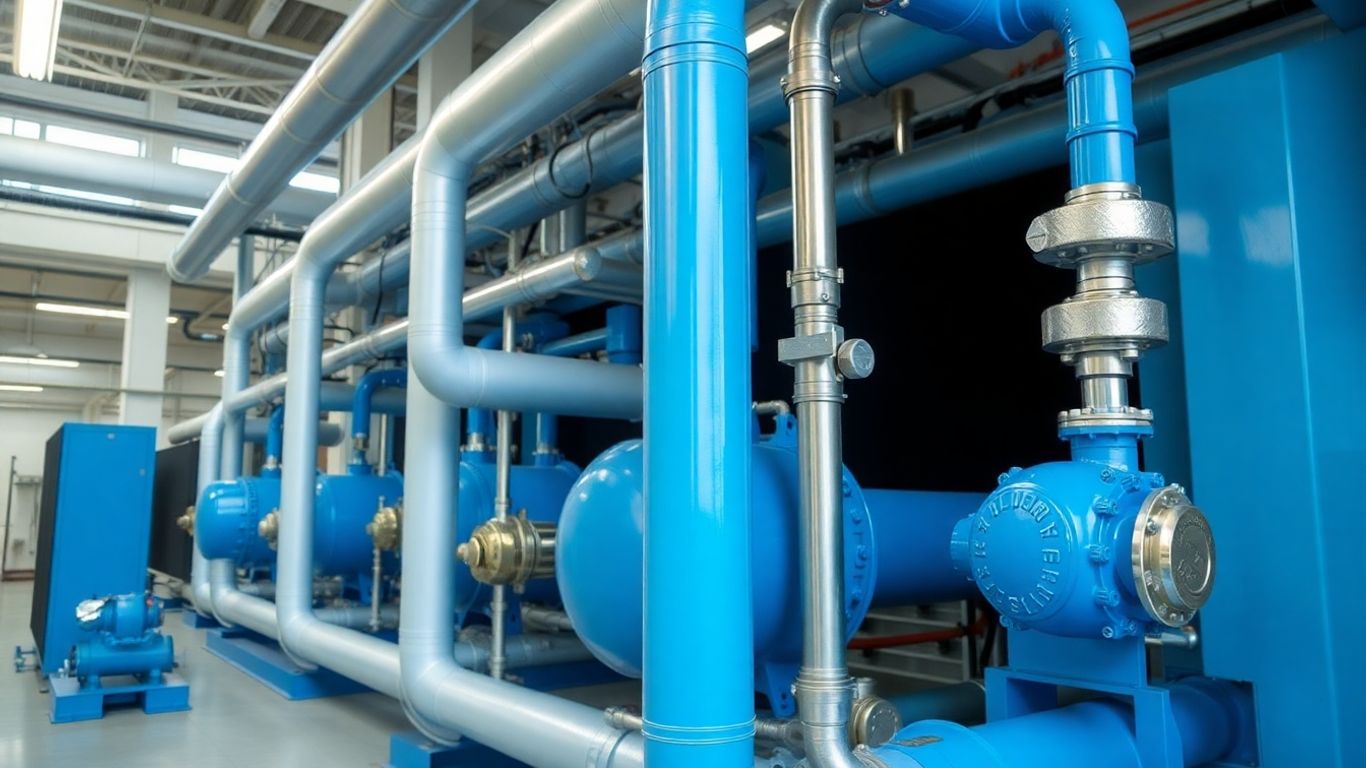
The starting point is always to look at the expected use and the size of the building to be cooled. A chilled water system is well-suited to large areas: hospitals, commercial or industrial buildings.
- Assess the total cooling load (in kW or in cooling capacity)
- Consider peak demand in summer or during simultaneous operation of several zones
- Plan for possible future extensions or modifications of the building
Poor assessment leads to overconsumption or lack of cooling. Accurate sizing saves you long-term unnecessary extra costs.
When a building needs to meet cooling needs over multiple levels, focusing on a solid study of the number of terminal units to be installed (fan coils, chilled ceilings, air handling units) becomes essential.
Installation constraints and architectural integration
Technical integration is rarely straightforward. The placement of the chiller affects almost everything: chilled water circulation, pressure losses, ease of access for maintenance, noise. The site’s architecture and spatial restrictions must be considered. An outdoor system frees up usable indoor space, but beware of noise and weather exposure.
| Distribution network | Indoor chiller | Outdoor chiller |
|---|---|---|
| Noise | Moderate | Higher |
| Ease of maintenance | Easy | Sometimes complex |
| Space consumption | Takes up space | Optimises space |
Sometimes, your home automation layout constraints smart home solutions dictate the choice.
Impact on energy performance and costs
Making a decision isn’t just about comparing purchase prices. It’s about balancing:
- Initial cost: equipment, installation, works
- Operational expenses: energy consumption over several seasons
- Maintenance and servicing costs for fluids and hydraulic networks
Energy performance of a suitable system can yield significant long-term savings. Some chilled water solutions also allow for heat recovery, further reducing your overall bills.
- Choose a scalable system if the building is evolving
- Opt for equipment compatible with new low carbon footprint fluids
- Don’t forget to include available funding for efficient installations
In summary, making the right choice depends on forward planning, taking the actual site constraints into account, and finding a balance between initial investment, technical layout, running savings, and long-term comfort impact.
Industrial and service sector applications of chilled water
Chilled water has a central role in thermal regulation across many sectors. Its efficiency and capacity to operate across a wide range of temperatures make it indispensable. You’ll discover here how it meets the varied requirements of the industrial and service sectors.
Specific needs of the agri-food industry
In the food industry, reliable cooling is essential. Your installations must guarantee sanitary safety, preserve the quality of products, and support intensive production rates. Chillers are often selected for their ability to provide chilled water at negative temperatures — sometimes down to –12°C — thus ensuring:
- Rapid cooling of sensitive goods (milk, meat, fresh fruit).
- Constant maintenance of the cold chain on production lines.
- Heat recovery for other uses (pre-heating, cleaning).
Manufacturers are increasingly looking for low-consumption solutions, continuously monitored to detect the slightest drifts or leaks.
Solutions for hospital sites and service sector complexes
If you manage a hospital, shopping centre or office building, the priority is different: it’s about ensuring uniform thermal comfort and guaranteeing service continuity. The chilled water network, combined with careful distribution, supports:
- Precise temperature control in each zone (operating rooms, offices, shops).
- Silent operation, vital in some settings.
- Flexibility for expansions or modifications as needs change.
HVAC specialists regularly intervene to monitor your chilled water networks and anticipate possible failures (optimising HVAC networks).
Management of industrial processes and clean rooms
In the pharmaceutical industry, electronics, or the production of sensitive components, each clean room demands a strictly controlled environment. The use of chilled water allows you to:
- Stabilise temperature and humidity, ensuring reliable processes.
- Limit particles through suitable air treatment equipment.
- Adapt to peak loads thanks to powerful and precise chillers.
Here’s an overview of common temperatures and associated uses:
| Use | Typical temperature range (°C) |
|---|---|
| Cooling offices/hospitals | 6–12 |
| Agri-food production lines | -4 to –12 |
| Specialised industrial processes | Down to -40 |
The choice of technology and regulation plays a key role in meeting the energy challenges and strict standards of these environments (HVAC engineering for industry).
Adapting the installation to your real needs allows you to optimise service continuity while reducing energy consumption.
Chilled water and environmental and energy challenges
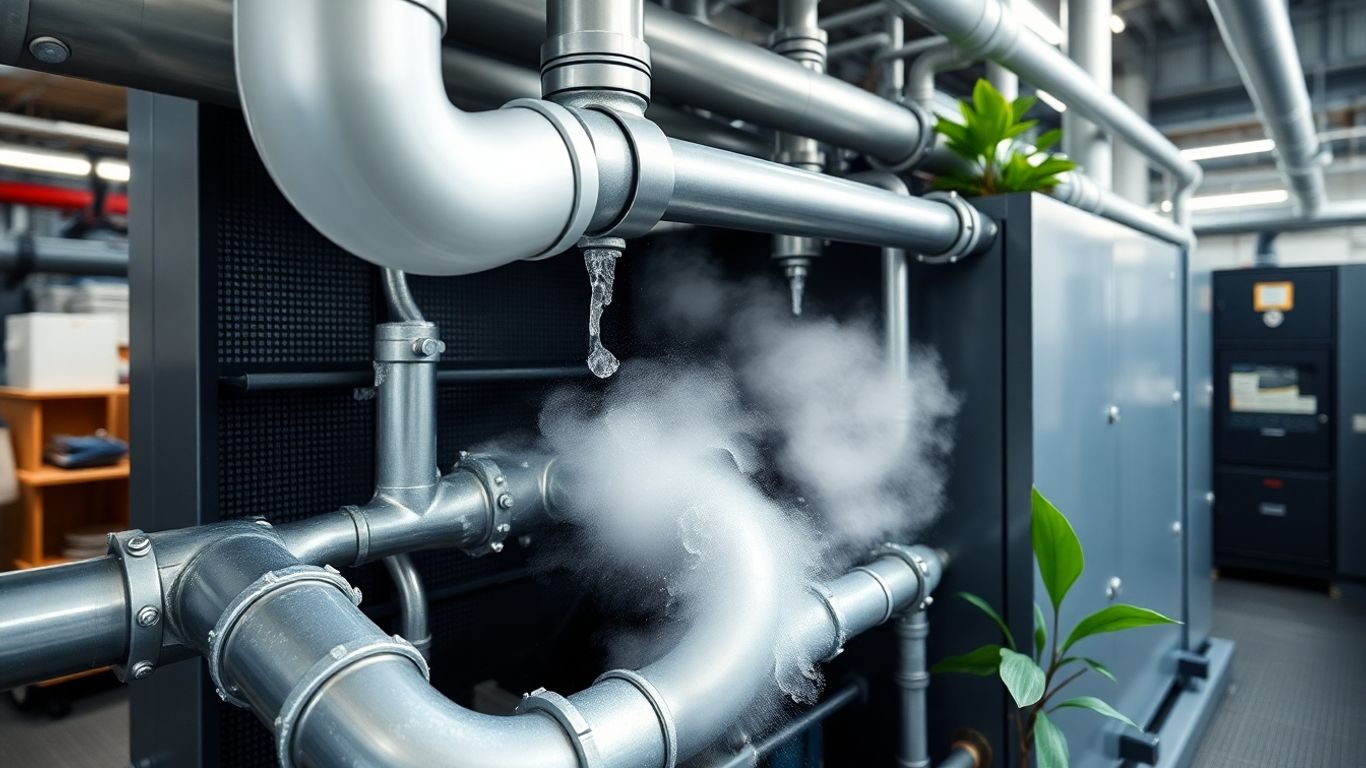
Chilled water systems are playing an increasingly important role in seeking effective solutions to limit the environmental footprint of buildings and industrial sites. Integrating energy optimisation and appropriate technology choices is necessary if you want to reduce energy consumption and carbon emissions. You’ll also be faced with the choice of refrigerants and strategies for harnessing recoverable heat.
Energy optimisation and carbon emissions reduction
To make real progress in environmental performance, you must aim for maximum efficiency:
- Optimal adjustment of temperature setpoints depending on use and season.
- Selection of efficient equipment, such as variable speed units or those with magnetic bearings.
- Continuous monitoring of consumption via building management systems, allowing rapid identification of energy drifts (see presentation of basic principles).
By targeting these optimisations, reducing energy bills often goes hand-in-hand with cutting CO₂ emissions. Some manufacturers implement continuous improvement plans based precisely on the real-time measurement and interpretation of operating data.
Even a modest variation in temperature setpoint or the replacement of ageing equipment translates into a marked reduction in annual energy consumption.
Integration of heat recovery and free cooling
Heat recovery is increasingly being integrated, especially when chillers are installed near heating requirements (DHW, air preheating, etc.):
- Use of condensers for total or partial heat recovery.
- Supplying the building heating network with heat produced by the chiller.
- Direct free cooling when the outside temperature allows fresh ambient air to cool the water without a compressor.
Here’s an overview of the potential savings associated with free cooling:
| Operating mode | Annual energy savings |
|---|---|
| Chiller only | 0% |
| Partial free cooling | 15-25% |
| Total free cooling (winter) | 30-40% |
These solutions reduce the load on the chiller and limit mechanical wear—while meeting environmental objectives.
Choosing low-impact refrigerants
The choice of refrigerant used in chillers is also crucial to limit climate impact. At present, it is advised to opt for:
- Very low global warming potential (GWP<1) fluids, such as HFO R-1234ze.
- Non-halogenated alternatives that do not produce persistent greenhouse gases.
- Equipment compatible with upcoming regulatory developments.
Modern systems, with leak monitoring and continuous improvements to regulation, play a part in the shift towards more frugal technologies, as shown by the solutions presented by the E-Home team.
Embracing a sustainable approach relies on technical choices, but also on a global approach to comfort, adaptability, and the management of energy resources.
Maintenance, servicing, and durability of chilled water installations
Ensuring a long life and reliable performance of your chilled water installation is only possible with structured servicing, regular maintenance, and close monitoring. Lack of monitoring or cleaning can rapidly lead to reduced efficiency or costly breakdowns. You’ve probably already noticed it: a small oversight today can mean a major job tomorrow.
Preventive maintenance practices
A good preventive maintenance plan is the foundation for avoiding problems. Here are some key points to check systematically:
- Regular check of heat exchanger cleanliness (evaporator and condenser)
- Pump inspection, checking flow and pressure
- Check of refrigerant charge and purging of non-condensable gases
- Weekly visual inspection around installations for leaks, corrosion, or abnormal noise
- Annual full cleaning of the hydraulic network and components
For most sites, combining preventive maintenance with regular parameter monitoring (temperature, flow, pressure) will anticipate the majority of faults.
Managing water quality and the hydraulic network
Water quality is often overlooked, yet it plays a central role in equipment longevity. Poor water quality leads to deposits, corrosion, or even blockages. Make provision for:
- Periodic chemical analysis of the circulating water
- Addition of corrosion inhibitors if required
- Bleeding air from the network to avoid oxygen pockets
- Mechanical or chemical cleaning of circuits every 1 to 3 years
Here’s an example of a typical monitoring schedule:
| Frequency | Action |
|---|---|
| Weekly | Visual inspection |
| Quarterly | Water analysis + adjustment |
| Annually | Complete cleaning |
For more maintenance advice, you’ll find similar principles in home automation management: the importance of regular maintenance.
Importance of energy monitoring and supervision
Monitoring your energy consumption and operating parameters lets you react quickly to issues and also optimise costs in the long run. A few practical tools:
- Energy meters installed on main sections
- Readings of chilled water inlet/outlet temperatures
- Automated or centralised technical management for alerts in case of overruns
- Keeping a logbook with maintenance dates, incidents, abnormal variations
By collecting this data, you’ll be able to spot problems early, avoid overconsumption, and calmly plan replacements or improvements to the network.
Conclusion
In conclusion, chilled water remains a reliable and widely used solution in the HVAC field, especially for large buildings or industrial installations. As you’ve seen, its principle is based on the circulation of water cooled to specific temperatures, ensuring constant thermal comfort and good control of energy consumption. Its uses are varied, from service sector to industry, and the technical choices always depend on your specific needs, site configuration, and available budget. If you’re hesitating between several solutions, it’s wise to consult a HVAC professional. They can guide you towards the system best suited to your situation, taking into account technical constraints and performance objectives. In short, choosing and maintaining your chilled water installation well means guaranteeing a pleasant indoor environment and savings in the long term.
Frequently Asked Questions
What is chilled water in an HVAC system?
Chilled water is water cooled, often between 6 and 12°C, which circulates through pipes to cool the air inside buildings. It is produced by a machine called a chiller and keeps rooms cool, especially in large buildings.
How does a chilled water circuit work?
In a chilled water circuit, water is cooled by the chiller and then sent throughout the building via pipes. The water absorbs heat from rooms, then returns to the chiller to be cooled again. This process repeats in a loop.
Why choose a chilled water system rather than another air conditioning solution?
The chilled water system is ideal for large buildings as it can cool large areas with a single central installation. It is also quieter and easier to integrate into complex buildings, such as hospitals or shopping centres.
What are the usual temperatures for chilled water in HVAC?
For building air conditioning, chilled water usually circulates between 6°C and 12°C. For specific needs, such as in industry, it can go down to 0°C or even lower with suitable equipment.
What are the important components of a chilled water network?
A chilled water network includes the chiller (cooler), pipes, pumps to circulate the water, terminal units (such as fan coil units), and control systems to regulate temperature and flow.
How do you maintain a chilled water system?
You need to regularly check water quality, clean filters, monitor pumps and pipes, and check the chiller. Regular maintenance prevents breakdowns, extends the system’s life, and ensures good energy performance.
