
Looking to understand how a fan coil unit works to heat or cool your space? It’s a fairly common system that uses a fan and water to adjust the temperature. We’ll look together at how it works, what different types are available, and why you might choose this solution for your home or office. We’ll also cover how to install it and how to set it up to be as efficient as possible.
Key Points to Remember
- The fan coil unit uses a fan to circulate air through a heat exchanger, where it is heated or cooled by water. This forced convection principle allows for rapid temperature adjustment in a room.
- There are several configurations: 2-pipe systems (a single water circuit, hot or cold), 4-pipe systems (two independent circuits for hot and cold), and variants with auxiliary electric resistance.
- These devices are valued for their ability to provide rapid and homogeneous thermal comfort. They are also quite flexible in terms of installation and can be discreet in an interior.
- Installation requires proper sizing of the exchangers, planning for condensate management, and considering air filtration. Integration into hydraulic and electrical networks also needs to be considered.
- Good regulation, whether local on each device or centralised, is important to optimise the comfort and energy efficiency of the fan coil unit system.
Understanding how the fan coil unit works
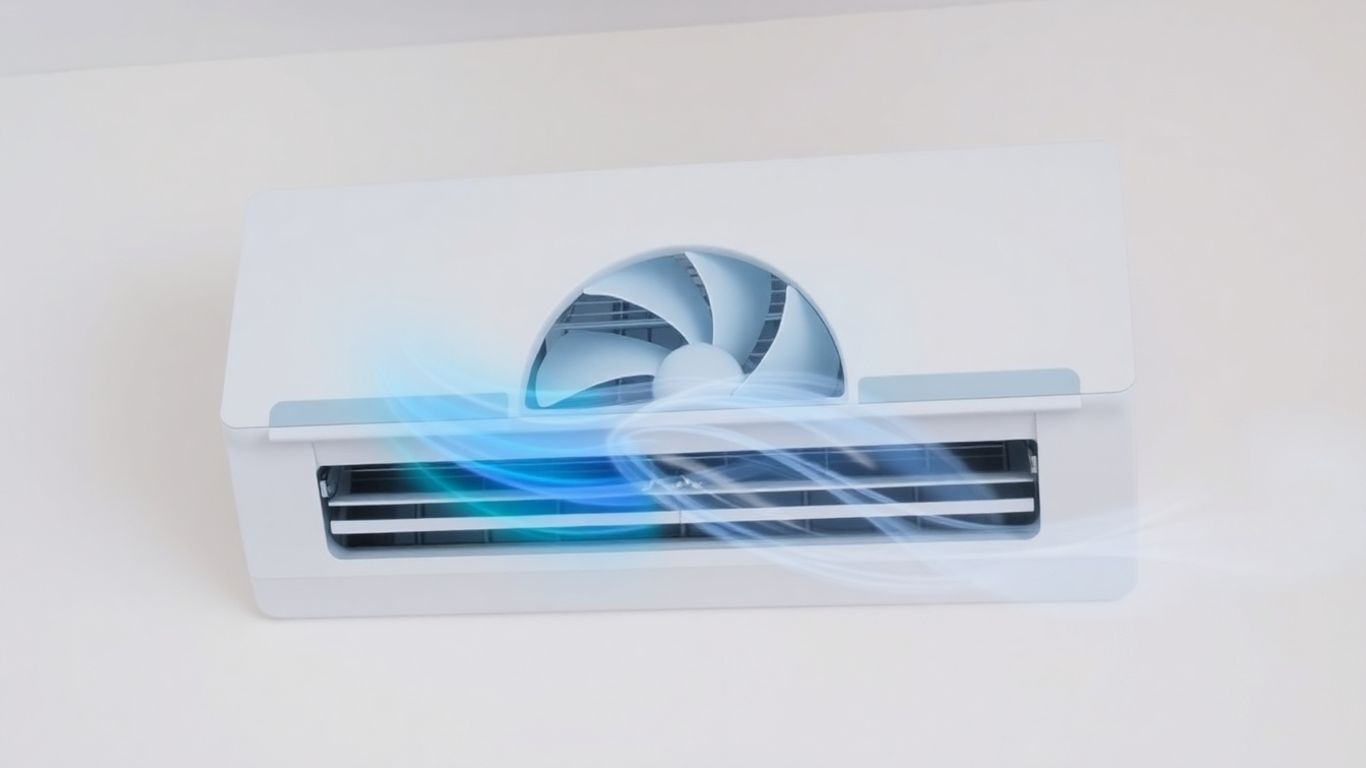
The fan coil unit, often abbreviated to “fan coil”, is a device that combines two main functions: heating and air conditioning. It acts on the air in your room to adjust the temperature according to your needs. Its name comes from its dual action: a fan that circulates air and an exchanger that heats or cools it. It’s a bit like an improved radiator, but with the added ability to cool. The idea is to make the air more pleasant, whether in the middle of winter or during the intense heat of summer.
The principle of convection applied to air treatment
The operation of the fan coil unit is based on the principle of convection. This is a natural phenomenon: hot air, being less dense, rises, while cold air, being denser, falls. The fan coil unit uses this movement to diffuse the desired temperature throughout the room. It draws in ambient air, passes it over a heat exchanger, then releases it back into the room. This cycle allows the air to be heated or cooled relatively quickly and uniformly. This forced air circulation is what distinguishes it from a simple radiator.
Essential components of a fan coil unit
To fully understand how it works, you need to know its main parts. Each element plays a role in the air treatment process:
- The fan: This is the engine of the device. It draws air from the room and propels it through the exchanger before redistributing it. The fan speed can often be adjusted to modulate the power.
- The heat exchanger (or coil): This is where heat transfer takes place. It consists of a network of tubes through which a fluid circulates (hot water for heating, chilled water for air conditioning). The ambient air, passing over these tubes, heats up or cools down.
- The filter: Located at the air inlet, it retains dust and other particles. This is important for indoor air quality and to protect the internal components of the device.
- The condensate drip tray: In air conditioning mode, hot and humid air from the room can cause condensation on the cold exchanger. This tray collects the formed water to prevent it from dripping into the room.
- The casing (or housing): This is the visible part of the device, which protects the internal components and allows for more discreet integration into your decor.
The role of the fan and the heat exchanger
The fan and the heat exchanger are the two main actors in the fan coil unit. The fan, often a turbine, is responsible for air circulation. It can have several speeds, which allows for adjusting the airflow and thus the power of the device. The faster the fan spins, the more air is circulated and the more intense the heat exchange. The exchanger, for its part, is where the heat transfer fluid (water) gives up or absorbs heat. Its design, with numerous tubes and fins, maximises the contact surface with the air for the most efficient energy transfer possible. It is the combination of these two elements that allows the fan coil unit to offer rapid and adjustable thermal comfort.
The operation is quite simple: the room air is drawn in, passes through a filter to be cleaned, then passes through an exchanger where it is heated or cooled by a water circuit. Finally, the treated air is returned to the room by a fan. This cycle repeats to maintain the desired temperature.
Different fan coil unit configurations
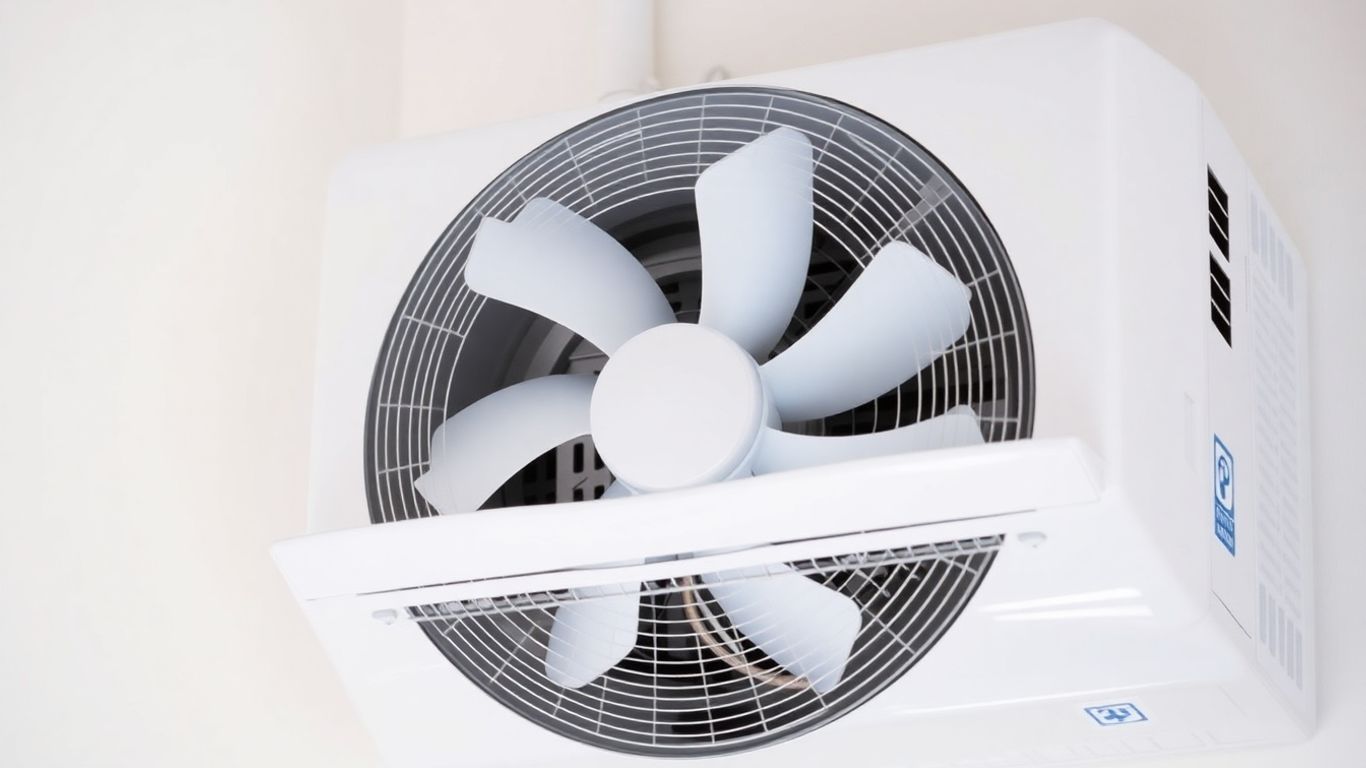
To meet various heating and air conditioning needs, fan coil units come in several configurations. The choice between these models will depend on the complexity of your installation, your comfort requirements, and your budget. Understanding these differences will help you select the most suitable solution for your project.
Two-pipe fan coil units: simplicity and versatility
Two-pipe units are the most common. They have a single heat exchanger. This is supplied with either hot water for heating in winter or chilled water for cooling in summer. This configuration is appreciated for its simple design and generally more affordable cost. It is particularly suitable for buildings where thermal needs are relatively uniform. However, in cases where exposures or internal gains vary greatly from room to room, or during intermediate seasons, comfort may sometimes be less optimal. It is important to note that this system cannot produce heat and cold simultaneously.
Four-pipe fan coil units: performance and independence
For increased flexibility and performance, four-pipe fan coil units are an excellent option. Unlike two-pipe models, these incorporate two distinct heat exchangers. One is dedicated to hot water for heating, the other to chilled water for cooling. This architecture allows each unit to be supplied independently with heat or cold, according to the specific needs of each zone. This is an ideal solution for buildings with varied thermal requirements, offering precise temperature control room by room. However, the installation is more complex, requiring two separate hydraulic networks. This type of system is often preferred for applications requiring fine regulation and high responsiveness, such as in hotels or modern offices, where thermal comfort is a priority. They allow for finer thermal management, for example by providing heating to one area while cooling another, which is impossible with a two-pipe system. You can consult examples of chilled water production systems to better understand their integration.
Hybrid systems: two pipes, two wires and their variants
Between the simplicity of two pipes and the performance of four pipes, hybrid configurations exist. The “two pipes, two wires” system is a common example. It uses a single exchanger but incorporates an auxiliary electric resistance. This resistance takes over for heating when the hot water supply is insufficient or unavailable. This offers a complementary heating solution, but attention must be paid to the associated electricity consumption. Other variants exist, sometimes combining the advantages of both systems to adapt to specific installation constraints or occasional heating or cooling needs. These systems seek to optimise the compromise between installation cost, operating cost, and comfort level.
Applications and advantages of the fan coil unit
The fan coil unit stands out for its ability to adapt to various cold and heat production systems, thus offering a very flexible thermal comfort solution. Whether you have a heat pump, a boiler, or an air handling unit, this device can be easily integrated. Its main strength lies in its speed of action: it allows the desired temperature to be reached in a room much faster than a traditional heating or air conditioning system.
Adaptability to cold and heat production systems
Fan coil units are designed to work with different heat transfer fluids, whether hot water for heating or chilled water for air conditioning. This versatility allows you to couple them with a wide range of cold and heat production equipment, such as chillers or boilers. You can thus use a single hydraulic installation to ensure the comfort of your building throughout the year. The use of chilled water systems is particularly relevant for air conditioning, as it allows for efficient cold transfer.
Rapid and homogeneous thermal comfort
Thanks to its integrated fan, the fan coil unit ensures active diffusion of treated air. Unlike conventional radiators which rely on natural convection, the fan coil unit forces air circulation. This means that hot or cold air is propelled into the room, quickly reaching all areas and creating a homogeneous temperature. You feel the temperature change faster, which is a significant advantage during seasonal changes or when the outside temperature varies abruptly.
Installation flexibility and aesthetic discretion
These devices come in many configurations: wall-mounted, ceiling-mounted, console, ducted… This variety allows them to be adapted to almost all architectural configurations and all types of buildings, whether new constructions or renovations. Moreover, their design is often conceived to be discreet. They integrate easily into your interior decor without being too visually imposing. Their small footprint is a major asset, especially in rooms where space is limited.
Here are some points to consider for their installation:
- Choice of location: Favour a place that allows good air circulation, away from obstacles.
- Connections: Ensure that hydraulic and electrical connections are accessible and comply with standards.
- Maintenance: Provide easy access for filter cleaning and general maintenance of the device.
One of the great assets of the fan coil unit is its ability to provide both heating and air conditioning with a single device. This greatly simplifies the installation and management of thermal comfort systems in a building.
Technical considerations for installation
The installation of a fan coil unit requires particular attention to ensure its proper functioning and longevity. It’s not just about connecting it and turning it on; several technical points deserve your consideration.
Sizing of exchangers for cooling and heating
The core of a fan coil unit’s performance lies in its heat exchanger. For both cooling and heating, adequate sizing is essential. An undersized exchanger will struggle to reach the desired temperature, while an oversized model can lead to unnecessary costs and less precise regulation. Local climatic conditions, the thermal load of the room, and the characteristics of the heat transfer fluid (chilled water or hot water) used must be taken into account. A preliminary thermal study is therefore indispensable to choose the correct exchanger size.
Condensate management and air filtration
When a fan coil unit cools the air, condensation forms. This water must be collected and drained correctly to prevent water damage or mould growth. A condensate drip tray, connected to the drainage system, is therefore necessary. In some cases, particularly for units installed in false ceilings, a small condensate pump may be required. In parallel, air filtration is important for indoor air quality. Filters, usually washable or replaceable, must be accessible for regular maintenance. A clogged filter reduces airflow and the efficiency of the unit.
Integration into hydraulic and electrical networks
The hydraulic installation involves connecting the chilled water and hot water pipes, as well as the control valves. It is important to provide isolation valves to facilitate maintenance. For two-pipe systems, flow management is a key point. The use of two-way valves may require a bypass valve or a variable speed pump to protect the pump and optimise energy consumption. Electrically, the connection must comply with current standards, taking into account the fan’s power supply and, if applicable, auxiliary heaters. Good electrical management can prevent overloads, particularly by providing load shedding systems for units with auxiliary electric heating.
Correct installation of fan coil units is the first step towards optimal thermal comfort and controlled energy consumption. Do not neglect these technical aspects to guarantee the performance of your air conditioning and heating system.
Optimising fan coil unit regulation
To get the most out of your fan coil units, well-thought-out regulation is essential. It’s not just about turning the device on or off; it aims to maintain optimal comfort while controlling your energy consumption. Let’s see how you can refine this management.
Local device regulation
The first step for good regulation happens at the level of each device. You generally have two main approaches to managing the temperature in a room.
- Water temperature modulation: In this case, the fan speed remains constant. It is a valve, often a three-way valve, that adjusts the flow of hot or chilled water circulating in the exchanger coil. The greater the demand for heating or cooling, the more the valve opens to let the water pass. This method offers appreciable comfort, especially if you can adjust the fan speed to several positions to modulate the noise.
- Fan speed modulation: Here, the water temperature arriving at the device is constant. It is the fan speed that varies to meet the needs of the room. A higher speed means more air treated and therefore faster heating or cooling. Although potentially less expensive, this solution can be less comfortable if the fan operates in an on/off mode.
In both cases, it is recommended to establish a sufficiently wide neutral range. For example, between 21°C and 24°C, the device consumes no energy. The ambient temperature then fluctuates within this zone without intervention. The placement of the temperature sensor is also important; a sensor in the room generally gives better results than a sensor in the air flow returned by the device.
Centralised management of chilled and hot water supply
Beyond the individual management of each fan coil unit, a global view of the system allows for substantial savings. A central control unit, sometimes called BMS (Building Management System), can orchestrate the whole.
- Coordination of summer/winter cycles: The centralised system can automatically manage the switching between hot and chilled water production, depending on the season or specific needs. This avoids manual adjustment errors and optimises the use of production equipment.
- Optimisation of hydraulic flows: For systems using two-way valves, the closing of several valves can pose a problem for pumps. Centralised regulation can manage variable speed pumps to maintain constant pressure in the network, which is more energy-efficient. Alternatively, a bypass valve can be used, but this maintains constant consumption.
- Management of consumption peaks: In systems that use auxiliary electric heaters (such as ‘two pipes, two wires’ systems), centralised management can shed load from certain devices during peak demand to avoid overloading the electrical network. This can be done sequentially, as the building itself acts as a thermal buffer.
Solutions for increased energy efficiency
To go further in optimisation, several techniques can be implemented.
- Window opening detection: Some systems integrate contacts on window frames. If a window is open, the fan coil unit in the room concerned is automatically stopped. This is a simple but effective measure to avoid wasting energy.
- Time programming: Use programming to anticipate needs. For example, start heating or cooling before occupants arrive in the morning, potentially taking advantage of lower electricity tariffs at night.
- Communication and supervision: Modern fan coil units can often be connected to communication networks (fieldbus, Wi-Fi). This allows not only remote supervision but also analysis of operating data to identify other areas for improvement. Some can even be controlled via a smartphone app.
A well-designed regulation does not just respond to a setpoint. It anticipates, adapts, and communicates to ensure the best possible comfort while minimising the impact on your energy bill. It is a subtle balance between technology and common sense.
In summary: your thermal comfort at your fingertips
As you will have understood, the fan coil unit is a versatile solution for managing the temperature of your spaces, whether for heating in winter or air conditioning in summer. Depending on your specific needs, whether you opt for a 2 or 4-pipe system, with or without electric auxiliary heating, you will find the suitable model. Remember to carefully consider the energy source, the necessary power, and your budget to make the best choice. A well-thought-out installation will guarantee optimal thermal comfort and efficient management of your air conditioning.
Frequently Asked Questions
How does a fan coil unit work to heat or cool a room?
Imagine a fan that pushes the air from your room through an exchanger. This exchanger is like a small radiator, but it can be filled with hot water to heat or chilled water to cool. The air passes through, takes on the water’s temperature, and is then returned to the room. It’s a bit like a hairdryer that can also blow cool air!
What are the differences between 2-pipe and 4-pipe fan coil units?
A 2-pipe fan coil unit has a single exchanger for both heating and cooling, but you have to choose one or the other. A 4-pipe unit has two: one for heating and one for cooling. It’s like having two devices in one, which allows you to heat one room and cool another at the same time, without confusion.
Does a fan coil unit make a lot of noise?
That’s a good question! Since there’s a fan, there’s bound to be some noise. Modern models are designed to be quieter, especially when running at low speed. If you are sensitive to noise, it’s advisable to look for models with more efficient motors or ask for advice to choose the one that will be most discreet in your bedroom or living room.
Can a fan coil unit be used with a heat pump?
Absolutely! It’s even a very common and efficient combination. The heat pump produces the hot or chilled water, and the fan coil unit is responsible for diffusing this temperature into the room. It’s an ecological solution for heating and air conditioning your home.
Does a fan coil unit need maintenance?
Yes, like any appliance, it needs a little maintenance to function properly. The most important thing is to clean or replace the filters regularly. This ensures good air quality and prevents the unit from getting clogged. Think of it like changing your vacuum cleaner filter!
What are the advantages of having a fan coil unit compared to a classic radiator?
The big advantage is speed! The fan coil unit heats or cools the air much faster than a classic radiator. Plus, it can do both: heat in winter and cool in summer, whereas a radiator only heats. So it’s a more versatile solution for your comfort all year round.
