
Considering installing a decentralised dual-flow MVHR system in your home? That’s an excellent idea for improving your comfort and reducing your energy bills. This system, although sometimes a little technical at first glance, is actually quite simple to understand. It allows you to renew the air in your home while recovering heat. In this article, we will explain everything you need to know about decentralised dual-flow MVHR: how it works, its advantages, how to install it, and what benefits you can expect. Get ready to discover an efficient ventilation solution suitable for many situations.
Key Points to Remember about Decentralised Dual-Flow MVHR
- Decentralised dual-flow MVHR renews the air in your home by extracting stale air and supplying fresh air, while recovering heat from the outgoing air to pre-heat the incoming air.
- It is particularly suitable for older or renovated buildings where the installation of complex ducts is difficult, thanks to its simplified installation in walls.
- Its main advantages include improved indoor air quality, reduced heat loss, and therefore a decrease in your heating bills.
- Installation is less invasive than a centralised dual-flow MVHR, as it does not require an extensive duct network throughout the house.
- Regular maintenance, particularly cleaning or replacing filters, is necessary to ensure its proper functioning and energy performance.
Understanding the principle of decentralised dual-flow MVHR
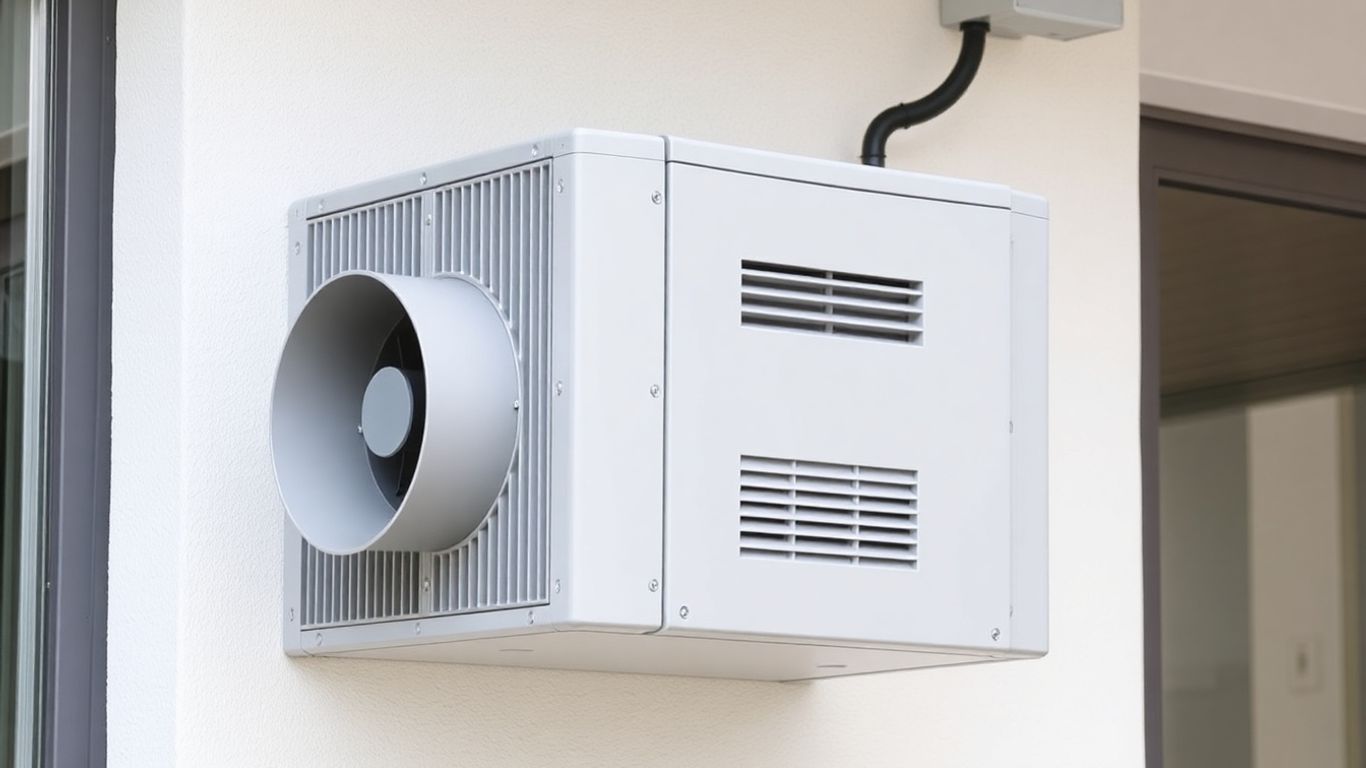
Decentralised mechanical ventilation with heat recovery (MVHR) represents a significant evolution compared to traditional systems. It combines the benefits of efficient ventilation with optimised energy recovery, all in a configuration more adaptable to various types of housing.
General operation of dual-flow ventilation
The fundamental principle of a dual-flow MVHR is based on the constant renewal of indoor air. Unlike a single-flow MVHR which simply extracts stale air, the dual-flow system goes further. It extracts used air from so-called rooms
The advantages of decentralised dual-flow MVHR for your home
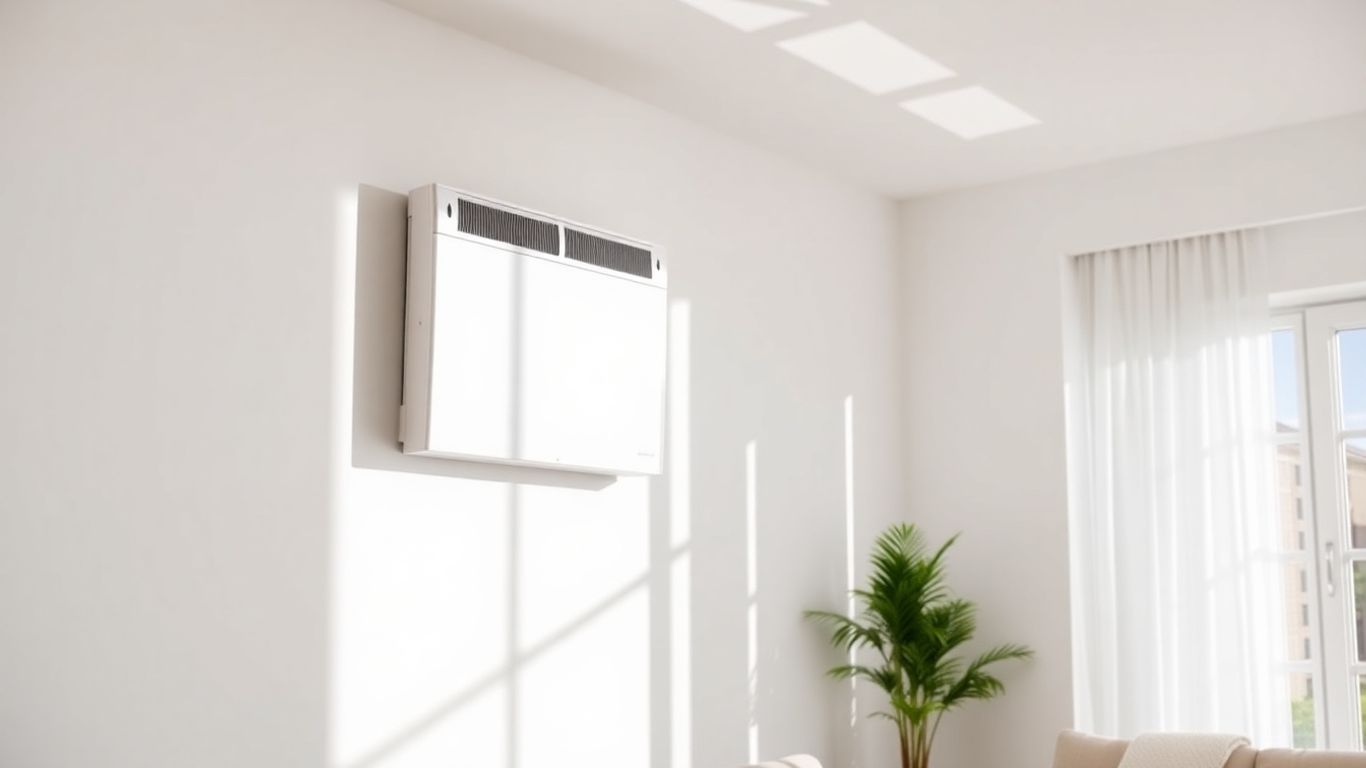
Improved indoor air quality
One of the major benefits of a decentralised dual-flow MVHR lies in its constant supply of fresh air. Unlike simple window ventilation, which can let in dust and pollen, this system filters outdoor air before supplying it into your home. This means you breathe healthier air, free from fine particles, allergens like pollen, and pollutants. This is a significant advantage, especially if you suffer from allergies or respiratory problems. Furthermore, it effectively manages indoor humidity, thereby reducing the risks of condensation and mould development, which contributes to a healthier living environment.
Optimised energy performance
Decentralised dual-flow MVHR stands out for its ability to recover heat from the stale air extracted from your home. This recovered energy is then used to pre-heat the fresh air entering. This mechanism significantly reduces heat losses and, consequently, the heating demand. In winter, the incoming air is already pre-heated, which lightens the load on your main heating system. This directly translates into a reduction in your energy consumption, whether for gas or electricity, and therefore savings on your bills. The efficiency of this heat recovery is a key point of its economic interest.
Increased acoustic and thermal comfort
Thanks to decentralised dual-flow MVHR, you no longer need to open your windows to ventilate, even in the middle of winter. This helps maintain a stable and pleasant indoor temperature, without the cold draughts often associated with opening windows. Moreover, by keeping your windows closed, you benefit from improved sound insulation. External noises, whether from traffic or neighbours, are considerably attenuated. You thus enjoy a quieter and more comfortable indoor environment, both thermally and acoustically. The installation of this type of ventilation can be an excellent solution for older buildings, as it does not require extensive duct installation throughout the house.
Here are the main benefits for your comfort:
- Improved air quality: Filtration of outdoor pollutants and allergens.
- Thermal comfort: Prevention of cold draughts thanks to pre-heating of incoming air.
- Tranquillity: Significant reduction of external noise pollution.
Installation of a decentralised dual-flow MVHR
The installation of a decentralised mechanical ventilation with heat recovery (MVHR) is a particularly suitable solution for improving air quality and thermal comfort in your home, especially in older buildings or during major renovations. Unlike centralised systems that require a complex network of ducts, decentralised dual-flow MVHR stands out for its simplicity of installation.
Adaptability to older and renovated buildings
In older houses, integrating a centralised ventilation system with ducts can prove technically complicated, or even impossible, without altering the building’s structure. Decentralised dual-flow MVHR offers an ingenious alternative. Each unit is designed to be installed directly into an external wall, thus requiring no duct circulation through floors or rooms. This makes it ideal for houses where architectural constraints are significant, or during renovations where one wishes to minimise large-scale work. It adapts to different wall thicknesses, generally between 250 and 470 mm, which covers the majority of constructions.
Simplified installation procedure
The installation of a decentralised dual-flow MVHR is significantly less invasive than a traditional system. Here are the general steps:
- Wall drilling: A hole of suitable diameter is made in the external wall of the room to be ventilated. This hole will allow the passage of the air inlet and outlet ducts, as well as the integration of the unit.
- Duct installation: Air ducts, often telescopic to adjust to the wall thickness, are inserted. They are generally insulated to prevent condensation.
- Unit fixing: The ventilation unit, which contains the fan and heat exchanger, is fixed inside the dwelling, against the wall.
- Electrical connection: The appliance is connected to the electrical network.
- Commissioning: Once the installation is complete, the appliance is started up and the airflows are checked and adjusted by a professional to ensure optimal balancing.
The absence of a complex duct network significantly reduces the time and cost of installation.
Positioning and accessibility criteria
The choice of location for each decentralised unit is important for its efficiency and your comfort. Ideally, living rooms (lounge, bedrooms) and rooms potentially subject to humidity (kitchen, bathroom, WC) should be prioritised. It is recommended to position the units to balance the length of the extraction and supply ducts, and to minimise the number of bends to reduce pressure losses. Furthermore, it is crucial that the appliance is easily accessible for maintenance operations, particularly cleaning or replacing filters. Easy access ensures that maintenance will be carried out regularly, which is essential for the proper functioning and longevity of the system.
The installation of a decentralised dual-flow MVHR is an intervention that can be carried out by a qualified professional. They will ensure that the sizing is correct, that the connections comply with standards, and that the system operates optimally. Do not hesitate to request several quotes to compare offers and guarantees.
Choosing and maintaining your decentralised dual-flow MVHR
For your decentralised mechanical ventilation with heat recovery (MVHR) system to function optimally and provide all the expected benefits, it is important to choose it well and not neglect its maintenance. It’s not that complicated, and it’s really worth it for the health of your home and your wallet.
Selection criteria for a high-performance model
When you look at different models, don’t get overwhelmed by everything. There are specific things to look for to ensure you make the right choice. Opt for certified appliances, such as those bearing the NF 205 mark or the German Phi certification. These labels give you an idea of the heat exchanger’s efficiency (look for an NF efficiency above 90% or Phi above 84%) and the electrical consumption of the fans. Reasonable consumption, say under 50 W-Th-C for the NF standard, is a good sign. Also consider the airflow rate: it must be adapted to the volume of your house. A system that is too powerful can dry out the air, which is not ideal.
Importance of regular maintenance
A well-maintained system is a system that lasts and works as it should. If you let dust accumulate, your MVHR will not be able to do its job properly. This means lower air quality and higher energy expenditure. It’s a bit like a car: if you don’t change the oil, it won’t run well.
Here are the key maintenance steps:
- Filter replacement: This is fundamental. They need to be replaced every six months. They trap dust and pollen, thus protecting the air you breathe and the heat exchanger.
- Cleaning the exchanger and vents: Once a year, a quick dusting of the central unit and air vents is necessary. It’s often simpler than you think.
- Duct cleaning: Every ten years or so, a more thorough cleaning of the ducts may be necessary to ensure good air circulation.
Accessibility for maintenance
When you install your MVHR, think about the future. The appliance must be easily accessible. If the technician (or yourself) has to dismantle half the house to change a filter, it’s not practical. Make sure the unit is placed in a location where it can be accessed without too much difficulty. Ask your installer to specify the filter reference; this will make it easier for you to order them later. The cost of filters is generally around £20, which remains reasonable for the comfort and health it provides.
It is often possible to carry out most maintenance operations yourself. The most common interventions, such as filter replacement or heat exchanger cleaning, do not require particular technical skills. Video tutorials are also often available to guide you.
Potential gains with a decentralised dual-flow MVHR
Installing a decentralised dual-flow MVHR in your home can result in tangible benefits, both in terms of comfort and your finances. It is a system that, although more discreet in its implementation than its centralised counterparts, offers notable performance.
Reduction of heat losses
The very principle of dual-flow relies on heat recovery. The stale air extracted from your interior is not simply vented outside. It passes through a heat exchanger where it transfers a large part of its heat to the incoming fresh air. This fresh air, thus pre-heated, is then supplied into your living areas. This means you reintroduce air at a more pleasant temperature, thereby reducing the need to heat this incoming air from scratch. For a decentralised dual-flow MVHR, the efficiency of this exchanger is generally between 70% and 80%. Although slightly lower than that of the most efficient centralised systems, this rate remains significant and actively contributes to limiting heat losses through air renewal.
Savings on heating bills
The direct consequence of reduced heat losses is a decrease in your energy consumption for heating. By reusing the heat from the extracted air, your main heating system (boiler, electric radiators, etc.) has less effort to make to reach and maintain the desired temperature. ADEME estimates that these savings can reach approximately 10% on your heating bill. Of course, this figure is an average and can vary depending on several factors:
- The intrinsic performance of your MVHR unit.
- The level of insulation in your home.
- Your consumption habits and the set temperature.
- The severity of the outdoor climate.
In some cases, with very efficient appliances and good insulation, savings can be even greater, especially if you previously had a single-flow ventilation system that vented hot air without any recovery.
Impact on the overall building performance
Beyond direct savings, a decentralised dual-flow MVHR contributes to the overall improvement of your home’s energy performance. By ensuring constant and controlled air renewal, it helps maintain a healthy indoor environment, limiting humidity and condensation problems that can degrade building materials in the long term. Moreover, by allowing windows to remain closed while renewing the air, it also improves acoustic comfort, a significant advantage, especially in noisy urban areas. The filtered air, free from pollen and other fine particles, is an additional asset for the occupants’ health, contributing to overall well-being in the home.
To conclude on decentralised dual-flow MVHR
There you have it, you now have a good idea of what a decentralised dual-flow MVHR is and how it works. It’s an interesting solution, especially if you’re renovating an old house and installing traditional ducts isn’t straightforward. It allows you to renew the air without losing too much heat, which is pretty good for comfort and for making some savings. Don’t forget that installation requires a bit of know-how, and regular maintenance, particularly changing the filters, is necessary for it to continue doing its job well. Consider it if you’re looking to improve the air quality in your home without undertaking major works.
Frequently Asked Questions
What is the main difference between a single-flow MVHR and a decentralised dual-flow MVHR?
Imagine you’re airing your house. A single-flow MVHR is like just opening a window to let out warm air and let in cold air. A decentralised dual-flow MVHR is smarter: it extracts warm, stale air from your house, recovers its heat to warm up the fresh air coming in. It’s like having a window that warms itself up before letting air in, and that’s much better for keeping your house comfortable and saving money.
Is decentralised dual-flow MVHR complicated to install in an old house?
Not at all! That’s precisely one of its big advantages. Unlike older systems that require running lots of pipes everywhere, decentralised dual-flow MVHR is easier to install. It’s fixed directly into a wall, which is perfect for houses that already have their charm and where you don’t want to tear everything apart to install a ventilation system.
How do I know if I need a decentralised dual-flow MVHR?
If you live in a well-insulated house, especially if it’s old and you’ve renovated it to make it more airtight, it’s an excellent idea. When a house is well sealed, air no longer circulates naturally. Decentralised dual-flow MVHR ensures you always have fresh air without losing the heat you paid to produce, and it also helps prevent humidity.
Does this system really improve the quality of the air we breathe at home?
Absolutely. This system is designed to constantly renew the air. It removes air laden with bad odours, humidity, and other pollutants, and it brings in fresh, filtered air. It’s like having an integrated air purification system that helps you breathe healthier air, especially if you are sensitive to allergies like pollen.
How much does maintenance for a decentralised dual-flow MVHR cost and how often should it be done?
The main maintenance involves cleaning or replacing the filters, much like for a vacuum cleaner. This should be done approximately every six months for the system to function well. Other maintenance, such as cleaning the heat exchanger, is less frequent. It’s generally simpler than for large centralised systems, and it helps keep your MVHR performing efficiently for a long time.
Is decentralised dual-flow MVHR very noisy?
Recent models are designed to be quite quiet. The main noise can come from the fans, but it is generally comparable to that of a refrigerator. The advantage is that since the fresh air is warmed before entering, you don’t need to leave your windows open, which also reduces noise from outside.
