
Looking to master your home’s temperature without your energy bill skyrocketing? The thermostat is your best ally. It allows you to set and programme your heating for optimal comfort, while also saving money. Let’s discover together how this device can transform your daily life.
Key Points to Remember
- The thermostat acts as a regulator to maintain the desired temperature in your home, directly influencing your comfort and energy consumption.
- Mechanical thermostats, often imprecise with significant temperature variations, should be avoided in favour of electronic or smart models for better regulation.
- An electronic thermostat uses a probe for a finer temperature measurement (up to 0.1°C), while smart models with PID regulation anticipate needs for increased thermal stability.
- Programme your thermostat according to your habits and rooms to optimise heating: lower temperatures at night or when you’re out can lead to significant savings.
- Installation is crucial: position your thermostat on an internal wall, at a good height (around 130 cm), away from direct heat or cold sources for a reliable measurement.
Understanding how a thermostat works
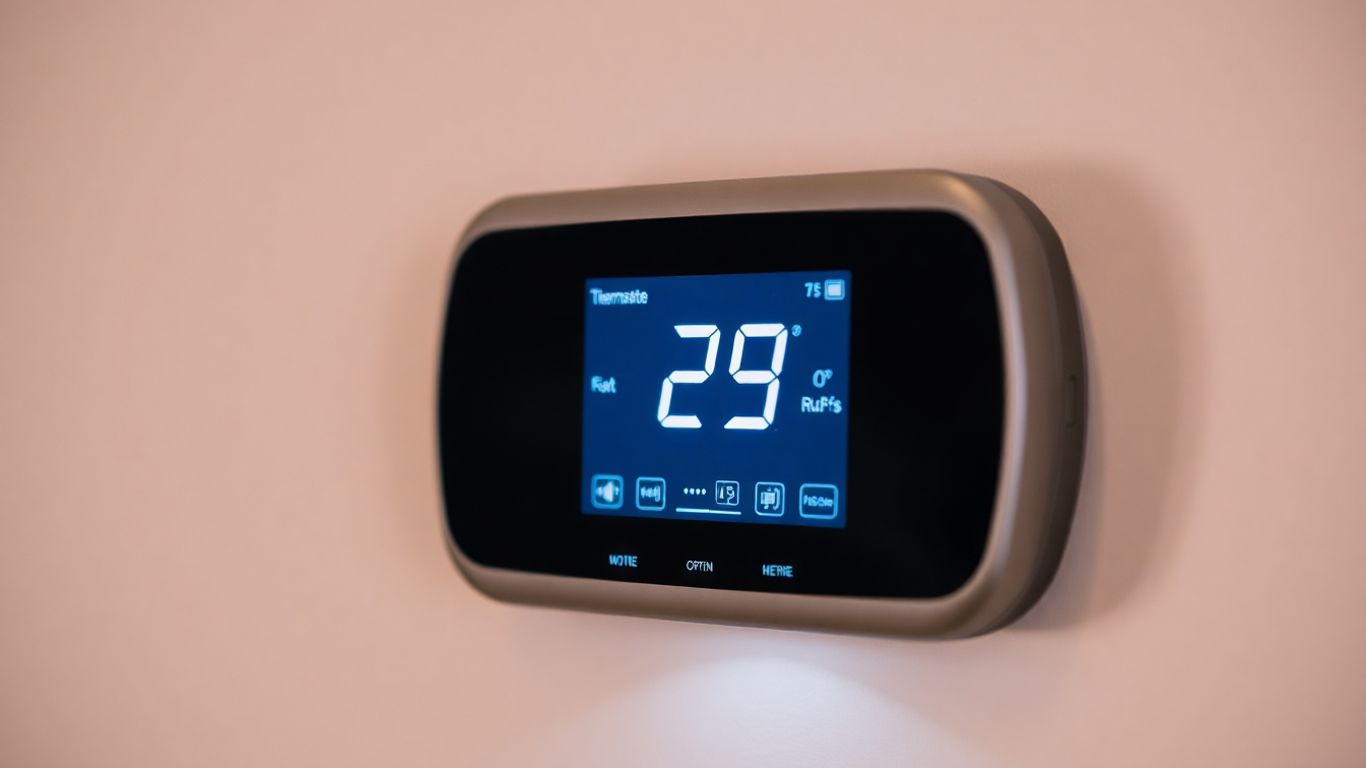
Are you looking to control your home’s temperature to combine comfort and savings? The thermostat is your main ally. It acts as the brain of your heating system, allowing you to maintain a pleasant and constant temperature without unnecessary effort. Understanding its role and operation is the first step to getting the most out of it.
The thermostat is, in essence, a device designed to maintain a predefined temperature in an enclosed space, such as your home. It constantly compares the measured ambient temperature with the temperature you have chosen. If the measured temperature is below the setpoint, the thermostat sends a signal to activate the heating system. Conversely, if the temperature exceeds the desired threshold, it switches off the heating. It is this cycle of activation and deactivation that allows the temperature to be regulated dynamically.
Principles of temperature measurement by different types of thermostats
Thermostats use various sensors to measure ambient temperature. Older models, known as mechanical thermostats, often employ a bulb filled with a liquid or gas whose volume varies with temperature. This variation in volume actuates a mechanism that opens or closes an electrical contact, thereby controlling the heating. Although simple, these systems often lack precision.
More modern electronic thermostats use temperature probes, such as thermistors or thermocouples. These probes measure temperature with great precision based on the variation of their electrical resistance as a function of temperature. This technology allows for much finer and more responsive regulation.
The importance of precision in ambient temperature measurement
The precision of temperature measurement is a key factor for comfort and energy efficiency. An imprecise thermostat can lead to significant temperature variations in your home. For example, a mechanical thermostat with a 3°C margin of error can cause the temperature to fluctuate noticeably. Did you know that an increase of just 1°C in the average temperature can lead to an overconsumption of energy of around 7%? Precise measurement therefore not only allows you to maintain the desired temperature, but also to avoid energy waste and achieve substantial savings.
A thermostat’s ability to accurately measure ambient temperature directly determines its effectiveness in maintaining stable thermal comfort and optimising your energy consumption. An accurate measurement is the foundation of efficient regulation.
Choosing the right type of thermostat for your needs
Choosing your thermostat is a crucial step for your comfort and for controlling your energy consumption. An unsuitable device, even if it is associated with an efficient heating system, can lead to significant overconsumption. It is therefore essential to understand the differences between the available models to make the most judicious choice.
Mechanical thermostats, often recognisable by their dial that produces a slight ‘click’ when changing state, generally work with a bimetallic strip system. This strip is composed of two metals with different expansion coefficients. When the ambient temperature varies, these metals deform, opening or closing an electrical contact. However, their precision is limited, often around 3°C. This means that the temperature in your room can fluctuate significantly. Knowing that a 1°C increase leads to an overconsumption of approximately 7%, opting for a mechanical thermostat can prove costly in the long run, despite a potentially lower purchase price.
Conversely, electronic thermostats use a temperature probe to measure ambient heat. This system offers much greater precision, often around 0.1°C. This fine measurement allows for more stable regulation and therefore better control of your consumption. Furthermore, programmable models give you the ability to adapt the temperature to your lifestyle. You can thus define specific time slots for heating, for example, lowering the temperature during your absences or at night. Well-thought-out programming can generate substantial energy savings.
- Increased precision: Temperature measurement to the nearest tenth of a degree.
- Customisable programming: Adaptation of heating cycles to your habits.
- Energy savings: Reduced consumption thanks to optimised regulation.
The most advanced thermostats today incorporate predictive regulation algorithms, often designated by the acronym PID (Proportional, Integral, Derivative). These smart systems learn the thermal characteristics of your home, such as the inertia of the building and the heating system. By anticipating temperature variations, they proactively adjust the heating power to maintain the setpoint temperature with great stability. This avoids overheating and excessive temperature drops, ensuring constant comfort while optimising consumption. For fine control of your comfort, it is recommended to choose a thermostat that can be controlled remotely, for example via a mobile application, allowing you to adjust settings wherever you are. This can be particularly useful if you have an irregular lifestyle or if you want to anticipate your return home. Integrating your thermostat into a larger home automation system can also offer interesting possibilities for managing your connected home.
Investing in a programmable, or even smart, electronic thermostat is a strategic choice for anyone wishing to combine thermal comfort and control over energy expenditure. Measurement precision and adaptability to lifestyles are major assets for optimising your heating system.
Optimising your thermostat settings
To get the most out of your heating system and save energy, precise adjustment of your thermostat is essential. It’s not just about setting a temperature, but about adapting your heating’s operation to your lifestyle. This may seem complex at first, but with a few tips, you’ll quickly master this tool for optimal thermal comfort and controlled consumption.
Adapting the temperature according to rooms and times of day
It is entirely possible, and even recommended, not to heat all rooms in your home in the same way, or at the same times. Your lifestyle is unique, and your heating system should be too. For example, it is of little use to maintain a high temperature in rooms you don’t use or when you are out. Remember to adjust the temperature according to the actual occupancy of each space. The goal is to heat just enough, when needed.
Here are some general recommendations for setpoint temperatures, to be adapted according to your feeling:
- Living areas (lounge, office, kitchen): 19°C when occupied, 17°C when unoccupied.
- Bedroom: 17°C, or 19°C for a baby’s room.
- Bathroom: 20°C when in use, 17°C when unoccupied.
- Passage areas (hallways, toilets): 17°C.
Using programming to anticipate your heating needs
Programming is the key to effective regulation. Rather than reacting to temperature drops, anticipate them. A programmable thermostat allows you to define time slots for heating. For example, you can programme a temperature increase before you return from work or in the morning before you get up. Well-thought-out programming can save you between 5 and 15% on your energy bill. Don’t hesitate to customise the predefined time slots to perfectly match your schedule. If you are leaving for a short period (less than 48 hours), a simple reduction of a few degrees is sufficient. For longer absences, the frost protection mode (around 8°C) is ideal for protecting your installations without overconsuming.
The benefits of the ‘away’ function for reducing consumption
The ‘away’ or ‘eco’ function of your thermostat is a powerful tool for reducing your energy consumption when you are not at home. The idea is to lower the setpoint temperature to a reasonable level during your working hours, outings, or holidays. It is important to note that for short absences, too significant a temperature drop can be counterproductive. If you lower the temperature by more than 3°C, the time and energy required to reheat the home can cancel out the savings made. It is therefore preferable to programme a slight drop rather than a total shutdown for absences of a few hours. For prolonged departures, such as holidays, you should remember to reactivate the heating sufficiently in advance to find a pleasant temperature upon your return, sometimes up to 24 hours beforehand.
Installing your thermostat correctly for a reliable measurement
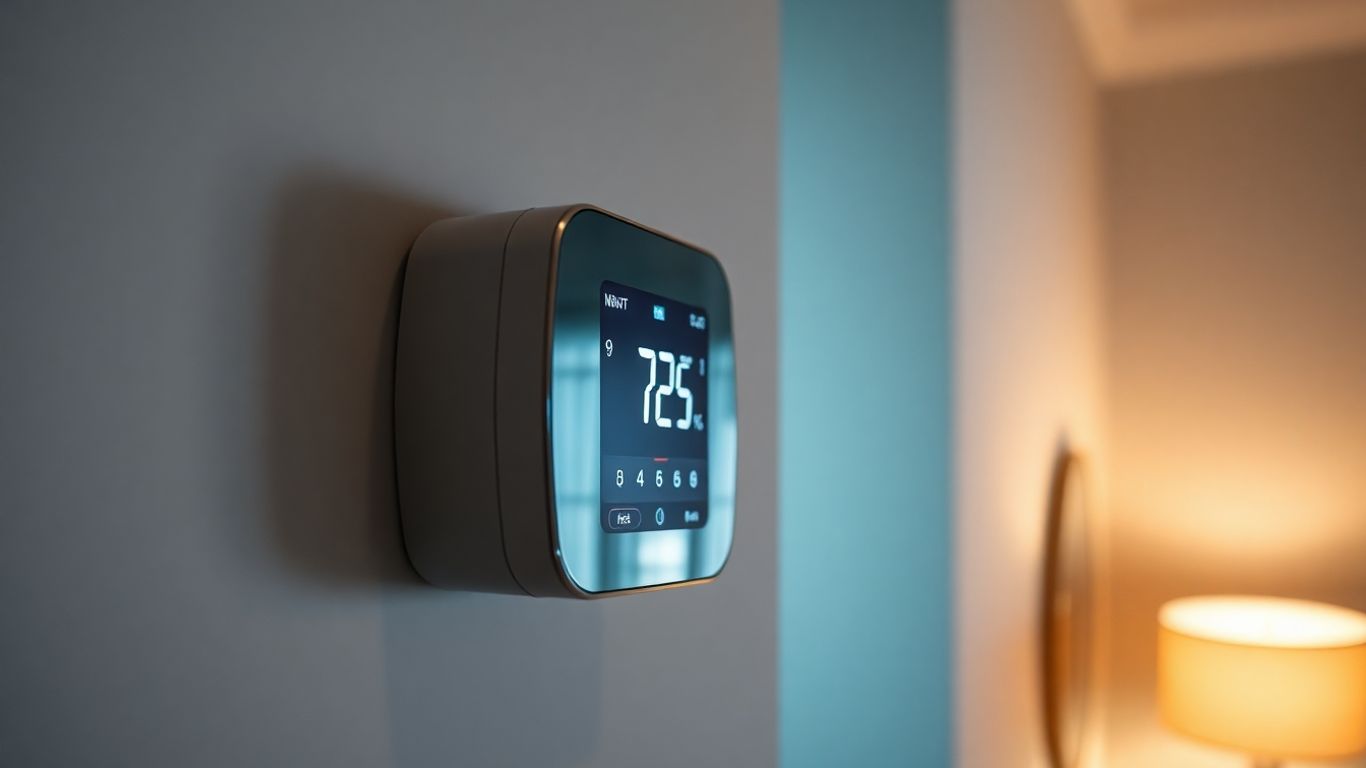
The placement of your thermostat is a key step to ensure precise temperature regulation in your home. Incorrect positioning can lead to erroneous measurements, thus affecting your comfort and energy consumption. It is therefore essential to follow a few recommendations to optimise its installation.
The importance of thermostat positioning in the room
To obtain an accurate measurement of the ambient temperature, the thermostat must be placed in a room representative of the general temperature of your home. The living room is often a good choice, as it is a frequently used living area. It is generally advisable to install it at a height of approximately 1.30 metres from the floor, on an internal wall. An external wall, potentially colder, could skew readings and cause the heating system to run more than necessary. Accurate measurement is the basis of effective regulation.
Avoiding parasitic heat or cold sources
Several elements can disrupt the proper functioning of your thermostat. It is essential to install it away from any direct heat source, such as a radiator, a fireplace, or even an electronic device emitting heat, such as a television. Similarly, direct exposure to sunlight can overheat the sensor and skew readings. Also remember to keep it away from draughts, caused by doors or windows, which could create artificial temperature variations. These precautions help to avoid inappropriate heating or cooling cycles, which result in overconsumption of energy. A poorly placed thermostat can make you consume up to 30% more energy compared to a correctly installed device.
The advantages of a thermostat with a remote sensor
In some cases, particularly if you have radiators with high inertia or if the ideal location for the thermostat is not optimal in the main room, using a remote sensor can be very beneficial. This sensor, placed in a strategic location, communicates directly with the thermostat. It allows for a more representative measurement of the actual room temperature, regardless of the heat emitted by the radiator itself or the specific conditions of the thermostat casing’s location. This is a particularly interesting solution for refining regulation and improving thermal comfort, while optimising the management of your heating.
Here are some key points to remember for optimal positioning:
- Install the thermostat on an internal wall.
- Avoid immediate proximity to heat or cold sources.
- Position it at a height of approximately 1.30 m from the floor.
- Prefer a main living room such as the lounge.
Careful installation of your thermostat is a direct investment in your comfort and in controlling your energy expenditure. Do not neglect this step, as it determines the effectiveness of your entire thermal regulation system.
The benefits of a modern thermostat for your comfort and savings
Adopting a modern thermostat represents a significant step towards improving both your daily comfort and controlling your energy expenditure. These devices, much more sophisticated than their predecessors, offer thermal regulation with remarkable precision, transforming the way you heat your home.
Achieving energy savings through precise regulation
A modern thermostat, especially if it is connected, allows you to make substantial savings. By accurately measuring the ambient temperature and adapting to variations, it avoids unnecessary overheating. Did you know that an increase of just 1°C above the desired temperature can lead to an overconsumption of around 7%? A precise thermostat maintains the desired temperature without excess, which directly translates into a reduced energy bill. Furthermore, the ability to programme temperature reductions during unoccupied periods, even short ones, contributes to significantly reducing your overall consumption. Ademe estimates that these programmable regulation systems can generate between 5 and 15% in savings.
Improving the thermal comfort of your home
Beyond savings, the main advantage of a modern thermostat lies in improving your comfort. No more unpleasant temperature variations or rooms that are too hot or too cold. A smart thermostat anticipates heating needs by taking into account the thermal inertia of your home and, for some models, weather forecasts. This ensures a stable and homogeneous ambient temperature, thus creating a more pleasant indoor environment in all circumstances. You can thus enjoy gentle and constant warmth, without having to manually adjust your heating system.
Advanced features of connected thermostats
Connected thermostats open the way to even finer and more personalised management of your heating. Thanks to a dedicated mobile application, you can control your heating system remotely, wherever you are. Whether you want to anticipate your return home or adjust the temperature during an unforeseen absence, everything can be done at your fingertips. Some models even integrate learning functions that allow them to adapt to your lifestyle and habits, thus automatically optimising the operation of your heating. These smart devices are a key element for a connected and energy-efficient home, simplifying the management of your thermal comfort.
Investing in a modern and efficient thermostat is therefore a judicious choice for anyone wishing to combine living comfort and control over their energy expenditure. Measurement precision and programming flexibility are the watchwords for effective thermal regulation.
In conclusion: controlled thermal comfort and guaranteed savings
As you will have understood, correctly setting your thermostat is a key step for optimal thermal comfort and for controlling your energy consumption. By opting for an electronic model, ideally programmable or connected, and by ensuring its correct positioning, you put all the chances on your side to heat just enough, when needed. Remember to adapt the temperatures according to the rooms and your lifestyle; every degree saved counts for your wallet and for the planet. Take the time to read your device’s manual, because judicious use is the key to fully enjoying the advantages offered by a modern thermostat.
Frequently Asked Questions
Why doesn’t my mechanical thermostat regulate the temperature well?
Older thermostats, often with a dial, use a metal piece that bends with heat. This system is not very precise; there can be up to a 3-degree difference! Imagine, increasing the heating by just one degree can push your bill up by 7%. To save money and be comfortable at home, it’s better to choose a more modern model.
What is the difference between a mechanical thermostat and an electronic thermostat?
The mechanical thermostat is the old model with a dial. It uses a metal piece that deforms with temperature. The electronic thermostat, on the other hand, uses a small probe to measure the temperature. It’s much more precise, with a difference of only 0.1 degrees. It’s like comparing a broken ruler with a laser measure!
How do I set my thermostat to save money?
It’s simple! You can programme your thermostat to heat less when you’re not there, for example when you’re at work or at night. There’s also an ‘away’ function that allows you to lower the heating during your holidays. Every degree less means money saved!
Where should I install my thermostat so it measures the temperature accurately?
You need to choose a good spot! Avoid placing it near a window, a radiator, or in direct sunlight. The ideal place is on an internal wall, roughly at eye level (about 1.30m). That way, it measures the true temperature of the room and not just that of a hot or cold corner.
What is a ‘smart’ thermostat or one with PID regulation?
A smart thermostat is a bit like a brain for your heating. It learns how your house heats up and anticipates! For example, it can start heating a little before the scheduled time so that you have the right temperature exactly when you arrive. This is PID regulation; it adapts to ensure it’s always comfortable without wasting energy.
Can I set different temperatures in each room?
Absolutely! That’s one of the big advantages of modern thermostats. You can set a higher temperature in the bathroom when you’re using it, and lower in the bedrooms at night. This allows you to heat only where it’s needed, and therefore save even more energy.
