
You may be wondering what a HEPA filter actually is and whether the difference between H13 and H14 levels has any real impact on the air quality you breathe. HEPA filters are found in many devices, from air purifiers to vacuum cleaners, and are often highlighted for their effectiveness. But between the figures, standards and practical reality, things can sometimes get confusing. In this article, we’ll clarify things simply so that you can choose the HEPA filter that best matches your needs.
Key Points to Remember
- The HEPA filter works thanks to a combination of physical phenomena that allow it to trap even very fine particles in its fibres.
- H13 and H14 levels correspond to different filtration rates: H13 traps 99.95% of particles, H14 goes up to 99.995%, but this gain comes with a reduced air flow rate.
- To guarantee the efficiency of a HEPA filter, the installation must also be airtight; otherwise, unfiltered air may pass by the filter.
- Regular maintenance and filter replacement are essential to maintain good performance, especially in very polluted or sensitive environments.
- Certified HEPA filters are tested to strict standards, while ‘HEPA-type’ filters do not always offer the same performance guarantees.
Understanding How a HEPA Filter Works
The Physical Mechanisms of Particle Capture
When you look at how a HEPA filter manages to trap tiny particles, there are four fairly simple physical processes involved:
- Impaction: The largest particles, carried by the air, directly strike the filter fibres and stick to them.
- Interception: Some particles follow the airflow but brush against the fibres and become trapped.
- Diffusion: The smallest particles (ultrafine aerosols) move randomly, causing them to hit the fibres by chance and, often, stick to them.
- Electrostatic attraction: Some fibres capture particles by electrostatic effect, a bit like a balloon attracting hair.
This ensures filtration that adapts to all sorts of particle sizes. HEPA filters therefore trap dust, pollen, viruses, or bacteria very efficiently.
Filter Description: Structure and Materials
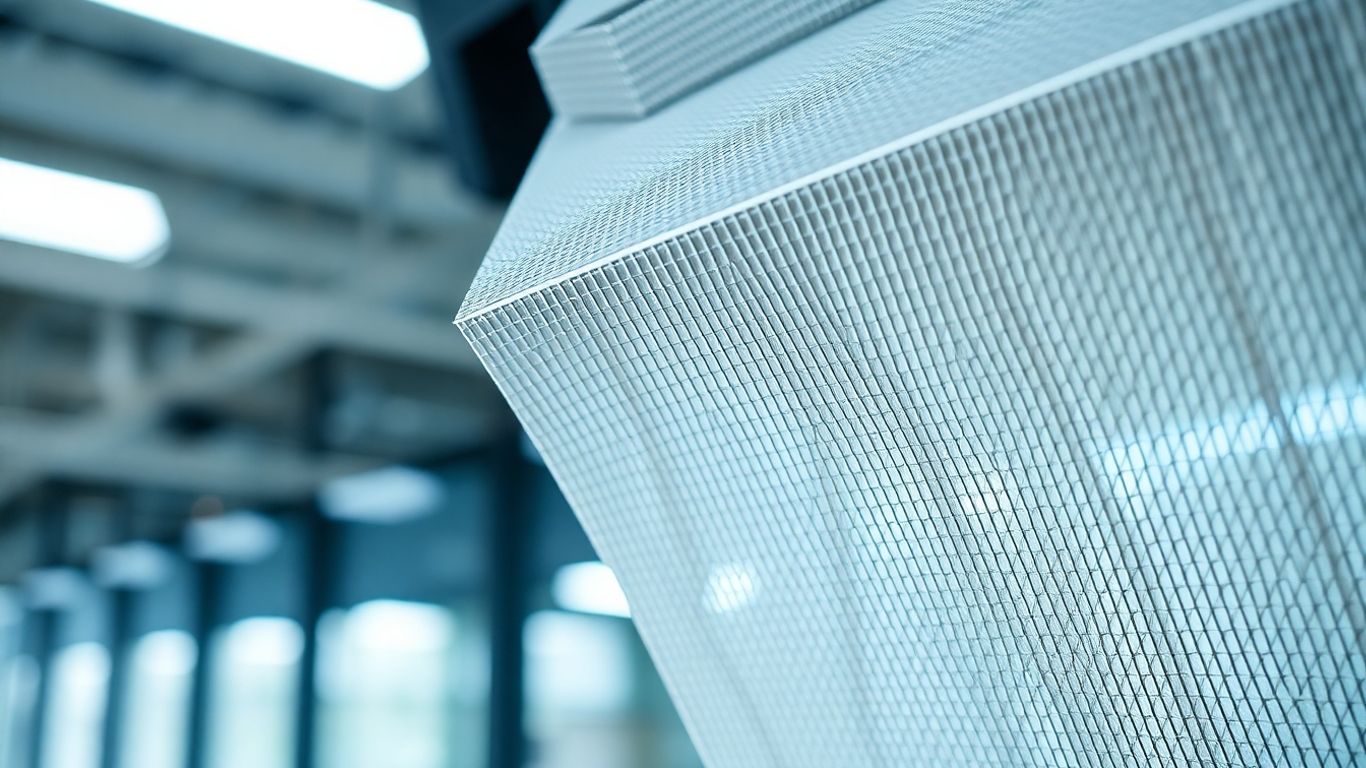
A typical HEPA filter consists of a dense network of pleated fibres, often made from glass microfibres or synthetic material. This pleated structure provides a large contact surface in a compact space, which increases the chances of capturing particles as they pass through. The layers are arranged to optimise the retention of fine dust, without overly impeding the flow of air.
Here is a comparison table of the composition of a standard HEPA filter:
| Element | Main role |
|---|---|
| Glass fibres | Mechanical filtration |
| Synthetic support | Maintains structure |
| Specific glue | Secures the pleats |
| Sealing gasket | Prevents air leaks |
Some systems also include a pre-filter or an activated carbon filter to deal with odours or gases.
Application Areas for HEPA Filters
You will find HEPA filters in many sectors and everyday situations:
- Hospitals and laboratories use them in clean rooms to filter out even the smallest contaminating particles.
- Transport like aeroplanes, as well as the automotive sector, benefit from better air quality thanks to these filters.
- For many domestic uses, HEPA filters are now found in air purifiers and vacuum cleaners to trap spores, pollen and dust – they are even assessed for their effectiveness in protecting against pathogens according to specific certification.
In summary, opting for a HEPA filter means wanting cleaner air, whatever the context – medical, industrial, or simply for your living room. The working principle remains the same: a physical barrier optimised so that the air you breathe is largely freed from its smallest pollutants.
Standards and Certifications Governing HEPA Filters
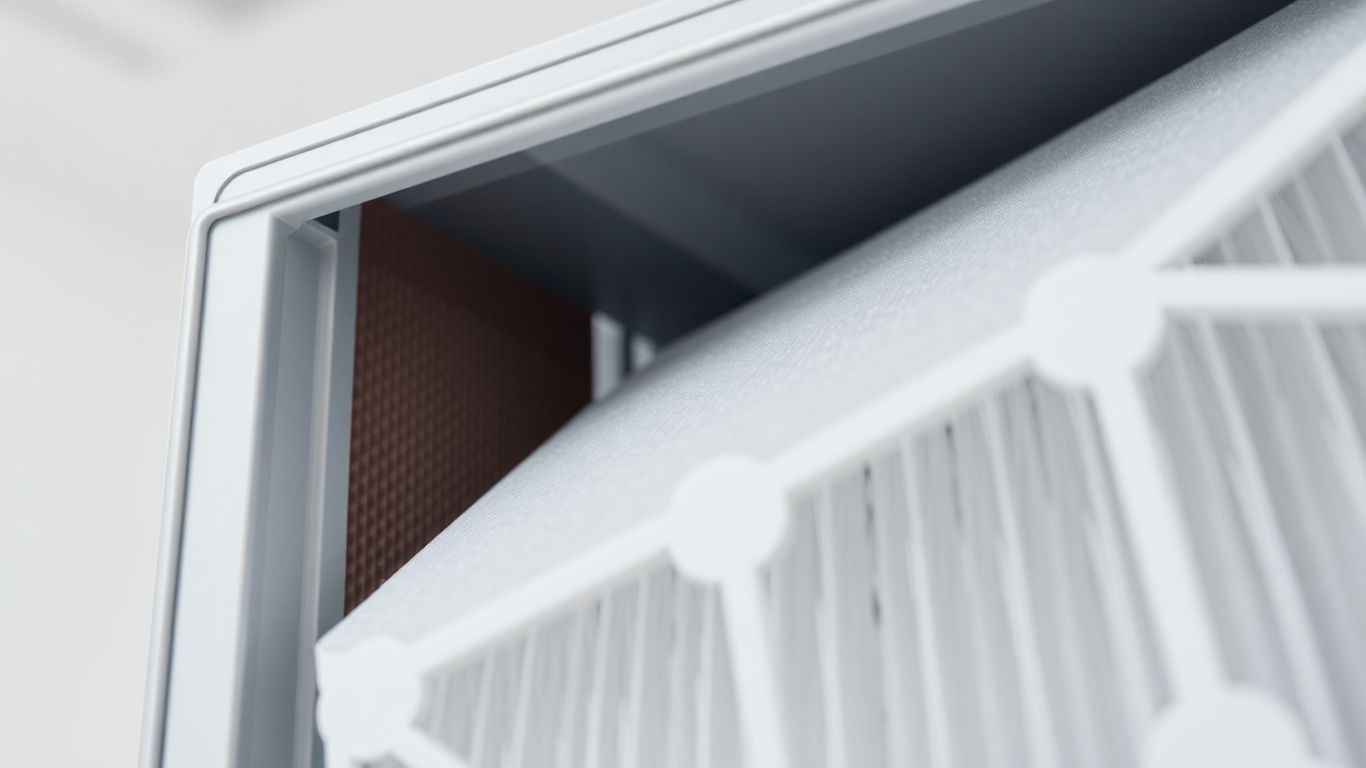
The efficiency of HEPA filters is based primarily on strict standards and precise certifications. These requirements allow for clear comparison between the different classes and guarantee the end-user verified filtration quality. It is essential not to rely on simple commercial claims but always to check the official certification of the filter.
Overview of EN 1822 Standard
The EN 1822 standard structures the classification of HEPA filters in Europe. It defines minimum performance for particle retention and leak control for high-efficiency filtration. This standard segments filters by their ability to capture the most penetrating particle, known as MPPS (Most Penetrating Particle Size).
| Class | Efficiency (%) | Maximum number of 0.1 µm particles passing per litre of air |
|---|---|---|
| H13 | 99.95 | 50 |
| H14 | 99.995 | 5 |
- The standard details every testing step, from the filter media to the finished product.
- It also distinguishes between EPA, HEPA, and ULPA filters by specific classes: E10 to E12 (EPA), H13/H14 (HEPA), U15 and above (ULPA).
- Filters must be tested on the MPPS particle size to ensure effectiveness in real use conditions.
Testing and Classification Procedures
To obtain HEPA certification, each filter must pass very precise tests. The main one involves measuring the penetration of 0.3 µm particles, i.e., checking how many particles pass through the filter under standardised conditions.
- The filter media is tested for its ability to stop the MPPS at the same speed as in intended operation.
- The fully assembled filter then undergoes global and spot efficiency checks to identify any micro-leaks.
- Devices are graded by their final class, determined by the recorded efficiency.
Before any certified HEPA filter EN 1822 is put on the market, it must prove, through several independent inspections, its strict compliance with the specifications, including tests on all its components.
Importance of an Airtight Fitting for Efficiency
Even a perfect filter guarantees nothing if the installation allows air to pass around the media. So, the airtightness of the fitting is crucial:
- Each gasket must be well positioned, with no faults or deformation.
- Cases, racks and frames are checked to avoid even the smallest leak.
- An integrity check on site is mandatory, especially in controlled contamination areas (laboratories, hospitals).
Installation recommendations emphasise checking clamping, testing gaskets and structural integrity after transport and installation. For more information on integrating technologies in a healthy, connected house, see the solutions from E-Home for optimising the home.
Finally, remember that good filtration performance depends not only on the filter itself: the quality of the installation and adherence to testing protocols are just as important to guarantee truly clean air.
Comparison of H13 and H14 Efficiency Levels
Criteria Differentiating H13 and H14
The efficiency of a HEPA filter is measured by the amount of particles it lets through, especially those around 0.1 micron in diameter. The H13 level captures 99.95% of these particles whereas H14 blocks 99.995%. It’s a small yet precise difference, especially in areas with strict health requirements.
Here is a summary table to aid comparison:
| Class | Efficiency (%) | Number of 0.1 μm particles leaving the filter (per litre of air) |
|---|---|---|
| H13 | 99.95 | 50 |
| H14 | 99.995 | 5 |
The difference between H13 and H14 lies in slightly more advanced filtration, with ten times fewer residual particles in the air. Take expert recommendations into account according to your environment: a laboratory could opt for H14, while a residential setting might be satisfied with H13. For a practical overview of these different filter types and their applications, see this precise comparison of air purifier filter types.
Impact on Purified Air Quality
Between H13 and H14, the purity of the air improves, but the difference is minor in a non-medical setting. H14 ensures almost particle-free air, useful for:
- Operating theatres
- Analysis or pharmaceutical laboratories
- High-risk environments (sensitive industries, cleanrooms)
In a flat or public space, the effect will be less noticeable compared to the investment required. The air quality benefit with H13 is already strong.
If you’re looking for a dramatic improvement in air quality for standard use, aiming for H14 brings little concrete advantage over H13.
Consequences for Airflow and Energy Consumption
Improved filtration leads to increased air resistance in the filter. Going from H13 to H14 raises this resistance, which can result in:
- Reduced airflow, so slower purification
- Higher energy consumption to compensate for reduced flow
- More frequent maintenance due to premature clogging
For all these reasons, choosing a H14 filter is really only justified if you are facing a regulatory obligation or very high levels of particulate pollution. For domestic or most commercial uses, a H13 filter remains the best compromise between efficiency and everyday performance.
Use of HEPA Filters in Specific Environments
HEPA filters are not reserved for a single field. You’ll find them wherever air quality needs to be controlled, from hospitals to family kitchens. Their adaptability to different environments relies on their capacity to filter a wide range of particles, but there are differences in application according to the sector.
Role in Medical Settings and Cleanrooms
In hospitals, laboratories and cleanrooms, HEPA filters are essential. For example, they are used in:
- Ventilation systems for operating theatres
- Laminar flow hoods for preparing sterile medicines
- Cleanrooms in the pharmaceutical and electronics industries
Their ability to retain viruses, bacteria and fine dust helps limit the risks of infection and contamination. Without this filtration, it would be almost impossible to guarantee a truly controlled environment.
Applications in Residential and Public Spaces
HEPA filters also have a prominent role in everyday life, especially with the rise of allergies and pollution incidents:
- Air purifiers for children’s bedrooms or sensitive people
- Central vacuuming systems or vacuum cleaners fitted with HEPA filters
- Installations in nurseries, schools, offices, and public transport
With them, indoor air becomes purer, though their installation may sometimes need to be suited to the airflow and the volume to be treated.
Choosing a purifier with a HEPA filter in these spaces can reduce dust, allergens and circulating micro-particles. However, note: it does not filter gases or volatile organic compounds.
Integration in Household Appliances
Today, many domestic appliances include a HEPA filter to improve ambient air. You’ll find them in:
- Modern vacuum cleaners, especially in homes with pets or smokers
- Some high-end air conditioners and domestic ventilation systems (MVHR/HRV)
- Tumble dryers or portable air purifiers
Here’s a quick look at some appliances and their usual filtration level:
| Appliance | HEPA presence | Typical efficiency |
|---|---|---|
| Vacuum cleaner | Yes | H13 or H14 |
| Air purifier | Yes | H13 to H14 |
| Residential air conditioner | Sometimes | H11 to H14 |
| Domestic ventilation unit | Rare | H13 |
Remember that good filter integration also depends on the frequency of maintenance and filter changes.
Each of these environments imposes specific challenges for filtration: air volume, the type of pollutants to remove, accessibility for maintenance. Adapting the solution judiciously ensures constant and reliable filtration every day.
Maintenance and Lifespan of HEPA Filters
Factors Affecting Lifespan and Clogging
Several factors influence how a HEPA filter wears out over time. It’s not just a question of time on the calendar:
- Ambient air quality: The more polluted the air, the more quickly the filter clogs.
- Intensity and frequency of use: If you use your system daily, you’ll probably need to change the filter sooner.
- Type of particles captured: Larger dust, hair and fibres clog the filter faster than fine particles.
- Presence of a pre-filter or activated carbon filter, which can extend the life of the HEPA filter by trapping coarser particles (combining the HEPA filter).
A saturated filter quickly loses efficiency and can become a breeding ground for microbes.
Recommended Replacement Frequency
There is no universal rule, but these recommendations are quite common:
| Usage intensity | Air quality | Recommended replacement |
|---|---|---|
| Moderate (domestic use) | Good | Every 12 months |
| Severe (polluted environments) | Poor | Every 6 to 8 months |
| Critical areas (hospitals, labs) | Excellent | 3 to 6 months |
Regularly cleaning the pre-filter can genuinely extend the use duration of the main HEPA filter but does not replace replacement when saturated.
Safety Instructions for Maintenance
When replacing or cleaning a HEPA filter, it is important to observe a few safety principles:
- Wear gloves and, if possible, a mask, especially if you are sensitive to dust or allergens.
- Handle the filter carefully to avoid releasing trapped particles.
- Immediately place the used filter in a sealed bag for disposal, without contaminating the surrounding air.
- Clean the surfaces around the filter housing after removal.
- Always follow the manufacturer’s instructions to avoid electrical risks or incorrect fitting.
Proper maintenance will allow your purification system to maintain satisfactory efficiency over time. Neglecting replacement means losing the real benefit expected from HEPA filtration.
Actual Effectiveness of HEPA Filters Against Different Pollutants
Filtration of Fine and Nanoparticles
A HEPA filter is not just a marketing term; it meets a proven capacity: it captures virtually all fine particles, those that cause problems at lung and cardiovascular level. For example, H13 and H14 filters, often used in domestic air purifiers, stop 99.95% and 99.995% of particles respectively, including nanoparticles from 0.01 µm (optimal filtration performance).
| Particle type | H13 Efficiency | H14 Efficiency |
|---|---|---|
| PM10 (≤10 µm) | >99.95% | >99.995% |
| PM2.5 (≤2.5 µm) | >99.95% | >99.995% |
| Nanoparticles (<0.1 µm) | >99.95% | >99.995% |
- Highly effective against fine dust, PM2.5 and PM10, as well as smoke (candles, incense).
- Performance is consistent whatever the size, even below 0.3 µm.
- Using in a space with constant pollution (city traffic, tobacco) truly improves perceived air quality.
The action of a HEPA filter on fine particles makes it a solid ally against invisible pollution, present in many homes and public places.
Ability to Remove Biological Agents (Viruses, Bacteria, Allergens)
HEPA filters are also often recommended for their action against microscopic living matter.
- Virus filtration: recent studies, notably during COVID-19, show a reduction in airborne viral load of 99.9% in controlled conditions.
- Bacteria and mould spores also do not resist the dense fibrous structure of the filters.
- Common allergens (pollen, dust mites) are effectively trapped, reducing allergy symptoms.
However, remember that a HEPA filter traps but does not destroy these agents. Maintenance and replacement are therefore necessary to avoid the filter itself becoming a reservoir for germs.
Limitations and Performance In Situ
The actual effectiveness of a HEPA filter depends on several external conditions, sometimes overlooked:
- The installation must be well sealed: air that bypasses the filter will not be properly treated.
- The unit’s airflow must be appropriate to the room volume to guarantee effective filtration of the entire ambient air.
- VOCs (volatile organic compounds) and certain gases, such as ozone, are not captured: other technologies are required if you are targeting these pollutants.
In practice, here’s what you should check:
- Check the filter’s certification; the difference between a true HEPA filter and a HEPA-type filter can be huge in nanoparticle filtration.
- Monitor leaks and filter changes to maintain initial effectiveness.
- Combine with a pre-filter and/or activated carbon filter for a broader spectrum of pollutant control.
Using a HEPA filter in a suitable environment genuinely reduces airborne dust and biological agents, but does not replace regular ventilation or other methods for handling chemical pollutants.
HEPA Filter and Alternatives: Differences and Complementarity
Distinction Between Certified and “HEPA-Type” Filters
You may sometimes see the phrase “HEPA-type” on certain devices, but this means nothing about the filter’s actual effectiveness. A truly certified HEPA filter meets the EN 1822 standard and undergoes strict checks, guaranteeing at least 99.95% retention for H13 and 99.995% for H14 on the most penetrating particles. In contrast, a “HEPA-type” filter may only mimic the appearance or design of a certified filter, without proof of its performance.
Here are the main differences to look for:
- Official certification with the grade clearly indicated (H13, H14)
- Individual testing for each certified HEPA filter
- No guaranteed performance for “HEPA-type” filters
To protect your health and your air, pay attention to a clear HEPA certification, especially if the situation concerns a controlled atmosphere or industrial equipment.
Combining HEPA Filters With Other Purification Technologies
The HEPA filter does not trap all pollutants. Its mechanical action captures fine particles, dust, or allergens but allows some gases (VOCs, ozone) through and does not sterilise trapped pathogens. For complete purification, several technologies are often combined with HEPA filters in a device:
- Activated carbon filter: It absorbs volatile organic compounds and removes certain odours.
- Photocatalysis: This technology breaks down gases and pollutants with light and a catalyst.
- UV-C: It disinfects air by neutralising bacteria and viruses carried in the airflow.
- Pre-filters: They protect and extend the life of the HEPA filter by capturing coarser particles.
Combining these methods creates a kind of multi-barrier where each level compensates for the weaknesses of the others. Some industrial devices even focus on multifunctional design, like those using HEPA or ULPA filters for removing ultra-fine particles.
Comparison with ULPA Filters
ULPA filters (Ultra-Low Penetration Air) provide even finer filtration than HEPA, but this comes with trade-offs. Here are the main differences at a glance:
| Feature | HEPA Filter (H13/H14) | ULPA Filter |
|---|---|---|
| Retention rate | 99.95 – 99.995 % | 99.9995 % |
| Minimum size captured | 0.3 micron | 0.1 micron |
| Pressure loss | Moderate | High |
| Common usage | Medical, residential | Cleanrooms |
ULPA thus offers superior performance on paper, but this fineness requires lower airflow rates and greater energy consumption, limiting its daily use. For the vast majority of applications, a well-sized HEPA filter will offer the optimal balance between purification, maintenance and effectiveness.
Conclusion
To sum up, it’s clear that HEPA filters, particularly H13 and H14 levels, are now a reliable solution for improving indoor air quality. You’ve seen that the efficiency difference between H13 and H14 exists, but for most domestic or professional uses, that difference remains minimal in daily life. The choice between these two levels depends above all on your specific needs and the environment where the filter will be used. Remember that regular filter maintenance and following the manufacturer’s recommendations are essential for ensuring optimal filtration. In short, choosing a certified, well-installed and well-maintained HEPA filter is a simple and effective step towards healthier air at home or at work.
Frequently Asked Questions
What is the main difference between a HEPA H13 and H14 filter?
The main difference between a HEPA H13 and H14 filter is their ability to retain fine particles. The H13 filter stops 99.95% of 0.1 micron particles, while the H14 traps 99.995%. This means H14 lets through ten times fewer particles than H13. However, this efficiency gain makes the device a little slower and requires more energy.
How can I tell if a filter is genuinely HEPA certified?
To be sure that a filter is HEPA certified, check that it meets the EN 1822 standard. This standard checks the filter’s effectiveness on the most difficult particles to stop. Also look out for filters marked ‘HEPA-type’, as they do not always offer the same filtration quality.
Where are HEPA filters most commonly used?
HEPA filters are widely used in hospitals, operating rooms, laboratories and cleanrooms where the air must be very pure. They are also found in domestic appliances such as air purifiers, vacuum cleaners and sometimes in cars.
How long does a HEPA filter last before needing to be changed?
The lifespan of a HEPA filter depends on the air quality and frequency of use. Generally, it is recommended to change the filter every 6 to 12 months. If the air is very full of dust or allergens, it may need replacing sooner.
Do HEPA filters remove viruses and bacteria?
Yes, HEPA filters have the ability to capture the majority of viruses, bacteria and allergens present in the air. Their special structure allows them to trap even very small particles, making them effective against many biological pollutants.
Can a HEPA filter be washed and reused?
Some HEPA filters are designed to be washed and reused, but most are disposable. If your filter is washable, follow the manufacturer’s instructions carefully. Otherwise, it is important to replace it in due time to maintain good air quality.
